






 Portuguese
  Spanish
  7 min of reading
  0 comments


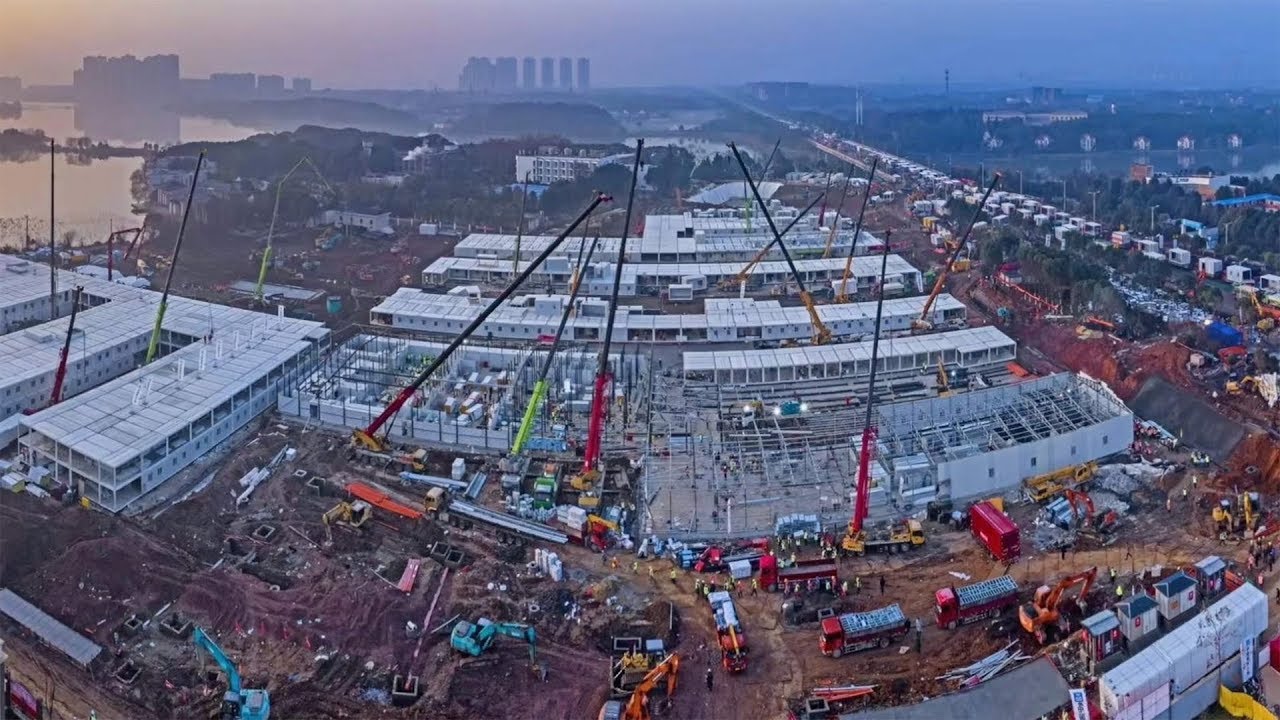
Huoshenshan Hospital was delivered in 10 days in Wuhan with 1,000 beds, pre-fabrication, thousands of workers, and continuous construction during the pandemic.
When Wuhan went into lockdown at the end of January 2020, the pressure on the healthcare network was growing faster than the capacity of the city’s hospitals. In this scenario, China decided to build a new unit dedicated to treating patients infected with the coronavirus and turned the construction of the Huoshenshan Hospital into one of the most impressive episodes of emergency engineering during the pandemic. The unit was delivered on February 2, 2020, with a capacity for 1,000 beds, after a race against time that became a symbol of China’s response in the early days of the health crisis.
What made the case so remarkable was not just the speed, but the combination of factors that shortened normally long stages in hospital projects: adoption of pre-fabricated buildings, simultaneous mobilization of thousands of workers, heavy use of machinery, and uninterrupted shifts throughout the day and night. Instead of a conventional construction site, Wuhan mounted a war operation to open beds in record time as the outbreak advanced.
Huoshenshan Hospital was born out of urgency and reused a model used by China during SARS
Huoshenshan was not treated as a common construction. According to the National Health Commission of China, the project was designed to repeat the logic used in 2003, when Beijing built the Xiaotangshan Hospital during the SARS epidemic.
-
Without mortar, grout, or traditional construction: the ClickBrick system assembles brick facades with ceramic pieces held by metal clips, eliminating the need for glue, speeding up installation, and even allowing everything to be dismantled later without turning the construction into expensive permanent debris.

-
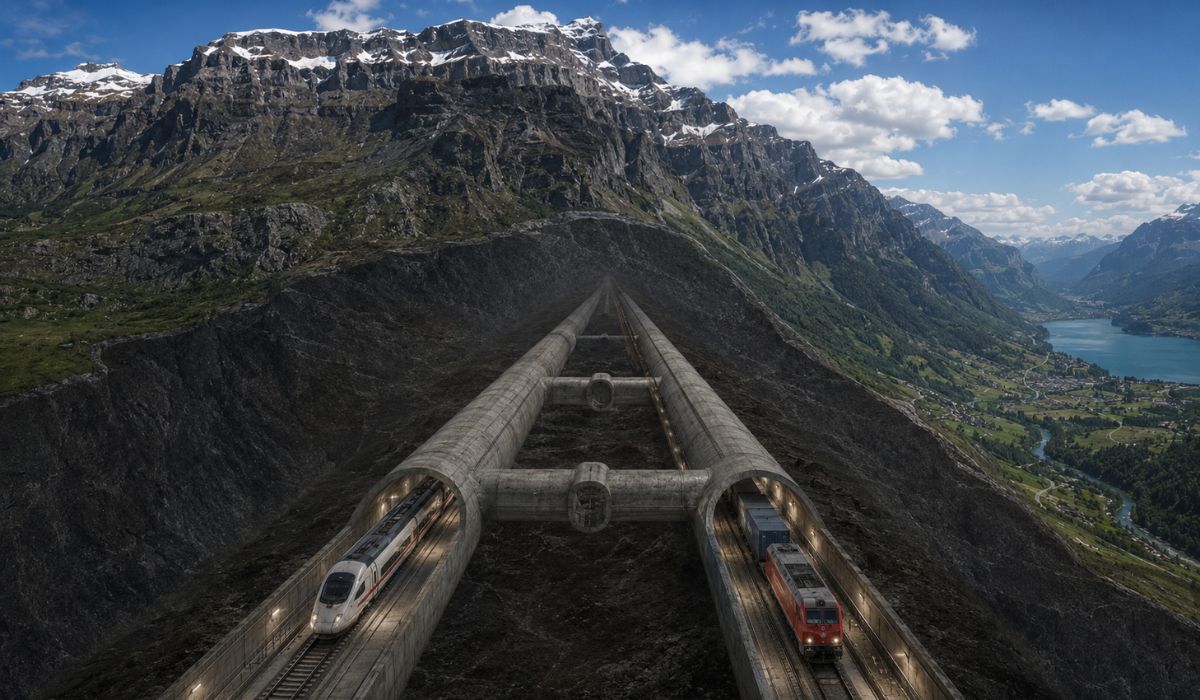
Switzerland took 17 years to tear through the Alps and build the world’s largest railway tunnel, a 57.1 km passage under 2,300 meters of rock, with 50 °C heat and 28.2 million tons excavated to connect the north to the south of Europe.

-
With 1,415 m², a frontal view of the sea, and surrounded by skyscrapers, the mansion worth R$ 140 million bought by Luciano Hang is the last standing residence on the waterfront of the ‘Brazilian Dubai’ in Balneário Camboriú.

-
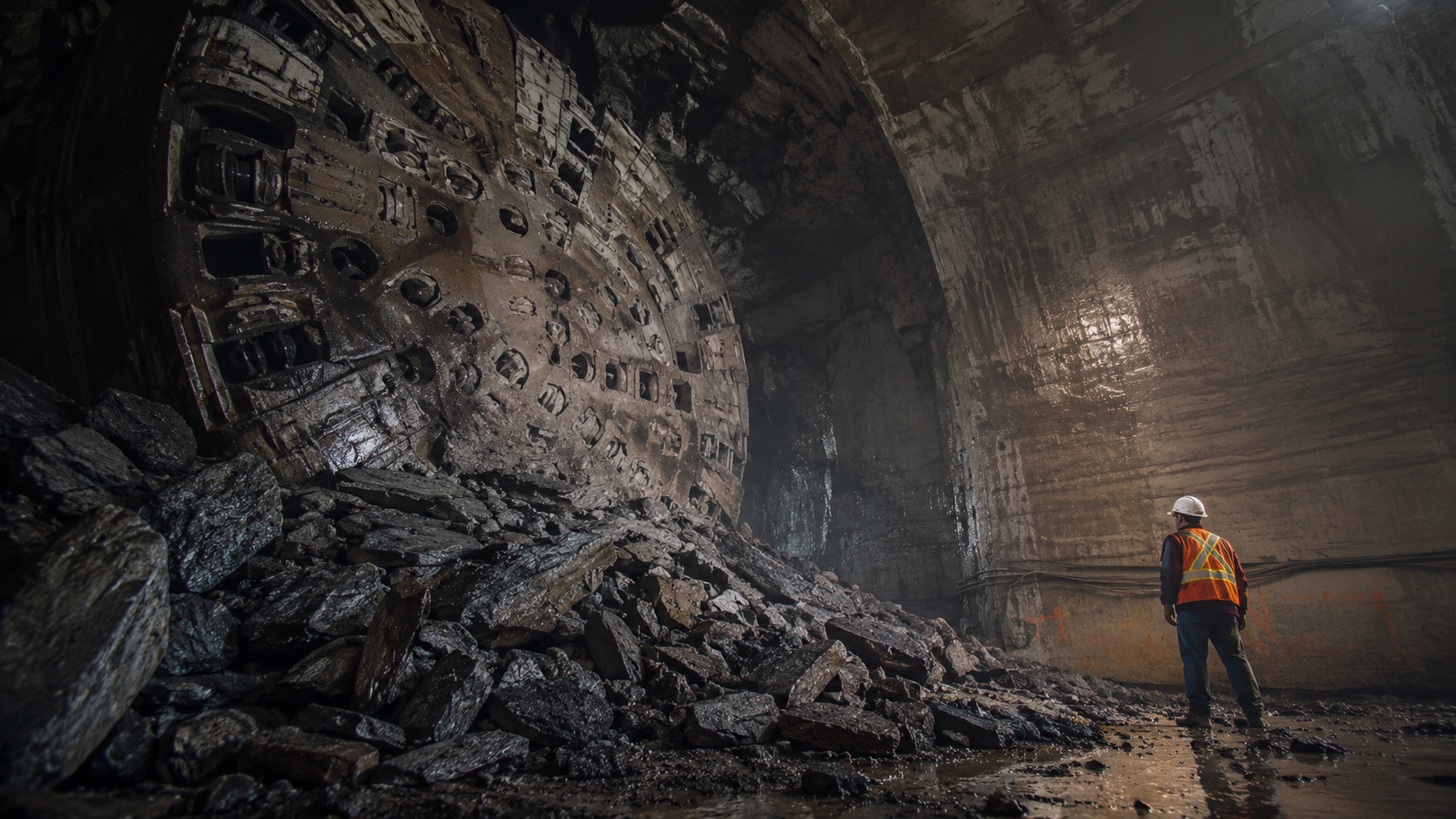
“Big Becky,” the 4,000-ton steel monster with the height of a four-story building, spent five years tearing through 10.2 km of solid rock beneath Niagara Falls to divert the river’s force and generate clean energy for 160,000 homes.



Reuters also reported that Wuhan sought to replicate this previous experience to quickly respond to the collapse of beds and expand hospital capacity amid the Covid-19 outbreak.

This reference to the SARS hospital helps explain why the project advanced so quickly. The solution did not start from scratch in conceptual terms: the country already had a precedent for accelerated construction of an emergency hospital and decided to reapply the logic on a scale adjusted to the new crisis.
The result was a project designed from the start to be fast, functional, and directly linked to the care of contaminated patients.
Machines arrived on the first night and the land preparation advanced at an extreme pace
The speed of the construction became apparent in the early hours. A report from Reuters states that 35 excavators and 10 bulldozers arrived at the site on the night of January 23 to begin preparing the area where the hospital would be assembled.
The goal was to have the unit ready by the beginning of the following week, an unusual reaction even for large construction sites.
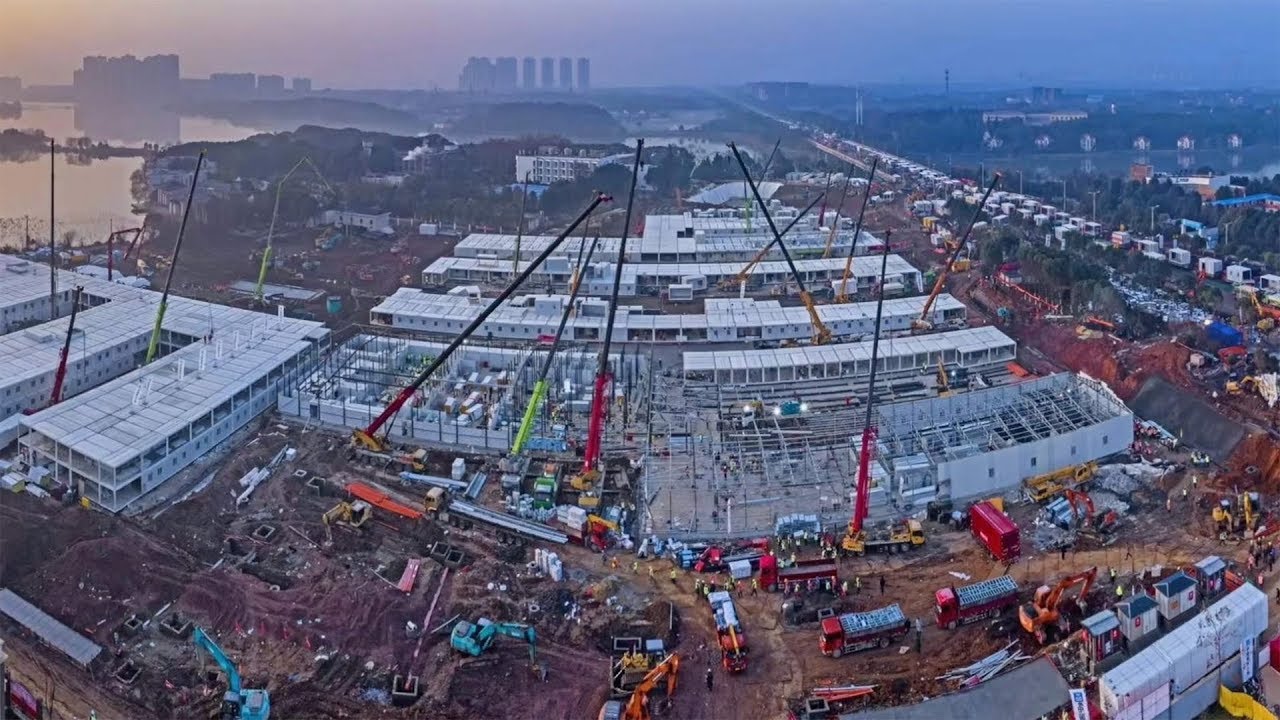
The National Health Commission reports that the construction was carried out with more than 800 pieces of equipment operating simultaneously and thousands of workers working in shifts.
Some slept only four hours a day, according to the organization. Meanwhile, the China Daily described that the workers worked around the clock, meaning continuously, without stopping, during the ten days between the decision and the delivery of the hospital.
This immediate mobilization was essential because the construction could not wait for the traditional sequence of civil construction. Earthworks, material logistics, assembly, and adaptation of the site advanced in an overlapping manner, reducing the interval between each phase and transforming the site into a synchronized operation under maximum pressure.
Prefabrication shortened stages and became the heart of the hospital assembly
One of the pillars of Huoshenshan’s speed was the use of prefabricated modules. Reuters reported that the hospital would be assembled with prefabricated buildings, a solution that would allow the structure to be erected quickly and at a lower cost than a conventional hospital construction.
Instead of relying on construction entirely executed on-site, the project relied on industrialized and standardized components, capable of accelerating fitting, assembly, and installation.
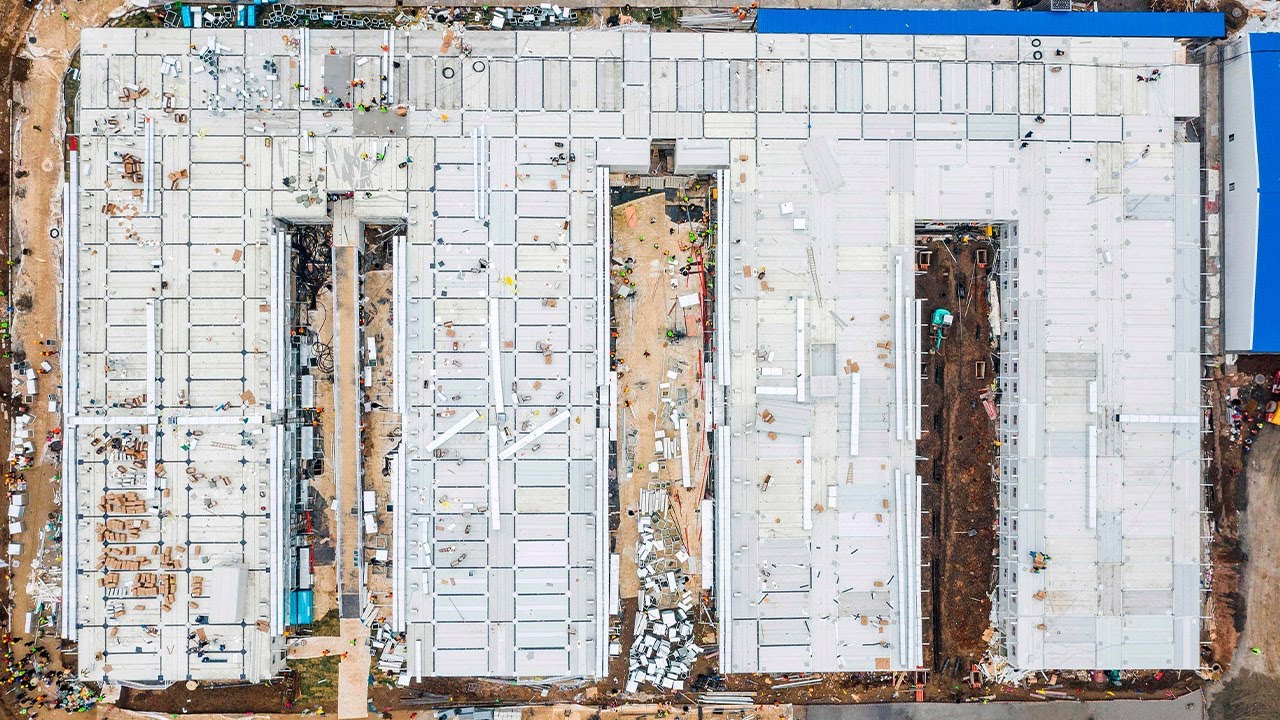
In practice, this meant replacing a long construction sequence with a more direct production and assembly logic.
By adopting ready-made pieces and structures, Wuhan reduced the time lost with repetitive stages and gained scale at a time when every day counted. It was this constructive base, combined with continuous work, that made it possible to deliver a complete hospital unit in such a short interval.
The case of Huoshenshan showed that prefabrication was not a mere technical detail, but one of the central drivers of speed.
Without this model, the mobilization of thousands of workers and hundreds of machines would probably not have been enough to shorten the schedule so much. The project became an extreme example of how industrialized systems can be decisive in scenarios of health emergencies.
More than 7,500 workers and continuous shifts turned the project into a race against time
The human scale of the construction was also extraordinary. On February 3, 2020, Reuters reported that more than 7,500 workers participated in the Huoshenshan project, completed that weekend to start receiving patients on Monday.
The National Health Commission described the presence of thousands of workers and heavy machinery operating without interruption, reinforcing the industrial and militarized dimension of the assembly.
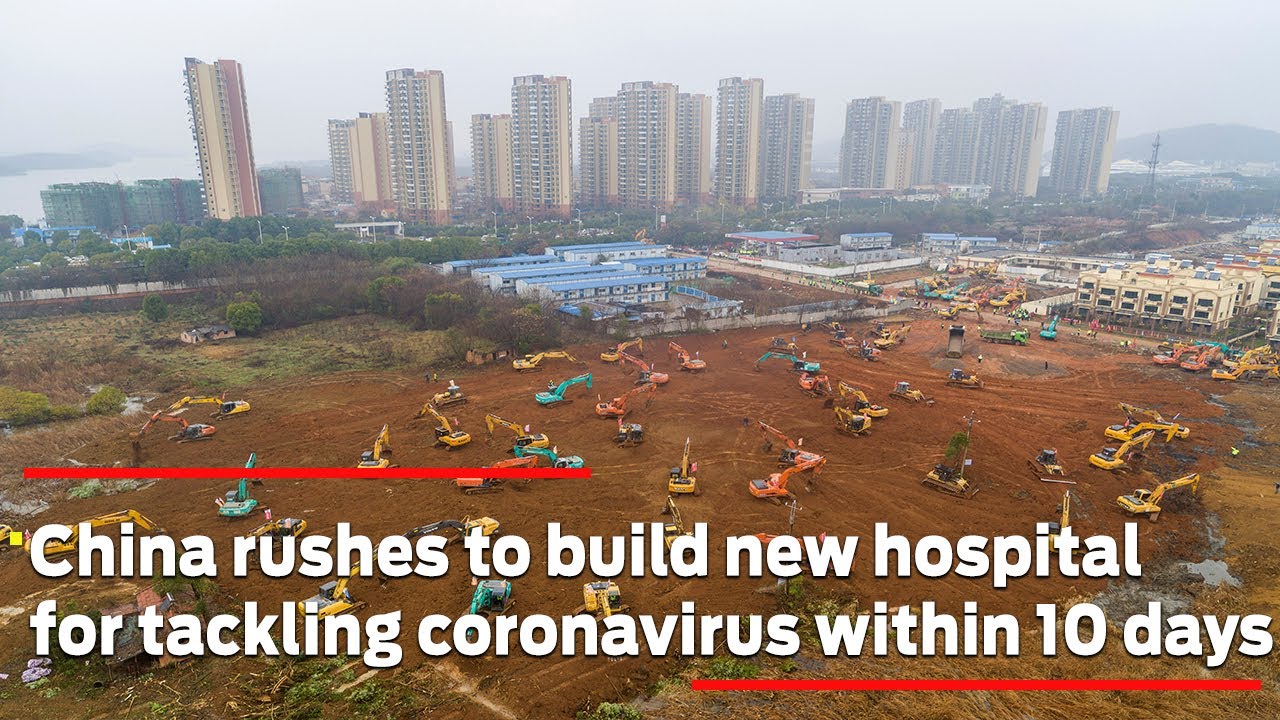
The China Daily adds that the workers operated day and night throughout the entire schedule. This continuous operation was crucial because the urgency did not allow for traditional site breaks.
Instead of relying on a common shift, the project advanced in successive blocks of work, with lighting, machines, and teams rotating continuously to meet a deadline that seemed impossible for a hospital of this size.
This type of mobilization helps explain why Huoshenshan became so emblematic. It was not just about quickly erecting walls, but about coordinating labor, logistics, materials, and political decision-making on a rare scale, compressing into a few days a schedule that, under normal conditions, would take much longer.
Hospital was delivered on February 2 and began receiving patients the next day

The delivery took place on February 2, 2020, according to the National Health Commission, which also reported that 1,400 health professionals from the armed forces were assigned to work at the hospital starting the following Monday.
Reuters reported that the unit, with 1,000 beds, would start receiving patients on February 3, at a time when Wuhan was facing a severe shortage of hospital spaces.
This sequence between the completion of the work and the start of operation helps measure the level of urgency surrounding the project.
There was no long interval between delivery, installation, and use. The hospital was designed to become operational immediately and relieve pressure on other units in the city, which were already operating under heavy overload in the early weeks of the pandemic.
By turning into real beds in such a short time, Huoshenshan came to represent more than just a quick construction. It became a symbol of the attempt to buy time at a moment when each new hospital space meant additional capacity to isolate, treat, and monitor infected patients in an epicenter under collapse.
Live broadcast turned hospital construction into a digital phenomenon in China
The construction of Huoshenshan also gained digital proportions. China Daily reported that live broadcast cameras were installed at the Huoshenshan and Leishenshan sites, allowing the public to follow in real-time the movement of workers, trucks, and excavators.
In one of the moments recorded by the newspaper, about 10 million people were simultaneously watching the progress of the works.

This audience turned the construction site into a national spectacle. The newspaper reports that many viewers began to define themselves as “online supervisors”, following the progress of the work and commenting on each stage of the assembly.
Amidst the lockdown and the outbreak’s progression, the broadcast helped convert the hospital’s construction into a visible sign of state response and hope for part of the population.
Therefore, Huoshenshan was not just a hastily built hospital. It was also a public event followed on a massive scale, uniting engineering, health crisis, political pressure, and symbolic mobilization around a project that needed to be completed before Wuhan’s hospital reality worsened even further.
Leishenshan expanded the response and showed that the strategy did not stop at a single hospital
Huoshenshan was not an isolated case. Reuters reported that China was also building, in parallel, the Leishenshan Hospital, planned for 1,600 beds. Meanwhile, China Daily published on January 28, 2020, that Wuhan had announced another emergency hospital to alleviate the shortage of spaces, while live broadcasts showed the two construction fronts being followed by millions of people.
This duplication of the strategy reinforces the magnitude of the problem faced by Wuhan in those days. The Chinese government not only focused on expanding existing hospitals but also on creating new structures dedicated to treating Covid-19 patients within an extremely compressed timeframe. The result was a leap in hospital capacity in just a few days, something rare in large-scale health crises.
The experience of Huoshenshan was marked precisely by this combination of extreme urgency, industrialization of the construction, and centralized coordination. More than a visually impressive feat, the hospital demonstrated how prefabrication, heavy logistics, and continuous work can radically shorten the construction timeline when the goal is to open beds as quickly as possible during an emergency.








Be the first to react!