






 Portuguese
  Spanish
  6 min of reading
  0 comments


Recognized by UNESCO in 2012, the cultural landscape of Bali brings together rice terraces, water temples, and the subak system in about 19.5 thousand hectares. The structure, linked to the Tri Hita Karana philosophy, remains alive but suffers from tourist pressure, unwanted constructions, and the challenge of keeping farmers on the land.
The rice terraces of Bali are not just a beautiful landscape shaped on volcanic slopes. They are part of a cultural, agricultural, and spiritual system that combines water, temples, farming communities, and an ancient philosophy focused on the balance between the human world, nature, and spirit.
UNESCO inscribed the Cultural Landscape of the Province of Bali on the World Heritage List in 2012. The ensemble includes five areas of terraces and water temples, covering about 19.5 thousand hectares, where the subak system still organizes irrigation and sustains a traditional form of cultivation on the volcanic island.
Volcanoes gave Bali the soil that sustains the rice fields
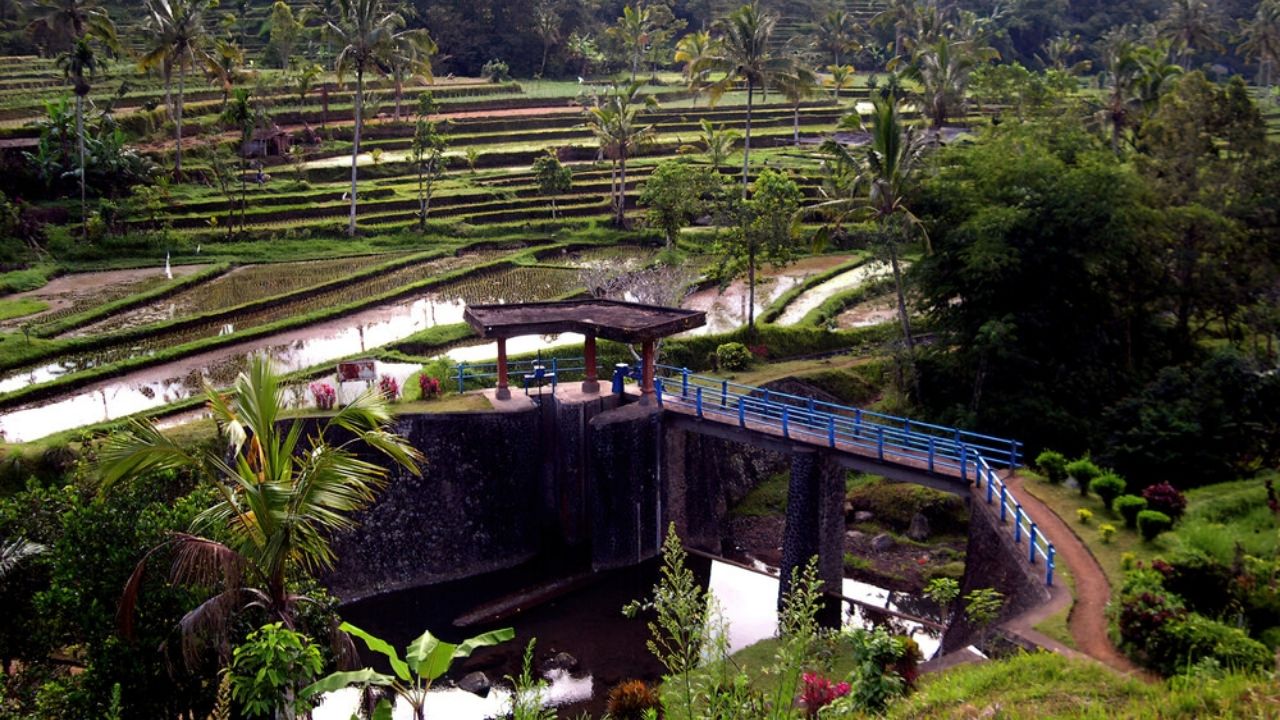
The landscape of Bali is dominated by a chain of volcanoes, which provided fertile soils for agriculture. Combined with the humid tropical climate, this environment allowed for rice cultivation both in flat areas and on mountain terraces.
-
Two young inventors create a terracotta brick that uses water, air, and solar energy to cool cities, and the idea points to buildings that stop worsening urban heat.

-
Without power for millions, Madagascar receives a proposal for a floating hydroelectric plant inspired by the baobab that promises clean energy, greenhouses, and tourism, but still needs to be realized.
-
China has a giant rice terrace carved over 1,300 years in the mountains, with up to 3,000 terraces, 82 villages, and 445 km of canals, but the ancestral work that overcame droughts now faces growing tourism, landslides, and rural abandonment.

-
The largest Gothic church in Northern Europe began in 1248 to house the relics of the Three Wise Men, remained unfinished for centuries, and was only completed 632 years later, with steel, steam, and a German national campaign that turned the delay into a historical symbol.


This geography explains part of the visual strength of the rice terraces. River water was channeled to irrigate slopes and fields, creating a layered landscape that did not arise by chance. It is the result of centuries of management, adaptation, and community organization.
Subak system organizes water, temples, and farmers
The subak is described by UNESCO as a cooperative water management system, consisting of channels, tunnels, and dams. It dates back to the 9th century and has water temples as the center of collective water resource administration.
In Bali, water is not treated merely as a technical resource. It passes through temples, reaches rice fields, and connects communities. The subak system transforms irrigation into a social and religious practice, uniting agriculture, belief, and coexistence among farmers.
Five landscapes form the recognized heritage
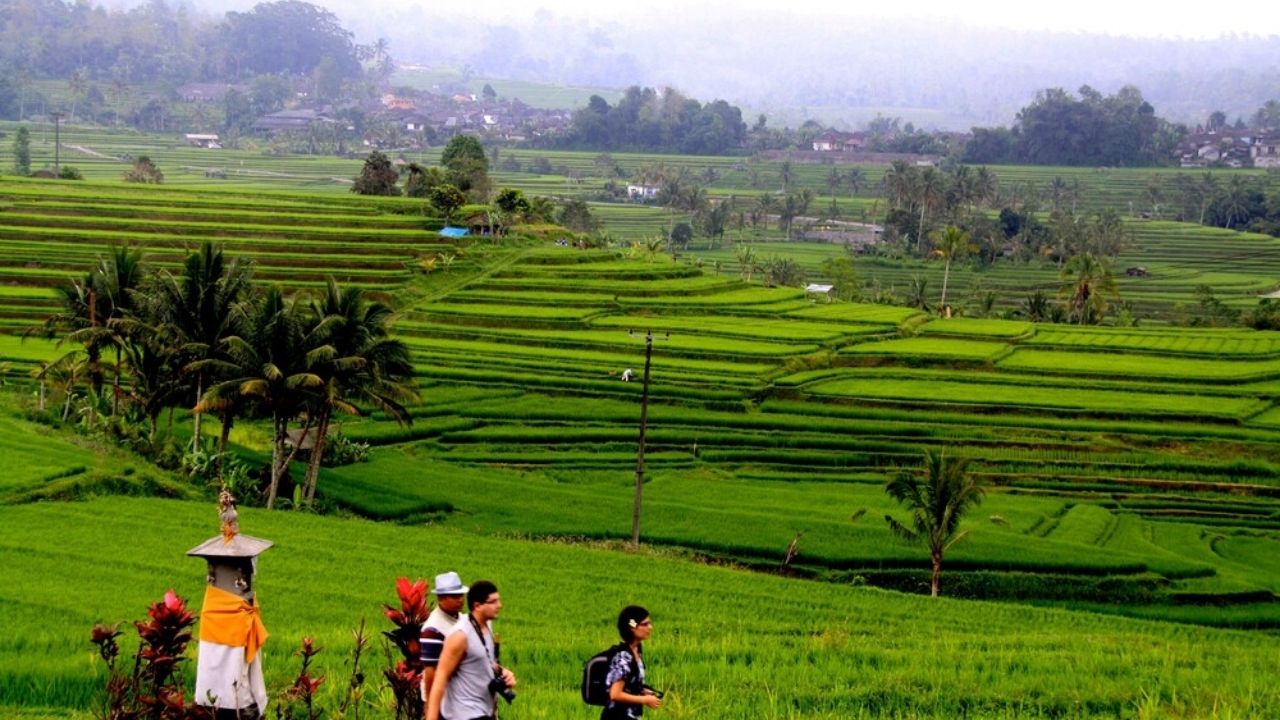
The property recognized by UNESCO consists of five sites that exemplify the natural, religious, and cultural elements of the subak system. Among them is the Supreme Water Temple of Pura Ulun Danu Batur, on the shores of Lake Batur.
Also part of the set are the Subak Landscape of the Pakerisan Watershed, the Subak Landscape of Catur Angga Batukaru, and the Royal Water Temple of Pura Taman Ayun. These sites show how the rice terraces connect to temples, forests, villages, and water sources.
Tri Hita Karana gives spiritual meaning to the landscape
The subak system reflects the Balinese philosophy Tri Hita Karana, which integrates three dimensions: the spirit, the human world, and nature. According to UNESCO, this vision was born from the cultural exchange between Bali and India over the last 2,000 years.
In practice, the philosophy appears in the rituals of the water temples and in the way communities deal with the environment. The landscape is not only productive: it expresses an idea of harmony between people, natural forces, and spiritual life.
Water temples function as management centers
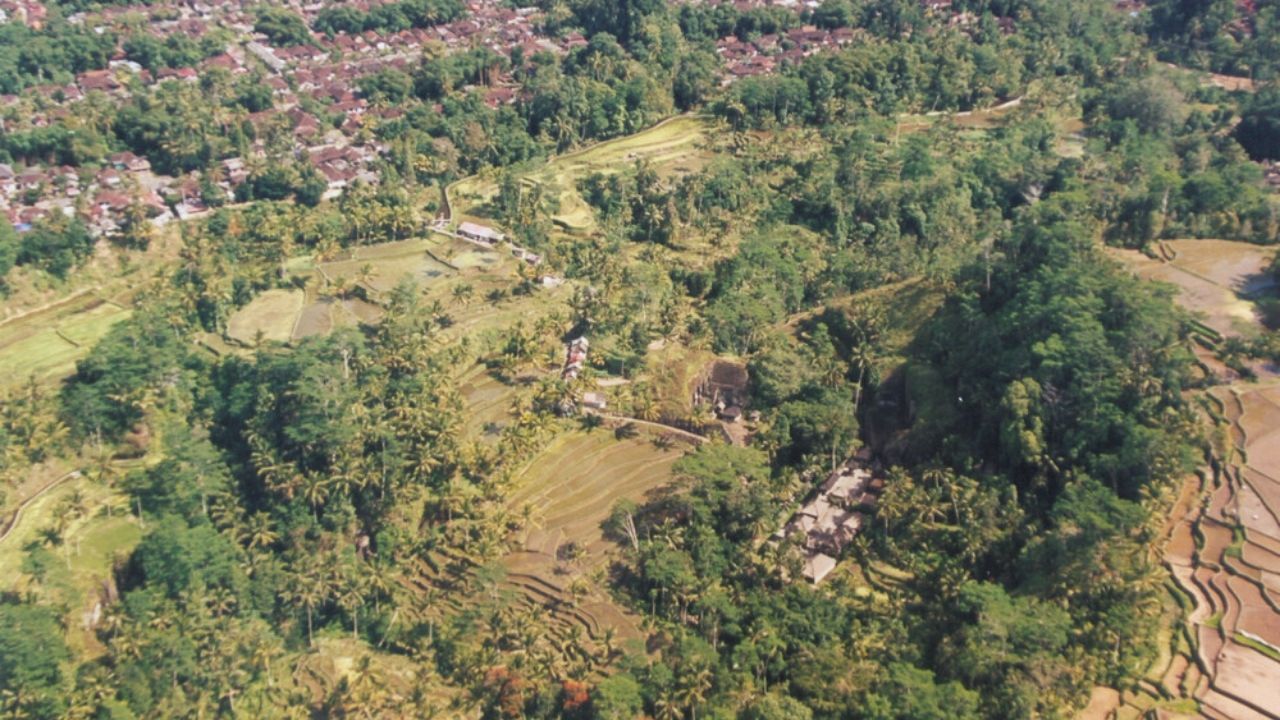
Since the 11th century, networks of water temples have managed the ecology of the terraces on a watershed scale. This organization allowed for responding to the challenge of sustaining a dense population on a rugged volcanic island.
UNESCO describes the water temples as unique institutions, linked both to the practice of irrigation and to ancient religious traditions. Thus, the rice terraces depend on community decisions that pass through sacred spaces and traditional rules of cooperation.
Bali has about 1,200 water collectives
The source from UNESCO informs that Bali has about 1,200 water collectives. In each of them, between 50 and 400 farmers manage the supply from a single source.
This data shows that the system is not just historical; it continues to function as a living network. The strength of the subak lies precisely in the collective management of water, without separating agricultural work from the social organization of the communities.
Rice, water, and religion have shaped the island for centuries
Rice is described as an integral part of religious life in Bali. UNESCO informs that it is seen as a divine gift, while the subak system is part of the temple culture.
This relationship helps explain why the rice terraces are considered cultural heritage, not just agricultural landscape. They unite food, faith, work, and territory in a structure that has shaped Balinese life over the past thousand years.
Landscape is still cultivated by local communities
UNESCO states that the agricultural areas continue to be sustainably cultivated by local communities. In recognized locations, farmers still cultivate traditional Balinese rice, without the aid of fertilizers or pesticides, according to the heritage description.
This aspect reinforces the idea of a living landscape. The value of the system is not only in preserving temples and fields as a tourist image, but in maintaining agricultural use, rituals, and water management in operation.
Tourism and constructions pressure the surroundings of the sites
Although none of the main components are described as threatened, UNESCO warns that the terraced landscape is highly vulnerable to social and economic changes, including increased tourist pressure.
The surroundings of the sites are also considered fragile and under development pressure, especially associated with tourism. In some cases, the source points out that undesirable constructions have already occurred, which may affect the visual integrity of the five sites.
Farmers need to stay on the land
To sustain the living landscape, UNESCO states that it will be necessary to support traditional systems and create benefits that allow farmers to remain on the land. This point is central to understanding the risk of rural abandonment.
If farmers leave the fields, the rice terraces lose not only labor but also knowledge, rituals, maintenance of the channels, and social continuity. A living agricultural heritage does not survive only with international recognition; it depends on those who plant, irrigate, and care for it.
Water management is key to maintaining the landscape
The protection of the landscape surroundings is considered essential to preserve the water source that sustains the subak system. UNESCO also highlights that water management is a critical element for maintaining the visual quality of the property.
This means that the landscape depends on balance. Construction, tourism, changes in land use, and pressure on water resources can affect not only the farmers but also the appearance and functioning of the terraces.
When the beauty of Bali depends on an invisible system
The Bali terraces impress because they seem to be drawn over volcanoes, but their permanence depends on something less visible: community agreements, water temples, rituals, channels, traditional rules, and farmers who continue working the land.
The question is whether a landscape so admired by global tourism can continue to live without losing its agricultural and sacred base. Do you think the rice terraces of Bali should receive more visitors or need stricter limits to protect farmers, temples, and local traditions? Leave your opinion in the comments.






Be the first to react!