Portuguese
  Spanish


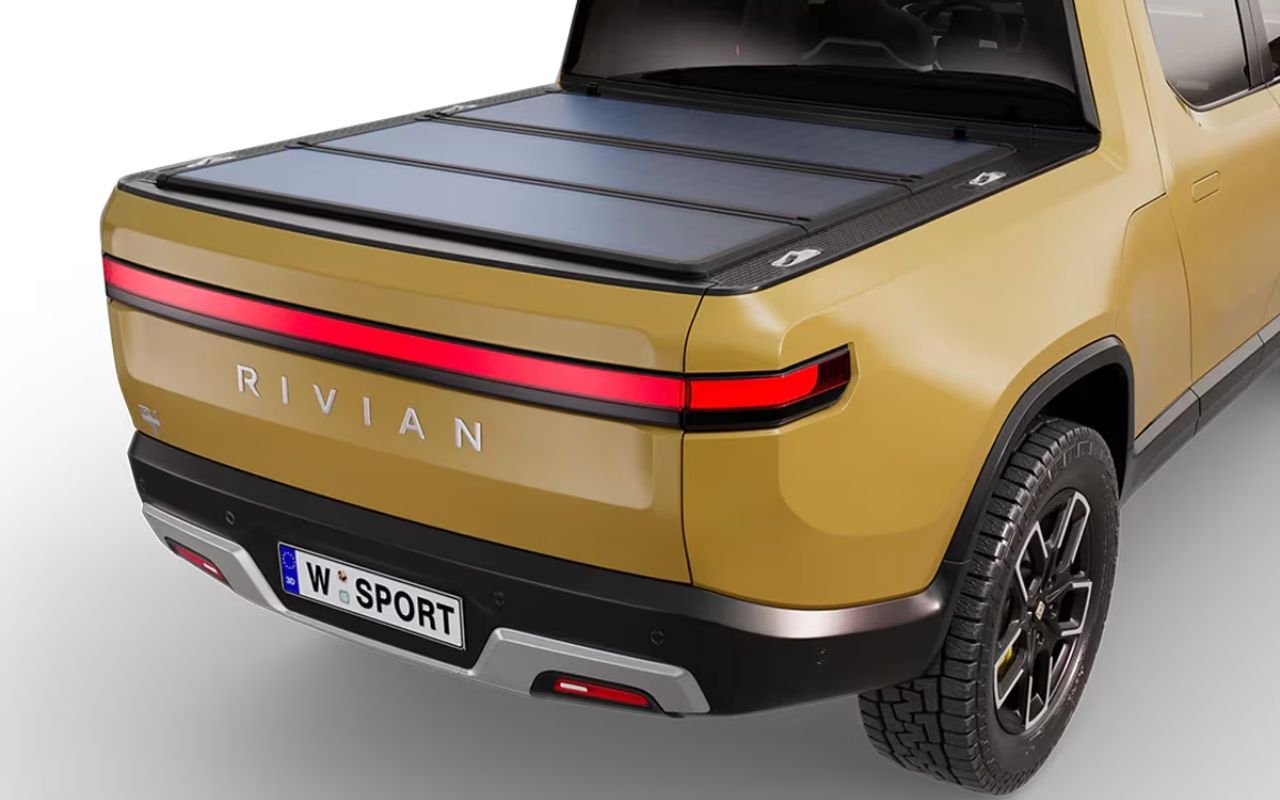


Rivian and Worksport Present Solar Cap for R1T Electric Pickup That Generates Renewable Energy of Up to 250 W. Understand How It Works, Limitations, and the Impact of This Innovation on the EV Universe.
Rivian presents a solar cap for the electric pickup that can generate renewable energy for accessories and equipment, now available for pre-order with delivery expected in mid-January 2026.
The novelty was announced by American accessory manufacturer Worksport, and promises up to 250 watts of direct solar generation installed on the truck bed cover, providing more independence for those who use the electric pickup for outdoor activities.
The solution was developed specifically for the Rivian R1T, a standout electric pickup in the EV market, but can also be adapted to various other popular truck models.
-
BYD’s Dolphin Mini Becomes Electric Vehicle Sensation in Brazil, Surpassing 300,000 Sales with Major Factory and Retail Leadership

-
Brazil Faces Surge in Copper Wire Thefts at Electric Car Charging Stations, Leaving Drivers Stranded

-
Jetour S06 Launches in Brazil as a More Affordable Plug-In Hybrid SUV Than BYD Song Plus and Haval H6, But Tests Highlight Its Shortcomings
-
Electric and Hybrid Cars Set to Transform Brazilian Streets: A New Era Begins
Solar Panel on Rivian’s Electric Pickup: What Changes
The new cover called SOLIS combines integrated solar panels with a hard cover for the truck bed.
It converts sunlight into electrical energy, generating up to 250 W directly in the vehicle.

This system does not recharge the Rivian electric pickup’s traction battery directly, but charges a battery created by Worksport itself.
The stored energy can be used for tools, lighting, and electronic devices while camping or remote work — an important boost for those who spend long periods away from outlets or noisy generators.
Price of the SOLIS Solar Cap for Rivian R1T
The SOLIS solar cap for Rivian R1T is now available for pre-order, with deliveries scheduled for mid-January 2026.
The complete set, which includes the cap and the battery, has an additional cost that varies based on size and components.
The cap itself costs about US$ 1,999 — an investment that, for owners of premium electric pickups, may be worth it for the off-grid benefits.
Current Limitations
Although it generates clean energy, this solution does not replace the traditional charging of the main battery of the Rivian electric pickup.

That is, the solar cap may enhance energy autonomy for equipment, but does not provide significant recharging for the pickup’s traction battery — something that still relies on future partnerships with manufacturers such as Rivian itself and the development of direct integrations with the vehicle’s electrical system.
How the SOLIS Solar Cap Works in Practice for Rivian R1T?
The system consists of robust, foldable solar panels mounted over the truck bed, which capture sunlight even when the vehicle is parked or in motion.
The energy generated powers the portable COR battery in about four hours under full sun, making it an ideal source for tools, lights, camping equipment, and electronics — all without noise or reliance on generators.
This type of solution is especially useful for those exploring trails, rural areas, or doing remote work with the electric pickup, adding versatility to use beyond urban roads.
The Impact on the EV Market
The initiative represents an important movement in the electric vehicle universe.
The growing demand for sustainable solutions independent of traditional charging points reflects the profile of Rivian owners, who value technology, ecology, and autonomy in outdoor adventures.
Moreover, the solar cap signals broader trends: integrating renewable sources into vehicles and transforming electric pickups into mobile energy platforms could be a strong competitive differential in the future.
While today the system is limited to auxiliary energy generation, there is hope that future versions may directly integrate charging for the electric pickup’s battery.
Worksport plans partnerships with automotive manufacturers to enable this evolution, which could transform the solar cap into an even more relevant solution for those seeking to reduce reliance on traditional electrical infrastructure.