Portuguese
  Spanish


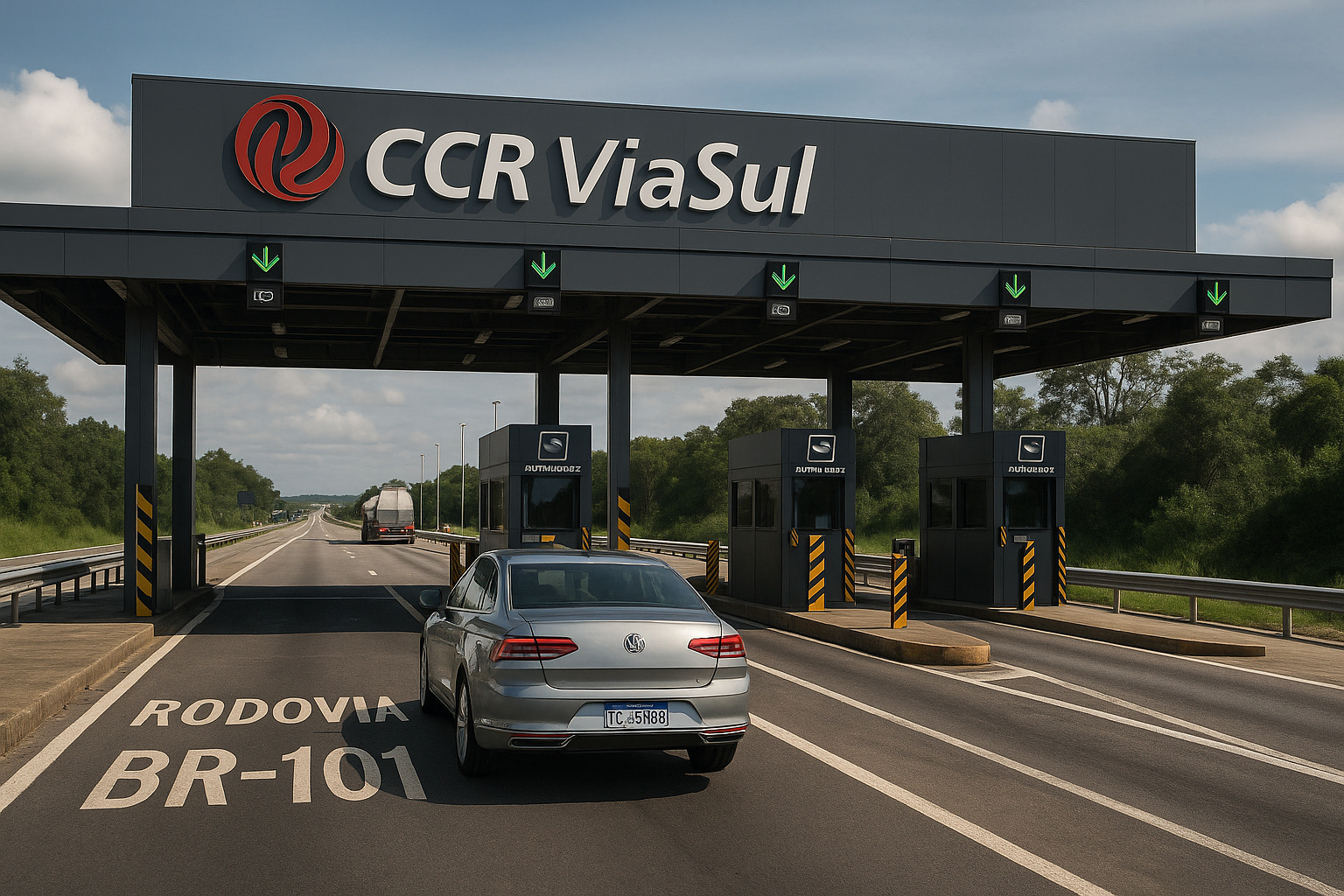

Federal Highway Follows National Trend and Eliminates Cash, Adopting Electronic Payment System and Free Flow Model Without Barriers
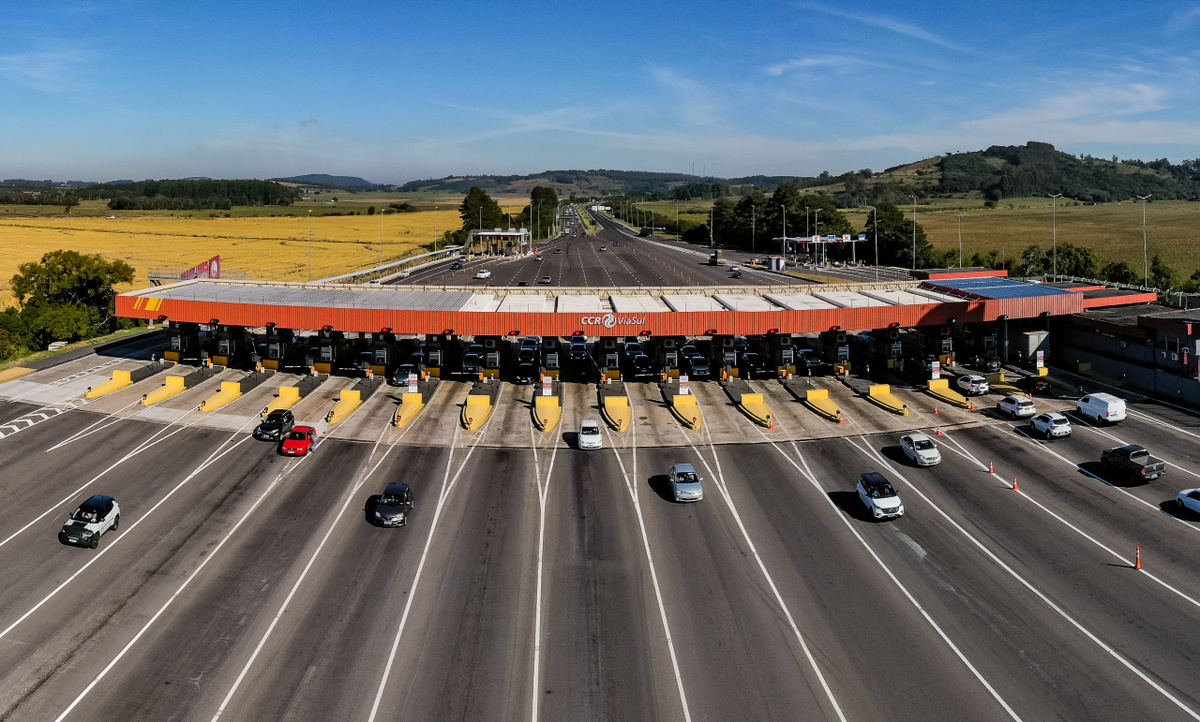
A historic change begins to transform BR-101 South, in Rio Grande do Sul. CCR ViaSul, the concessionaire responsible for managing the road, confirmed in September 2024 that cash payments will be completely eliminated by 2026. From that date, tolls will only accept contactless cards, Tags, mobile devices, and the electronic free flow system, which eliminates booths and barriers.
This decision is part of a national modernization plan for federal highways, coordinated by the National Land Transport Agency (ANTT). Since 2022, CCR has recorded a 156% increase in electronic transactions, reflecting drivers’ adherence to digital means and the modernization of the roadway system.
Technological Transformation on BR-101 South Drives Agility and Safety
Currently, only 13% of transactions at CCR’s tolls are still made with cash, according to company data. For this reason, all toll plazas on BR-101 South/RS will eliminate the use of cash by 2026, replacing traditional booths with automatic systems and ATMs.
-
Latin America’s Largest Port Invests $400 Million in Rail System with Trains Up to 2.4 Kilometers Long
-
New Smart Radar Begins Issuing Fines to Solo Drivers in Carpool Lanes, Uses Cameras to Count Occupants, Changing Traffic Enforcement Rules on Busy European Roads

-
Why can the crane operator only obey the correct signalman on the construction site: among dozens of workers, a hand raised by the wrong person can confuse the maneuver and turn a load of tons into an immediate risk.
-
What changes with the new public transportation rules that can reduce pressure on fares and pave the way for zero fare in Brazil?

CCR already has 61 automatic booths in operation on its federal highways. Of this total, 24 are in Rio Grande do Sul, 16 in Santa Catarina, 17 in São Paulo and Rio de Janeiro, and 4 on ViaLagos (RJ). The latter was the first to adopt the fully electronic model, in 2021, starting the digital revolution on Brazilian roads.
In addition to providing more speed, digitalization reduces operational costs and increases driver safety, avoiding cash handling and reducing queues at toll plazas.
Free Flow System Advances and Redefines Road Mobility
As BR-101 South progresses, other highways in the country are already operating with 100% electronic technology, consolidating the national trend. In São Paulo, since 2024, several toll plazas of CCR only accept contactless payments, such as cards, cell phones, and smartwatches.
The free flow system, implemented on a large scale in Brazil in 2022, already represents 85% of the electronic transactions of the CCR group, according to data from September 2024. This model eliminates the need to stop the vehicle for payment and ensures traffic fluidity.
Nevertheless, some drivers still question the lack of options for those who do not use digital means. The ANTT is studying technological and tariff inclusion policies to broaden access and allow all users to travel safely.
Espírito Santo Follows Modernization with Exemptions and Dynamic Tariffs
While the South speeds up the digitalization process, the segment of BR-101 in Espírito Santo, managed by Ecovias Capixabas, underwent changes in August 2025. The new contract signed with the ANTT established benefits and progressive tariffs that encourage the use of technology.
Among the measures are:
- Total exemption for motorcyclists, with exclusive lanes marked in blue;
- 5% discount for drivers using electronic Tags, which encourages the use of automatic payment;
- Reduced tariffs for frequent users, who receive additional discounts for continuous usage.
The plan foresees investments of R$ 10.3 billion over 24 years, with R$ 3.3 billion allocated to operation, maintenance, and driver assistance. The measure was confirmed in a joint statement from Ecovias Capixabas and the ANTT, which monitors the execution schedule.
Modernization Challenges Inclusion and Digital Accessibility
Although technological advancement is evident, experts warn about the importance of digital inclusion on highways. In areas with lower connectivity, drivers still face difficulties in adopting electronic payment methods, which requires tailored solutions.
The ANTT emphasizes that concessionaires must provide alternative service channels, as per Law No. 14,157/2021, which regulates electronic toll collection on federal highways. Thus, drivers will have time and structure to adapt to the new reality.
According to engineers from the Federal University of Rio Grande do Sul (UFRGS), the digital transition is a milestone for road transport. However, careful planning is necessary to ensure that innovation goes hand in hand with accessibility and operational safety.
What Changes for Brazilian Drivers by 2026?
With BR-101 South fully digitized by 2026, CCR ViaSul aims to make the experience on the roads more fluid, safe, and modern. The elimination of physical booths and queues represents a revolution in the way to drive and pay tolls.
This change follows a global trend of road automation, already adopted in countries such as France, Spain, and the United States. Additionally, it marks the end of cash on Brazilian roads and inaugurates a new era for road transport.
And in light of this technological shift, the inevitable question is: are you prepared to drive in a Brazil without tolls that accept cash?