






 Portuguese
  Spanish


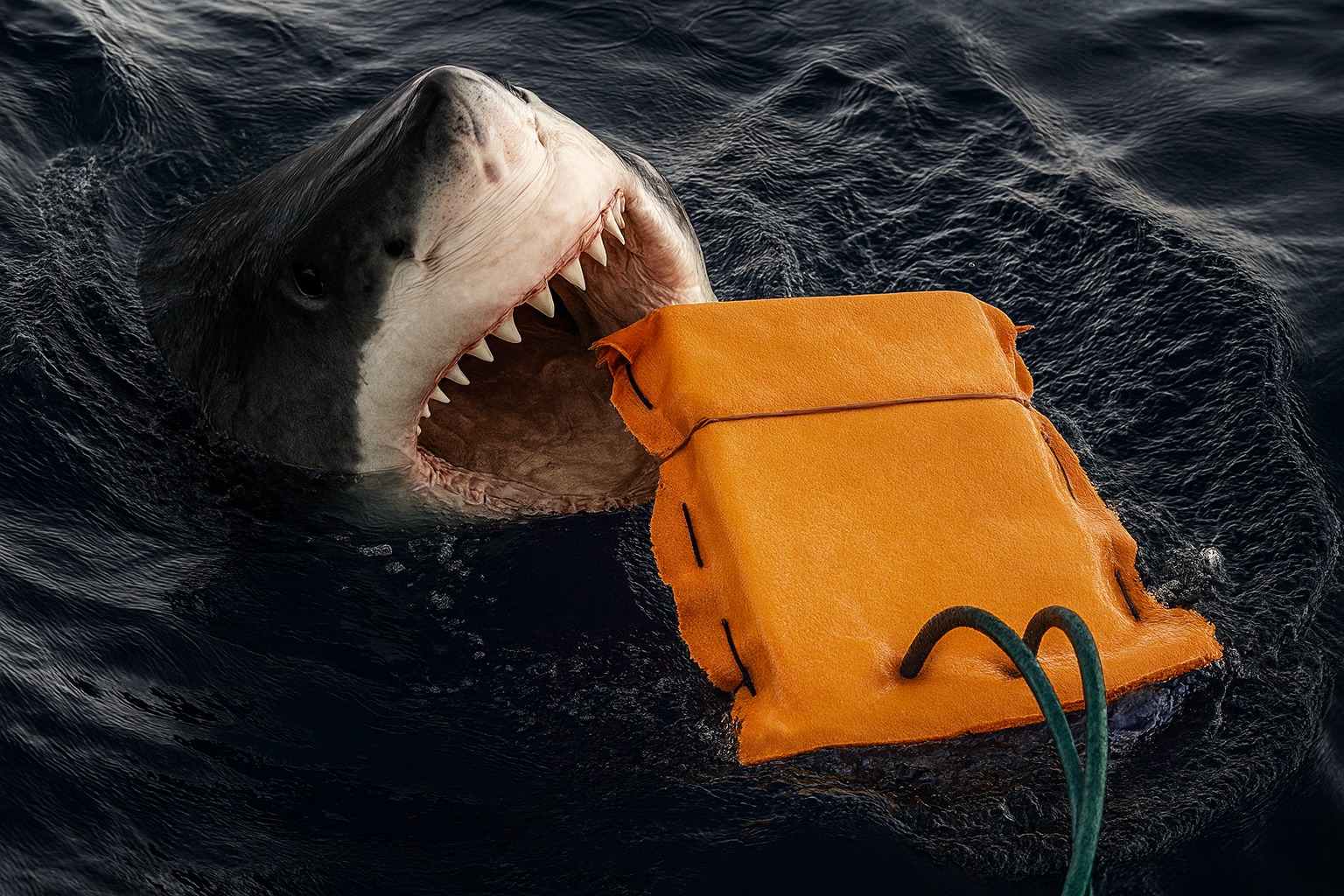
Australian Researchers Tested Four Diving Suit Materials And Found That All Significantly Reduced The Damage From White And Tiger Shark Bites, Offering Unprecedented Protection For Surfers And Divers.
An Australian study provided new evidence regarding the effectiveness of diving suit materials capable of reducing the severity of injuries caused by shark bites.
The research, conducted by Flinders University, tested four types of fabrics developed to offer protection against attacks from species such as the white shark and the tiger shark, responsible for some of the fatal incidents recorded in coastal waters.
The Growing Threat Of Sharks
The growth of human populations near the coast and the rise of marine recreational activities have increased the frequency of encounters between people and sharks. Although incidents remain rare, they have a significant impact on local communities, especially when involving surfers and divers.
-
In the World’s Most Densely Populated Desert, Families Dig Funnel-Shaped Underground Cisterns to Capture Rare Rainfall and Store Drinking Water for Up to Eight Months

-
Smart Glass Revolutionizes Privacy: Touch-Activated Opacity Transforms Windows into Connected Home Features with App and Voice Control

-
Young Innovators from Brazil Turn Discarded Plastic into Eco-Friendly Bricks Using Coconut Fiber, Offering a Sustainable Alternative for Construction
-
Brazilian Scientists Among Team Proposing to Turn Ocean Depths into Giant Gravity Battery Using Cargo Ships and Subsea Cranes





According to the Australian Shark Incident Database, the country records an average of 20 injuries and almost three deaths per year. The recent death of surfer Mercury Psillakis, attacked near Dee Why beach in Sydney, highlights the ongoing risk.
The serrated and sharp teeth of sharks are designed to quickly tear through flesh and bone. This explains why, in humans, attacks often result in severe bleeding, tissue loss, or even amputations.
Until now, the most well-known form of protection was chainmail suits, but their weight and rigidity limited participation in water sports such as surfing.
Testing New Generation Materials
To change this scenario, researchers analyzed four materials: Aqua Armour, Shark Stop, ActionTX-S, and Brewster fabric. All were made from ultra-high molecular weight polyethylene, an extremely strong yet lightweight fiber — already used in sail cords.
According to Dr. Tom Clarke from the School of Science and Engineering at Flinders University, all the tested materials showed significant reduction in damage that would typically be associated with limb loss or fatal bleeding.
The specialist highlighted that, while there were small variations in results, the performance was positive in all cases.
The tests occurred under real conditions, using white sharks in Spencer Gulf in southern Australia and tiger sharks on Norfolk Island in Queensland. To simulate human flesh, scientists created a “bite package” with coated foam. In total, 84 bites from white sharks and 68 from tiger sharks were analyzed.
Encouraging Results, But With Reservations
The damage was classified into four levels: superficial, mild, substantial, and critical. The durable materials significantly reduced tooth penetration compared to standard neoprene suits.
“Our study showed that suits made with bite-resistant materials can lessen injuries even in attacks by large sharks over three meters long,” said Clarke.
Professor Charlie Huveneers, also from Flinders University, noted, however, that the suits do not eliminate all risks. Internal injuries can still occur. The significant difference lies in the potential to avoid critical blood loss, thereby increasing survival chances in emergency situations.
Innovations For Surfer Safety
This is not the only advancement in the field. In 2024, Macquarie University introduced LED-based technology to deter sharks, exploring how these animals visually perceive their prey. The innovation represents another tool in the global effort to reduce attacks without compromising ecological balance.
With the findings published in the journal Wildlife Research, researchers believe that integrating these diving suits with new technologies could transform the relationship between humans and sharks in the coming decades.
Surfing, diving, and other water sports will continue to expose practitioners to risks. However, with the arrival of flexible, lightweight, and reinforced suits, the expectation is that many lives can be saved, reducing the trauma that still marks such incidents today.


Be the first to react!