Portuguese
  Spanish


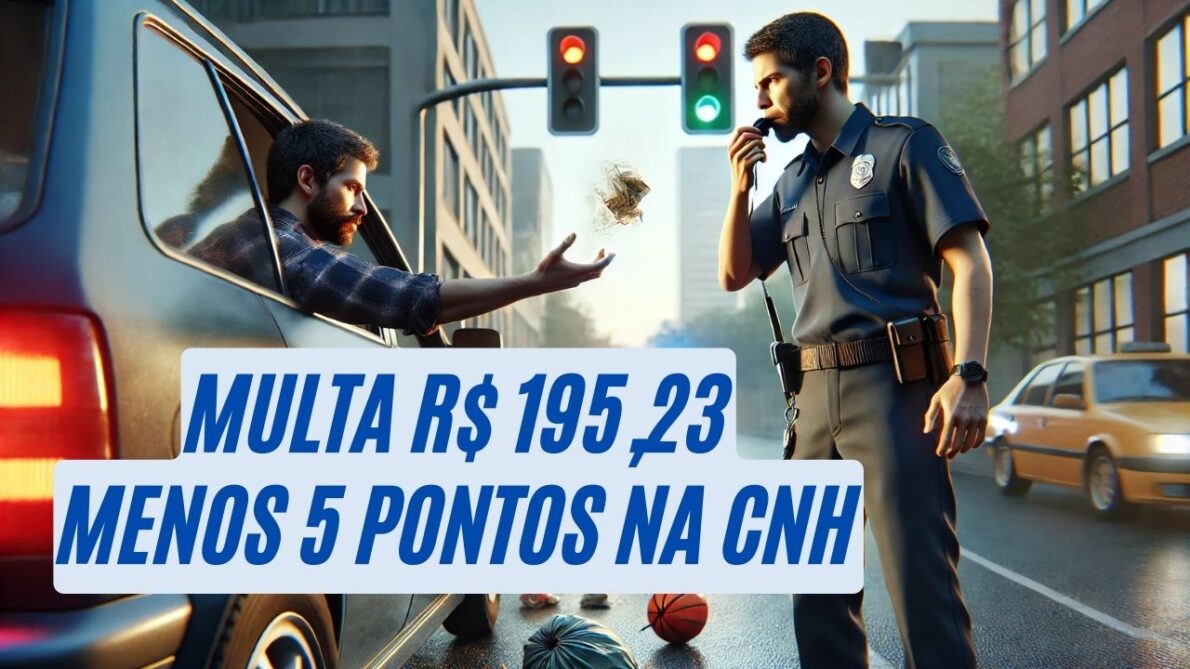

Imagine: a little orange rolling out of the car window or that little snack pack flying in the wrong direction. It may seem harmless, but throwing trash out of the car window can become a serious offense in Brazil, and it won’t be taken lightly! A new bill in progress aims to turn this slip into a headache for drivers, with higher fines and even more points on their driver’s license. If approved, the measure will be a significant step toward raising awareness and penalizing those who still insist on treating public roads as trash cans.
The Chamber of Deputies is reviewing Bill 1644/19, which proposes to increase the penalty for drivers who throw trash out of their car windows, changing the classification of the offense from medium to serious. Currently, those who commit this offense are fined R$ 130.16 and lose 4 points on their driver’s license. However, if the bill is approved, the fine will increase to R$ 195.23, with a loss of 5 points on the driver’s license, increasing the burden on offenders.
The rapporteur of the proposal, Deputy Hugo Leal (PSD-RJ), defended the change, highlighting that the habit of littering is harmful not only to the environment, but also to public safety. “This practice may seem harmless, but it can have serious consequences, including accidents,” Leal stated. He added that the increase in punishment reinforces the need for a more responsible attitude on the road.
New Law Affects Driver’s License
The proposal originated from Senator Veneziano Vital do Rêgo (MDB-PB), who emphasizes the importance of promoting behavioral change among Brazilian drivers. According to the senator, the practice not only harms the aesthetics and cleanliness of cities but also shows disrespect for public spaces and the community. Moreover, the project aims to raise greater awareness about the environmental impact and safety risks caused by the irresponsible disposal of trash on public roads.
-
Family Quietly Transforms Old Sawmill into $700 Million Business, Opens 25 Stores in Two Years Across 22 Brazilian States

-
Couple Sold Their Home to Save Business, Now Run Platform Handling $180 Million Monthly and Managing Over 51 Million Listings
-
Brazil’s 2026 Tax Refund: Record 9.58 Million Filers in Largest Payout Ever, But a Key Detail on Priority Recipients Draws Nationwide Attention

-
Itaú Alters Hybrid Work Model, Increasing Office Days from 2028, Prompting Employees to Adjust to New Routine



Objective to Combat Pollution and Accidents
The Bill also aims to combat pollution on public roads and contribute to the reduction of accumulated trash on the streets, a growing problem in Brazil’s major cities. Currently, the act of throwing or abandoning objects on the roads is penalized by Article 172 of the Brazilian Traffic Code, classified as a medium offense on the driver’s license. Changing it to a serious offense in Brazil emphasizes the urgency of curbing this type of behavior and protecting both the urban and natural environment.
The change is seen as positive for environmental awareness and encouraging more sustainable practices on the road. The expectation is that a more severe punishment will directly influence drivers’ behavior, reducing instances of improper disposal and promoting safer traffic for everyone.
Progress and Next Steps
The project is in the final phase of deliberation in the Chamber of Deputies. This means that if approved without changes by the Committee on Constitution and Justice and Citizenship (CCJC), it can go directly to presidential sanction without needing to go through the plenary. The measure, if sanctioned, could come into effect shortly, bringing immediate impacts for drivers.
For specialists and advocates of the proposal, the increase in penalties is a necessary initiative to achieve a more conscientious attitude from drivers. The project aligns Brazil with practices in other countries that have sought stricter legislation to protect the environment and ensure safety on the roads.
The expectation is that the new classification as a serious offense in Brazil will make drivers think twice before throwing any object out the window. Besides the loss to their driver’s license and pocket, drivers would be contributing to safer traffic and a cleaner environment. Let’s wait for the next steps in the progress of this project, which promises to bring significant changes both to traffic and to environmental awareness in Brazil.