






 Portuguese
  Spanish


CONAB Survey Shows Increase in Cultivated Area and Record Productivity, Highlighting Corn, Soybeans, Rice, and Cotton.
Brazilian grain production in the 2024/25 crop year is expected to reach 345.2 million tons, marking a new record in the historical series of the National Supply Company (CONAB).
The volume exceeds the 2022/23 harvest, which recorded 320.91 million tons. The increase of 47.7 million tons compared to the previous cycle reflects a favorable scenario for several crops.
The 11th Grain Crop Survey, released this Thursday (14/8), indicates that the increase is due to both the larger cultivated area, estimated at 81.9 million hectares, and the recovery of productivity.
-
With Nearly 60% Desert, Israel Desalinates Seawater and Recycles 90% of Wastewater to Build a Billion-Dollar Agricultural Powerhouse in Dates and Cotton

-
74-Hour Barbecue in Brazil Sets World Record: 3.4 Tons of Meat, 10,500 Meals Served

-
Man Takes on Swarms in Singapore, Saves 6 Million Bees and Encourages Locals to Choose Conservation Over Pesticides
-
In Brazil’s Arid Northeast, Vineyards Now Produce Wine Grapes Year-Round, Accounting for 98% of the Country’s Grape Exports
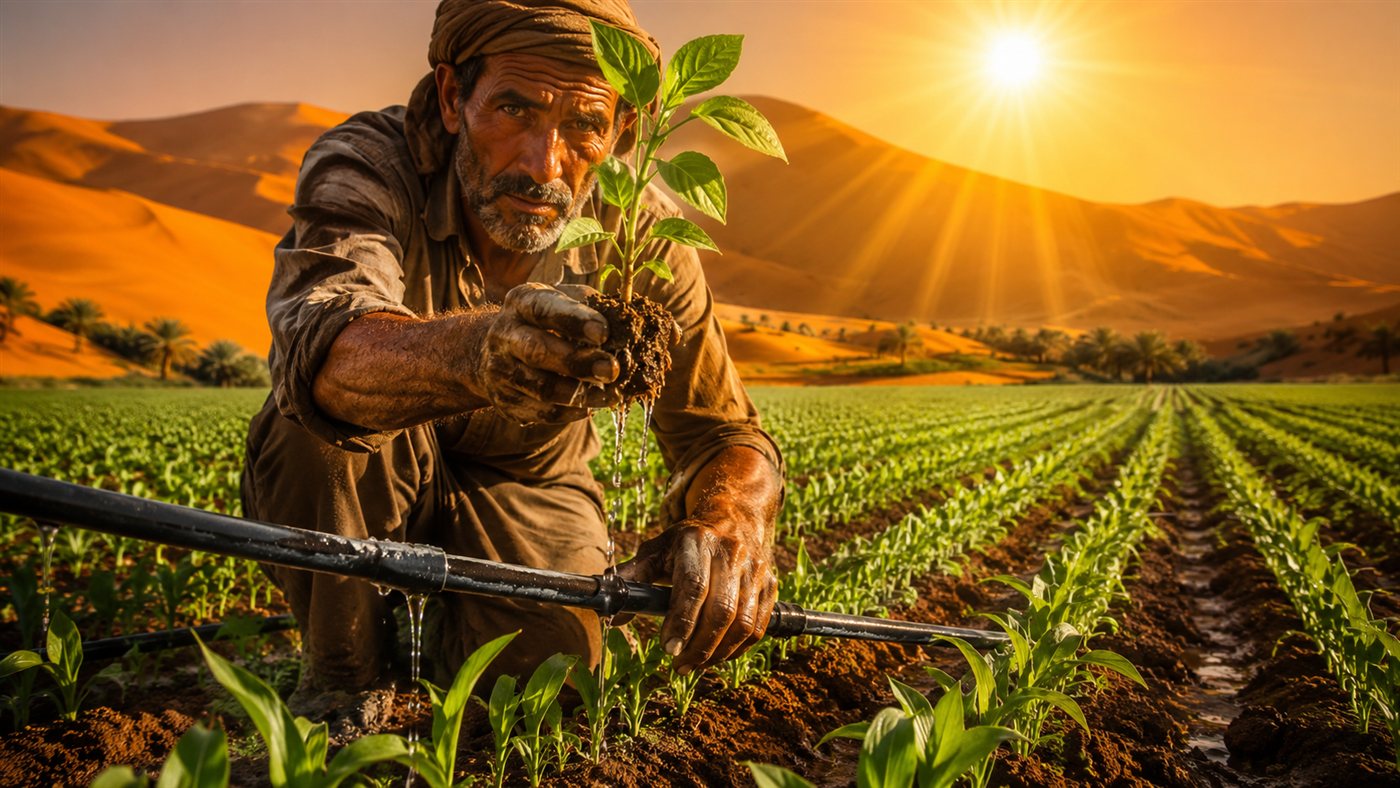


The national average rose from 3,722 kilograms per hectare in 2023/24 to 4,214 kilograms per hectare this season.
Corn and Soybeans Drive Results
Corn and soybeans, together, are expected to account for 43.4 million tons of total growth. Corn is projected to increase by about 21.5 million tons, while soybeans are expected to rise by 21.9 million tons.
For corn, the expectation is for a total harvest of 137 million tons, the highest figure ever recorded by CONAB. The second crop of the cereal is expected to reach 109.6 million tons.
So far, 83.7% of the cultivated area has already been harvested, close to the historical average of 84.3%.
In Mato Grosso, the main producing state, harvesting is nearing completion, with an estimated production of 53.55 million tons. This represents 49% of the total second crop production in the country.
Soybeans, in turn, have an estimated production of 169.7 million tons, a 14.8% increase compared to the previous crop. Investments facilitated by the Safra Plan and good climate conditions in most producing regions contributed to this record result.
Rice Records Increase
Rice production is expected to reach 12.3 million tons, an increase of 1.7 million tons compared to the last crop. The 8.8% expansion in the planted area and favorable weather, especially in Rio Grande do Sul, support this growth.
Cotton Reaches New Level
Cotton, another second-crop culture, is also expected to set a record, with 3.9 million tons of lint. The planted area grew by 7.3%, and the elevated average productivity resulted in a 6.3% increase in production.
However, harvesting is slower than the average of the last five years, with 39% of the area harvested. Rains and unseasonably cold weather in June and July delayed plant maturation. The expectation is for a recovery in pace in August, aligning with historical figures in September.
Beans Decrease
Beans are expected to total 3.1 million tons across the three harvests, a 3.5% decrease compared to the previous cycle. In the second cycle, Paraná, one of the main producers, experienced unfavorable weather, which reduced quality and grain yield. The third crop is also expected to show a decline.
Wheat Near Stability
Among the winter crops, wheat stands out. Despite a 16.7% decrease in the planted area, estimated at 2.55 million hectares, production is expected to remain stable at 7.81 million tons. Better climatic conditions than those of the previous harvest justify the result.
Outlook for the Corn Market
The survey updated the corn supply outlook for 2024/25. With greater availability in the second crop and the potential for an increase in external demand, influenced by tariff disputes between the USA and major importers, Brazilian exports are expected to grow.
The forecast is for shipments of 40 million tons, up from the 38.5 million exported in 2023/24. Domestic consumption is also expected to rise, surpassing 90 million tons. Still, the record production will allow for stock replenishment, estimated at 10.3 million tons.
The scenario presented by CONAB confirms that the 2024/25 crop year is expected to solidify Brazil as a power in grain production.
The combination of larger planted area, higher productivity, and favorable climatic conditions supports this historic performance.
Complete information on each crop and the market can be consulted in the 11th Grain Crop Survey 2024/25, available on the CONAB website.


