Portuguese
  Spanish


After Leaving Vaca Muerta, ExxonMobil Secures 10 Blocks in Brazil with Petrobras — Potential of Up to 1.1 Million Barrels per Day in the Equatorial Margin
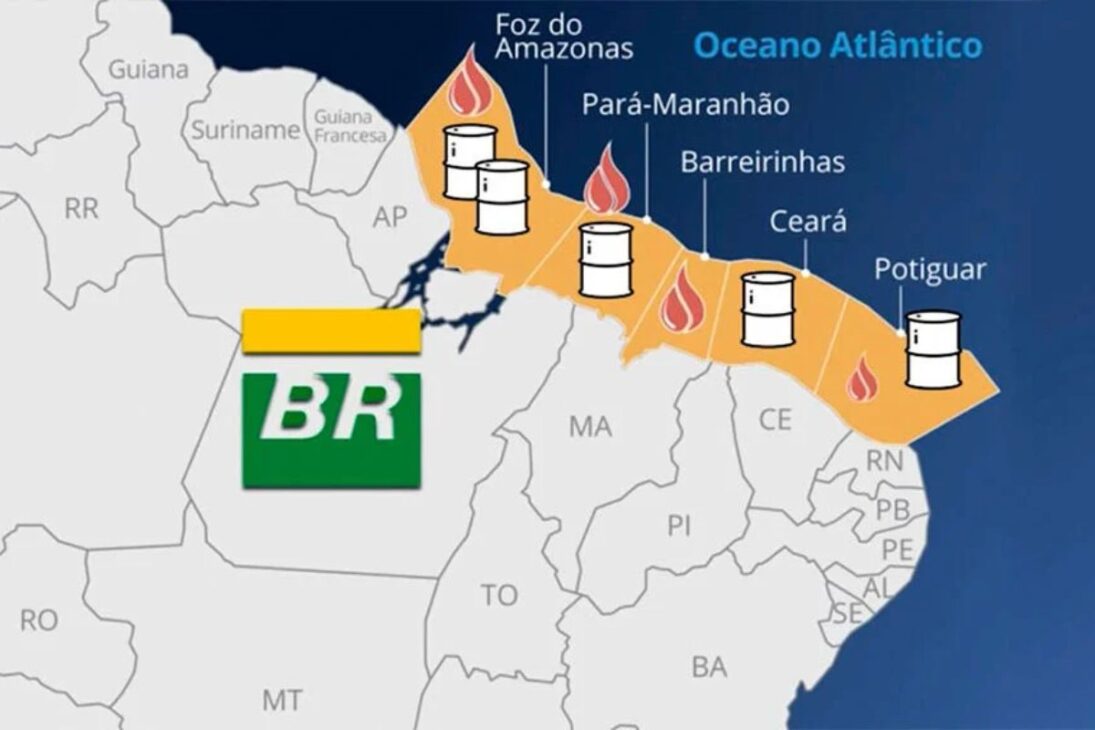
After offloading its assets in Vaca Muerta for US$ 1.7 billion, ExxonMobil has decided to focus on Brazil. Together with Petrobras, the American oil company secured ten of the 19 exploration blocks auctioned in the strategic Foz do Amazonas Basin, an area that the federal government aims to turn into the country’s new oil export frontier. The region is part of the so-called Equatorial Margin, a maritime strip with enormous energy potential and contested by major companies in the sector.
ANP Auction Attracts International Giants
The consortium between ExxonMobil and Petrobras emerged as the biggest winner of the last auction by the National Petroleum Agency (ANP), taking home the majority of the blocks offered in the Foz do Amazonas. Chevron, in partnership with the Chinese state-owned CNPC, secured the other nine blocks after fierce bidding competition. In the case of the winning consortium, half of the blocks will be operated by Petrobras and the others by ExxonMobil, sharing risks and strategies in conducting the drilling.
In total, 34 exploratory blocks were awarded in the Parecis, Santos, Pelotas, and Foz do Amazonas basins. Only in the latter, considered the most promising of the auction, concentrated international interest, especially due to geological similarities with areas in Guyana, where reserves have been discovered that transformed the neighboring country into one of the world’s leading emerging producers.
-
Northern Brazilian ports surpass the South as the country’s largest grain corridor amid record harvest

-
Amazon launches its own brand in Brazil a week before Prime Day, following a $3.7 billion investment and the establishment of over 300 distribution centers nationwide by 2025.

-
Trump’s 50% Tariff on Brazilian Goods Cuts U.S. Exports by 30%, Brazil Sets Records in 42 Countries and Germany Becomes Top Coffee Buyer
-
Brazil Harvests Record 358 Million Tons of Grain but Lacks Storage for 134 Million Tons


Equatorial Margin: Technical Potential and Old Challenges
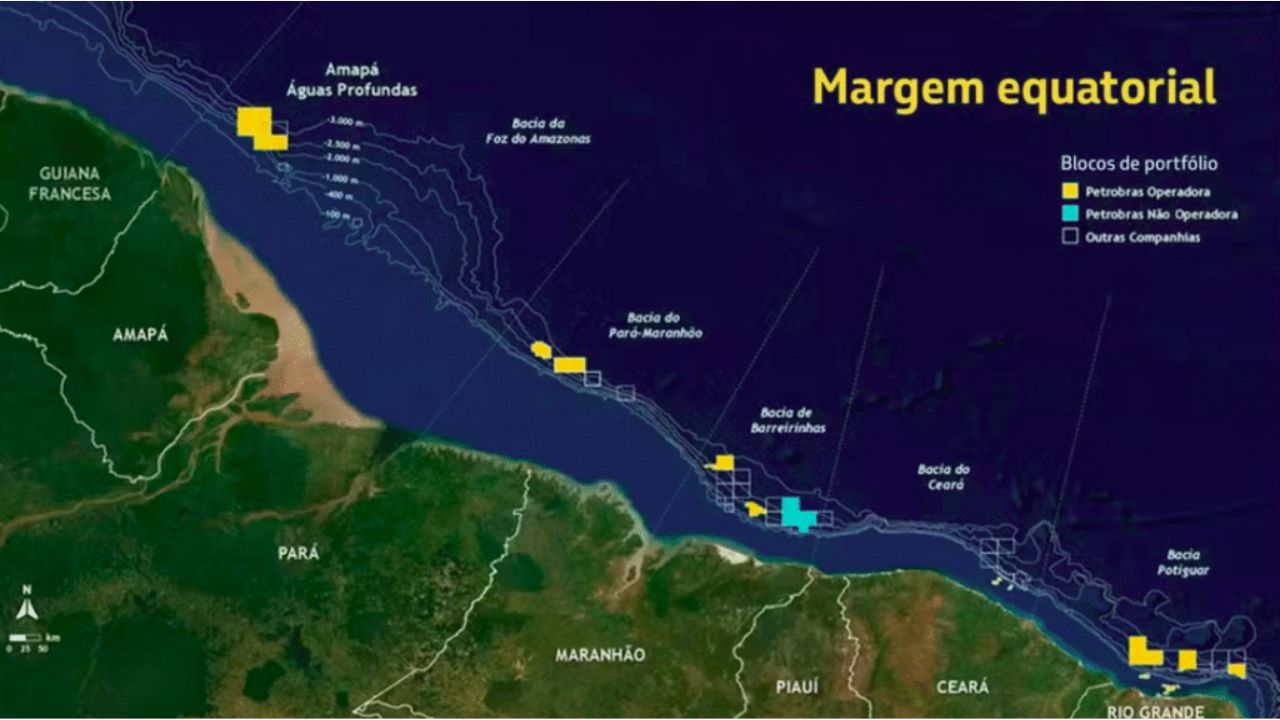
According to estimates by the ANP itself, the volume of oil and natural gas in the Equatorial Margin could reach 30 billion barrels of oil equivalent. These reserves, according to the government and oil companies, could ensure the continuity of national production and sustain the volume of exports in the face of a future decline in pre-salt exploration.
Despite the enthusiasm, the region’s history demands caution. The first drilling attempts in the Foz do Amazonas occurred in the 1970s but were not enough to prove the commercial viability of the fields. Until now, most of the surveys have been conducted in shallow waters, which limits the knowledge about the true potential of deeper reserves.
Nonetheless, Petrobras has already defined its strategy. In the Strategic Plan 2050 and the Business Plan 2025-2029, the state-owned company has set aside US$ 3 billion to invest in the Equatorial Margin over the next five years. The intention is to drill eight exploratory wells, starting with block FZA-M-59, located about 2,500 meters deep below sea level.
Environmental Pressure and Tensions in Government
The company’s president, Magda Chambriard, highlighted that “with this result and the continuity of our exploratory activities, we remain optimistic about our possibilities of replenishing oil reserves and ensuring Brazil’s energy security.”
The international interest has also grown with advances in environmental licensing processes. Petrobras received approval from Ibama to start drilling in block FZA-M-59, which has generated friction within the federal government itself. The Ministry of the Environment and Climate Change, led by Marina Silva, resists allowing high-impact activities in the region, while the Ministry of Mines and Energy defends exploration as strategic for the country.
The Brazilian Institute of Environment and Renewable Natural Resources (Ibama) has authorized Petrobras’ fauna rescue plan but requires additional simulations before finalizing the licensing phase. The exploration area is close to sensitive reefs and coastal Indigenous communities, which increases the level of environmental requirements.
Climate Risks and Economic Projections
Studies by the Brazilian Institute of Petroleum (IBP) indicate that, if the estimates are confirmed, the Equatorial Margin could reach a production of up to 1.1 million barrels per day, equivalent to one-third of Brazil’s current production. This would keep the country as a relevant player in the global market until at least 2035. On the other hand, environmentalists warn that the activity could generate emissions of up to 4.7 million tons of CO2 equivalent solely in the Foz do Amazonas blocks.
ExxonMobil’s recent experience on the coast of Guyana, where it leads the exploration of billion-dollar fields, fuels its bet on Brazil. By sharing risks with Petrobras, the multinational aims to reduce regulatory pressure and strengthen its presence in South America. Meanwhile, Petrobras leverages the partnership to boost its technical capacity and expand its offshore production.
The first drilling is expected to occur between the third and fourth quarters of 2025. The exploratory phase is anticipated to last until 2029. If the results are positive, commercial production could begin in the following years, with a peak estimated for the mid-2030s.
In addition to the economic potential, the government seeks to attract investments that generate local jobs and increase tax revenue. However, civil society organizations are already coordinating legal actions to prevent the advancement of activities in areas deemed sensitive.
Brazil faces a crucial decision: to explore one of the biggest oil promises of the last decades or to prioritize the environmental preservation of a unique region in the world. The Equatorial Margin could become Brazil’s new pre-salt — or a watershed between energy ambition and climate responsibility.