






 Portuguese
  Spanish


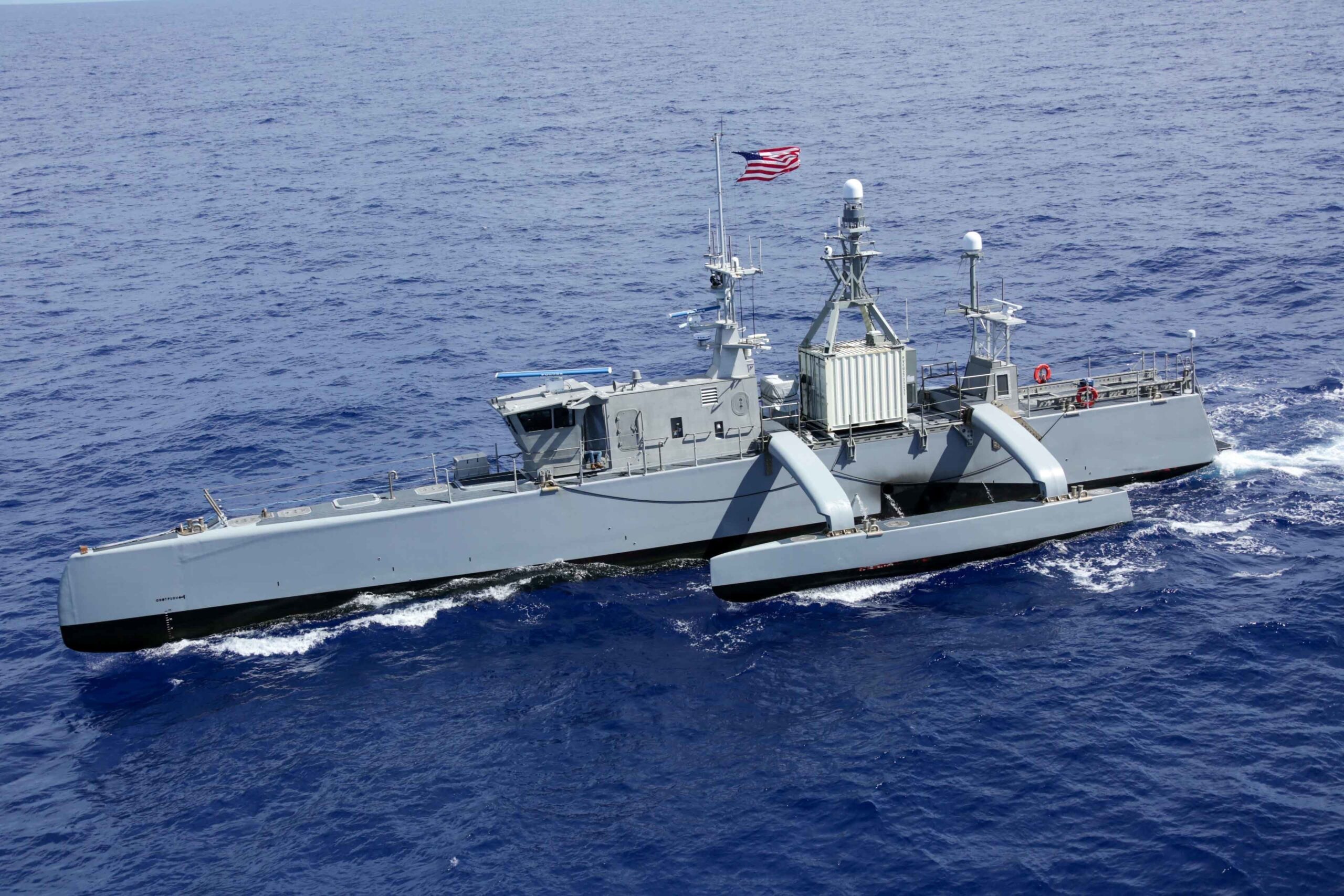
The United States Navy has introduced the Saildrone Spectre, a warship with no one on board: an unmanned vessel capable of patrolling the ocean for months hunting enemy submarines and, in some versions, carrying vertical missile launchers, highlighting the shift towards naval warfare increasingly conducted by autonomous machines.
After aerial drones and submarine drones, the trio was incomplete: surface robot ships. And they have arrived with force. The Saildrone Spectre is an unmanned surface vehicle, known as USV in English, designed to navigate alone over long distances, monitor vast areas of the sea, and execute military missions without putting a single sailor at risk.
The concept is not entirely new, but it has matured quickly. The American Navy has been testing several of these autonomous ships, and the Spectre represents a leap because it combines long-duration autonomy with the capability to hunt submarines and even fire weapons, functions previously reserved for manned ships that cost a fortune.
A crewless submarine hunter
The great specialty of the Spectre is anti-submarine warfare, one of the most difficult and time-consuming tasks of the Navy. Finding a hidden submarine in the depths requires patiently listening to the ocean for long periods, something that tires crews and consumes expensive ships. A robot that does this alone, for months on end, solves the problem of patience and cost at once.
-
Poland’s Massive Tank and Artillery Purchases Make It Europe’s Largest Land Army Overnight

-
Indonesia Recovers Underwater Spy Drone, Sparking Debate: Is It a Machine or a Warship?
-
UK, Italy, and Japan Collaborate to Build Stealth Fighter Jet Set to Dominate Skies by 2035
-
South Korea Surpasses Germany, Its Former Submarine Mentor, by Advancing to Nuclear Submarines


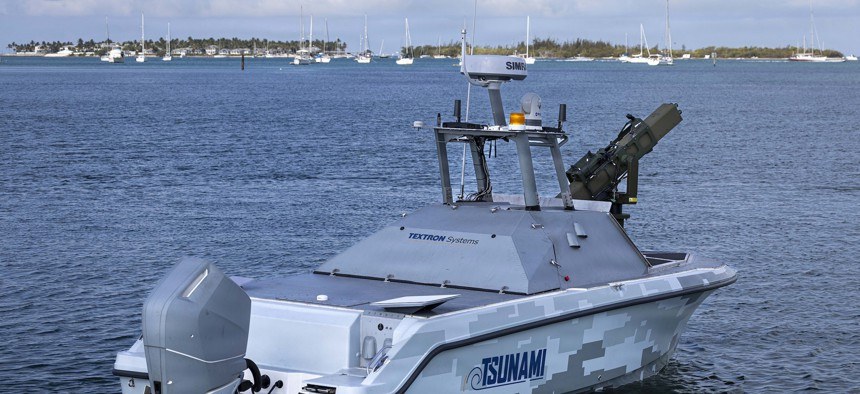
Some versions go beyond surveillance. Equipped with vertical missile launchers, they can attack targets, transforming the robot ship from a mere scout into an armed hunter. It’s the same logic as the aerial drone, which started by spying and ended up firing, now applied to the sea surface.
Part of these ships use clean energy, with rigid sails and solar panels, which greatly extends the time they can stay at sea without refueling. A ship that moves largely with wind and sun can patrol entire oceans spending almost nothing on fuel, a huge logistical advantage.
The economy that changes naval warfare
What makes robot ships so attractive is the mathematics. A manned warship costs billions, takes years to build, and requires a large, trained crew exposed to danger. A USV costs a fraction of that, can be mass-produced, and if lost in combat, there are no lives to mourn. To cover vast oceans, multiplying cheap machines makes more sense than betting everything on a few expensive ships.
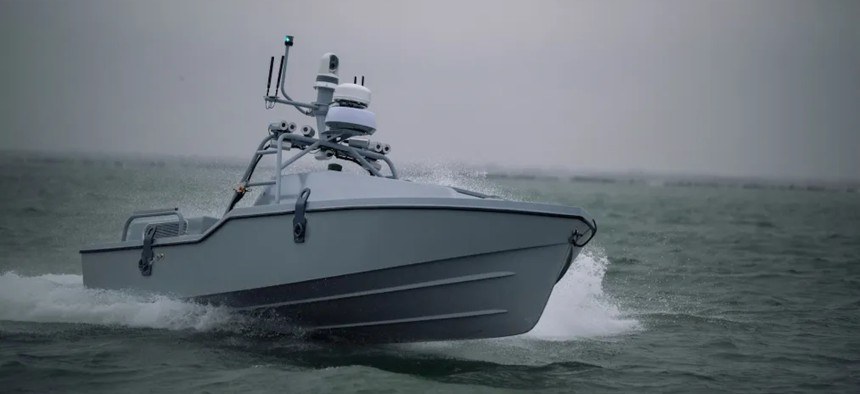
This logic is reorganizing modern navies. Instead of only large ships, the future points to mixed fleets, where a few powerful manned ships are accompanied by swarms of surface and submarine robots, which perform routine surveillance and take on riskier missions. Humans retreat to command and decision-making, and machines advance to the front line.
The urgency has an address. Tensions in the Indo-Pacific and China’s naval expansion have accelerated the United States’ interest in autonomous ships, seen as a quick and cheap way to increase military presence in vast oceans without needing to build dozens of manned ships, which would take decades to be ready.
Powered by wind and sun
A detail that draws attention to these ships is the propulsion. Several USVs, including models from the same manufacturer as the Spectre, use rigid sails and solar panels to move and power the sensors, giving them almost unbelievable autonomy: months at sea without refueling. It’s the oldest technology in navigation, the sail, united with the most modern, artificial intelligence.
This energy efficiency changes the scope of missions. A ship that depends little on fuel can cross entire oceans, remain on the lookout in a distant region for long periods, and return, all without the heavy logistical support that a conventional ship requires. To monitor remote areas of the ocean, where maintaining manned ships is extremely expensive, this characteristic is a game-changer.
The questions that remain
All this autonomy brings dilemmas. A ship that fires missiles alone raises the question of how much decision-making should be handed over to a machine, especially when lives are at stake. The armed forces assure that there will always be a human in control of lethal decisions, but technology advances faster than the rules that should govern it.
There is also the risk of a new naval arms race, with each power rushing to fill the oceans with war robots. The sea, already a stage for disputes over routes, resources, and power, gains another element of tension, and the balance between deterrence and escalation becomes more delicate when a large part of the combatants has no crew.
For Brazil, with its immense coast and the so-called Blue Amazon to monitor, the technology sparks obvious interest. Patrolling millions of square kilometers of sea, keeping an eye on the pre-salt and trade routes, is an expensive task, and robot ships could, in the future, help cover this vastness at a much lower cost than traditional fleets.
In one way or another, the direction is clear: the future of naval power is increasingly decided by autonomous machines, on the surface and in the depths. The Saildrone Spectre is another sign that war at sea is moving away from being solely about steel and crew to also being about software and silence.
Are we ready for an ocean patrolled by warships that decide and fire almost on their own?


