Portuguese
  Spanish


During an urban intervention in Cologne, explosive artifacts left from World War II were found beneath a busy area, leading German authorities to set up a large security operation that altered the routine of residents, tourists, patients, and workers.
The war returned from underground.
On a regular morning of construction, machines and probes found something that seemed to belong only in history books, but was still buried under one of Germany’s most well-known cities. Three American bombs from World War II appeared in a busy urban area and forced Cologne to evacuate part of the city.
The case mobilized about 20,500 people, closed bridges over the Rhine River, affected schools, hotels, museums, public transport, and led authorities to set up one of the largest evacuations in the city since the end of the conflict in 1945.
-
World’s Largest Ice Cave Extends 42 km Beneath Austrian Alps, Revealing a Vast Frozen Realm Preserved by Natural Air Currents

-
Volcanic Soils from Destructive Eruptions Turn into Million-Dollar Crops: Ashes Nourish Grapes in Lanzarote, Bananas in the Canary Islands, Blood Oranges on Mount Etna, and Cacti in Mexico, Showcasing How Lava-Formed Lands Sustain Rare Harvests in Seemingly Barren Regions

-
In the Caucasus Mountains, a Community Preserves a Language So Rare Few Outsiders Can Understand It

-
Slovakia’s Ice Cave Holds Over 110,000 m³ of Frozen Wonders, Boasts Walls Up to 27 Meters Thick, and Was Among the First Electrified Caves Globally


According to Reuters, the operation took place after the artifacts were located in a construction area in the Deutz region, on the banks of the Rhine, a strategic and busy area of the city.
Three buried bombs changed the routine of an entire city
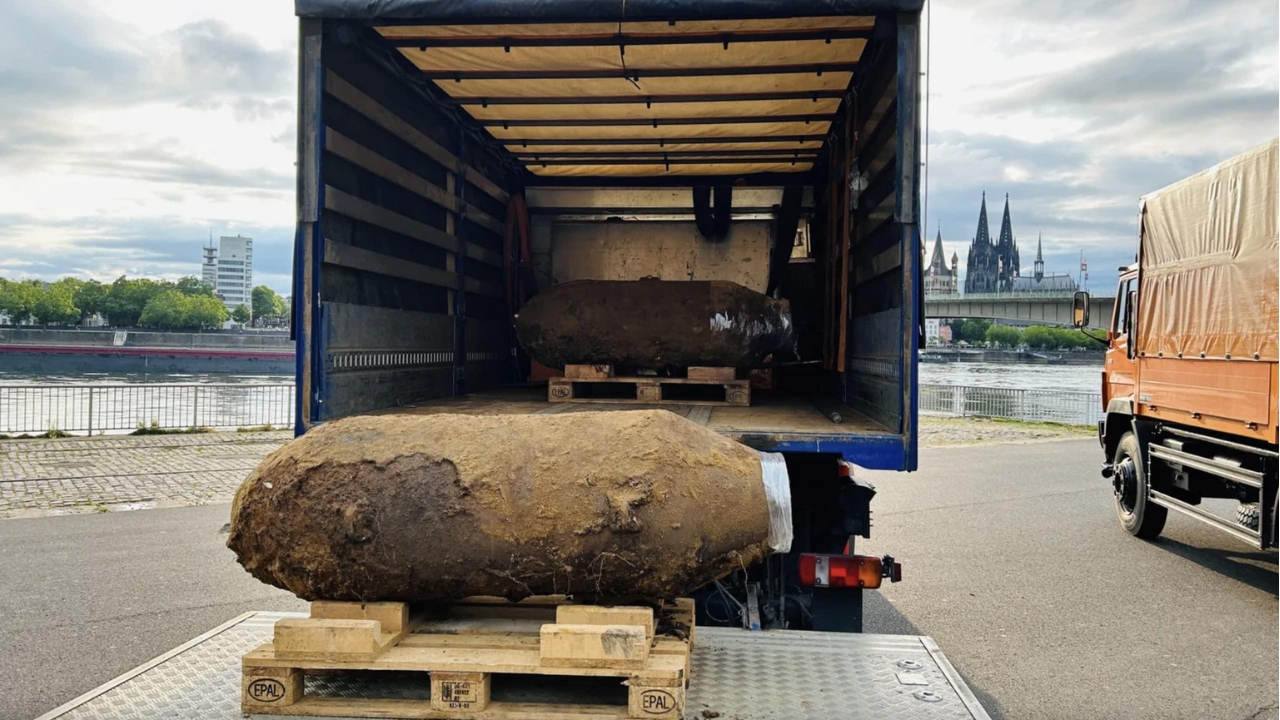
The bombs were found on June 2, 2025, during probing and preparation work at Deutzer Werft. Two days later, on June 4, the city had to stop so that specialists could safely deactivate the explosives.
According to Stadt Köln, the official city administration, there were three American bombs from World War II. Two were 20 Zentner and one was 10 Zentner, German measures that correspond approximately to two 1,000 kg bombs and one 500 kg bomb.
The most sensitive detail was in the fuses. All had impact fuses, which increased the risk and required a wide safety radius.
Therefore, the authorities ordered the evacuation of an area of 1,000 meters around the point where the artifacts were buried. In practice, this meant transforming streets, public buildings, hotels, and cultural areas into a temporarily empty zone.
Hospitals, schools, and hotels entered the risk zone
The operation did not only affect residents. Within the perimeter were a hospital, two nursing homes, nine schools, daycares, hotels, restaurants, churches, museums, and administrative buildings.
The Eduardus-Krankenhaus, elderly care institutions, school units, and cultural areas needed to be evacuated. Among the affected locations were also the Museum Ludwig, the Wallraf-Richartz-Museum, the Cologne Philharmonic, and the Musical Dome.
According to WDR, a German regional public broadcaster, 58 hotels and other types of accommodations were within the evacuated area. This increased the impact of the operation because the city also had to deal with tourists, guests, workers, and passersby.
The scene was unusual. While technicians prepared to handle war explosives, agents knocked on doors, streets were blocked, and the city reduced movement in one of the most sensitive areas of the urban center.
Closed bridges and interrupted transport showed the scale of the operation
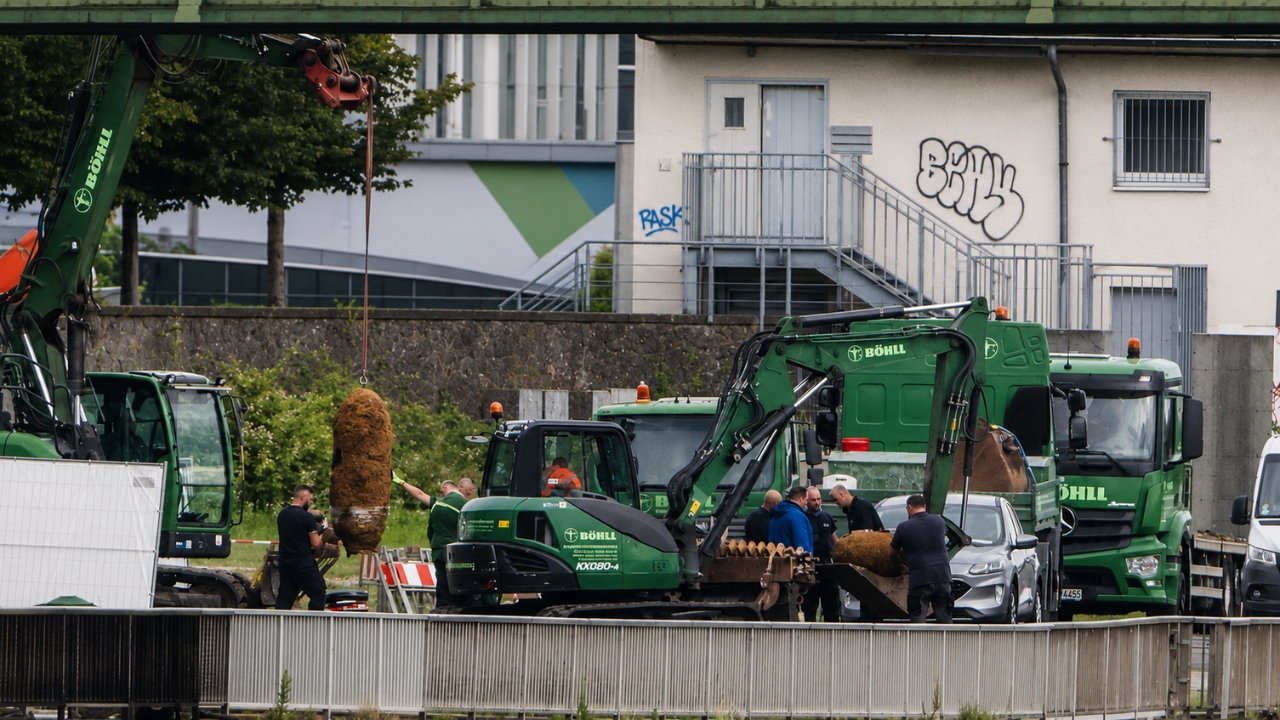
The impact reached transportation. Three bridges over the Rhine were closed: Hohenzollernbrücke, Deutzer Brücke, and Severinsbrücke. Trains, buses, and trams also faced interruptions, mainly around the Köln Messe/Deutz station.
Part of the rail traffic was diverted or canceled. A section of the Rhine River was also blocked before deactivation, an important point because the river is one of the main European routes for cargo.
The evacuation also had effects beyond the streets. RTL, a private broadcaster with teams in the affected area, even interrupted its morning programming because employees had to leave the building. Cultural events were also canceled or rescheduled.
Deactivation ended without injuries but exposed an 80-year legacy
The evacuation of people began in the morning, and the start of technical work was delayed because one person initially resisted leaving their residence in the historic center, as reported by international agencies.
After the area was deemed clear, specialists began deactivation. The three bombs were neutralized on the same day. There were no reports of injuries.
The episode, however, did not end just as a successful emergency operation. It showed how World War II still appears in German daily life, often under construction sites, streets, buildings, and transportation areas.
Even eight decades later, unexploded bombs continue to be found in cities that suffered intense air raids. In Cologne, a construction site revealed that the past was still buried in the heart of the city.