Portuguese
  Spanish


The WHO wants to curb the medicalization of normal childbirth and says that many healthy women continue to receive unnecessary interventions, in a scenario that affects birth and the care of mothers and babies worldwide.
The World Health Organization has reignited the debate on the medicalization of childbirth by stating that, in many countries, healthy women and babies continue to be exposed to unnecessary interventions during birth. The entity says this is happening even when the progression of labor is normal and there is no sign of complication.
The warning comes amid a change affecting millions of families every year: the WHO estimates that about 140 million births occur worldwide annually. In the agency’s view, a good portion of these births could happen with less interference, provided there was adequate care, clear communication, and respect for the woman’s decisions.
According to the WHO, the problem is not with the use of medical resources when they are necessary, but with the tendency to accelerate labor or intervene routinely, even without indication. Examples cited include the infusion of oxytocin to speed up contractions and cesarean sections, procedures that have gained ground in recent decades.
-
World War II American Bombs Discovered in German City Prompt Evacuation of 20,500 Residents

-
World’s Largest Ice Cave Extends 42 km Beneath Austrian Alps, Revealing a Vast Frozen Realm Preserved by Natural Air Currents

-
Volcanic Soils from Destructive Eruptions Turn into Million-Dollar Crops: Ashes Nourish Grapes in Lanzarote, Bananas in the Canary Islands, Blood Oranges on Mount Etna, and Cacti in Mexico, Showcasing How Lava-Formed Lands Sustain Rare Harvests in Seemingly Barren Regions
-
In the Caucasus Mountains, a Community Preserves a Language So Rare Few Outsiders Can Understand It




WHO says normal childbirth doesn’t need to become a procedure
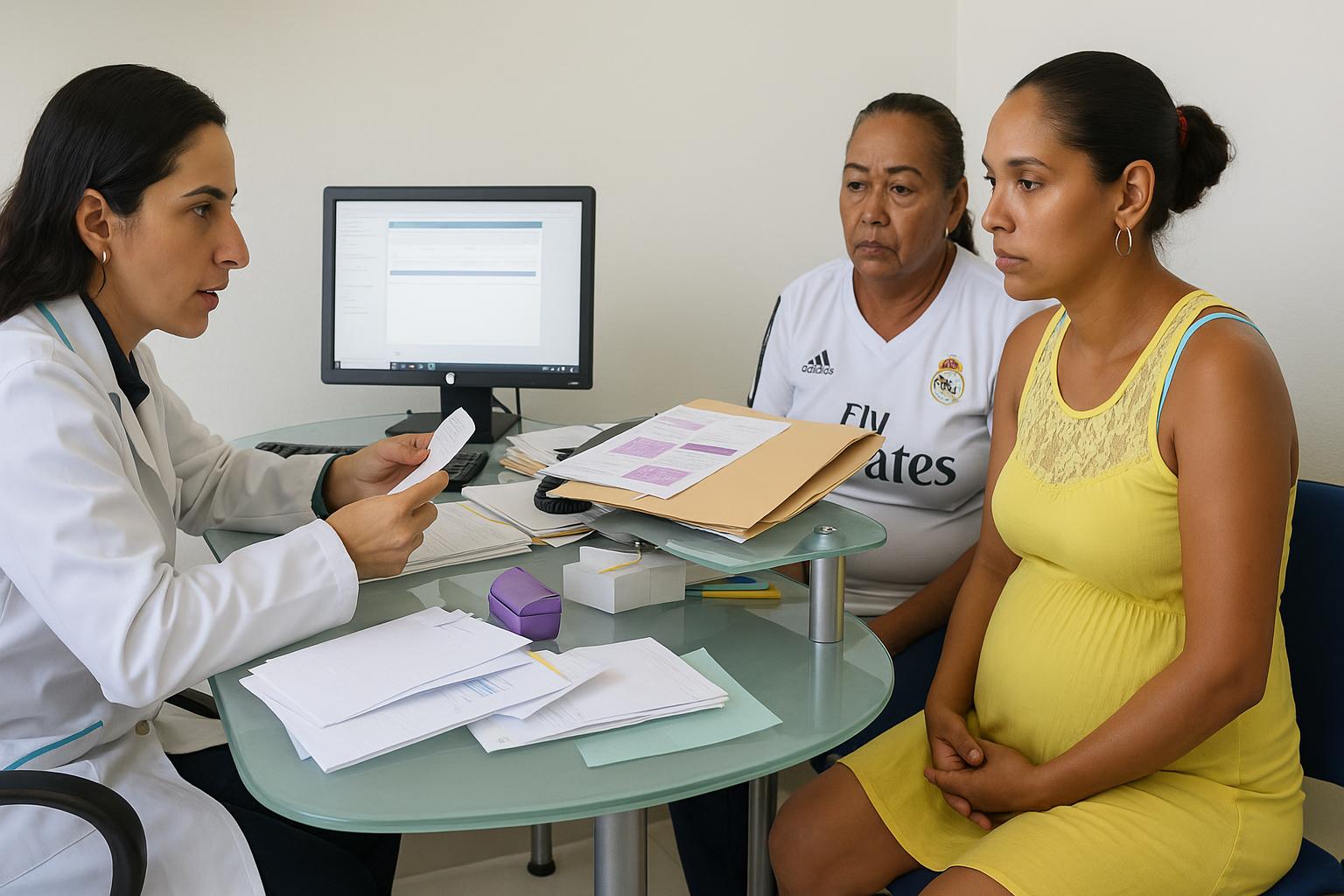
The main message from the WHO is straightforward: if labor is progressing normally and mother and baby are well, there is no reason to hasten the birth with extra interventions. The entity states that childbirth is a physiological process and that most women can go through it without complications.
In the statement, the agency also highlights a less visible but important effect: the medicalization of childbirth can weaken the woman’s sense of autonomy and worsen the birth experience. For the WHO, care needs to protect health without turning a natural event into a sequence of automatic procedures.
56 recommendations to change the birth experience
The new WHO guideline provides 56 evidence-based recommendations to guide care during labor and immediately after birth. The package includes measures that value the presence of a companion chosen by the pregnant woman, privacy, confidentiality, and respectful communication between professionals and patients.
The organization also advocates for the woman to participate in decisions about pain relief, birthing position, and the timing of pushing. The logic is simple: even when there is medical intervention, the patient should not be treated as a spectator of her own birth.
Haste to open dilation also under scrutiny
One of the most important points of the recommendation is the revision of the old reference of 1 centimeter per hour as a standard for cervical dilation in the active phase of labor. According to the WHO, this parameter may be unrealistic for some women and is not reliable for identifying the risk of poor outcomes.
The entity also states that slower dilation, by itself, should not be an automatic reason to accelerate labor or anticipate birth. In other words, each labor has its own rhythm, and haste cannot replace clinical evaluation.
The WHO notes that the active phase usually lasts up to 12 hours in the first birth and up to 10 hours in subsequent ones, although this time varies from woman to woman. The agency’s message is that the difference in rhythm is part of the process and should not be treated as a failure.
Humanized births gain strength amid risks and inequalities
The debate about the medicalization of childbirth also exposes a larger issue: the quality of care provided to women. The WHO states that unnecessary interventions are common in low, middle, and high-income countries, consuming resources and widening existing inequalities.
The agency also says that about 830 women die per day worldwide from complications related to pregnancy or childbirth, in deaths that, in most cases, could be avoided with better quality care. For the WHO, the challenge is not to choose between technology and naturalness, but to ensure that care is used judiciously, without excess and without institutional violence.
The alert brings back to the forefront a discussion that crosses hospitals, maternity wards, and public debates in various countries: being born safely also means being born with respect. If the topic is part of your routine or experience, feel free to share the article and leave your opinion in the comments.