Brian May astrophysicist joined a research that tries to explain why Bennu and Ryugu have such striking similarities and, at the same time, intriguing differences in the water trapped in their materials.
Brian May, Queen guitarist and astrophysicist, joined asteroid researchers to investigate how bodies like Bennu and Ryugu came about. The work brought together supercomputer simulations, 3D stereoscopic images, and data from space missions to try to answer one of the most curious questions in planetary science: did these asteroids come from the same type of origin?
The study draws attention because the two objects have similar shapes, with the so-called “spinning top” profile, but hold important differences in the amount of water in their materials. Meanwhile, the research also helps advance the preparations for the ESA’s Hera mission, focused on planetary defense.
According to ESA, the team also sought to understand whether these characteristics appear right at the formation of the asteroids or are the result of changes over time.
-
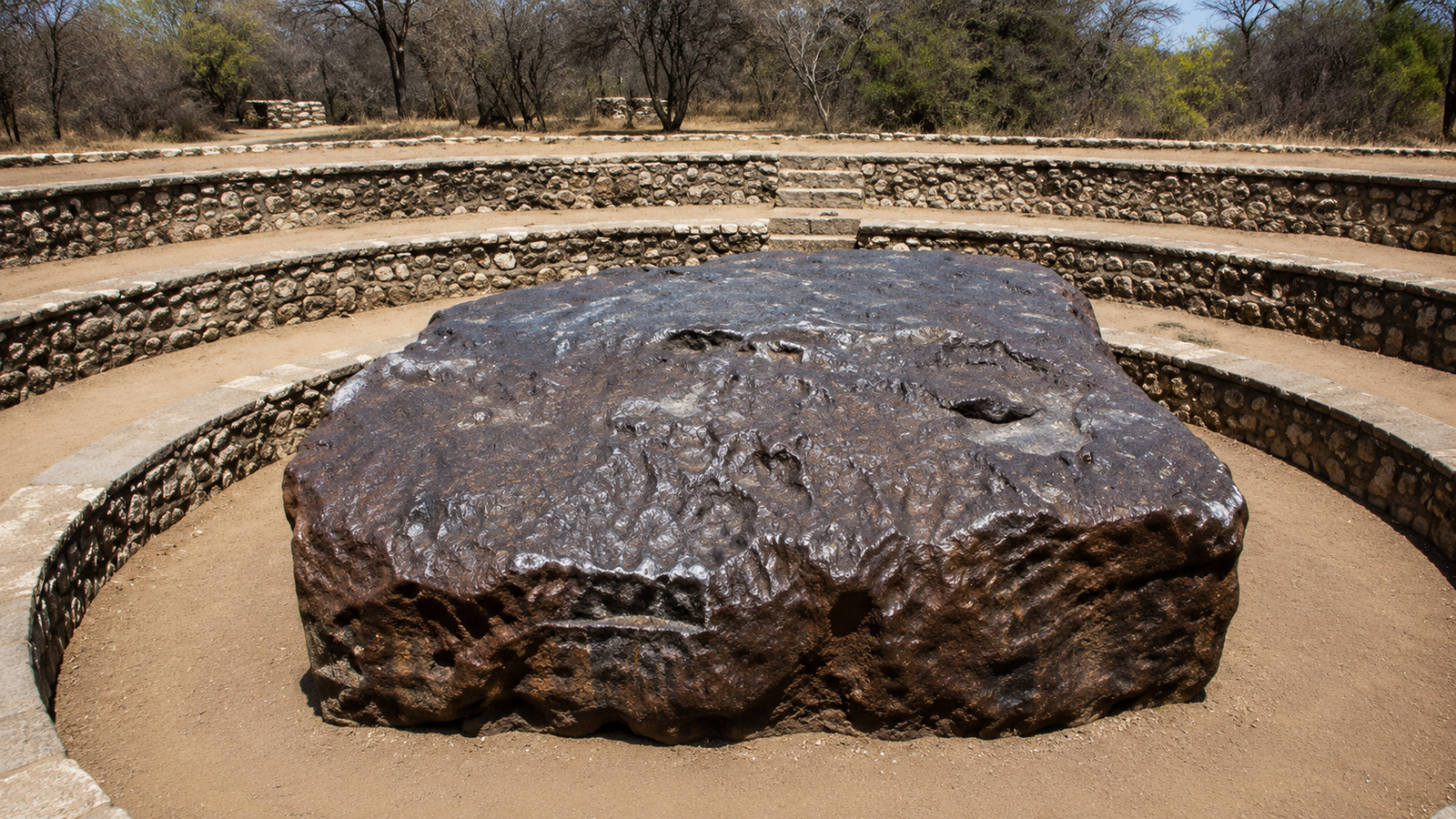
Largest Known Single-Piece Meteorite, Weighing 60 Tons, Puzzles Scientists with Its Intact Fall and Lack of Visible Crater

-
Oceanographer Turns Abandoned Fishing Nets from Brazilian Waters into Bags, Creating Jobs and Earning Over $7,000 Monthly

-
Australia deploys poisoned sausages and uses traps, shooting, and fences in a battle against invasive cats that kill over 1.5 billion native animals annually, threatening more than 200 species.

-
NASA Rover Captures “Tired Face” on Mars, Highlighting Human Brain’s Tendency to See Faces in Rock Formations




Similarities between Bennu and Ryugu raise an old question

Bennu, visited by NASA’s OSIRIS-REx mission, is about 525 meters in diameter. Ryugu, reached by the Japanese Hayabusa2 probe, is up to 1 kilometer. Despite the size difference, both exhibit the same elongated shape with a prominent equatorial ridge and similar densities.
The problem is that the similarity stops there. Spectral mapping showed clear differences in the hydration of the materials. Ryugu appears less hydrated than Bennu, even though it is considered younger in astronomical terms, with an estimated age of about 100 million years.
For Brian May, the shape and level of hydration serve as real clues to the origin of these bodies. The idea is to use these markers to reconstruct the history of each of them.
Supercomputer simulations attempt to go back in time
The research was led by Patrick Michel, research director at CNRS and principal scientist of ESA’s Hera mission. The team ran numerical simulations of 100-kilometer asteroids being destroyed in collisions, releasing fragments that would later reaggregate.
These rounds were conducted on the Bluecrab supercomputer, operated by the Maryland Advanced Research Computing Center, in work linked to Johns Hopkins University and the University of Maryland. The process took months and required detailed programming to simulate contact between particles, with rolling, sliding, and shear friction.
The result showed that the reassembly of fragments can generate varied shapes but tends to produce a top-shaped body. Then, this object can still be accelerated by the YORP effect, caused by uneven solar heating, and gain the equatorial ridge in less than a million years.
3D images revealed heating differences between the fragments
Brian May also worked with Claudia Manzoni from the London Stereoscopic Company to create 3D stereoscopic images of the moment right after the simulated impacts. The visualizations showed that fragments can emerge from the same collision with very different levels of heating.
This matters because heating directly interferes with the hydration of materials. In the same event, it would be possible to form a body with little thermal alteration, like Bennu, and another with more heated materials, like Ryugu.
According to the researchers, the two asteroids may even be part of the same family, coming from the same ancestral body. Since both seem to originate from the same region of the asteroid belt, this hypothesis has become stronger, although confirmation depends on the analysis of samples expected to be brought back by the Hayabusa2 and OSIRIS-REx missions.
The study also relates to the Hera mission
Patrick Michel highlighted that the research also aids ESA’s Hera mission, which will study the binary system Didymos after the trajectory alteration caused by NASA’s DART probe impact. The behavior of top-shaped asteroids, like Bennu and Ryugu, also appears in Didymos.
This type of investigation is important because it combines origin, internal structure, and planetary defense. By understanding how these bodies form and transform, scientists gain more clues about the Solar System and how to respond to future threats.
In the end, Brian May’s involvement shows how science and space exploration can go hand in hand in an uncommon way. And, in this case, the guitar took a back seat to a question that still moves researchers worldwide: where did Bennu and Ryugu come from?
If you enjoy these stories where science and space intersect in an unexpected way, share and tell us what caught your attention the most.