






 Portuguese
  Spanish
 5 min of reading
  0 comments



Lecar Announces Sales Network for Non-Existent Cars, Promises Hybrid Models with Range of 1,000 km, Plans Factory in Espírito Santo and Aims to Attract Dealers Even Without Ready Vehicles or Defined Production Line.
The Brazilian company Lecar is trying to establish a sales network for its future automobiles, even without a factory or ready models to circulate.
Founded by Flávio Figueiredo Assis, who presents himself as the “Brazilian Elon Musk,” the brand promises to launch the hybrid Lecar 459 in 2026, with an engine supplied by Horse, a range of up to 1,000 kilometers, and versions also in pickup.
So far, however, only static models have been displayed at events, as highlighted by the website Auto Papo in a report published last Thursday (28).
-
Brazilian Joins Homeownership Consortium, Faces Decade of Dual Payments Totaling $141,000, Surpassing Traditional Mortgage

-
Land Rover to Halt Production in July, Putting 371 Jobs at Risk, as Chinese Automaker Negotiates to Convert Factory to 100,000 Vehicles Annually by 2027

-
Mexican Pest Threatens U.S. Cattle Herds at Historic Lows, Potentially Boosting Brazilian Beef Exports as Burger Prices Soar

-
Brazilian Freight Bill Progresses in Congress with $5,000 Minimum Wage, 70% Advance Payment, and Fines Up to $1 Million, as Agriculture and Industry Warn of Rising Costs and Legal Uncertainty


Projects Still on Paper
Since 2023, Lecar has announced its intention to create a completely national automaker, but the proposal has undergone several changes.
Initially, the 459 was to be a 100% electric car made in Rio Grande do Sul.
Then, the production was transferred to Espírito Santo, and later, there were considerations to import the vehicles from China.
The current plan is to produce hybrids in series, in which the combustion engine works only as a generator, similar to Nissan’s E-Power system.
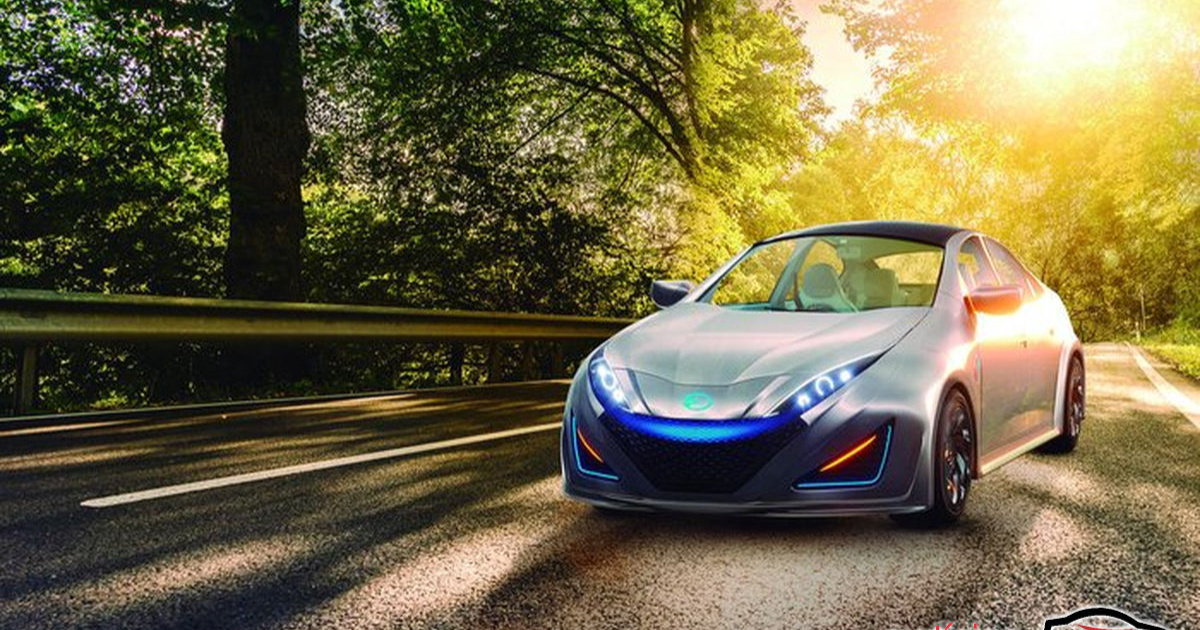
The company also presented the Campo pickup at fairs, but, like the sedan, it is just a mockup without an interior or ability to drive.
On social media, the brand also displays a chassis to demonstrate the planned powertrain, composed of a 1.0 turbo flex engine from Horse, a traction electric motor from Chinese HEPU Power, a generator from Brazilian WEG, and a promise of a technology package with driver assistance systems (ADAS).
Factory Only in Projections
Despite the expected debut in August 2026, Lecar admits that the schedule will not be met if it does not find a ready structure to operate.
The factory in Sooretama, Espírito Santo, exists only in computer-generated images.
Assis has already met with the city hall of Jacareí (SP) to negotiate the former Chery unit, now deactivated, and stated that he will only be able to meet the deadline if he completes the acquisition.
Even without confirming a physical space, the company talks about opening two factories and producing up to 120,000 vehicles per year — a number similar to that recorded by Jeep in 2024.
The contract signed with Horse, however, covers only 12,000 engines per year, revealing a discrepancy between the sales projection and the contracted capacity.
Virtual Resale Network
While the automobiles don’t hit the streets, the company’s strategy is to attract those interested in opening points of sale.
On its social networks, Lecar promotes registration links for dealers. The initial investment is R$ 15,000, intended for marketing materials.
Those wanting to display a model can acquire a mockup for R$ 200,000, limited to 20 units per year.
In a live event held on August 27, Flávio Figueiredo Assis explained that the system will not follow the traditional dealership format. According to him, it would only be necessary to have a commercial point to act as a seller.
The business model, compared by the founder to that adopted by brands such as Tesla and Porsche, foresees that the dealer will not need to maintain inventory, test vehicles, or mandatory display.
When asked about the risks for those investing, Assis asked for trust and claimed that opposing forces were trying to undermine the project.
Still, he ensured that sellers would receive financial returns.
He also stated that maintenance and servicing would be the responsibility of the automaker itself, at specialized centers, the number of which would depend on demand in each region.
According to Auto Papo, the founder’s speech was marked by promises of guaranteed returns to future commercial partners, although there are still no ready cars or a functioning factory.
Purchase Conditions
Lecar does not plan to adopt bank financing, leasing, or consortia. The only available modality will be the so-called “scheduled purchase”. The set price for the Lecar 459 and the Campo pickup is R$ 159,300.
The customer may pay in 48, 60, or 72 installments, interest-free, but will only have access to the car after paying at least half of the installments.
This means that, even with the launch forecast for 2026, the first buyers would receive their vehicles only in 2027.
If the customer withdraws from the contract, they will have to pay a fine.
According to Assis, about half of the reservations made have come from consumers in Santa Catarina, although the total number of orders has not been disclosed.
Partners and Promises
The strategy of Lecar is to use components already available in the market, which, according to the founder, would accelerate the development process.
Among the suppliers mentioned are Horse, Suspensys, Fras-le, Nakata, JBS Couros, Keko, and the Marcopolo group.
The company has also promised factory armoring in its official publications.
Still, industry experts point out that the announced timeline is ambitious.
Chinese BYD, for example, claims it needs at least 18 months to create a new model, even with more than 100,000 engineers.
Traditional manufacturers take four to five years to complete all stages of project, testing, and validation.
Auto Papo emphasizes that, despite the mentioned partnerships, Lecar has yet to present a functional vehicle, reinforcing the gap between the announcements and the reality of production.
Future Expectations
Even without a factory and without a running vehicle, Lecar has already announced plans to sell its models abroad, including European countries, with the aim of popularizing the use of ethanol.
It has also presented sketches of a third vehicle, the so-called “tactical SUV”.
With so many uncertainties about the timeline, factory, and actual production capacity, the central question remains: will Lecar be able to turn its models into real cars?


-

-

2 people reacted to this.