






 Portuguese
  Spanish
  3 min of reading
  10 comments


In This Article, You Will Discover How Magnetocaloric Heat Pump Technology Is Revolutionizing The Market, Offering A Cleaner And More Efficient Alternative For Heating And Cooling, With Practical Applications That Promise To Replace Conventional Systems And Reduce Environmental Impact.
Discover how an incredible innovation is revolutionizing heating and cooling systems! We will explain how magnetocaloric heat pumps can outperform conventional technologies in cost, weight, and performance, while eliminating environmentally harmful refrigerants.
The Replacement Of Refrigerants With Magnets: The Future Is Here
Researchers at the Ames National Laboratory, linked to the U.S. Department of Energy, have created a magnetocaloric heat pump that rivals traditional vapor compression pumps. Unlike technologies that use refrigerants—known for their high carbon emissions and harm to human health and the environment—this innovation promises unprecedented energy efficiency and sustainability.
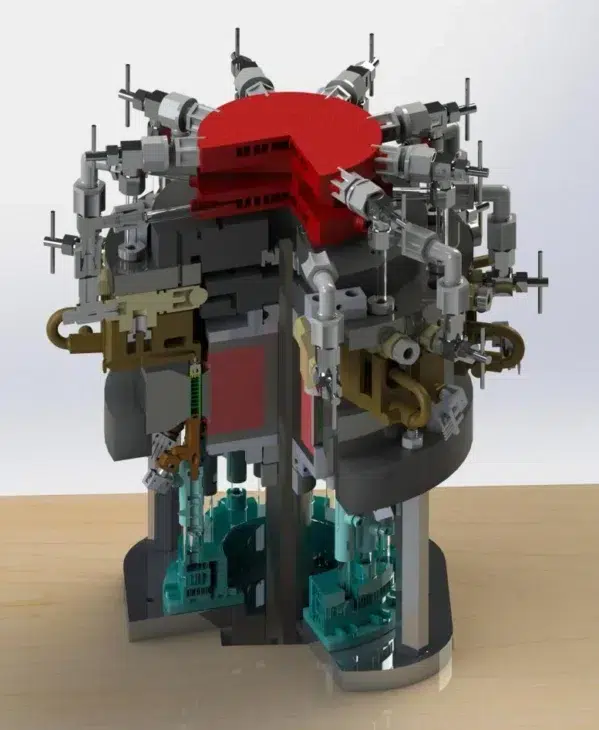
Magnetocaloric heat pumps completely eliminate refrigerant emissions and still operate with greater energy efficiency. While previously these pumps could not compete in weight, cost, and performance with traditional systems, the new technology achieves a perfect balance, offering a cleaner and more economical alternative for homes and industries.
-
Brazilian family creates machine that transforms seawater into fresh water, produces up to 130 liters per hour, facilitates routine on vessels, and boosts family business along the country’s coast.

-
A doctor from Minas Gerais warns that sleeping with the fan pointed at the body all night is not as harmless as you think; it dries out the respiratory tract, causes mucus buildup, spreads dust mites, and can even irritate the cornea of the eyes.

-
Ecuadorian volcano at 6,268 meters is more than 2,000 meters closer to space than Everest, which is 8,848 meters, because the Earth is wider at the equator.
-
Public school students in the hinterlands of Maranhão create a bioinsecticide with neem and castor to protect corn crops, transform rural waste into biogas and biofertilizer, and bring sustainable technology to producers at ExpoSertão.



The Researcher’s Vision: How It All Began
According to Julie Slaughter, project leader, the development of the pump started with an analysis of existing limitations. “We studied current devices and questioned how far we could push magnetocaloric technology,” Slaughter commented.
Magnetocaloric pumps operate by applying a magnetic field to special materials, while a fluid is pumped to transfer heat. Permanent magnets and magnetic steel play central roles in the design, allowing greater control and efficiency in heat movement.
The Practical Applications Of Magnetocaloric Technology
The new magnetocaloric heat pump promises to transform various sectors by offering a more efficient and eco-friendly alternative. Among the practical applications are:
- Residential Heating And Cooling: replacing traditional air conditioning and heating systems in homes and apartments with a lower environmental impact.
- Commercial And Industrial Refrigeration: being used in supermarkets, warehouses, and food industries to reduce refrigerant gas emissions.
- Vehicle And Transport Climate Control: cooling electric and hybrid vehicles or refrigerating food and medicines more sustainably.
- Data Centers: cooling servers with lower energy consumption and environmental impact.
- Medical Industry: ensuring precise thermal control in equipment such as magnetic resonance imaging.
- Climate Control For Large Spaces: such as offices, hospitals, and airports, which require robust and economical systems.
The Materials That Make It All Possible
The study focused on two main materials:
- Gadolinium: used in the basic prototype for its simplicity.
- Iron-Lanthanum-Silicon (LaFeSi): a more advanced material, with higher power density, but less accessible.
The researchers also adjusted the amount of expensive materials, such as permanent magnets, to make the system more economical and viable for large-scale production.
Reaching A Milestone In Competitiveness
With design optimizations, the new pump achieved power density comparable to current vapor compression technologies. In addition, reducing expensive materials in the main components enabled costs similar to those of conventional systems, making mass production a reality.
Conclusion: A Sustainable Leap
With this new technology, magnetocaloric heat pumps present themselves as a revolutionary solution. By eliminating the damage caused by refrigerants and offering the same performance as traditional heat pumps, the future of heating and cooling is greener than ever!
Will we see this technology become dominant soon?


Sim, e a relação de consumo de energia?
Ares condicionados? Kkkkk. O correto é condicionador de ar
Duvido muito. Como tantas outras tecnologias que botaram outras no chinelo, o lobo contra as mudanças é gigantesco. Pensemos aqui no Brasil, por exemplo, o projeto “copersucar”, que estacionou nos motores veiculares.