Portuguese
  Spanish


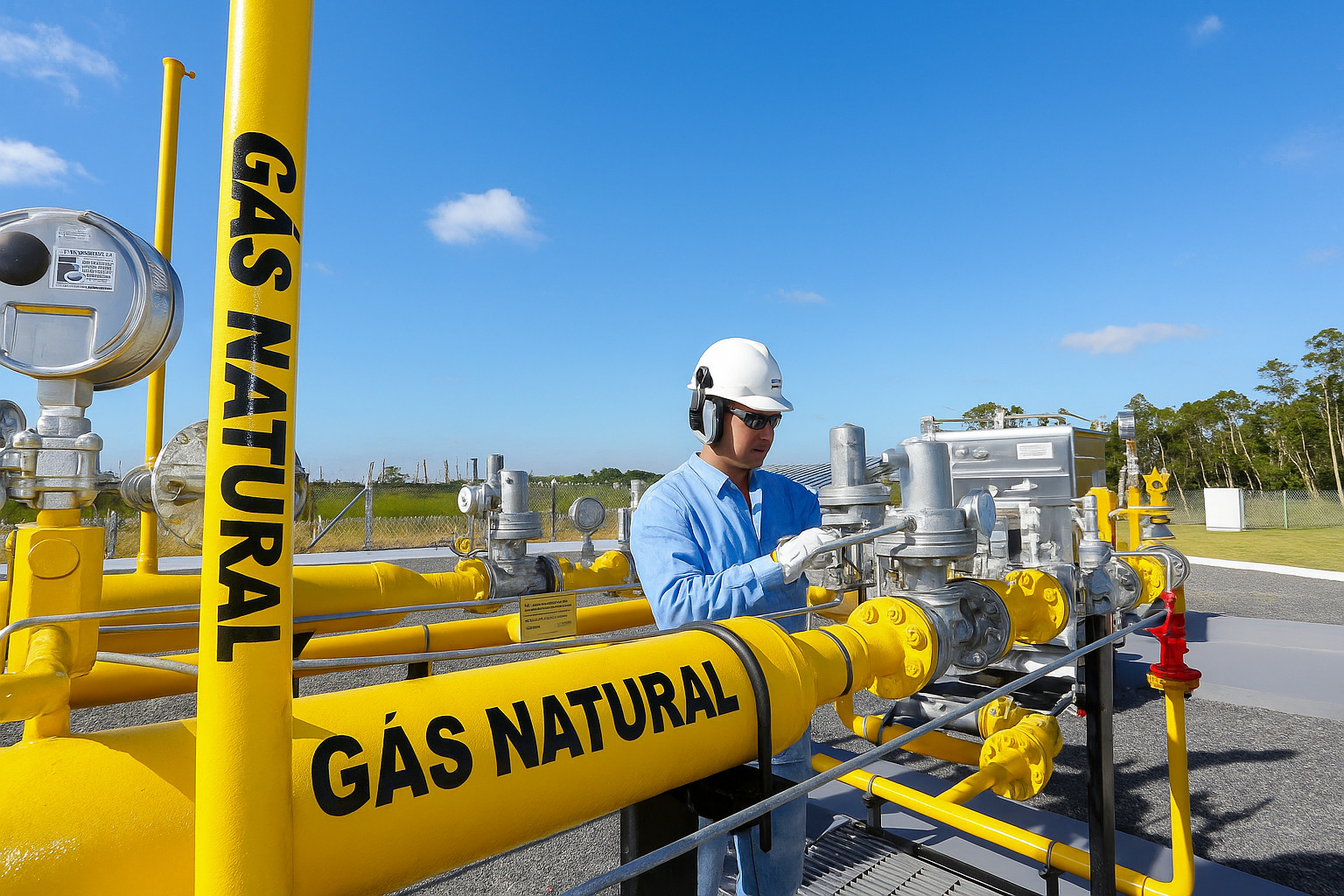

Discover How the Use of Natural Gas Strengthens Companies, Reduces Costs, and Boosts Efficiency with Economic and Environmental Benefits in the Productive Sector.
The use of natural gas has transformed the way many Brazilian companies organize their production. From small bakeries to large industries, this fuel has become a strategic ally to ensure savings and efficiency.
Historically, Brazil heavily relied on firewood, coal, and LPG as energy alternatives. However, over time, the transition to piped natural gas brought advantages that consolidated it as a reliable energy source.
Furthermore, the arrival of natural gas exploration in various Brazilian regions paved the way for investments in infrastructure and distribution.
-
Petrobras to Double Natural Gas Supply in Northeastern Brazil with New Investment

-
Petrobras Approves $1.2 Billion Refinery in Brazil to Produce Aviation Fuel and Diesel from Plants
-
Petrobras Secures $2.2 Billion Contract to Build and Operate Four Support Vessels for Brazil’s Offshore Oil Fields
-
Oil production grows in Rio, but reserve replacement raises a warning sign



In Sergipe, for example, Sergas played a fundamental role in expanding the supply network. Thanks to this structure, local companies began to have continuous supply, without relying on cylinders or other more expensive and less practical alternatives.
Consequently, the change in energy matrix enhanced the competitiveness of the productive sector. With lower costs and supply security, companies were able to expand their capacity without compromising quality.
The Direct Impact on Companies’ Routine
Businesswoman Maria Irene Menezes Teles, owner of a food business, experienced this transition.
Before adopting natural gas, her company used LPG and even considered electricity to power ovens and equipment.
However, as soon as she opted for piped natural gas, the benefits became immediate.
According to Irene, the company never faced supply issues. In addition, maintenance is carried out in a planned and communicated manner in advance, which provides security for the production process.
As a result, the bakery gained stability and significantly reduced expenses.
Another point highlighted by the businesswoman involves cleanliness and practicality. Natural gas does not leave visible combustion residues, contributing to safer and more pleasant environments.
Compared to an electric oven, the natural gas oven represents a huge difference in operational costs.
Therefore, in addition to savings, the work routine became more efficient and sustainable.
Efficiency and Sustainability as Allies
The use of natural gas also reinforces environmental commitments. Although it is not considered a fully renewable energy source, natural gas emits fewer pollutants than coal and fuel oil.
Thus, its use in the productive sector contributes to the reduction of greenhouse gases.
This sustainable aspect adds value to brands, as consumers are increasingly aware of socio-environmental responsibility.
Companies that use cleaner energy stand out in the market, building a positive reputation and gaining greater public trust.
Moreover, operational safety also deserves attention. As the supply occurs through a piped network, the risks of unexpected interruptions decrease, allowing for greater predictability in production planning.
This characteristic becomes essential for businesses that deal with large daily demands.
The Historical Context of Natural Gas in Brazil
Brazil began to structure the use of natural gas in the productive sector in the second half of the 20th century.
However, it was only in the 2000s, with the expansion of gas pipelines and the integration of the national market, that the fuel began to become competitive in different states.
In parallel, the technological development of industrial ovens and boilers accelerated the replacement of LPG.
In the case of Sergipe, the scenario strengthened with the partnership between local companies and Sergas, allowing small and medium-sized businesses access to the same resource that was previously restricted to large industries.
Today, natural gas integrates the national energy matrix as a support pillar for the transition to renewable sources.
Although it does not replace investment in solar, wind, or biomass, it offers a less polluting and more accessible alternative than traditional fuels.
Thus, it acts as a bridge to a cleaner energy future.
The Strengthening of the Local Economy
In the daily operations of companies, the use of natural gas ensures more predictable costs. This means that the productive sector can invest more confidently in expansion, modernization, and workforce training.
Thus, the fuel not only reduces expenses but also fosters economic and social development.
The case of businesswoman Maria Irene illustrates this transformation. Her bakery not only maintained competitiveness but also expanded its product offerings, serving new markets.
Additionally, the savings achieved through the use of natural gas enabled investments in modern equipment, which enhanced the final product quality.
As a result, local companies gain strength and establish themselves as examples of sustainability, innovation, and efficiency.
This reality reflects in the strengthening of the regional economy, as more stable businesses generate jobs, collect taxes, and stimulate the growth of the production chain.
The Future of the Use of Natural Gas in the Productive Sector
Observing the global trends, natural gas emerges as a fundamental energy transition resource.
Countries seeking to reduce dependence on coal and oil find in this fuel an intermediate option.
The same applies to Brazil, where energy diversification needs to consider both renewable sources and natural gas as support.
Moreover, the expansion of distribution networks should reach more cities, facilitating access of new businesses to piped supply.
As a result, companies of different sizes will have the opportunity to save and modernize their processes.
Although the future is clearly leaning towards renewable energies, natural gas will remain relevant for its practicality, cost predictability, and lower environmental impact compared to other fossil sources.
Therefore, the productive sector finds in it a strategic ally that enhances competitiveness without compromising socio-environmental responsibility.
The use of natural gas in the Brazilian productive sector symbolizes an important step towards efficiency, economy, and sustainability.
The experience of local companies, like that of Maria Irene in Sergipe, demonstrates that this energy choice brings practical results, both in the daily production process and in the strengthening of the regional economy.
Consequently, natural gas establishes itself as a strategic fuel in the present, while also paving the way for the energy transition of the future.
Companies that adopt this energy source not only reduce costs but also build a more modern, responsible, and competitive business model.