Portuguese
  Spanish


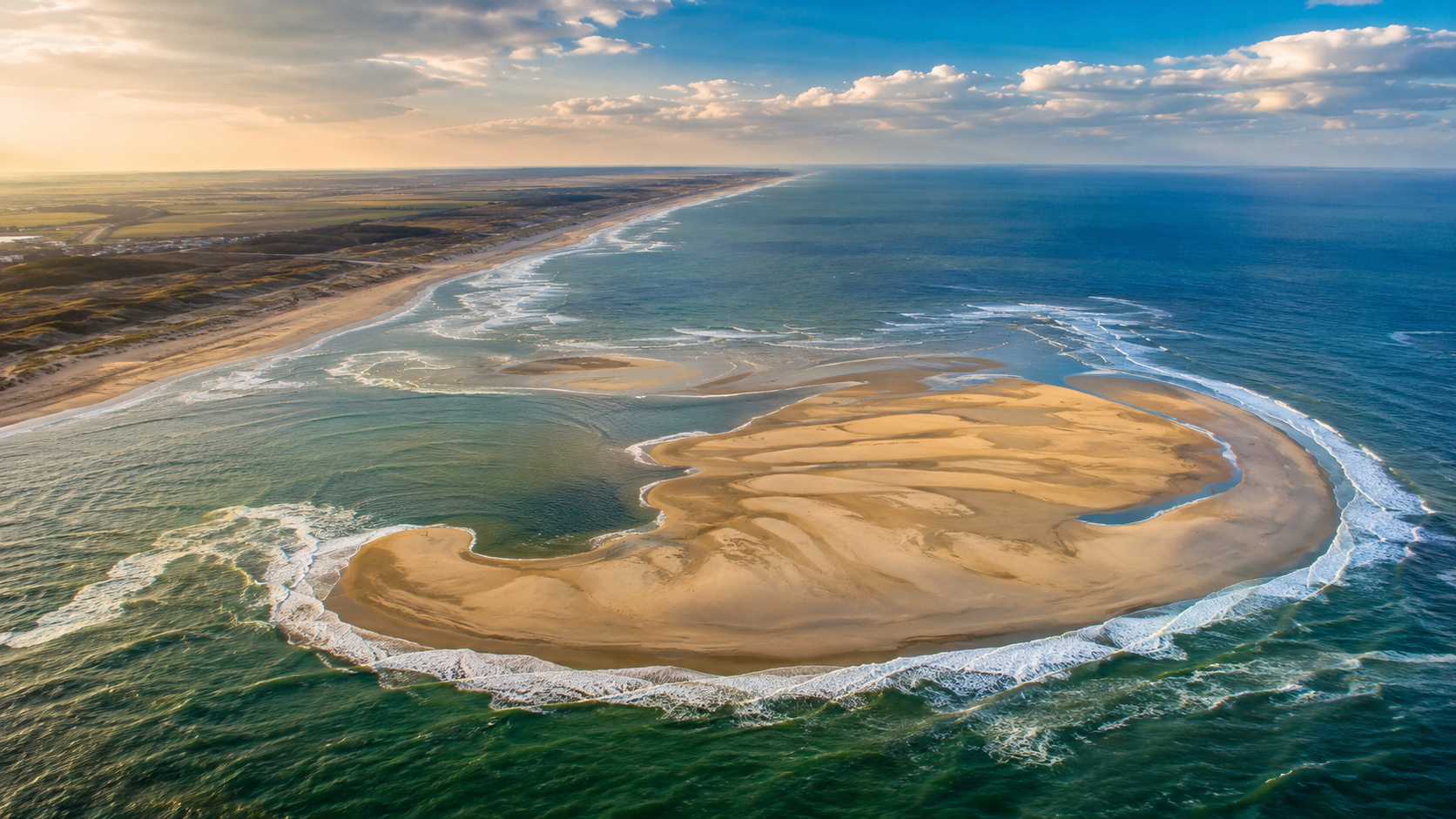

On the coast of Delfland, the Sand Motor became a large sand reserve that wind, waves, and currents gradually carry to expand beaches and dunes, a Dutch experience that helps to understand how beach nourishment can reduce losses caused by coastal erosion without trying to hold the sea in the same place.
To prevent the sea from advancing over its beaches, the Netherlands launched 21.5 million m³ of sand into the ocean and created a large peninsula near Kijkduin, in 2011. The structure was not made to remain the same, as the waves, winds, and currents began to transport the sand along the coast.
The information was released by Deltares, a Dutch institute for applied research on water and subsoil. The goal was to use the natural force of the sea to reinforce the sand strip and help in the growth of the dunes, which act as a barrier between the waves and the continent.
The project helps to understand coastal erosion in a simple way. Instead of just building walls or dumping sand many times on the same beach, the Netherlands created a huge reserve so that the ocean itself would gradually carry the material.
-
Swedish Mall Focuses on Sustainability by Repairing and Reselling Discarded Items

-
Mother Leaves Stable Job to Support Gamer Son’s Dream, Sees Channel Surpass 10 Million Subscribers, Now Helps Run a Million-Dollar Online Empire: The Story of Angie Baker

-
72-Year-Old Retired Chinese Engineer Builds Personal Cable Car for $1,200 to Avoid Climbing Stairs, Uses It for 5 Years Before Ordered to Dismantle

-
Neymar’s 14-year-old son, Davi Lucca, launches 3D dinosaur brand “Amigo Dino,” gaining attention on social media for his entrepreneurial spirit.




The sand peninsula created in 2011 advanced 1 km into the sea and occupied 2 km of coast
The Sand Motor was born on the coast of Delfland, in the south of the Netherlands. The peninsula had a hook shape, advanced 1 km into the sea, and occupied 2 km along the coast.
The sand came from an area located 10 km from the coast. Dredgers, which are vessels used to remove sand from the seabed, brought the material to the area where the peninsula was formed.


In some points, the structure reached 5 meters above the average sea level. Even so, it was not built as a rigid barrier. The design needed to change over time so that the sand would reach nearby beaches and dunes.
The appearance of the work also changes because the ocean moves the sand every day. The original peninsula loses part of its shape, but this behavior is part of the planned functioning of the Sand Motor.
Building with nature means letting wind, waves, and currents be part of the work
The idea used in the Sand Motor is called building with nature. In simple words, the technique takes advantage of natural forces that already exist in the location, instead of trying to completely stop the movement of the sea.
The enormous amount of sand functions as a reserve for the coast. The wind carries part of the material to the dunes, while the waves and currents spread another part across neighboring beaches.
This sand helps maintain a larger strip between the sea and the areas occupied by people. It also reduces the direct impact of the waves on the dunes, which can absorb part of the sea’s force.
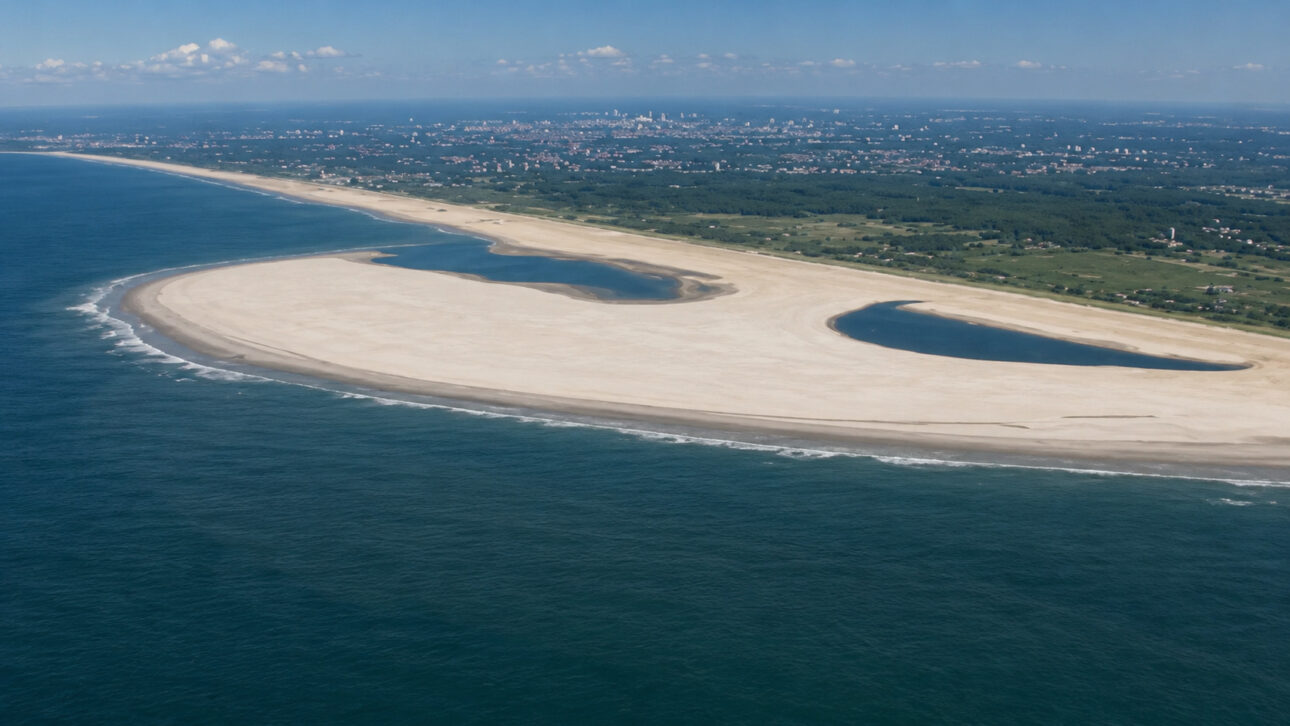
The project was designed to last about 20 years without requiring frequent new sand replenishments. This does not mean that coastal erosion disappears, as the sea continues to change the shape of the beaches over time.
The first 10 years showed wider beaches and growing dunes
The evaluation of the first 10 years showed that the coast became wider and the dunes grew. The sand began to spread across the nearby area, creating a larger beach strip in several sections.
Deltares, a Dutch institute for applied research on water and subsurface, coordinated the monitoring of the area. The measurements observed the safety of bathers, the formation of dunes, the movement of sand, and the effects on animals and plants.
In the southern part of the Sand Motor, dunes up to 3 meters high emerged on the beach. The existing dune strip near the peninsula also became wider, increasing the natural protection of the coast.
The area began to gather more types of animals that live on the seabed and more coastal birds. At the same time, the presence of visitors made some points less favorable for birds that need to nest.
Common Beach Nourishment and Mega Sand Feeding Work in Different Ways
Beach nourishment is the replenishment of sand in areas where the sea has taken part of the material. This type of work attempts to restore the width of the beach and create a larger area between the waves and nearby buildings.
In traditional interventions, the volume usually ranges between 2 million and 5 million m³ of sand. The duration generally lasts around 5 years, which may require frequent new replenishments.
The Sand Motor used a different logic. Instead of distributing small amounts at various times, it concentrated 21.5 million m³ of sand in a single large peninsula.
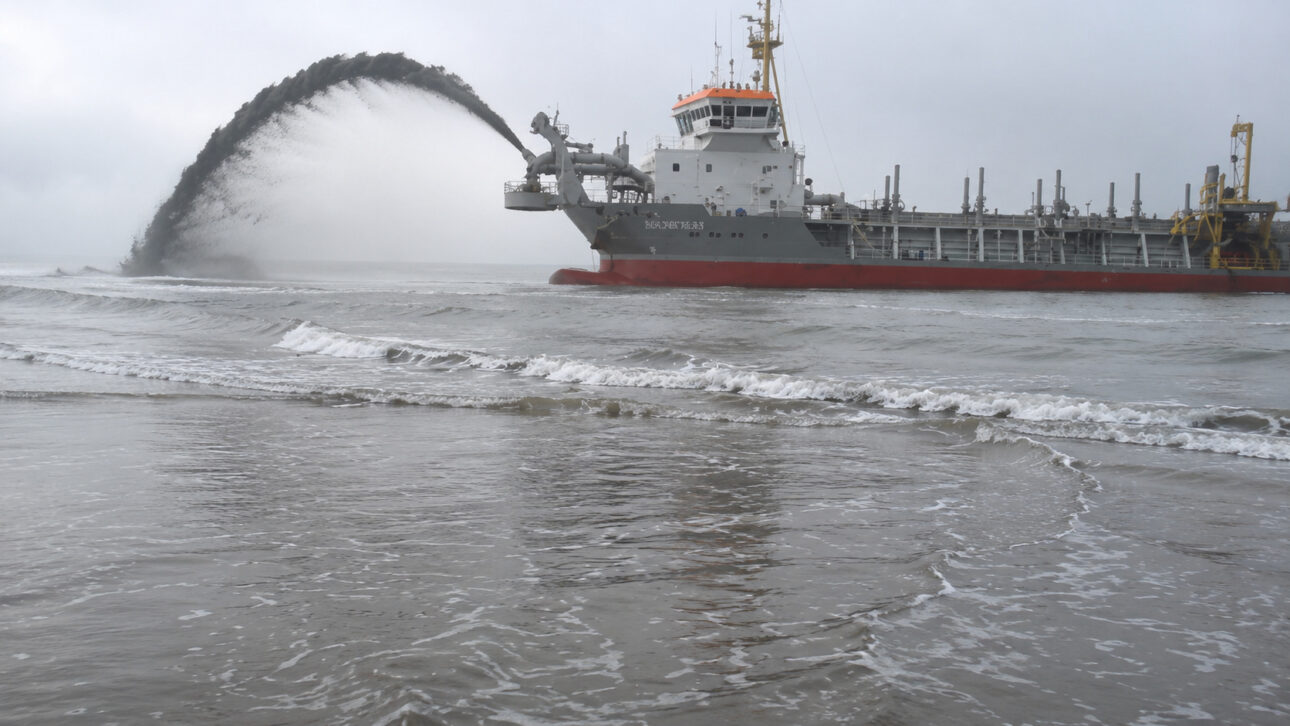
This choice reduced the need to repeat works at the same pace. However, an intervention of this size depends on sand compatible with the beach, studies on the seabed, and constant monitoring.
Brazilian Beaches Affected by Coastal Erosion Require Studies Before Copying the Experience
The Sand Motor may inspire debates on coastal erosion in Brazil, but it does not serve as a ready-made solution for any beach. Each coastline has different waves, currents, winds, and seabeds.
The sand used in replenishment needs to have characteristics similar to the sand already existing on the beach. It is also necessary to assess the distance to the extraction area and the depth required to obtain the material from the sea.
The variable shape of the peninsula can create temporary currents and increase risks for bathers. Therefore, works of this type need to ensure the safety of beachgoers, in addition to the effects on dunes, animals, and vegetation.
Coastal protection does not depend solely on dumping sand into the ocean. The result changes according to local conditions, the strength of the sea, and the planning done before the work.
The Sand Motor showed that 21.5 million m³ of sand can function as a reserve for beaches and dunes, without trying to turn the sea into something immobile. The peninsula created in 2011 was planned to change with the waves and spread sand along the coast.
The Dutch experience does not promise a definitive answer to coastal erosion. It shows that nature can participate in the protection of beaches when there is study, monitoring, and knowledge about the behavior of the sea.
On a threatened beach, would you trust the sea itself to spread sand and help protect the coast? Tell us in the comments and share this post.