Portuguese
  Spanish


The ship Equinox Eagle arrived at the Port of Porto Alegre with monoammonium phosphate from Saint Petersburg and marked the resumption of long-haul navigation, after investments in dredging, bathymetry, nautical signaling, operational safety, and night clearance that put the gaucho terminal back on international cargo routes.
The ship Equinox Eagle docked at the Port of Porto Alegre with 11 thousand tons of monoammonium phosphate from Saint Petersburg, Russia, and marked, in January 2026, a new phase for long-haul navigation in Rio Grande do Sul. The operation put the gaucho terminal back on the radar of international cargo routes.
According to information from the site PortosRS, the arrival of the vessel occurred after a series of technical interventions conducted by Portos RS, in coordination with the Brazilian Navy and the Pilotage. Dredging, bathymetric surveys, modernized nautical signaling, and validation of navigability conditions formed the basis for the resumption.
Ship Equinox Eagle marks the resumption of international navigation in Porto Alegre
The Port of Porto Alegre resumed operations with long-haul navigation with the docking of the Equinox Eagle, a vessel registered in the Cayman Islands. The ship brought to the terminal a load of 11 thousand tons of MAP NP 10:46, a phosphate fertilizer used in production chains linked to agribusiness.
-
Ports without drivers and cabins already move containers like automated factories: robotic cranes, autonomous electric vehicles, and software transform giant terminals into 24-hour logistics machines.

-
About 300 American ports still breathe diesel from trucks, cranes, and locomotives, but they are now trying to electrify heavy machinery to clean the air for 31 million nearby residents.

-
A 220-meter giant powered in part by solar energy and lithium batteries has just unloaded nearly 5,000 Chinese cars at the Port of Itajaí. It is the first of ten Grimaldi super ships and the first in the world prepared to run on ammonia as fuel.

-
The Port of SC has just entered the direct route to the largest hubs in Northern Europe with a new line from Maersk, gains a connection with Manaus in 13 days, and is preparing dredging to receive giant ships of up to 16,000 containers.
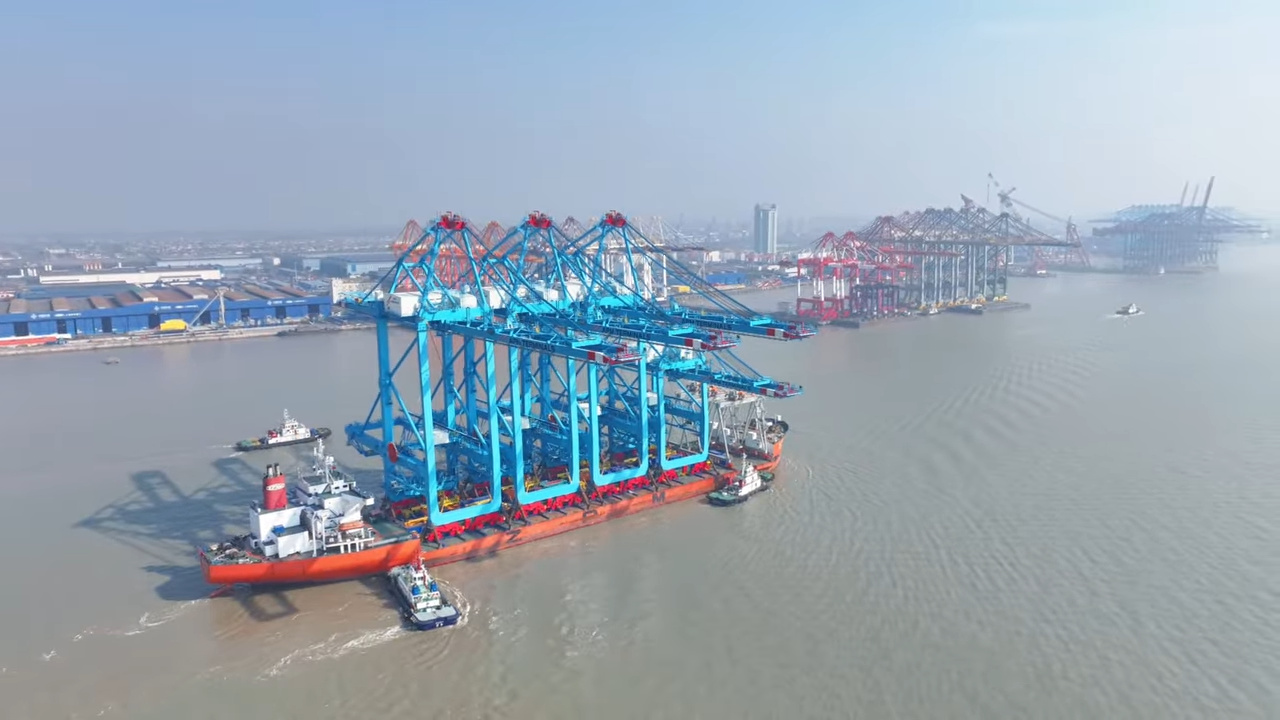


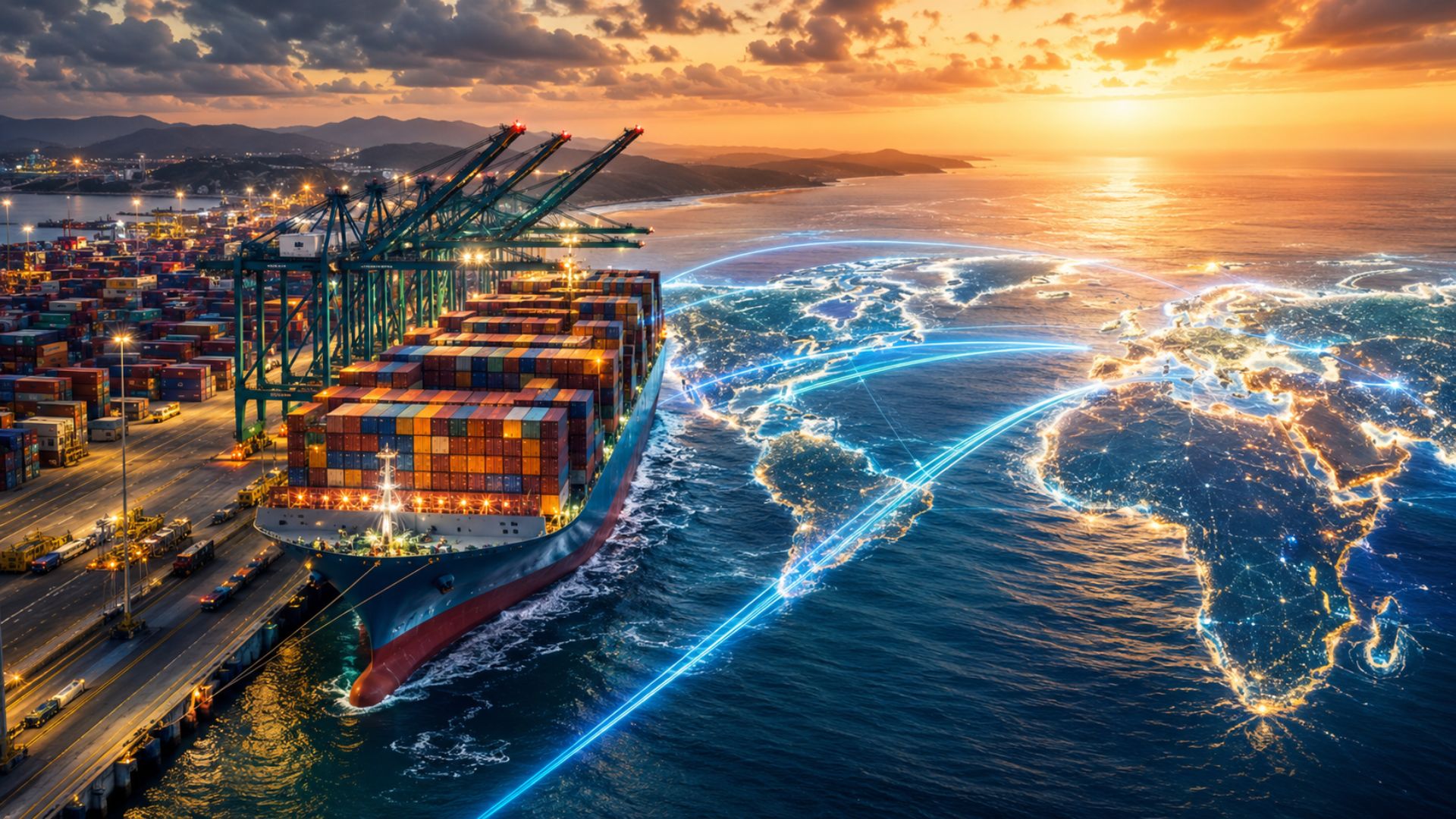
The operation had symbolic and logistical significance. The Equinox Eagle was the first large vessel to operate at the port since the official announcement of the resumption of long-haul navigation, made on January 15 by Portos RS, the Brazilian Navy, and the State Government. In practice, the terminal reconnected to international cargo flows.

Cargo from Russia reinforces the logistical role of Rio Grande do Sul
The origin of the cargo, in Saint Petersburg, increases the relevance of the operation. The international route shows that the Port of Porto Alegre can once again participate in a broader transportation chain, connecting Rio Grande do Sul to external markets through long-haul navigation.
This movement also strengthens the port’s role within the gaucho logistics system. With the arrival of the ship, the terminal demonstrated the capacity to receive international cargo at a time when the waterway infrastructure underwent technical adjustments to ensure more safety and operational predictability.
Dredging and bathymetry were decisive for the new stage
The resumption did not occur just with the arrival of a vessel. Before that, there was a set of technical actions aimed at navigability. Among them are channel dredging, bathymetric surveys, and the updating of information provided to the Brazilian Navy.
Dredging is an essential step to allow the safe passage of larger vessels. Bathymetry helps map the depths and conditions of the navigable bed. Without this technical work, the operation of a large vessel would be limited by operational risks and circulation restrictions.
Planned investment reaches R$ 258 million
According to Portos RS, the structured program to ensure full navigability foresees investments of approximately R$ 258 million. The resources come from the Rio Grande Plan Fund, Funrigs, and are part of a package aimed at recovering and expanding the operational capacity of the waterway.
The interventions cover strategic areas such as Lagoa dos Patos, Lago Guaíba, Rio Jacuí, and associated sections. In addition to physical works, continuous hydrographic surveys were contracted, creating a routine of permanent updating of the data necessary to guide navigation.
Operational safety gained weight in the resumption
Safety was one of the central points of the new configuration. The modernization of nautical signaling and the validation of navigability conditions were treated as necessary steps to allow the return of long-haul operations at the Port of Porto Alegre.
The complementary release of navigation during the night period also increases the terminal’s flexibility. This means that port operations can gain more movement windows, reducing time limitations and increasing service capacity. For a port seeking to regain international relevance, operating with more predictability is as important as receiving the ship.
Long-haul navigation can attract new business
The State Secretary of Logistics and Transport, Juvir Costella, assessed that the resumption of long-haul navigation represents a strategic operation to boost the economic development of Rio Grande do Sul. The government’s view is that the waterway mode can gain strength and open up space for new investments.
The return of this type of operation can also make Rio Grande do Sul more competitive in the race for cargo. With more prepared infrastructure, enhanced security, and the ability to receive international vessels, the Port of Porto Alegre begins to play a larger role within national logistics.
Port of Porto Alegre returns to the international cargo route
With the new operational phase, the Port of Porto Alegre reintegrates into international cargo routes. The arrival of the Equinox Eagle is not just an isolated operation but an important test of the terminal’s technical capacity after the investments made.
The ship coming from Russia serves as a milestone for this resumption because it brings together the main elements of the new stage: international cargo, large vessel, prepared waterway, and coordination between public agencies, maritime authority, and operators. The challenge now is to turn this return into a logistical routine.
The arrival of the Equinox Eagle at the Port of Porto Alegre shows how infrastructure, security, and technical planning can change the role of a terminal within the transport chain. After investments in dredging, bathymetry, signaling, and night navigation, the port of Rio Grande do Sul resumes operations on an international scale.
Now the question remains: can the resumption of long-haul navigation in Porto Alegre open a new phase for the logistics of Rio Grande do Sul, or does it still depend on more investments to consolidate? Leave your opinion in the comments.