Portuguese
  Spanish


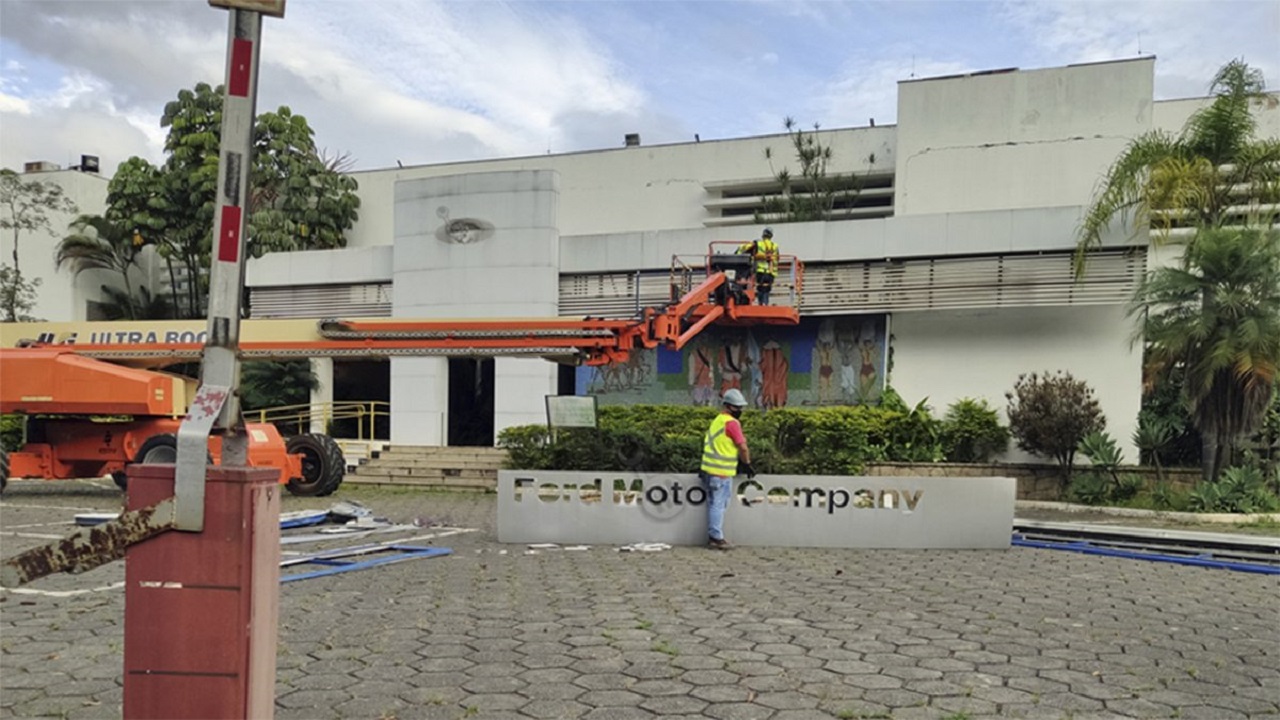

With The Closure of Ford’s Factories in The Country, The SBC Unit is Demolished and Transformed Into Logistics Warehouses With an Area of 460 Thousand m² for The Technology, Frozen, Electronics and Other Sectors
The multinational Ford announced, in the first month of this year, the closure of its factories in Taubaté (SP) and Camaçari (BA). As a result, the American brand stopped producing its vehicles in Brazil, operating in the country only as an importer. However, prior to this, still in 2019, the multinational had already deactivated its unit in São Bernardo do Campo (SP). On this Thursday (25), the industrial unit began to be demolished to be transformed into logistics warehouses.
Read Also
Logistics Warehouses Will Occupy 460 Thousand m² of a Total of 1 Million m²
The Automotive Press Museum (MIAU) published on its social media a video showing some of the administrative buildings of the former Ford factory being demolished. In the area, with a total of 1 million m², logistics warehouses will be built that will occupy an area of 460 thousand m² of the site. According to information, the warehouse will have an efficient level of logistics construction and a high level, 3A.
-
Chevrolet’s Parent Company to Invest Billions in Brazil to Modernize Factories, Update Cars, and Accelerate Hybrid Launch by 2028

-
Practical Driving Tests in Brazil Surge by 23.5%, Exceeding 2.2 Million by 2026, as New Rules Make the Process Cheaper and Simpler
-
Brazil’s Lula Government Allocates $463 Million Quota for Electric Car Parts, Waives Import Tax Until December, Sparking Competition Among BYD, Automakers, and Unions as Consumers Question Impact on Prices and Local Industry

-
Thinking of Installing LED Headlights? Why Replacing Halogen Bulbs is Still Banned, the Glare Risks Authorities Worry About, and How a New Proposal Could Allow Certified, Safe Installations


The purpose of building the logistics warehouses at the former multinational factory is to meet the demands of technology, frozen, and electronics companies, which require modern storage and also consume a lot of energy.
From the former factory’s facilities, some buildings and all electrical infrastructure, which have a capacity of 90 MW, will be reused. However, the main building, from the Willys Overland era, is expected to be transformed into a food court that will serve the external public present in the surroundings of the factory.
The Buying Group Invested R$ 1.2 Billion for The Construction of The Warehouses
The buying group of the Ford factory in São Bernardo do Campo invested R$ 1.2 billion, of which R$ 550 million were for the purchase of the complex in October 2019. The start of the works to transform the unit into logistics warehouses was scheduled for June this year.
With the closure of other factories of the multinational in the country, it is possible that the units will have a similar fate to that of São Bernardo do Campo and change their industrial vocation to services.
The former factory will have 13 logistics warehouses with varying dimensions and the possibility of being adapted to meet the needs of the tenant. In addition to housing a food court, as mentioned earlier, the former unit will also have a gym and a market open to employees and the local community. The projection is that by mid next year, half of the warehouses will be ready for operation and the others by October 2023.
Learn About The History of The Ford Unit in ABC Paulista
The facility is one of the oldest in Brazil and has had several owners before functioning for more than half a century under Ford’s ownership. In the mid-1950s, the unit began to take shape due to Willys Overland do Brasil, which used the site to assemble the classic Rural and Aero Willys.
It was only in 1967 that the multinational took over the unit’s operations, which in its last years of operation was responsible for the production of the brand’s trucks and also the Fiesta model.
When the company announced it would close the location, Caoa Chery publicly announced its interest but did not close the deal. Thus, according to the city hall of the municipality, the factory was purchased by Construtora São José, alongside FRAM Capital.