Portuguese
  Spanish


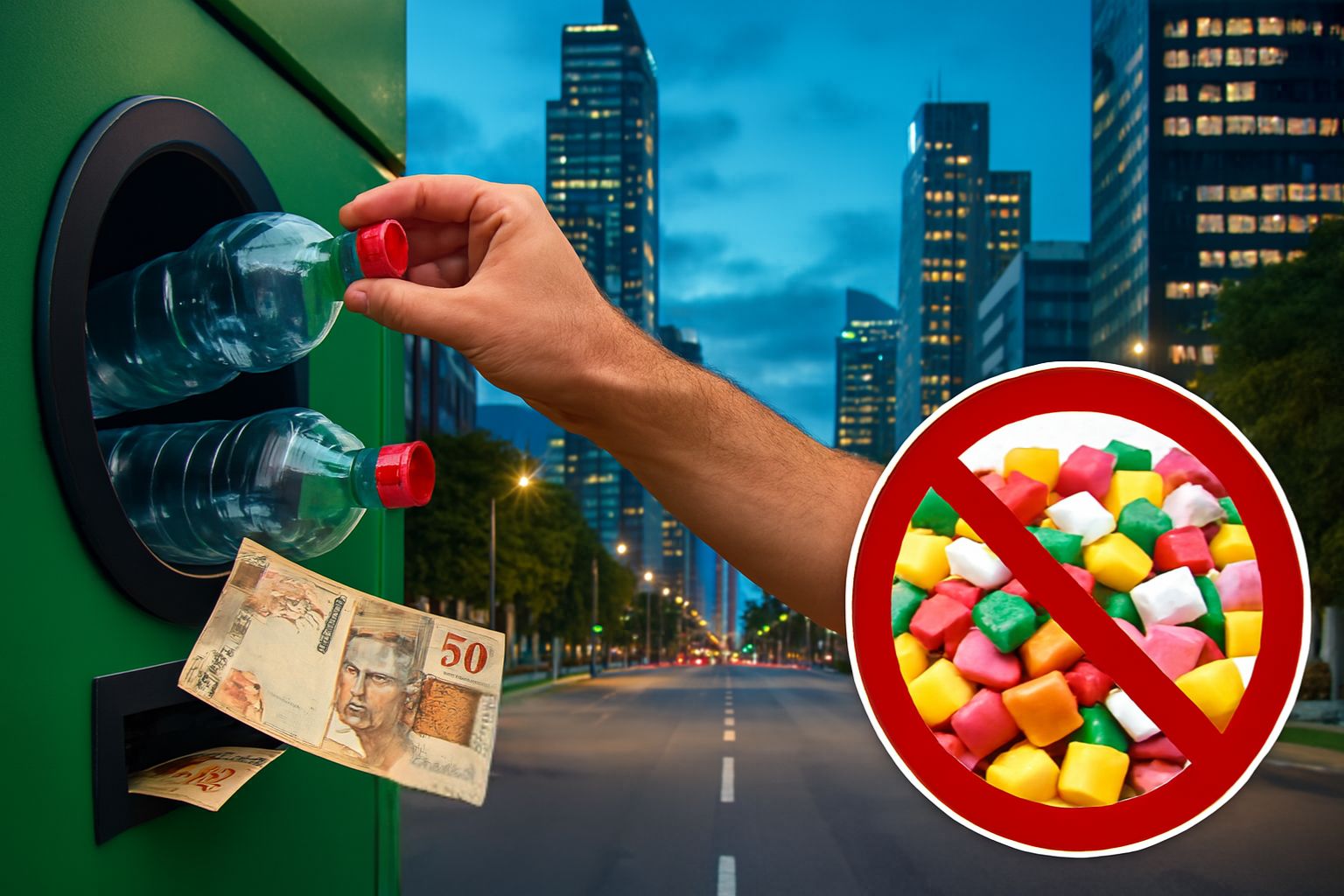


Singapore Banned Gum Sales to Keep Streets Clean and Now Will Pay Residents Who Return Bottles and Cans. Understand How the City Became a Global Example.
Singapore became famous worldwide for its strict laws that ensure impeccably clean streets and almost nonexistent crime rates. Among these is the ban on gum sales since 1992 — a controversial measure, but one that helped transform the urban landscape. Now, the Asian metropolis is taking another curious step: paying citizens who recycle bottles and cans through a national deposit and return system.
This combination of severe penalties and financial incentives shows how Singapore has found its own formula for dealing with urban issues, and it may offer lessons to other countries, including Brazil.
Gum Law: How a Controversial Measure Changed the Daily Lives of Singapore Residents
The so-called gum law emerged in 1992, following constant problems with litter on the streets and damage to train sensors, elevators, and locks caused by sticky residues. Since then, the sale and importation of the product have been banned, with penalties that can reach S$ 2,000 (about R$ 8,000).
-
Three-Year-Old Fulfills Dream of Joining Garbage Collectors in Brazil, Captivates Thousands Online with Heartwarming Video

-
Nikon Project Uses Dog’s Heartbeat to Capture Photos, Revealing What Truly Makes Dogs Happy

-
In Los Angeles, Young Adult Opts for Garage Living with Bed, Kitchen, and Bathroom to Avoid Rent, Highlighting Comfort and Organization Challenges in Compact Housing
-
Brazil Faces Crisis as New Data Reveals Alarming Rates of Youth Unemployment and School Dropouts, with Joblessness More Than Double the National Average and High Informality Among Teens




But there is a detail that many are unaware of: chewing gum itself is not a crime. The issue lies in selling, importing, or improperly disposing of it. Since 2004, only therapeutic gums, such as those containing nicotine, may be sold in pharmacies with a prescription.
This rule has helped shape Singapore’s image as an ultra-clean city, but it has also generated a reputation as a “nanny state” — where the government regulates even small daily habits.
Recycling in Singapore: Money for Used Bottles and Cans
If gum is treated as an urban threat, recycling has gained the status of a national priority. The city-state faces a serious challenge: little space for landfills and a low domestic recycling rate.
To tackle the problem, the government announced the Beverage Container Return Scheme, which will come into effect in 2025. The system works simply: each beverage bottle or can, between 150 mL and 3 L, will have a deposit of 10 Singapore cents (approximately R$ 0.38). Upon returning the container at collection points throughout the city, the consumer gets the amount back.
Additionally, private programs like Cash-for-Trash and the ALBA E-Waste system offer cash rewards or digital points for recycling electronics, paper, and plastics. Even smart recycling bins, equipped with sensors and reward apps, are being installed in 83 new public locations.
City that Blends Severe Penalties with Creative Rewards
Singapore’s model is based on two extremes: penalizing carelessness and rewarding care. Those who sell or improperly discard gum can be fined, but those who return recyclable packaging are rewarded.

This balance between rigidity and incentives has been effective. Despite criticisms that the city is “too tough,” the results are evident in clean streets, efficient public transportation, and an increasing recycling rate.
Experts point out that the strategy goes beyond cleanliness: it is also a tool for social education, shaping behaviors from an early age and strengthening Singapore’s international image as one of the most organized countries in the world.
What Brazil Can Learn from Singapore’s Experience
In Brazil, reverse logistics programs already exist but are still limited. The return of PET bottles and cans could be expanded with financial incentives, similar to Singapore’s deposit system.
At the same time, the gum ban would likely not be accepted here, but it serves as an example of how small changes can reduce urban cleaning costs.
Singapore’s message is clear: innovative laws — no matter how unusual they may seem — can transform cities. What sounds excessive to many has become synonymous with organization and quality of life there.
The City Where Even Trash is Worth Money
Singapore proves that thinking “outside the box” can yield surprising results. The same city that banned gum to keep streets clean now turns trash into income opportunities for its residents.
By combining rigidity with creativity, the Asian metropolis demonstrates that it is possible to balance discipline and innovation to tackle urban problems. Perhaps the secret lies in this: punish what disrupts, but pay for what helps.