






 Portuguese
  Spanish


NASA Inspector General’s Workshop Report Reveals a Less Visible Bottleneck of the Artemis Program: Bases Pressured by More Launches, Old Systems, and Insufficient Budget to Modernize Lunar Operations.
The Artemis program, one of NASA’s most ambitious bets to take astronauts back to the Moon, faces an obstacle that is not just in the rockets, capsules, or lunar landing systems. According to information from the NASA Inspector General’s Office, cited by Xataka in a report by Azucena Martín, the agency’s launch infrastructure is pressured, aging, and without enough funding to keep up with the planned mission pace.
The alert involves two central points of the American space operation: the Kennedy Space Center in Florida and the Wallops Flight Facility in Virginia. Both are used by NASA and also by private companies like SpaceX and Blue Origin. The problem is that the volume of launches has grown rapidly, while part of the bases continues to rely on structures designed for another era of the space race.
Launches Grew Too Fast
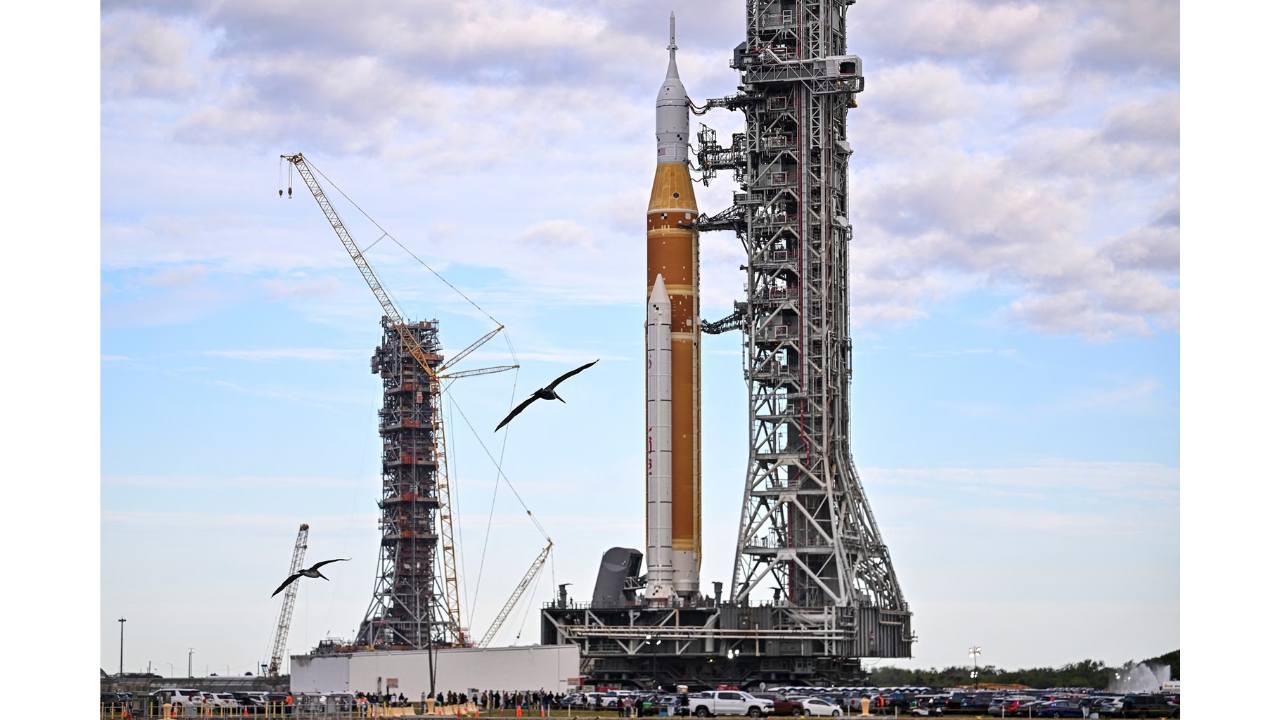
The striking data is the activity jump at the Kennedy Space Center. In 2020, the base recorded 31 launches. By 2025, this number reached 109. This represents an increase of 252%, according to the numbers cited in the analyzed material.
-
Self-Driving Harvester Now Operating in Brazil’s Vast Farmlands

-
Astronomers Discover Two Giant Exoplanets as Light as Cotton Candy, Challenging Current Scientific Models 1,110 Light-Years from Earth
-
NASA’s Plan to Dump ISS Debris in Ocean Sparks Environmental Concerns Among Scientists
-
14-Year-Old Invents Eco-Friendly Water Pump Using Recycled Materials to Aid Communities Without Water Access


In Wallops, the absolute quantity is smaller, but the proportional increase was even more significant. The facility went from 3 launches in 2020 to 17 in 2025. The increase was 467%, a strong growth for a structure that operates on a smaller scale than Kennedy.
This movement helps explain why the NASA Inspector General’s Office considers that the two facilities may reach their limit between 2028 and 2029. The period coincides with the phase when Artemis is expected to require a greater sequence of operations related to the Moon, including more frequent missions and support systems in orbit.
Bases Bear Marks from the 1960s
The challenge is not just the lack of space to accommodate so many launches. The age of the infrastructure also weighs. A large part of the base elements was built in the 1960s, a period when the Apollo program dominated NASA’s plans.
In practice, this means that some structures were designed for rockets, demands, and operational routines very different from the current ones. The report cited by Xataka points out problems such as paved roads not considering the weight of modern rockets, fuel pipelines unable to supply more than one user at a time, and an aging electrical grid.
The Kennedy Space Center appears as the most critical point. Wallops has already received some renovations, but it would still need significant improvements to support the new scenario. The contrast is clear: NASA works with cutting-edge technologies to return to the Moon but relies on parts of a base built for a previous era of space exploration.
Artemis requires a much larger operation
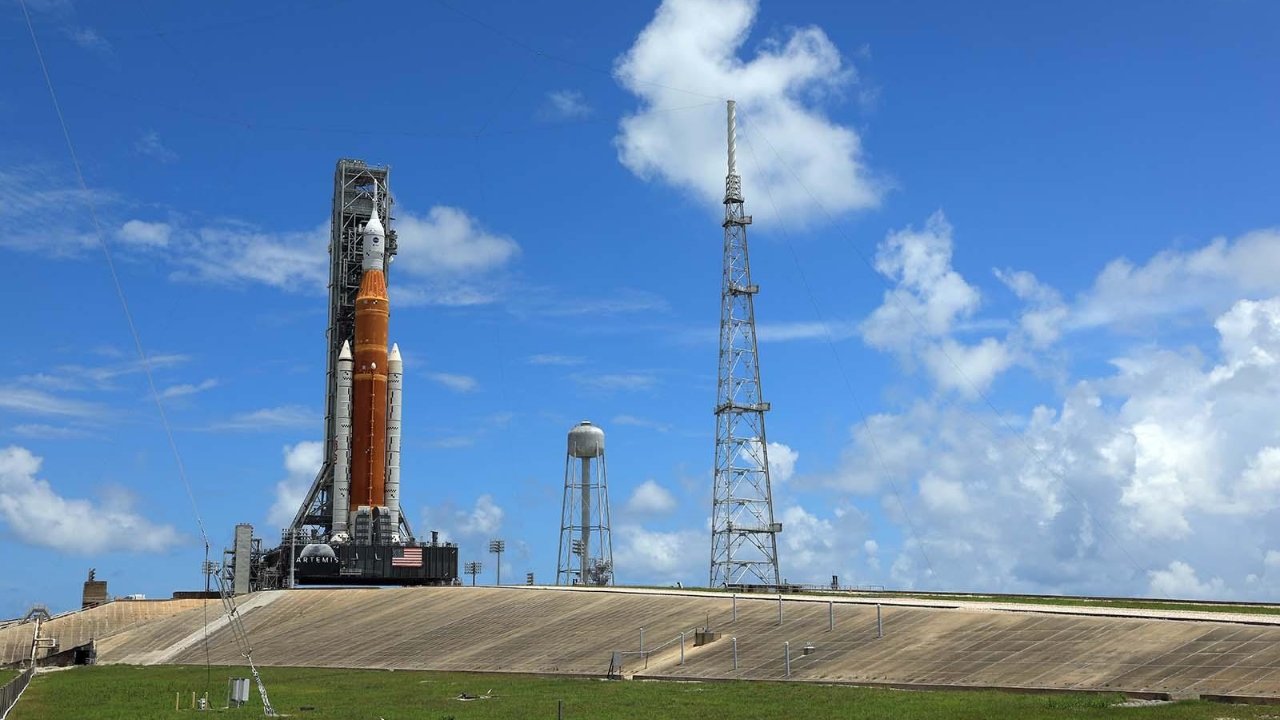
The Artemis missions do not rely solely on the launch of the Orion capsule with astronauts. The planned architecture also involves human landing systems developed by SpaceX and Blue Origin, which must be positioned to receive the crew in lunar orbit.
In some missions, the system used will be from one company, and in others, from another. The function of these modules will be to take the astronauts to the lunar surface and then return them to lunar orbit.
This operation requires a complex chain of launches. In the case of SpaceX, 15 refuelings have been confirmed. This means that several ships will need to be launched in a very short interval, something that directly pressures the platforms, fuel systems, electrical power, and base logistics.
The NASA Office of Inspector General also questions the ability to execute even more modest stages of Artemis III. In this phase, the human landing modules from Blue Origin and SpaceX would need to be sent to Earth orbit to demonstrate viability and docking capability. The problem is that nearly simultaneous launches run into the limitations of pipelines and electrical infrastructure.
The money does not match the urgency
The modernization would require a much larger amount than available. According to calculations by the Office of Inspector General, $1 billion would be needed to renew the two facilities. So far, however, NASA has received only $250 million from the funds linked to the H.R.1 reconciliation act of 2025.
The difference between what is necessary and what is available shows the size of the bottleneck. The agency itself has a schedule to renew all its facilities every 66 years. But, with the current budget, this cycle would take 260 years.
This number helps to size the problem. It’s not just about making occasional adjustments before an important mission. NASA would be trying to sustain a highly complex lunar program with a physical base that, in several areas, does not keep up with the pace of the new space phase.


The return to the Moon depends on more than rockets
The case shows that the race to return to the Moon will not be decided only by modern capsules, powerful rockets, or contracts with private companies. The ability to launch, supply, integrate, and repeat operations at high frequency can be as decisive as the technology embedded in the missions.
Artemis was born to open a new stage of human presence on the Moon. But the warning from NASA’s Office of Inspector General, released by Xataka, shows that the future of space exploration also depends on something less flashy: roads, pipelines, energy, and platforms capable of operating at the pace required by upcoming missions.


