






 Portuguese
  Spanish


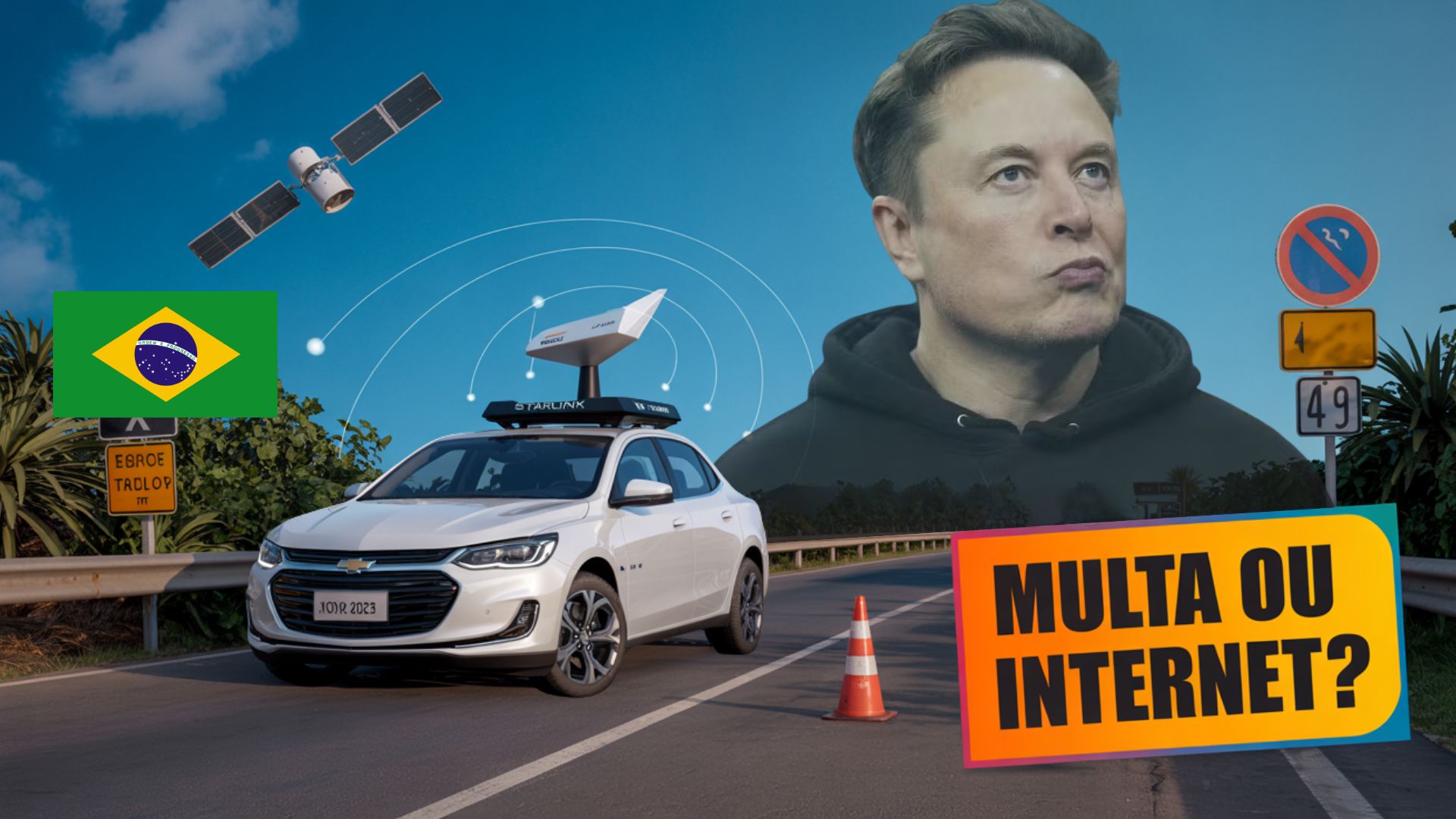

Growth of the Use of Starlink in Vehicles Raises Attention to Traffic Rules and Possible Penalties, Especially Due to Compromised Visibility of Drivers. Double Attention to Installation Can Prevent Fines and Vehicle Seizure.
The use of satellite internet in vehicles, through the Starlink antenna, has been rapidly increasing among Brazilian drivers, especially those traveling in remote or hard-to-access areas.
The demand for the service, launched by SpaceX, the company owned by Elon Musk, increased particularly in 2024 and 2025, reflecting the needs of professionals who rely on constant connectivity, such as truck drivers, rescue teams, and long-distance travelers.
However, the way this technology has been installed in cars, trucks, and even buses raises a red flag for traffic authorities and may result in severe penalties.
-
Bruno Guimarães, 28, Misses Crucial Penalty Against Norway in World Cup After Replacing Vinicius Jr.

-
Inspired by a school lesson on Africa’s water crisis, a young boy raised money through chores to fund a well that transformed a Ugandan community.

-
Brazilian Construction Worker Moves to France, Earns Up to €2,500 Monthly with Home Renovations, Gains Social Media Attention

-
US Navy Sinks USS Oriskany with 230 kg of C-4, Creating World’s Largest Artificial Reef in 37 Minutes





Risks of Fines and Vehicle Seizure with Starlink
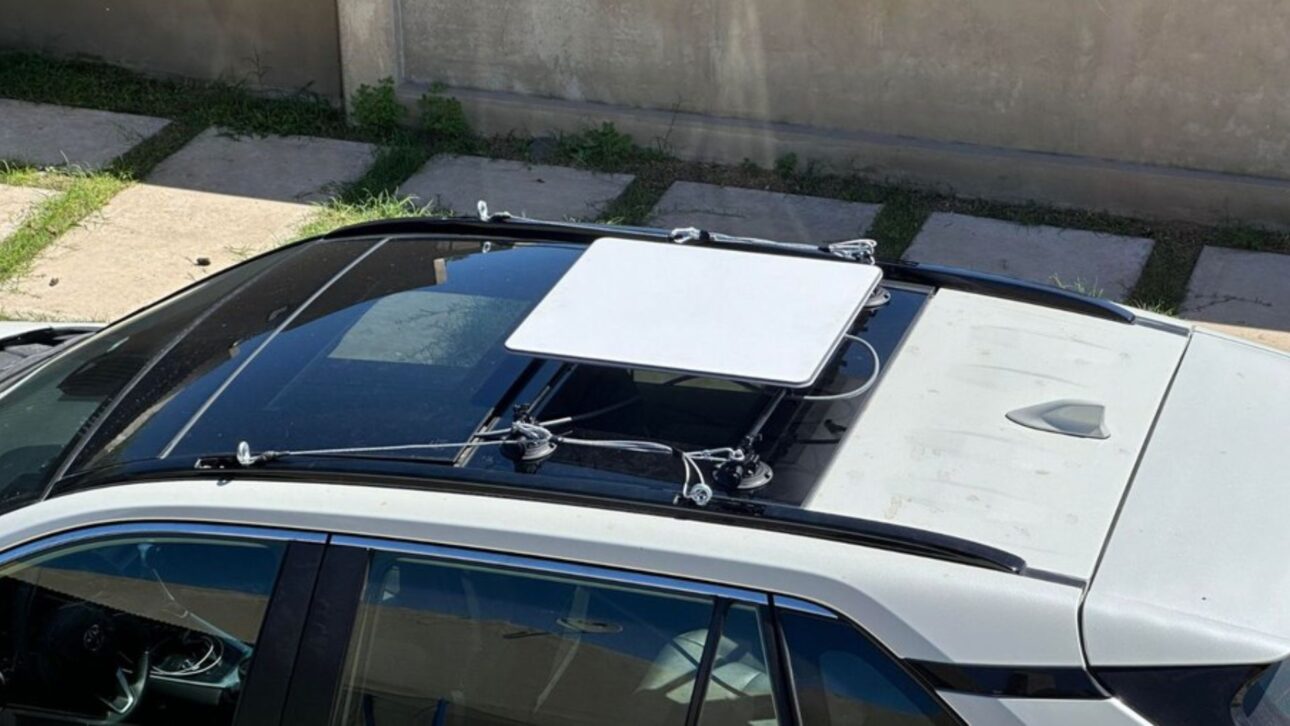
According to the Federal Highway Police (PRF), the use of the Starlink antenna can result in fines and even vehicle seizure if the installation occurs in locations that compromise driver visibility, such as the windshield or front windows.
As clarified by the corporation, Brazilian traffic legislation prohibits any object that compromises the driver’s line of sight.
“It is essential to ensure that no item installed, including satellite internet antennas, hampers the driver’s perception of the environment,” emphasizes the PRF.
Article 230 of the Brazilian Traffic Code (CTB) states that it is a serious offense to drive vehicles with windows partially or completely covered by objects.
The expected penalty includes a fine of R$ 195.23, addition of five points to the National Driver’s License (CNH), and vehicle seizure until the irregularity is resolved.
If the obstruction directly affects the field of vision and poses a danger to driving, the offense is classified as very serious, with a fine of R$ 293.47 and seven points on the CNH, based on Article 169 of the CTB, related to dangerous or inattentive driving.
Increase in Violations and Most Affected States
In the first half of 2025, the PRF registered 15,275 violations nationwide related to irregularities that compromise drivers’ visibility.
This number is slightly lower than that recorded during the same period in 2024, when there were 16,761 notifications.
The violations are concentrated mainly in states such as Bahia, Minas Gerais, Paraná, and São Paulo, regions with a higher volume of vehicles circulating in rural areas and federal highways.
In the state of Piauí, for example, drivers were fined after installing the Starlink antenna directly on the windshield, in clear violation of the current legislation.
Rules for Installation and What the Legislation Says
Resolution No. 960, of 2022, from the National Traffic Council (Contran), reinforces the prohibition of applying objects, films, or decorative panels on glass areas that are essential for the safe operation of the vehicle.
According to the resolution itself, “it is not allowed to install any device on the front windows that may hinder internal or external visibility from the vehicle”.
Thus, even though the regulation does not specifically mention Starlink, any antenna or equipment that impairs the driver’s vision can be grounds for penalties.
Responsible use of Starlink requires strict adherence to the recommendations of the authorities.
To avoid violations, the PRF advises that the antenna be mounted on the vehicle’s roof, preferably using magnetic supports designed for this purpose, or stored in cases that do not obstruct the driver’s view.
Installation on the rear windows, although not directly affecting the driver, may create blind spots and impair the perception of pedestrians, cyclists, and other vehicles.
Starlink Technology and Connectivity in Remote Areas
Starlink, a technology developed by SpaceX, operates through a constellation of thousands of satellites in low Earth orbit.
This system allows internet access in locations without coverage from conventional mobile networks.
The proposal gained popularity in Brazil due to the large territorial extension and the lack of signal in many regions of the countryside, farms, roads, and isolated communities.
The service, commercially launched in the country in 2023, has already reached thousands of users and continues to expand, including plans to offer internet onboard buses and vessels.
Despite the advantages of maintaining connectivity, especially for emergency operations, cargo transportation, and adventure tourism, non-compliance with traffic regulations can jeopardize road safety and lead to financial losses for vehicle owners.
According to the PRF, “modernization cannot put the lives of drivers and other road users at risk”.
Tips to Avoid Problems with the Starlink Antenna
Among the main recommendations for drivers who use or plan to install the Starlink antenna in their vehicles are:
- Avoid installing the antenna on the windshield, front windows, or glass areas essential for driving
- Use specific supports, preferably magnetic, securing the antenna on the roof of the vehicle
- Check the current legislation in the municipality and state before making any modifications to the vehicle
- Consult specialized professionals in vehicle equipment installation to ensure that the device does not obstruct visibility
Additionally, it is always recommended to review the manufacturer’s manual and Starlink’s instructions to ensure the integrity of the system and the vehicle.
In case of inspections, documentation of the equipment and service may be required.
Future of Connectivity and Traffic Legislation
The advancement of Starlink in the Brazilian market follows a global trend of digitalization of transportation.
In the coming years, an increase in the use of connected solutions in trucks, passenger cars, and public transport vehicles is expected, requiring constant adaptations of traffic laws.
However, the central challenge remains: how to ensure internet access without compromising road safety?
Given the growing demand for the service and frequent questions regarding its regulations, drivers must pay attention to the rules to avoid inconveniences and penalties.
After all, how to reconcile the need for connectivity in remote areas with the obligation to comply with legislation and maintain safety on Brazilian roads?
Do you believe that the popularization of satellite internet in vehicles will require an update of traffic laws in the country?





