






 Portuguese
  Spanish


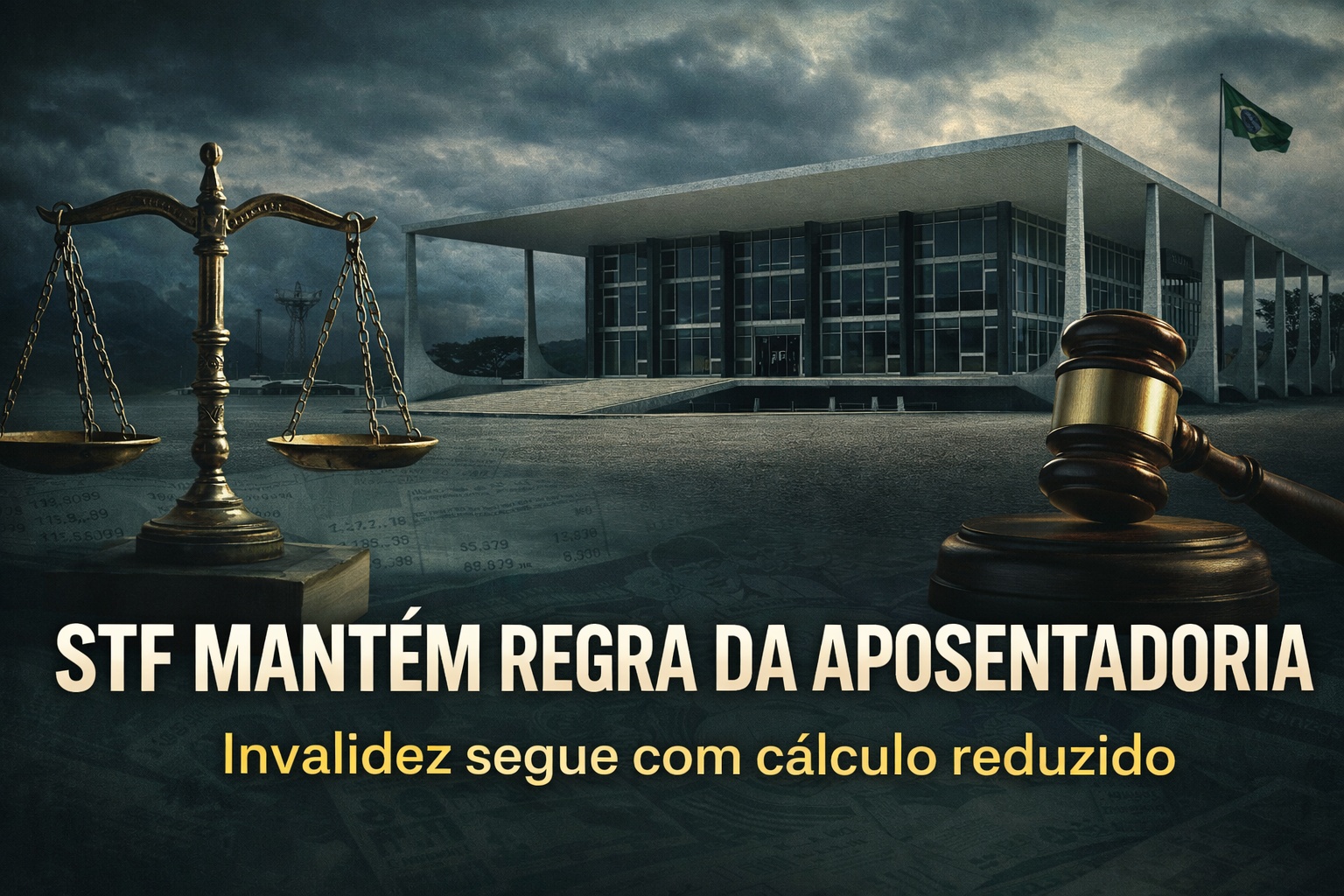


STF Confirms Constitutionality of the Social Security Reform and Maintains Reduced Calculation of Disability Retirement, Except in Cases of Work-Related Accidents.
The Federal Supreme Court put an end to one of the most sensitive social security discussions in recent years. In a narrow decision, the Court declared constitutional the rule of the Social Security Reform that reduced the value of disability retirement, now officially referred to as permanent incapacity retirement. As a result, retirees who began receiving the benefit after the reform remain subject to a less advantageous calculation, even in cases of total and permanent incapacity for work.
The decision directly impacts thousands of INSS policyholders and consolidates the understanding that the change brought about by the Constitutional Amendment No. 103, of 2019, is in accordance with the Federal Constitution. In practice, the ruling ends a series of lawsuits that sought to restore the full payment of the benefit.
What Exactly Did the STF Decide
The STF analyzed actions that questioned the new calculation of permanent incapacity retirement, introduced by the Social Security Reform.
-
Dismissing a retired worker or one eligible for retirement constitutes ageism and creates a duty to compensate: a unanimous decision by the TRT mandates reinstatement to employment, payment of back wages, and upholds compensation of R$ 15,000 for discrimination.

-
Work less and produce more? Nobel Prize in Economics explains why shorter workdays can increase productivity

-
Unions are growing again in Brazil after more than a decade, but they face an urgent challenge to win back digital workers and maintain relevance.
-
From the typewriter to the home office: how work has changed and why new generations think differently





The ministers, by a majority of votes, understood that the National Congress acted within its competence by altering the calculation method and that the measure does not violate constitutional principles such as human dignity or the non-reduction of benefits.
With that, the rule establishing that the initial value of disability retirement no longer needs to correspond to 100% of the average salary of the policyholder, as it did before the reform, was maintained.
How the Calculation Was Before the Social Security Reform
Before November 2019, when the Social Security Reform came into effect, the policyholder who retired due to disability received, as a general rule, 100% of the average of their contribution salaries. This applied regardless of the total contribution time, as long as permanent incapacity was proven.
This model guaranteed a income closer to what the worker had during their active life, especially in cases of serious or debilitating illnesses.
What Changed with the Reform and Was Confirmed by the STF
With the EC 103/2019, the calculation began to follow the logic of 60% of the average of all contribution salaries, with an increase of 2% for each year exceeding 20 years of contribution for men and 15 years for women.

In practice, this means that many disability retirees began to receive significantly lower amounts than they would have received under the old rules, especially those with less time of contribution.
The STF confirmed that this change is valid and should continue to be applied.
When Disability Retirement Is Still Full
Despite the maintenance of the more restrictive general rule, the Supreme Court made it clear that there are important exceptions. In cases where permanent incapacity results from work-related accidents, occupational diseases, or work-related illnesses, the benefit continues to be calculated based on 100% of the average salary.
This distinction was maintained by the Social Security Reform and has now been reaffirmed by the STF, preserving a differentiated treatment for situations directly linked to professional activity.
Why the Decision Divided the STF
The judgment was decided by a tight score, which demonstrates the sensitivity of the issue. The ministers who voted in favor of the constitutionality of the rule argued that the social security system needs to respect financial and actuarial balance, or it risks becoming unsustainable.
On the other hand, dissenting votes argued that reducing the benefit in cases of permanent incapacity compromises social protection and penalizes those who have lost their ability to work permanently.
Who Will Be Affected by the Decision
The decision primarily affects policyholders who had their incapacity recognized after the Social Security Reform came into effect in November 2019. For these cases, there is no longer an expectation of judicial review for the application of the old calculation, unless the incapacity is related to a work-related accident or occupational disease.
It also impacts legal proceedings that were suspended awaiting the definitive stance of the STF, which now must be judged according to the consolidated understanding.
What Changes in Practice for Those Already Receiving the Benefit
For those already receiving disability retirement calculated under the new rule, the STF’s decision means legal stability: the amount will not be recalculated upwards based on future judicial decisions on this specific topic.
For those still in the application or administrative discussion phase, the STF’s understanding reduces the chances of success in requests seeking to overturn the reduced calculation.
The STF’s decision makes it clear that, in the clash between social protection and the sustainability of the social security system, the fiscal logic of the Social Security Reform prevailed. For the policyholder, the impact is direct on their finances, especially at a time of extreme vulnerability caused by permanent incapacity.
It remains for the worker to know the rules well, identify whether their case falls within legal exceptions, and carefully plan each step of the request with the INSS. And you, reader: do you consider it fair for disability retirement to be lower even when incapacity is total and definitive?





Tem tanta gente neste país que absorve as riquezas da nação com salários e benefícios astronômicos e a culpa é de quem realmente produz algo útil pro país.
Sempre o STF contra o povo mais o salário deles fica sempre a mais do que deveria ganha e as pessoas que precisa só se ferra STF o câncer do Brasil
Quem paga a conta é sempre o trabalhador menos favorecido, os que fazem as leis e aplicam as leis são os ganham salários exorbitantes e pra esses a lei sempre foi diferenciada, um peso duas medidas, no Brasil é sempre assim.
Injusto, infelizmente quando mais se precisa, já tiram do pouco que se recebe
Uma. Pergunta. Como. Q. Fica. Essa. Gente. Quando. Se. Aposentar. Eles. Ganham. Uma. Fortuna.