






 Portuguese
  Spanish


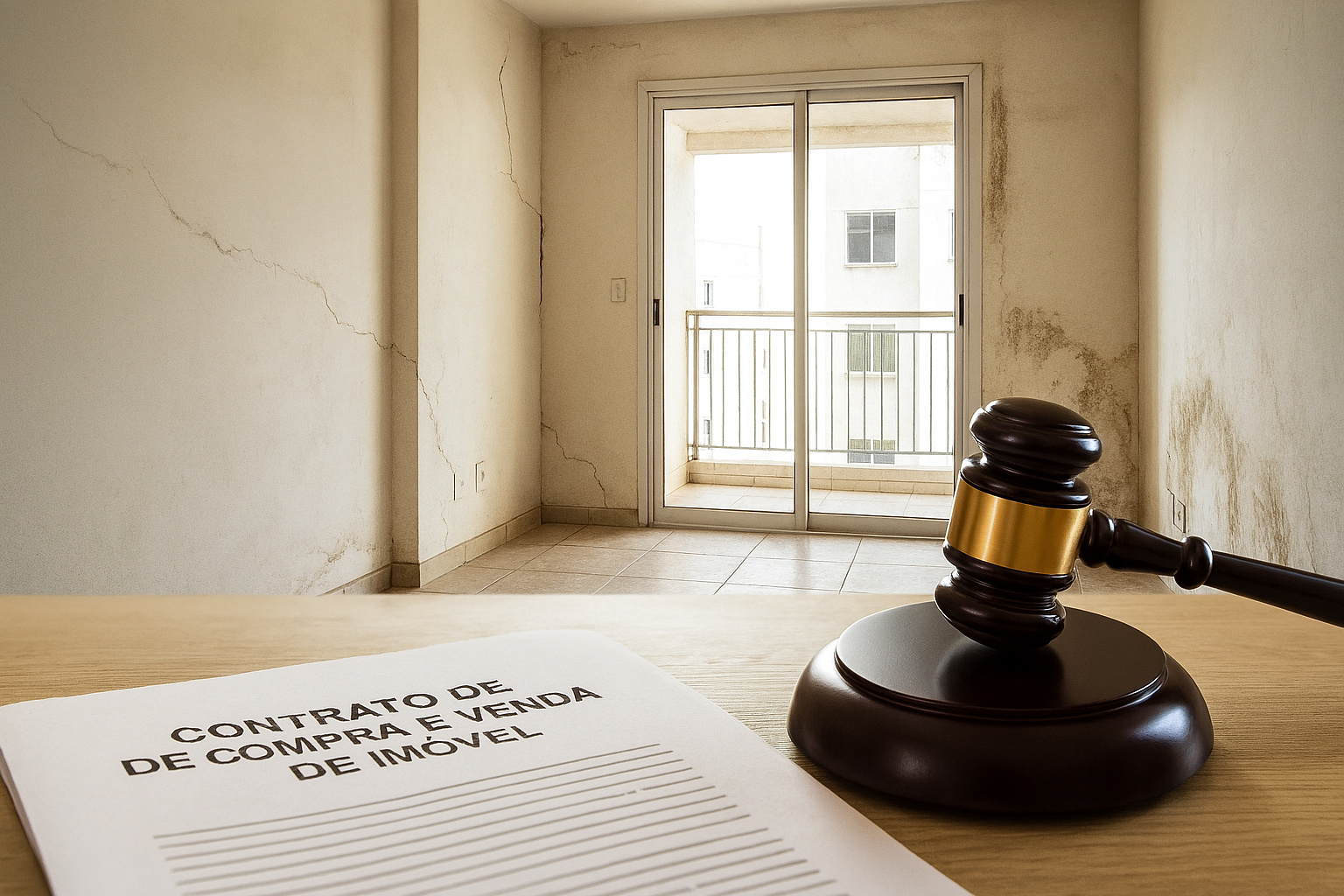


The STJ Decided That Construction Companies Are Liable for Hidden Defects Discovered Years After Delivery, Reinforcing Buyer Protection and Ensuring Compensation for Serious Defects That Compromise Property Quality.
The Superior Court of Justice (STJ) has consolidated an understanding of great impact for the Brazilian real estate market: construction companies can be held accountable for hidden defects discovered years after the property’s delivery. The decision provides greater protection for buyers and ensures that serious defects, even if not apparent at the time of acquisition, may result in future compensation.
In practice, this means that consumers are not left unprotected if structural problems arise after moving into the property. The court recognized that hidden defects — those that are not immediately noticeable — can compromise the solidity, safety, and usability value of the property, justifying the obligation for repair even after long periods.
What Are Hidden Defects and How Do They Affect Buyers
Brazilian legislation differentiates between apparent defects, which can be easily detected at the time of delivery, and hidden defects, which only reveal themselves over time. Some of the most common examples include:
-
Seniors Over 60 Can Travel for Free Across Brazil: Elderly Statute Ensures Two Free Bus Seats and 50% Discount When Full for Low-Income Passengers

-
Detran RJ starts requiring a toxicological test for those obtaining their first driver’s license in the car and motorcycle category starting June 29; see who will be affected.

-
Florida takes TikTok to court and accuses the Chinese giant ByteDance of ignoring the law that bars minors under 14, while parents and authorities demand more protection for children on social networks.
-
Chamber approves constitutional amendment reducing the age of criminal responsibility from 18 to 16 years; what now?




- leaks in walls and slabs that only appear during rainy periods;
- structural cracks that compromise safety;
- electrical or plumbing issues that arise after months of use;
- use of low-quality materials that wear out prematurely.
These defects, although invisible at the time of delivery, can incur high repair costs, buyer frustration, and even pose risks to the health and safety of families.


The STJ’s Position on Deadlines and Responsibilities
The STJ has emphasized that the deadline to claim hidden defects starts counting from the moment the defect is discovered, not from the handover of the keys. This prevents construction companies from avoiding responsibility by claiming that years have passed since the purchase.
In more severe cases, related to the solidity and safety of the structure, jurisprudence applies a long prescription period, which can reach up to 20 years. The goal is to ensure that structural problems are not left unrepaired, even when they appear long after occupation.
Thus, the construction company remains responsible whenever it is proven that the defect is due to construction failure, choice of materials, or execution of the works.
Impact on Construction Companies and Developers
The decision carries significant weight for the construction sector. Companies will need to invest even more in material quality, supplier oversight, and good construction practices to avoid the risks of future lawsuits.
At the same time, jurisprudence pressures construction companies to fulfill legal and contractual guarantees, as consumers now have solid judicial backing. This may increase sector costs, but it also strengthens buyer confidence in the real estate market.
Impact on Consumers and Property Owners
For buyers, the STJ’s understanding is a victory. Many consumers found themselves in a powerless situation upon discovering defects years after the acquisition, believing they no longer had the right to complain. Now, it is clear that hidden defects create liability for the construction company, regardless of the time elapsed, as long as the prescription periods are respected and the connection to the construction is proven.

In practice, families who invested their savings in a property and discovered cracks, leaks, or serious problems will be able to seek judicial compensation, restitution, or even complete corrections of the work.
The Role of the Consumer Protection Code
This understanding also relies on the Consumer Protection Code (CDC), which provides for the objective liability of the supplier. This means that the consumer does not need to prove the construction company’s fault, only demonstrate the defect and the damage caused.
The CDC reinforces protection against abusive practices and ensures that the buyer’s vulnerability is compensated by stricter rules of liability. In cases of hidden defects, this legislation serves as a balancing tool in consumer relationships.
Examples of Judged Practical Cases
In recent decisions, the STJ has already analyzed cases where buyers sued construction companies years after the property’s delivery:
- a residential building with recurring leaks in slabs and walls that only appeared five years after occupation;
- commercial buildings with faults in electrical systems that posed fire risks;
- residential properties with poorly executed foundations, causing serious cracks that compromised safety.
In these cases, the court recognized the construction company’s obligation to repair or indemnify consumers, reinforcing that liability goes beyond the moment of handing over the keys.
Victory for Consumers and a Warning to the Sector
The STJ’s decision to hold construction companies accountable for hidden defects even years after delivery is a landmark in protecting buyers in Brazil. It ensures that a lifetime savings are not put at risk due to hidden flaws and provides legal security for those investing in property.
At the same time, it is a red flag for the construction sector: quality, transparency, and responsibility must be at the center of real estate production, or companies will face not only financial losses but also irreversible damage to their reputation.
In the end, the message is clear: the consumer cannot be abandoned after the keys are handed over. Homeownership, a dream for millions of Brazilians, should be a place of safety and trust — and the justice system is ready to ensure this.









Anos,,,,, pode estar falando de 1, 2, 3, 4 ou 5 anos, a lei é clara quando diz que a construtora pode responder por até 5 anos por esses vicios graves,
O comprador usando um imóvel, desgastando, produtos químicos, animais, sol, chuva, etc
Sim 5 anos. A partir da descoberta.
Sim 5 anos. A partir da descoberta.