Portuguese
  Spanish


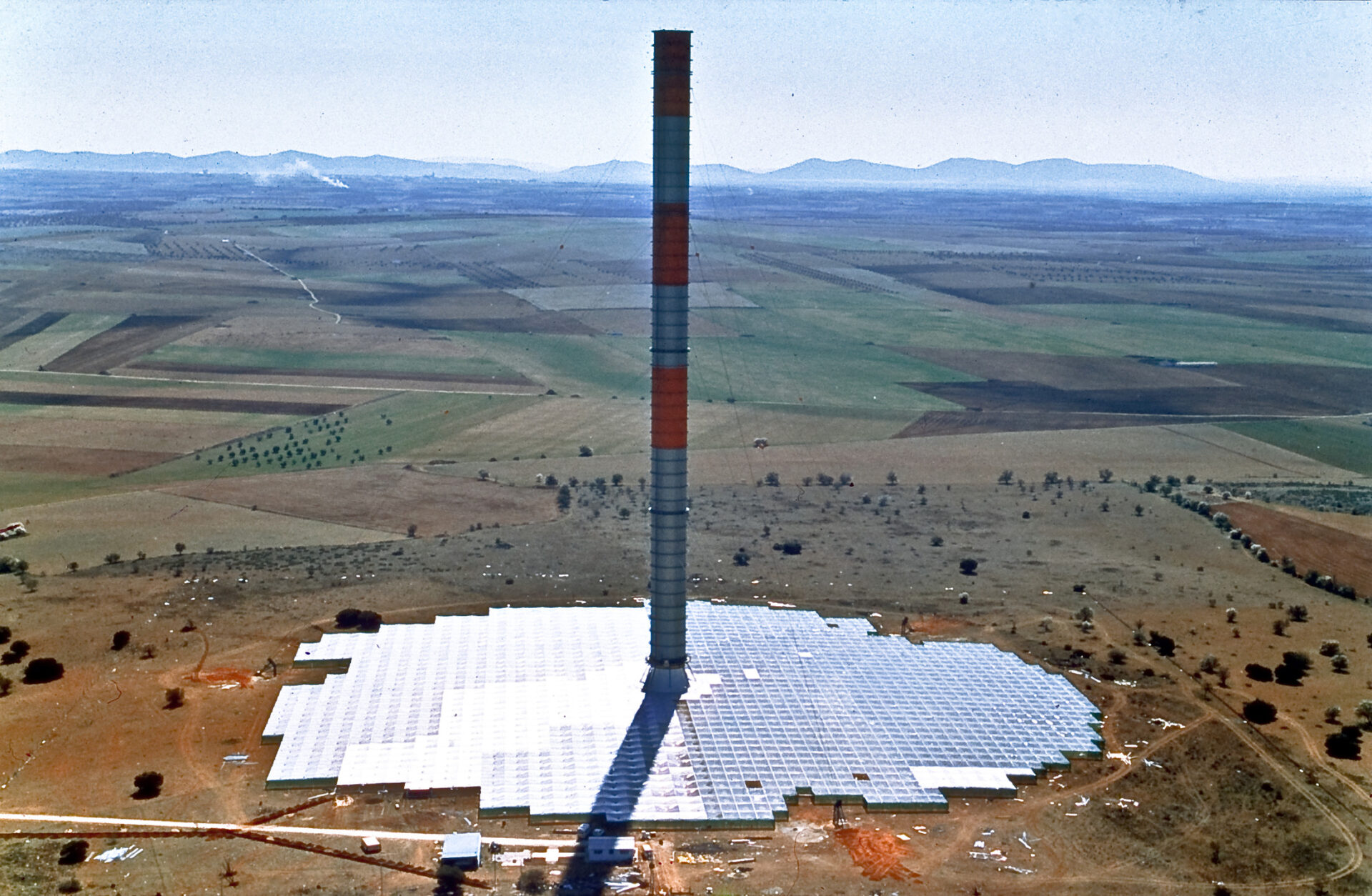

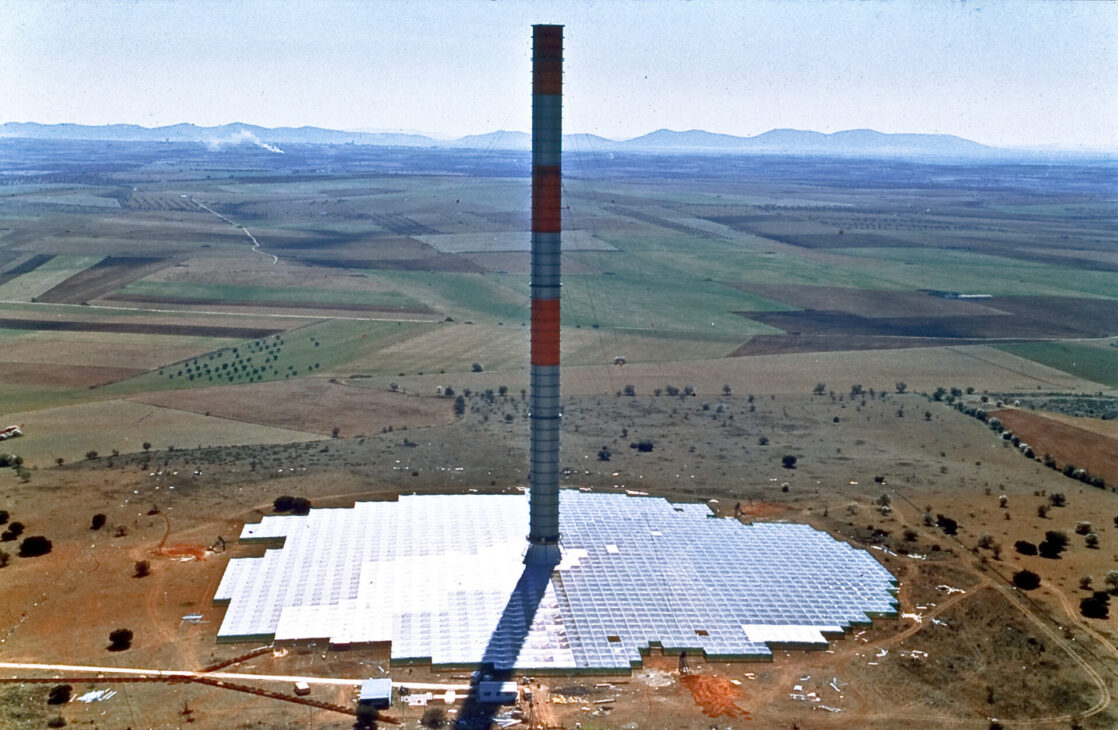
Prototype in Manzanares proved that a solar tower could generate electricity with the Sun’s heat, greenhouse effect, and upward air current.
In the early 1980s, German and Spanish engineers put into operation, in Manzanares, in the region of Castilla-La Mancha, one of the most daring prototypes in the history of solar energy. The proposal was to prove that a plant could generate electricity without burning fuel and without using photovoltaic panels, exploiting only the heating of the air by the Sun and its natural rise through a large chimney. The installation became known as the Solar Updraft Tower, or solar updraft tower. The prototype had 50 kW, a tower 195 meters high and was conceived as a full-scale demonstration, not as a plant for urban supply.
Even so, the experiment ended up becoming a worldwide reference for research on renewable generation by thermal convection.
How the Manzanares solar tower worked to generate electricity
The physical principle of the plant was simple, but the execution was ambitious. Around the tower, a large collector covered with translucent material was installed, which allowed solar radiation to enter and heat the ground under the cover, creating a strong greenhouse effect in the plant area.
-
Solar energy reaches 55 GW, becoming the second largest power source in Brazil’s energy mix

-
Solar energy can increase property value by up to 10% and become a selling point.
-
Solar and wind energy surpass natural gas for the first time in the world and accelerate energy revolution

-
Africa has about 500,000 cell towers and most still burn diesel to operate, while companies rush to cover antennas with solar energy and avoid signal blackouts.


This heated ground transferred heat to the air just above it. As hot air is less dense, it was drawn towards the center of the system and rose through the interior of the tower, forming a continuous upward current that drove the turbine installed at the base of the chimney.


In the Spanish prototype, the tower was 195 meters high and 10 meters in diameter, surrounded by a collector about 240 meters in diameter. The plant was also equipped with extensive instrumentation, with continuous measurements to record the thermal and aerodynamic performance of the system under real operating conditions.
Solar plant prototype operated for seven years and validated the concept
The engineering company Schlaich Bergermann Partner, SBP, reports that the Manzanares prototype was planned to operate for only three years. The period would be sufficient, in theory, to verify if the design calculations matched the plant’s behavior in the field.
In practice, the system went far beyond expectations. According to SBP itself, the installation produced electricity for seven years, demonstrating the efficiency and reliability of the solar tower concept. In other technical documentation associated with the project, the group records about 15,000 hours of operation since 1982 and reliability above 95% during a relevant phase of the tests.
This result was decisive because it showed that the idea was not just a theoretical exercise. Manzanares proved on a real scale that it was possible to transform solar heating of the air into electricity with a system of few moving components and an operational logic very different from photovoltaic solar energy and conventional wind energy.
Solar tower without panels showed that air heat could turn into energy
The Spanish prototype attracted attention precisely because it dispensed with the most well-known solar energy routes. Instead of converting light into electricity through photovoltaic cells, the plant transformed heat into air flow and then air flow into mechanical movement of the turbine.
This design made the solar tower a hybrid technology in physical concept. It combined greenhouse effect, thermal convection, and generation turbine, all concentrated in a large-scale architecture, designed for regions with high insolation and large availability of area.
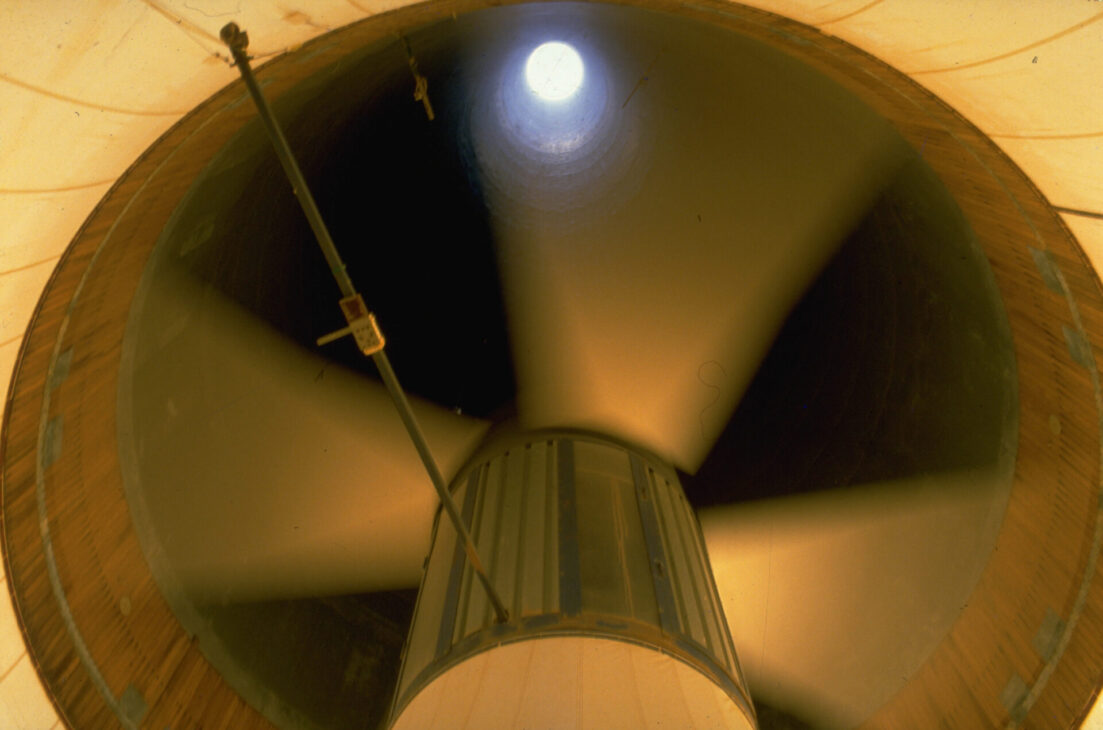
The review published by Purdue University highlights that solar towers differ from other renewables because they combine thermal and flow effects capable of sustaining generation for long periods, including with thermal storage strategies. This promise of prolonged operation helped keep the concept alive for decades in energy engineering.
Why engineers wanted to build much larger solar towers
From the beginning, Manzanares was treated as an initial step. SBP itself states that tall solar towers could reach 100 or 200 MW per unit, a gigantic leap from the 50 kW of the Spanish prototype.
In expansion studies, the idea was to multiply the scale of the chimney and the collector to dramatically increase air speed and the pressure available in the turbine.
In technical documents of the project, engineers argue that it was already possible to design structures about 1,000 meters high based on known construction solutions from tower and chimney engineering.

The logic was clear. The taller the tower and the larger the area for collecting solar heat, the greater the generation potential. Therefore, Manzanares was not seen as the final destination, but as proof that an entire family of large solar power plants could, in theory, be built.
Updraft solar energy inspired new projects but hit cost barriers
The technical success of the Spanish experiment fueled studies and proposals in various countries. The review by MDPI shows that in the following decades, there was strong growth in the technical literature on solar towers, with smaller experiments, numerical simulations, optimization studies, and feasibility assessments in different regions of the world.
But the same review also makes clear why the technology did not become a commercial standard. Among the main obstacles are the high initial investment, the still limited technological maturity, and the difficulty of converting good experimental results into large-scale commercial deployment.
In other words, the Manzanares solar tower worked and fulfilled its role as a proof of concept, but competition with other renewable generation routes, especially those that became cheaper in the following decades, reduced the economic space for gigantic solar chimneys.
The legacy of the 195-meter solar tower still weighs on energy engineering
Even without giving rise to a global network of megatowers, the Manzanares experiment remains a milestone in energy engineering. The MDPI review states that the results of the Spanish prototype helped illuminate later research and served as a basis for new theoretical, numerical, and experimental models.
The historical weight of the project lies in what it managed to prove. The plant demonstrated that solar heat could be converted into electricity through an entirely different route from photovoltaic, exploiting the physics of heated air in a monumental-scale structure.
More than four decades later, the 195-meter solar tower built in Spain is still remembered as one of the boldest experiments ever tested in the field of renewable energy. It did not change the global electricity matrix, but it showed, on a real scale, that a gigantic chimney powered by the Sun could transform a simple physical principle into electricity.