






 Portuguese
  Spanish


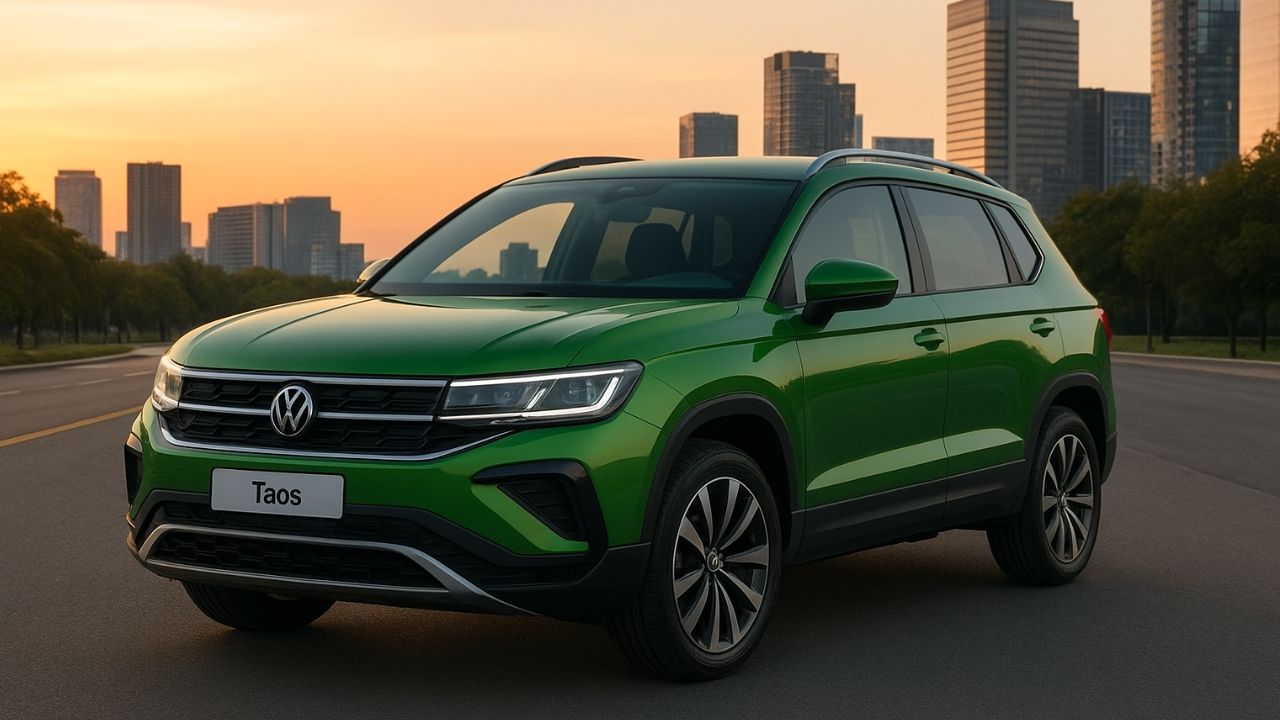
The VW Taos 2026 Has Already Started Arriving in Brazil. The Mid-Sized SUV from Volkswagen Features Design Inspired by the Tiguan and Debuts After the New Jetta GLI.
The VW Taos 2026, a mid-sized SUV from Volkswagen, has already started arriving in Brazil and is expected to officially hit the dealerships by November. The model, now produced in Mexico, was spotted in the country alongside the new Jetta GLI, set to debut in October.
The automaker’s strategy seeks to reinforce its line of utilities, leveraging the updated design and visual connection to the Tiguan.
Mexican Production Replaces Argentine Manufacturing
The factory change is significant. Until now, the Taos sold in Brazil came from the Argentine plant in Pacheco, but due to production cost issues and low profitability, Volkswagen decided to end this route.
-
Toyota Launches First 100% Electric Car in Brazil: bZ4X with 343 HP, All-Wheel Drive, 361 km Range, Priced at $419,990 BRL, Limited to 99 Units

-
Chinese SUV Achieves 24.4 km/l, Outperforms Toyota Yaris Cross in Real-World Tests with 224 hp Hybrid System, Offers 51-Liter Tank for Greater Range, and Costs Up to R$ 5,000 Less.

-
Uber Black Revamps Fleet, Drops Ten Car Models and Sets Deadline for Electric BYD Dolphin
-
Chinese Giant Uses Metal Structures and Cranes to Deliver Over 700 Electric Cars to Brazil


As a result, all markets receiving the mid-sized SUV from Argentina — such as Brazil and Uruguay — will now feature units manufactured in Mexico.
According to the portal Motor1.com Argentina, the decision is related to the so-called crisis of “redundant cars,” when products lose competitiveness due to high local costs.
Design Aligned with the Tiguan
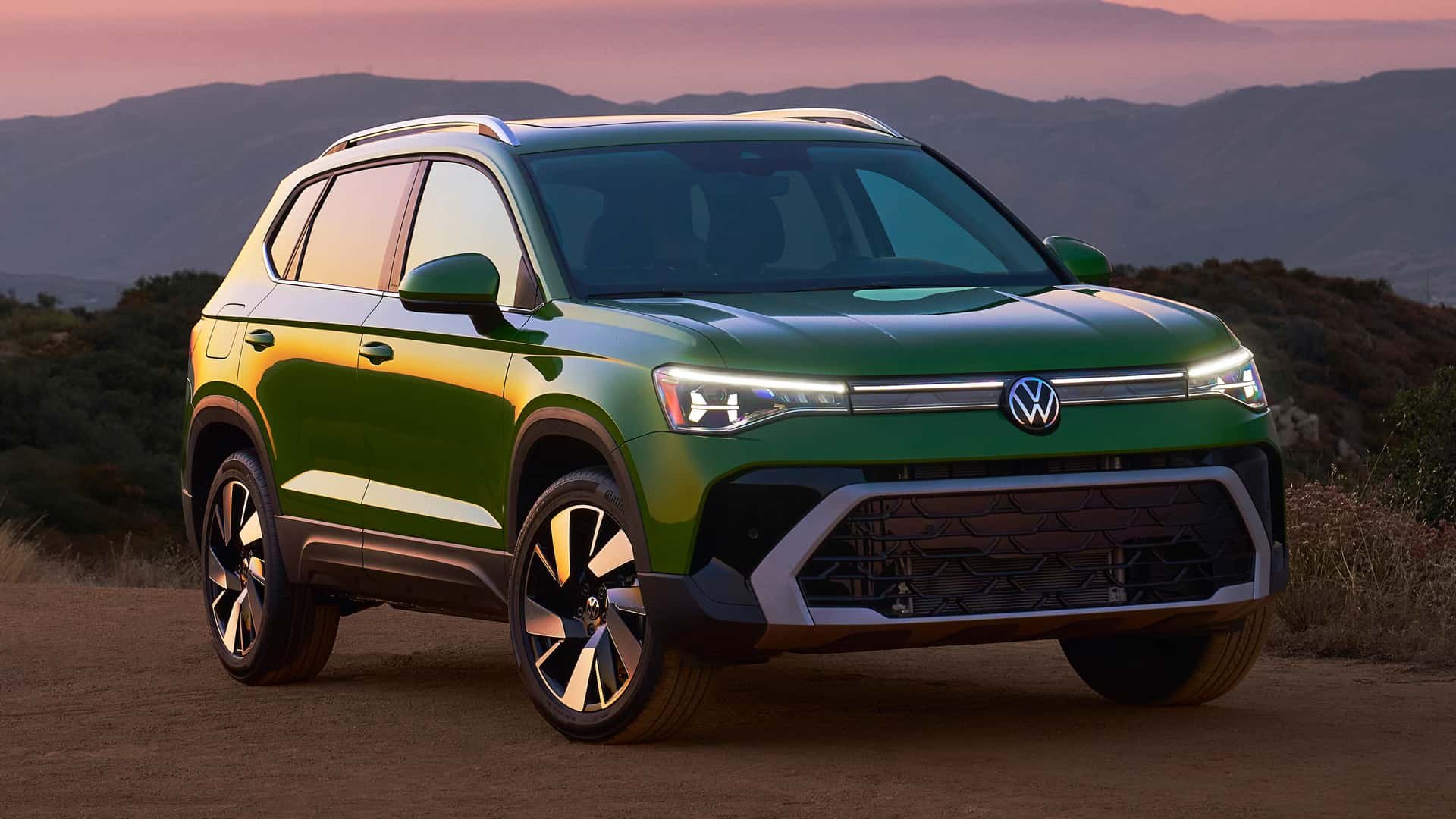
The VW Taos 2026 adopts the same design language already seen in the Mexican market. At the front, the headlights have a new shape and internal light arrangement, accompanied by a repositioned light strip at the top of the grille.
The bumper, in turn, features larger air intakes and contrasting color details, reinforcing the modernization proposal.
At the rear, the SUV showcases interconnected taillights with LEDs, as well as subtle touches on the bumper. The alloy wheels have also been redesigned, varying by version.
The color palette will include new options, including a vibrant green that has already been popular in the United States.
Mechanics Without Changes for Now
Although the design is renewed, the mechanical part of the VW Taos 2026 remains the same. The “250 TSI” badge confirms the maintenance of the 1.4 turbo flex engine, capable of delivering up to 150 hp and 25.5 kgfm of torque with ethanol.
The SUV still maintains the eight-speed automatic transmission (AQ300), which replaced the previous six-speed in the previous lineup.
This combination ensures a good balance between performance and efficiency, but still without the presence of electrification.
It’s worth noting that Volkswagen has already indicated plans to adopt hybrid engines in its lineup, inspired by what was presented in the new European T-Roc. However, this update is still expected to take time to arrive in Brazil.
Launch Strategy After the Jetta GLI
Volkswagen’s timetable for the Brazilian market has been carefully planned. In October, the sporty sedan Jetta GLI will debut in the country.
The VW Taos 2026 is expected to arrive at stores shortly afterward, but only after the stocks of the current version (2025 lineup) are completely sold.
During the presentation of the new Tiguan, dealers already hinted that the refreshed Taos should not take long.
The expectation is that the debut will happen by November, ensuring that the two models — Jetta and Taos — have their own spotlight in the brand’s launch calendar.
Market Expectations
The arrival of the VW Taos 2026 in Brazil comes at a strategic moment for Volkswagen, which seeks to maintain relevance in the highly competitive mid-sized SUV segment.
With strong competitors such as Jeep Compass and Toyota Corolla Cross, the redesign could help the model gain more space in the preferences of Brazilian consumers.
By adopting visual elements inspired by the Tiguan, the brand bets on a more sophisticated identity closer to its global models.
The combination of updated design, mechanical reliability, and Volkswagen’s tradition should reinforce the Taos’ positioning in the mid-size utility segment.





-

-

-

6 people reacted to this.