






 Portuguese
  Spanish


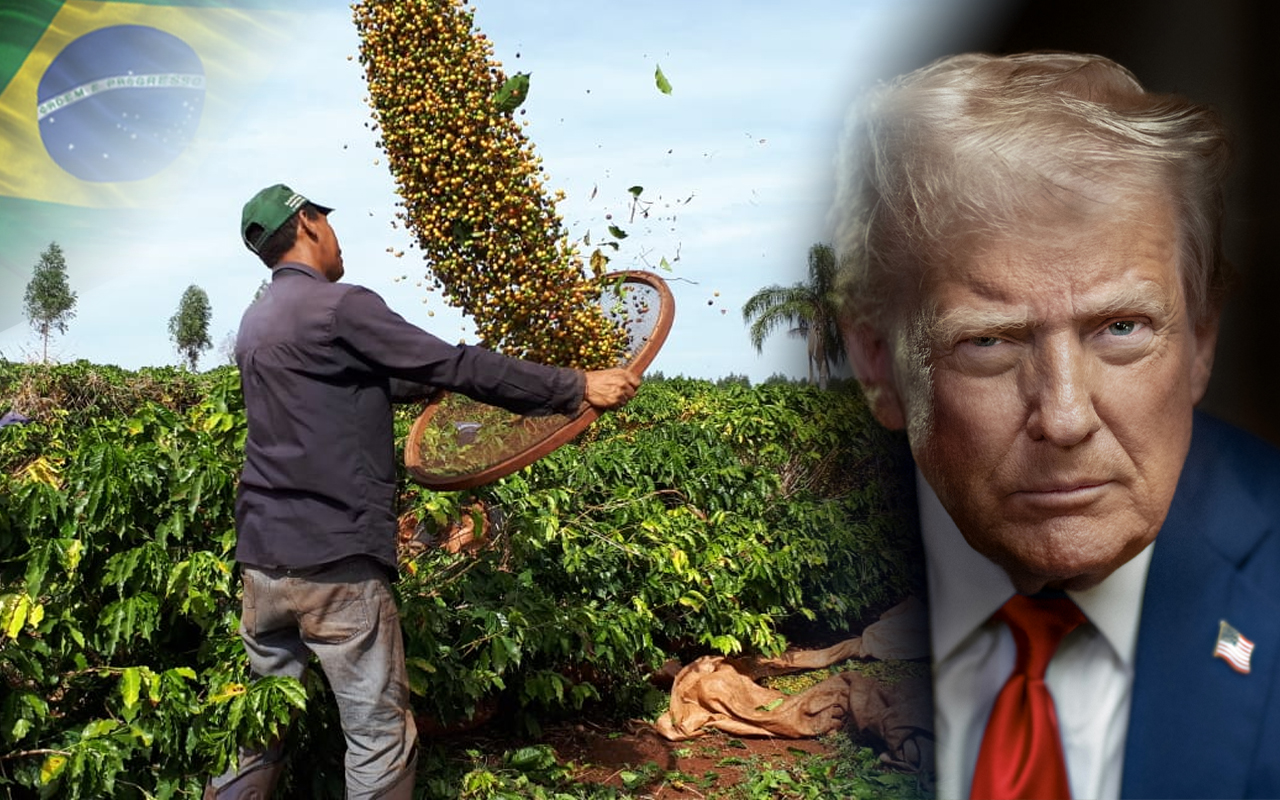


The US Imports 99% of the Coffee They Consume and Brazil Accounts for About a Third of This Volume. The New 50% Tariff Raises the Cost of Brazilian Beans and Could Divert Shipments to China and Europe.
The decision of the United States government to impose a 50% tariff on green coffee from Brazil raises an unprecedented alert in the world’s largest consumer market. Industry entities in the US claim that the measure could erode a USD 343 billion business currently sustained by roasting, distribution, and domestic retail.
The dependency is total, as Americans import 99% of the coffee they consume and Brazil accounts for about a third of this volume. By raising the cost of Brazilian beans, the tariff puts pressure on costs, affects blends, and threatens the standardization that supports cafes and large chains.
There is also the risk of trade diversion. With Brazil being more expensive for the US, part of the shipments is likely to migrate to China and Europe, while American roasters face compressed margins and pass-throughs to consumers.
-
Major Company Shuts Down 70-Year-Old Factory in Brazil, Relocating Production and Impacting Over 100 Families

-
Toyota Shuts Down Brazilian Plant After Producing Over 1 Million Vehicles, Plans Special Destination for Final Corolla Produced Following $2.1 Billion Investment and Expansion.
-
Shoe Factories Close, Leaving 528 Workers Jobless in Sudden Turn of Events Affecting Hundreds of Families After Decades of Operation.
-
Chinese Automaker Plans Second Mega Factory in Brazil with $2 Billion Investment to Produce Electric and Hybrid Cars in Strategic Location.


Economic Impact, The Size of the Coffee Business in the US
Coffee moves a gigantic chain within the US. According to the National Coffee Association (NCA), the sector had an economic impact of USD 343.2 billion in 2022, supporting over 2.2 million jobs and over USD 100 billion in wages.
In a bipartisan letter sent to the USTR, members of the Congressional Coffee Caucus reinforce the sector’s argument: each USD 1 in imported coffee generates about USD 43 in value throughout the chain (from importation to roasting, distribution, retail, and marketing). It is an added value of 4,200% that spreads across independent cafes, large chains, and related industries.
Moreover, coffee is by far the favorite beverage of Americans, and the coffee economy is shaped by a structural fact: over 99% of the coffee consumed in the US is imported, as domestic production is basically limited to Hawaii and Puerto Rico, volumes incapable of meeting national demand.
External Dependency and Risk of Supply Disruption
In the current market configuration, Brazil is the main source of coffee that arrives in the US. Academic and market studies estimate that Brazil accounts for about a third of coffee consumption/inputs in the country, a share that makes it difficult to quickly replace Brazilian product without price and quality impacts.
The new tariff has already begun to reverberate in logistics. Exporters report that American buyers have requested the postponement of shipments of Brazilian coffee after the 50% increase, waiting for political definitions and assessing short-term stocks.
In the legal-diplomatic sphere, Brazil took the dispute to the WTO and the US accepted the request for consultations on August 19, 2025, although the US government argues that the measure stems from national security reasons. This process opens a formal negotiation avenue, but does not automatically suspend tariffs.
Price Effect: Coffeeshops and Roasters Feel the Impact
For consumers, the visible link is the coffeeshops and roasters. In centers like New York, coffee shop owners report cost pressures and the risk of price pass-throughs due to the tariff increase on Brazil, a movement that adds to other pressures (freight, weather, commodities) already present in 2025.
The roasting chain also faces cash constraints: a container of green coffee is worth hundreds of thousands of dollars, and sudden changes in import costs can disrupt planning, blends, and contracts. Some importers and roasters even describe purchase postponements and renegotiation of deadlines until there is more regulatory clarity.
For a market where coffee has been historically exempt or with minimal tariffs for food and consumption policy reasons, the additional 50% bite on a dominant supplier tends to reprice retail, especially for specialty coffees and brands that rely on sensory profiles associated with Brazilian origins. Likely Outcome: more expensive cups and squeezed margins in the short term.
Trade Diversion: China and Other Destinations Enter the Radar
If the US raises the cost of Brazilian coffee, other markets rush to fill the gap. On July 30, China authorized 183 Brazilian companies to export coffee to its market for five years, a measure announced days before the enforcement of the American tariff. This facilitates the redirection of volumes that would traditionally go to the US.
This trade diversion could redesign global flows: American buyers would tend to increase purchases from Colombia, Vietnam, Central America, and others, while Brazilian shipments would gain space in Asia and Europe. In the short term, agribusiness analysts are already projecting this redistribution as one of the direct consequences of the new relative cost.
There is also a technical debate about customs origin: precedents from the CBP (US Customs and Border Protection) recognize that roasting coffee can constitute “substantial transformation”, altering the origin of the product to the country of roasting (relevant under certain regulations), while trade agents have been informing that, in recent practice, the tariff has been charged by the country of origin of the beans, even with processing in third markets.





A questão é que o café brasileiro tem 33% do mercado americano. Com a tarifa , o Brasil terá 0% e os outros fornecedores se desdobrarao para ocupar o espaço deixado. Será complicado no começo mas logo se ajustam.. bye bye Brazil
Os chineses vão ditar os preços da saca.
Quero é que os EUA se lasque , agora é ASIA nosso motor econômico
A Ásia, nosso motor econômico, já acertou comprar soja dos EUA