Portuguese
  Spanish


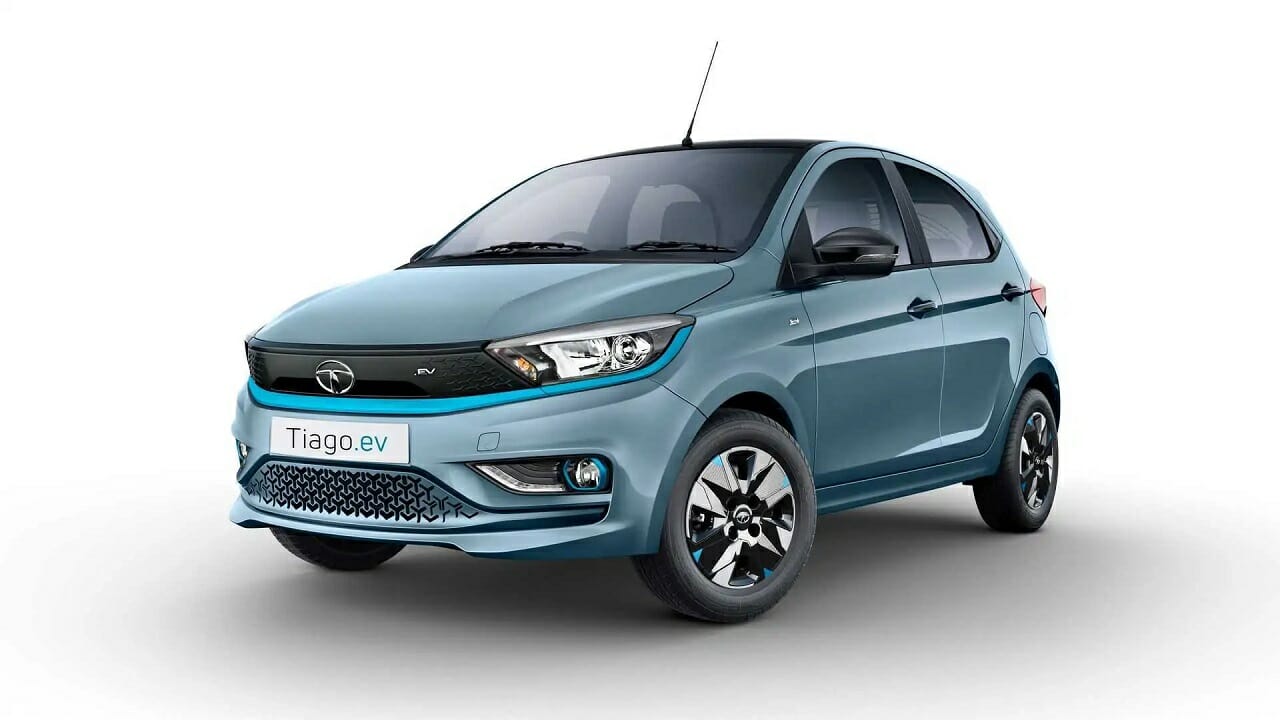

Tata Motors Announces New Affordable Electric Car That Promises to Revolutionize the Indian Market. The Vehicle Costs Less Than Rs 60 Thousand in Direct Conversion and Will Be a Rival of the Renault Kwid E-Tech.
The automotive industry is undergoing a transition marked by the growing demand for electric vehicles (EVs) worldwide. However, affordability remains one of the main obstacles to the mass adoption of this technology. Nevertheless, Tata Motors, an Indian company with a long history in vehicle production, recently announced a significant milestone toward making battery models more accessible. This is the Tata Tiago EV, an affordable electric car that could completely change the market.
Affordable Electric Car Delivers 315 km of Range on a Single Charge
Tata Motors announced the launch of its Tata Tiago EV, a compact electric car that can be purchased in India for an initial price of 849,000 rupees, equivalent to about Rs 56,000 in direct conversion.
This news is significant because it challenges the belief that electric cars are substantially more expensive than their combustion counterparts.
-
End of an era in Brazil: beloved sedan by Brazilians is discontinued despite having a 2.0 engine with 151 hp, CVT transmission, 466-liter trunk, and up to 650 km of range.

-
New Law Proposal in Brazil Could Heavily Penalize Drivers: Dangerous Overtaking May Become a Serious Offense with Fines Increased Tenfold and a 12-Month License Suspension; Update on 2026 Progress

-
Electric Revolution: Watts W125 Motorcycle Offers 160 km Range, 90 km/h Speed, and Affordable Price Starting at $3,000
-
General Motors Replaces Over a Thousand Workers with 50 Cobots at Electric Vehicle Plant, UAW Union Criticizes Move Amid Industry’s Automation Push




Although the affordable electric car is approximately US$ 2,000 more expensive than the gasoline Tiago, it is still remarkably accessible, especially for a newly launched electric vehicle.
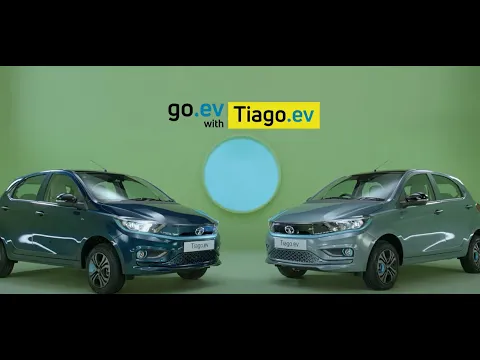

To fully understand the proposition of the affordable electric car, it is important to compare it to one of its direct competitors, the Renault Kwid E-Tech. Both vehicles have quite similar specifications and aim to be accessible electric vehicles.
The Tiago EV offers two battery options: a 19 kWh pack that delivers a range of 250 km and an optional 24 kWh pack that extends that range to up to 315 km on a full charge. It is important to note that the estimated range is calculated by the Modified Indian Driving Cycle (MIDC), which is known to be less precise compared to the WLTP test cycle.
New Electric Vehicle from Tata Motors Delivers Good Range, Top-Notch Technology and 74 cc
With a smaller battery, the affordable electric car has a less powerful motor, with 60 horsepower and 11.2 kgfm of torque. In contrast, the long-range model receives a more powerful motor with 74 horsepower and slightly more torque, 11.6 kgfm.
Both models have a standard charging rate of 3.3 kW; however, it is possible to purchase an upgraded onboard charger of 7.2 kW at an additional cost. Tata Motors also stated that the Tiago EV supports fast charging, although it did not specify the actual power, only stating that it is possible to add 110 km of range in half an hour.
The top-of-the-line trim, called XZ + Tech Lux, is an option that should be considered. This model offers an extensive range of features that significantly enhance the driving experience.
The affordable electric car comes with automatic air conditioning, rain sensors, and automatic headlights, cruise control, rear parking sensors, and a camera. Moreover, as is common in electric vehicles, the Tiago EV features adjustable regenerative braking, which helps to enhance efficiency and the vehicle’s range.
New Tiago EV Is a Market Revolution
The launch of Tata Motors’ model is an exciting milestone in the world of electric vehicles, especially for India, a country facing significant challenges related to air pollution and greenhouse gas emissions.
The affordability of the model could be the key to greater adoption of electric mobility in the country and may inspire other companies in the sector to follow the automaker’s example in the pursuit of sustainable and accessible transportation solutions.