






 Portuguese
  Spanish


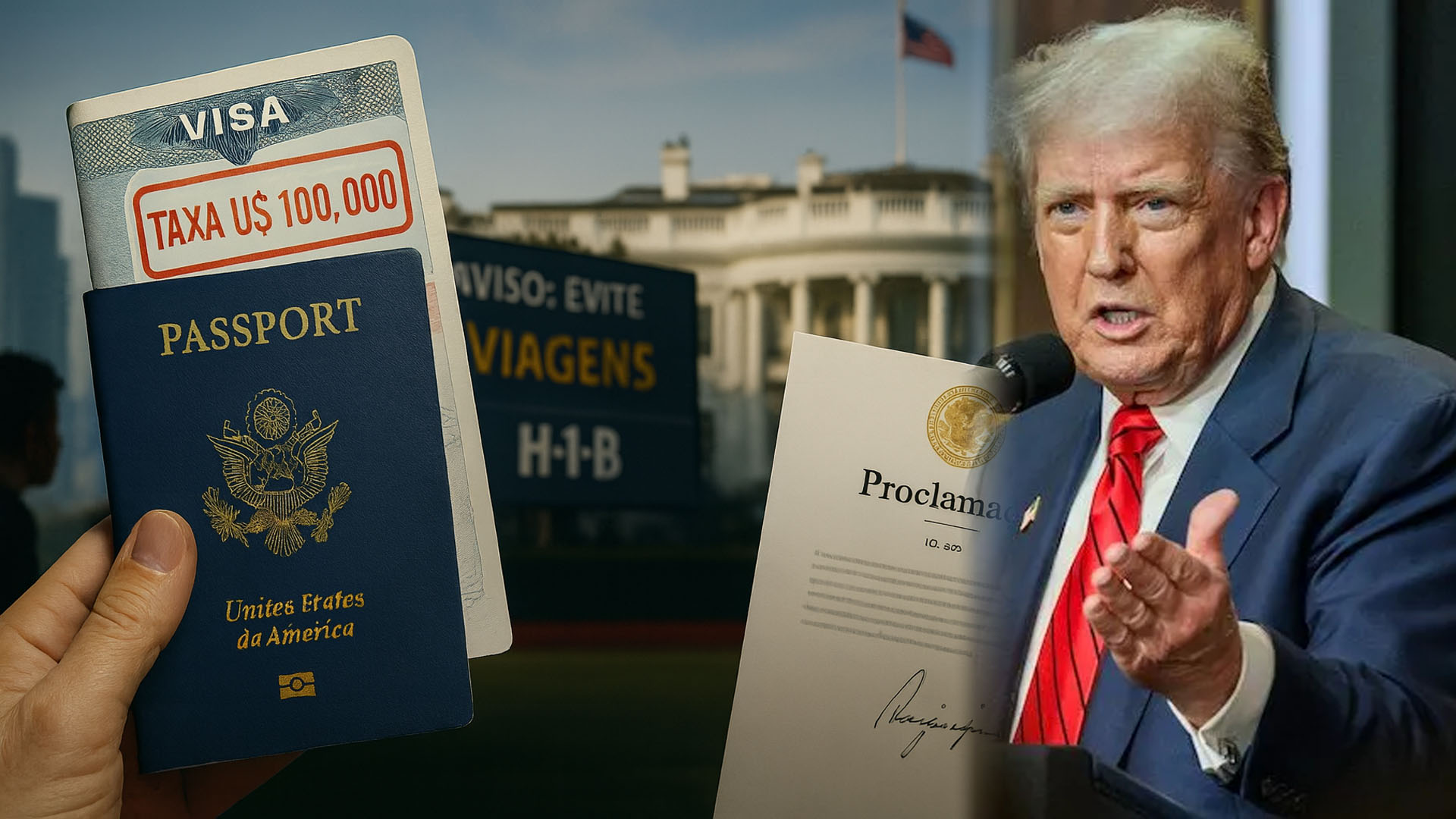

Proclamation Signed by Donald Trump Creates US$ 100,000 Fee for New H-1B Applications. Tech Sector Urges Employees to Avoid Travel and Await Official Details.
On Friday, September 19, President Donald Trump signed a proclamation that conditions the entry of skilled workers on the payment of a US$ 100,000 fee per H-1B visa petition, with an initial validity of 12 months.
On the 21st, USCIS published guidelines clarifying that the fee only applies to new applications and does not apply to visas already issued, renewals, or to anyone with petitions submitted before the deadline. The agency also stated that there are no travel restrictions for those who already have a valid H-1B.
Meanwhile, there was conflicting information regarding the nature of the fee. After the initial statement that it would be “annual,” The White House confirmed to CBS News that the payment is one-time, per new petition, and not a recurring annual charge.
-
Brazil’s 2026 Tax Refund: Record 9.58 Million Filers in Largest Payout Ever, But a Key Detail on Priority Recipients Draws Nationwide Attention

-
Itaú Alters Hybrid Work Model, Increasing Office Days from 2028, Prompting Employees to Adjust to New Routine
-
Facing Labor Shortage, Japan Plans to Invest $34 Million to Attract Foreign Workers in Construction, Healthcare, Industry, and Commerce

-
Brazilian City Makes Remarkable Leap, Becomes 4th Wealthiest in the Country with GDP of R$ 134.1 Billion



Reaction from Silicon Valley Tech Companies
Major tech and finance companies urged H-1B employees to stay in the U.S. and postpone international travel, citing the legal uncertainty over the weekend. Amazon, Microsoft, JPMorgan, and Meta were mentioned in internal communications and employee reports.
According to reports, HR departments and third-party immigration offices recommended that those outside the country return before the deadline and that those inside avoid leaving until new guidelines are issued. The measure was classified as a risk mitigation effort in light of the sudden change.
For Silicon Valley, which relies on the H-1B for engineers, scientists, and foreign programmers, the guidance aimed to ensure operational continuity until the rules stabilize.
What Changes Practically for Obtaining the H-1B
The H-1B is the most commonly used temporary specialized work visa in the tech industry. With the new rule, each new petition submitted from September 21 must be accompanied by a US$ 100,000 payment. USCIS emphasized that the fee does not affect renewals, current holders, or petitions already submitted.
The presidential text also stipulates that Labor and Homeland Security begin regulatory adjustments to raise wage floors and prioritize more qualified and better-paid candidates in future H-1B selections.
Experts indicate that companies will have to recalibrate hiring plans and international mobility budgets, especially for open positions in 2026. Immigration lawyers suggest reviewing timelines and avoiding unnecessary travel until full implementation.
Economic and Market Impact
Economists warn that the new US$ 100,000 fee may reduce productivity and discourage international talent from staying in the country after graduation, with implications for GDP growth and innovation. The bank Berenberg cut its growth forecast for the U.S., citing the risk of brain drain.
In the market, shares of tech companies fell after the announcement, reflecting their exposure to H-1B. Analysts see cost pressures and potential project reallocations if hiring in the U.S. becomes more expensive.
Industry organizations stated that the clarity that the fee only applies to new applications and has prospective application reduced short-term uncertainties, although the high fee imposes gradual adjustments.
How Professionals and Students are Affected
For those who already have a valid H-1B, official guidance states that travel remains permitted and that the fee does not apply to renewals. Still, immigration offices recommend extra planning and prior consultation with HR and counsel.
Candidates who plan to enter the program starting in 2026 should factor the fee into their sponsorship budget and salary offer strategy. The government indicates that reference salaries will be reviewed to higher levels, aligned with the goal of attracting “the best of the best”.
Universities and companies recruiting through OPT and STEM OPT are assessing indirect effects on talent retention, given the increased transition cost to H-1B.
Do you think the US$ 100,000 fee will protect jobs in the U.S. or tax innovation by driving global talent away? Leave your comment.








