Portuguese
  Spanish



When We Talk About Automotive Innovation, We Imagine Flying Cars, Artificial Intelligence at the Wheel, and Futuristic Driving Experiences. But, in Practice, Not Every Innovation is a Success. Some Technologies That Didn’t Work in Cars Are Remembered More for the Problems They Caused Than for the Solutions They Offered. Let’s Dive Into Some of These Ideas That, on Paper, Seemed Brilliant, but on the Road… Did Not Go Far!
Nowadays, technology is everywhere, even in our cars! But not everything that glitters is gold, especially when we talk about technologies that didn’t work in cars. Some innovations that promised to revolutionize the automotive market ended up being real duds, causing more headaches than benefits. In Brazil, there are plenty of examples of ideas that started with a lot of enthusiasm but quickly showed that it might have been better to leave them on paper.
The Clutchless System: A Costly Headache
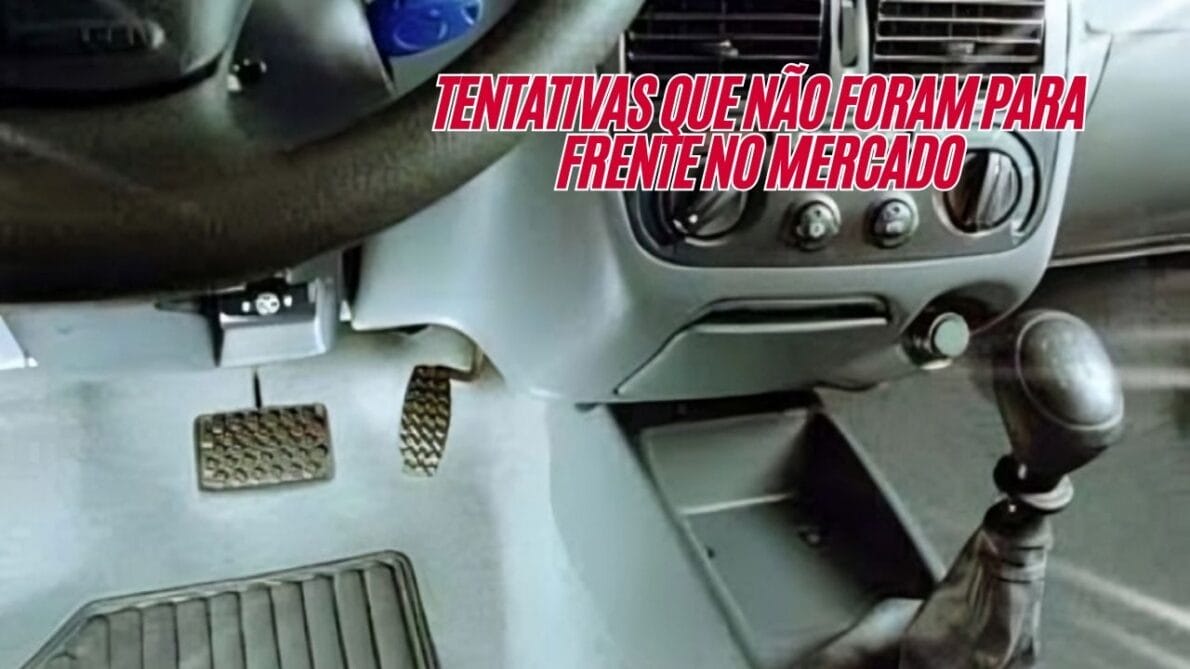
One of the technologies that didn’t work in cars and fell into obscurity was the clutchless manual transmission system, which arrived in Brazil in cars like the Fiat Palio Citymatic and the Chevrolet Corsa Autoclutch. The idea was to simplify gear shifting: without a clutch pedal, the driver simply moved the gear lever, and the electronic system would automatically engage the clutch.
In theory, it was a revolution, but in practice, it became a source of frustration. The high maintenance costs and the lack of precision of the system ultimately buried this technology. The promise of less effort in gear shifting was replaced by mechanics trying to resolve frequent failures, especially when the sensors and modules malfunctioned.
-
Turbocharged Engines with Direct Injection: Why High-Performance Engines Over 130 HP/Liter and Turbines at 200,000 RPM Challenge Durability

-
Chevrolet’s Parent Company to Invest Billions in Brazil to Modernize Factories, Update Cars, and Accelerate Hybrid Launch by 2028

-
Practical Driving Tests in Brazil Surge by 23.5%, Exceeding 2.2 Million by 2026, as New Rules Make the Process Cheaper and Simpler
-
Brazil’s Lula Government Allocates $463 Million Quota for Electric Car Parts, Waives Import Tax Until December, Sparking Competition Among BYD, Automakers, and Unions as Consumers Question Impact on Prices and Local Industry


TetraFuel: The Dream That Stumbled on Prejudice
In 2006, Fiat brought a bold idea to the Brazilian market: the Fiat Siena TetraFuel, which promised to run on four types of fuels: CNG, ethanol, pure gasoline, and gasoline with ethanol. With an electronic control unit that automatically read the fuels, the car adjusted to the best option for the moment, prioritizing CNG for cost savings.
Although the technology was promising, it was not embraced by Brazilian drivers, who still held some prejudice against CNG, along with a lack of government incentives to popularize the innovation in other automakers. The result? A technology that ended up limited to the Siena, with no significant advancements.
Ford Supercharger: A Shot in the Foot
One of the technologies that didn’t work in cars in Brazil was Ford’s attempt to popularize the mechanical supercharger in vehicles like the Fiesta 1.0 Supercharger and the EcoSport. The concept of the supercharger was simple: increase the oxygen intake in the cylinders to burn more fuel and generate more power.
In practice, the Fiesta with the supercharger ended up being slower and consuming more fuel than the aspirated 1.6 version. For Ford, it was a major shot in the foot, and owners of these models still face difficulties in finding replacement parts today.
Magnetic Alarm: A Boon for Thieves
In the 1990s, cars like the Chevrolet Chevette and Kadett came with an innovation: the magnetic alarm. It was enough to pass a magnetic key along the side of the car to activate or deactivate the security system. However, this “innovation” quickly became a nightmare for owners.
Thieves discovered that any simple magnet could deactivate the alarm, making the vehicles vulnerable. What seemed like a good idea to enhance security ended up facilitating car thefts.
Technologies That Didn’t Work in Cars in Brazil Had Their Chance


The automotive market is filled with innovations, some successful, others that failed. In Brazil, many technologies did not work in cars, whether due to cost, complexity, or simply rejection from drivers. Who knows if the future will bring better solutions? In the meantime, we remember these ideas that remain in the past as lessons for the next generations of vehicles.