Portuguese
  Spanish


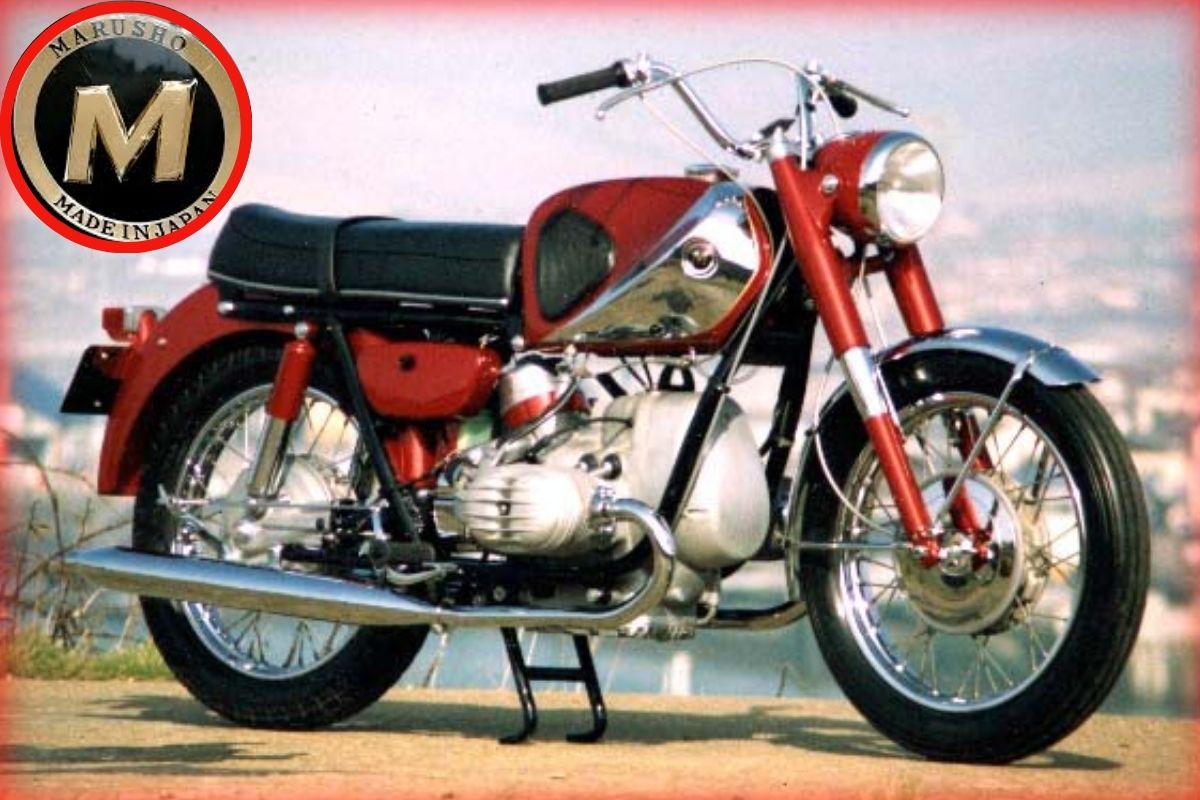

The Japanese brand Marusho bet on more advanced motorcycles than the post-war standard, shone on the tracks and in rare solutions for the time, but did not keep up with the mass market and disappeared in 1967
The Japanese brand Marusho was born in a Japan that was not yet dominated by just four names. In the late 1940s and throughout the 1950s, dozens of manufacturers tried to carve out a space, and Marusho entered this race wanting to play in “engineering first” mode, very different from the path that Honda would consolidate.
For a time, it worked. The brand had striking models, sought a unique identity, and even built a reputation on the tracks. However, when the industry turned into a competition of large-scale, fast, and cheap production, what was once a differentiator became a burden. And this bet, in the end, could not sustain the company, which disappeared from the map in 1967.
When Japan was not just the “Big Four”
Today, the history of Japanese motorcycling is often told as the reign of Honda, Suzuki, Kawasaki, and Yamaha. The foundation recalls that there was a time when the landscape was much more open: there was an industrial boom and several brands trying to find a niche.
-
End of an era in Brazil: beloved sedan by Brazilians is discontinued despite having a 2.0 engine with 151 hp, CVT transmission, 466-liter trunk, and up to 650 km of range.

-
New Law Proposal in Brazil Could Heavily Penalize Drivers: Dangerous Overtaking May Become a Serious Offense with Fines Increased Tenfold and a 12-Month License Suspension; Update on 2026 Progress

-
Electric Revolution: Watts W125 Motorcycle Offers 160 km Range, 90 km/h Speed, and Affordable Price Starting at $3,000
-
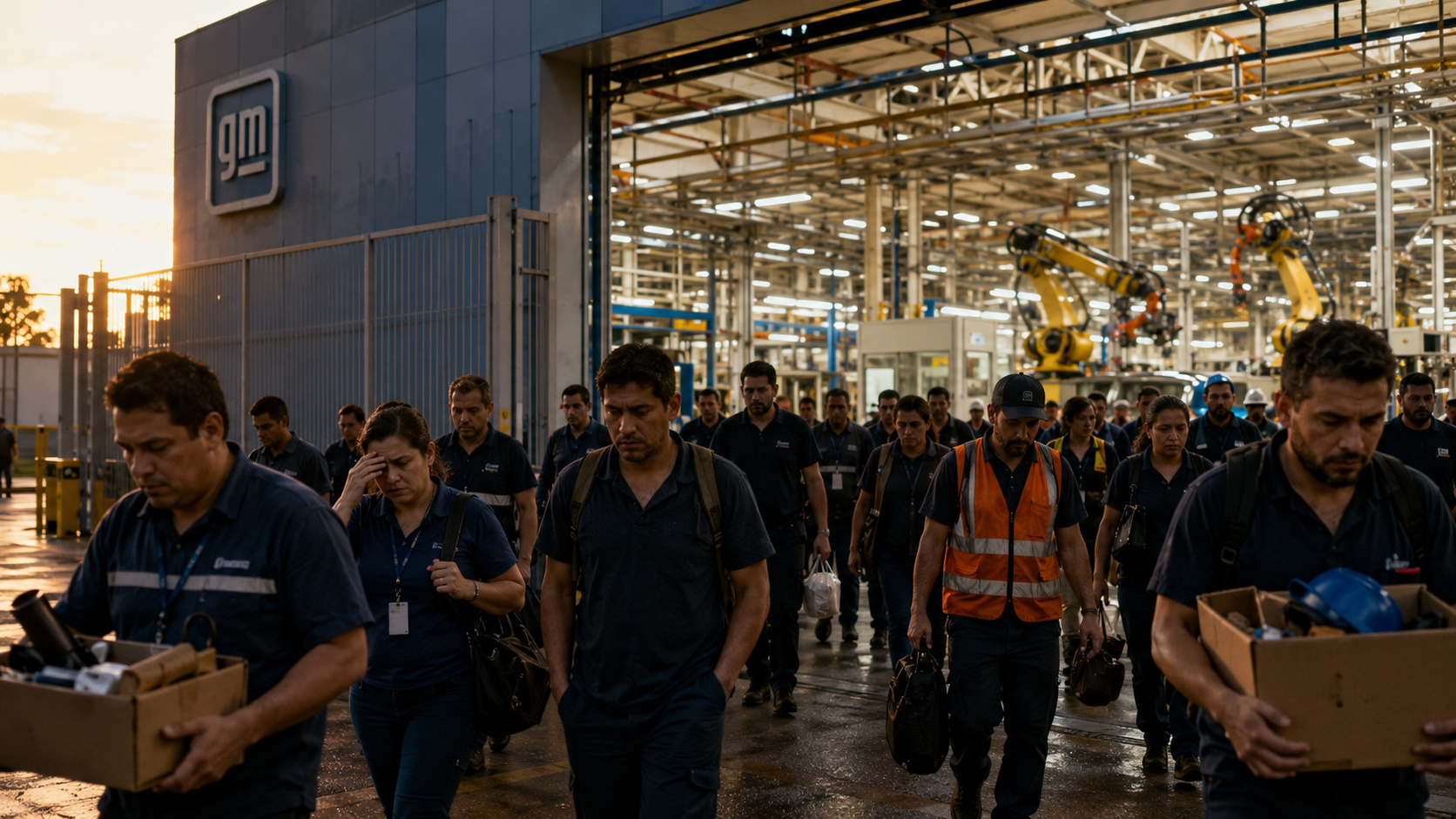
General Motors Replaces Over a Thousand Workers with 50 Cobots at Electric Vehicle Plant, UAW Union Criticizes Move Amid Industry’s Automation Push


It is in this context that Marusho enters, a company that shared location and ambition with big names, including in the Hamamatsu region. The cruel detail is that while one brand became a giant and crossed decades, the other could not withstand the type of market that formed.
The choice that defined everything: more engineering, less popularity
Founder Masashi Ito came from the world of mechanics and decided not to follow the most obvious path. While Soichiro Honda built his empire with simple, reliable, and affordable motorcycles, Ito preferred the opposite direction: more complex motorcycles and unusual technical solutions for the time.
In theory, this was a shortcut to stand out. In practice, it was a huge risk in a country where a large part of the audience wanted something straightforward, cheap, and easy to maintain.
Shaft drive as a signature in an era dominated by chain
The most emblematic feature appeared on the Lilac motorcycles. At a time when practically everyone used chain transmission, Marusho made shaft drive the main feature, something that today is seen as more sophisticated and “premium,” but had been around for almost 80 years.
This decision helped the brand appear advanced and different. At the same time, it pushed costs and complexity up, precisely at a moment when the market began to reward those who simplified.
V-twin longitudinal and other rare mechanical bets in Japan
The foundation also points out that Marusho experimented with various configurations: single-cylinder engines inspired by European designs and more sophisticated options, including a V-twin longitudinal, something practically unprecedented in Japan at that time.
This kind of boldness increases technical prestige, but it also raises the costs of design, production, and maintenance. And to grow, it was not enough to be better on paper: it was necessary to deliver volume.
Baby Lilac and the attempt to reach more people

Despite the image of a complex brand, there was a phase when Marusho managed to broaden its reach. Models like the Baby Lilac helped popularize the brand with an accessible and easy-to-ride proposal, even designed for a female audience, something little considered at that time.
This shows that the company was not incapable of seeing the consumer. The problem was maintaining a balance between innovation and price when the industry accelerated towards a model that favored scale.
On the tracks, the proof that the brand had level
Races have always been a showcase for motorcycles, and Marusho also raced. The foundation states that the brand achieved significant victories, strengthening its image and showing that, technically, it could be on the same level as any competitor, or even above.
However, the street market does not buy just performance and reputation. It buys availability, price, network, maintenance, and consistency. And that’s where the game changed.
The turning point of the 1950s and the shock with the mass market
As the 1950s progressed, the industry began to value processes that can be summed up in one phrase: produce a lot, produce fast, produce cheap. Marusho, with elaborate and more expensive motorcycles, was the opposite of that.
What was a technical advantage became a commercial disadvantage. The foundation points out that the brand could not compete on price or volume with Honda, Yamaha, and Suzuki, which already had much more powerful industrial structures and were beginning to reap economies of scale and expansion.
1967: the end of production and the disappearance of the brand
By the end of the 1960s, the company’s financial situation became unsustainable. In 1967, Marusho abandoned motorcycle production and disappeared from the map, leaving a short but intense history.
The foundation already opens with the idea that Honda ended up absorbing this fifth Japanese brand. The summary of the fall goes through this: brilliant engineering, poor timing, and a competition where scale and price won over sophistication.
Why this story still draws attention
Marusho is the portrait of a choice: to bet on engineering when the market was already learning to reward accessibility. If it had managed to reconcile innovation with costs and volume, perhaps today the conversation would be about “Five Giants,” and not just four.
Do you think that in the world of motorcycles, a more technically advanced brand can survive without entering the mass production game, or does that always end up costing them sooner or later?