






 Portuguese
  Spanish
  5 min of reading
  0 comments


Two years of tests show that the discovery was not born by chance
The industry relies on oil to manufacture many types of plastic, but a 16-year-old girl showed that discarded banana peels can also join this conversation. Elif Bilgin, a student from Istanbul, used this common waste to create a bioplastic after two years of attempts.
The information was published by Scientific American, a scientific dissemination magazine about research and innovation. The case gained visibility in 2013, when Elif won the Science in Action Award, a prize linked to the Google Science Fair.
The most important point is to understand the real size of the discovery. The project was award-winning and promising, but it does not appear as a ready industrial replacement for petroleum plastics. It shows a possible path to reuse organic waste and study new materials.
-
Argentina issues radiological emergency alert after theft of Cesium-137, a substance that can cause severe burns and death, and became famous in Brazil due to the Goiânia accident in 1987.

-
While the world tries to prevent plastic in the oceans, an 18-year-old used oil, rust, and a magnet to solve the problem before it reaches the sea.

-
The technology seemed too expensive for many families until a 13-year-old boy used Lego pieces to create a low-cost braille printer.
-
A forgotten society lived isolated in caves for 500 years in Spain, and now the ancient DNA from human remains has revealed smallpox, signs of violence, and a routine marked by animal husbandry.


Banana peel stopped being waste and became raw material in the laboratory
The banana peel usually goes straight to the trash after the fruit is consumed. In Elif Bilgin’s project, this waste gained another destination: it became raw material for bioplastic tests.
Bioplastic is a type of plastic made from biological origin materials. In simple language, it is an attempt to create materials similar to plastic using sources linked to plants, food, or natural residues.
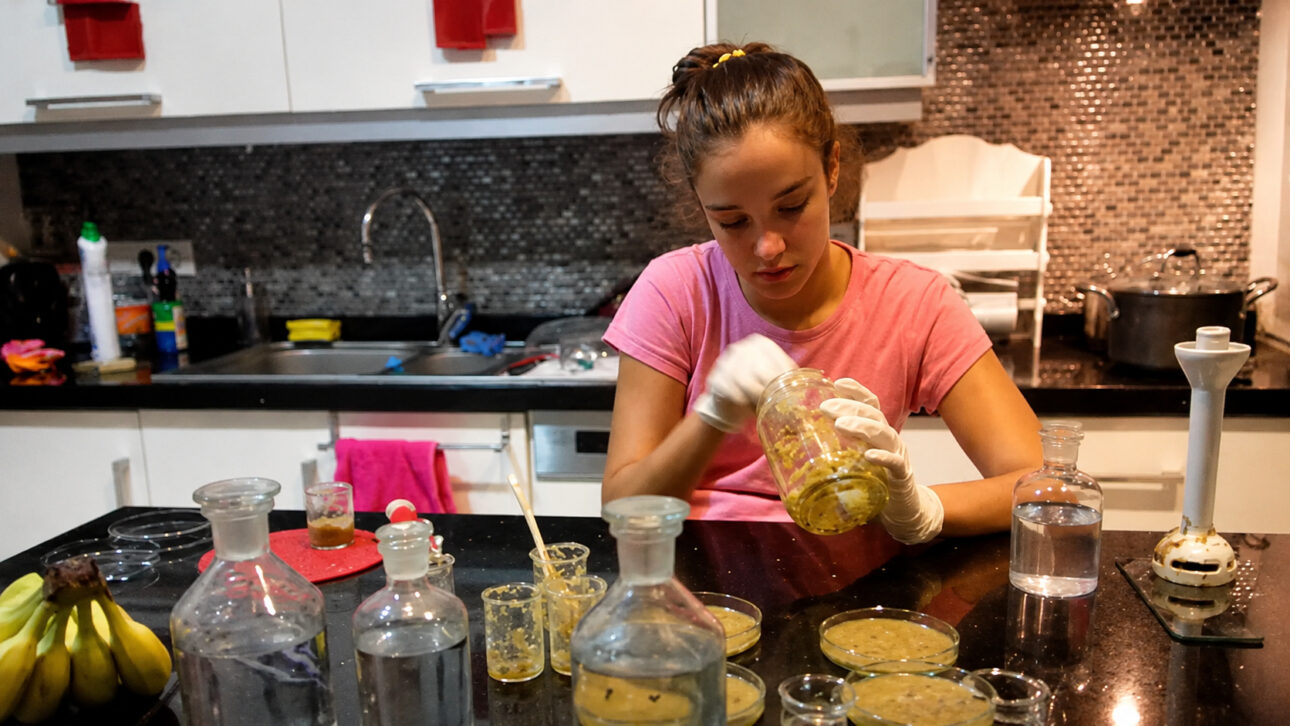
The strength of the case lies in this change of perspective. A common leftover, which seems worthless, entered a research process and began to be treated as a resource.
This idea aligns with the circular economy, a term used to explain the reuse of previously discarded materials. Instead of throwing it away, the waste can return to the usage chain, when there is research and safe application.
Two years of testing show that the discovery was not born by chance
Elif Bilgin worked on the project for two years. During this period, she faced 10 failed attempts before achieving the result that gained international attention.
This detail helps to understand how science works in practice. A discovery is not always born quickly. Often, it depends on error, repetition, patience, and adjustments.
In the case of the student from Istanbul, the material created from banana peels was recognized in 2013 by the Science in Action Award. The award valued projects by young people with the potential to tackle real problems.
The story also shows that a simple idea can require a lot of work. The image of the banana peel coming out of the trash seems easy to understand, but transforming this waste into useful material required time and persistence.
Bioplastic targets an old industry problem: dependence on oil
A large part of the plastics used daily comes from raw materials linked to oil. This connects packaging, objects, and common products to a heavy industrial chain.
The bioplastic made from banana peels appears as a research alternative. It does not eliminate traditional plastic on its own, but it helps to show that other paths can be explored.
Scientific American, a scientific dissemination magazine about research and innovation, reported that Elif developed a resistant bioplastic from discarded peels. The publication also linked the project to the debate on replacing petroleum-derived materials.
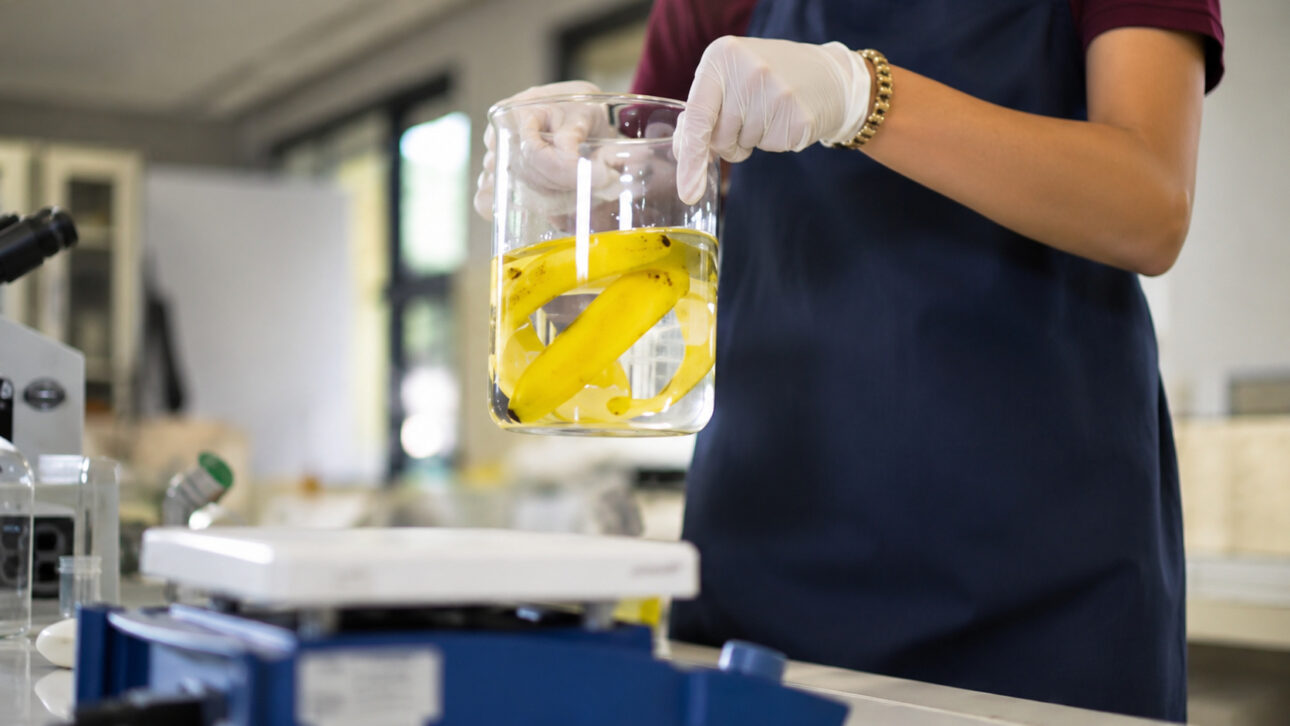
This difference needs to be maintained. The case does not prove that banana peels can already replace all market plastic. It shows an award-winning research, with potential for new stages.
Istanbul appears as the setting for a simple question about urban waste
The project was born in Istanbul, a large city where waste disposal is part of the urban routine. In such places, food scraps accumulate every day.
The banana peel is the simplest item to find in waste. It leaves the kitchen, goes to the trash, and is almost never seen as something useful.
Elif Bilgin changed this logic in the laboratory. The waste began to be seen as a possible base for a new material, linked to applied chemistry and reuse.
This type of research brings science closer to everyday life. It is not necessary to start with a rare material to raise an important question. Sometimes, the question arises from something simple, like a discarded peel.
The award gave visibility, but industrial scale still requires new steps
The recognition at the Science in Action Award showed that the project had scientific and environmental value. Even so, an award does not mean large-scale production.
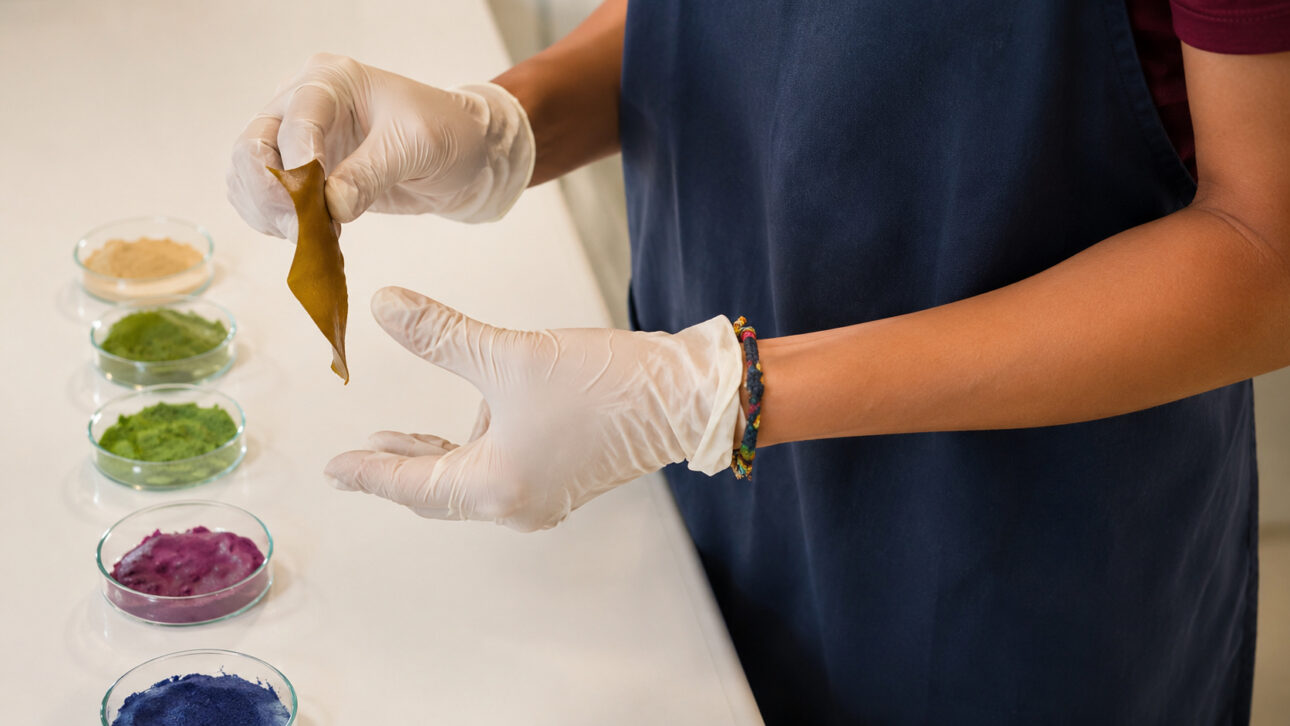
To reach the industry, a material needs to be tested in many aspects. It needs to maintain quality, withstand use, have a viable cost, and function in large quantities.
These points do not appear to be resolved in the case of Elif Bilgin. Therefore, the banana peel bioplastic should be understood as promising research, not as a ready product to replace common plastic.
This perspective avoids exaggerations. The project is important because it shows possibility, not because it solves the global plastic problem.
What this bioplastic teaches about waste, oil, and new materials
The case of Elif Bilgin teaches that organic waste can be viewed differently. Banana peels, once seen only as discard, entered research capable of dialoguing with industry, environment, and applied science.
It also shows that the dependence on oil in plastic production can be questioned through different paths. Some of these paths start small, in laboratories, before any scale application.
At 16 years old, after two years of attempts, Elif created an award-winning bioplastic and brought an important question to the table: what are we still throwing away without realizing its value?
The project does not solve the plastic problem alone, but it helps to broaden the discussion. It shows that organic waste can become a starting point for smarter materials, as long as research advances responsibly.
Do you believe that common waste, such as banana peels, can become real raw material for the industry in the future? Share your opinion.


Be the first to react!