Portuguese
  Spanish


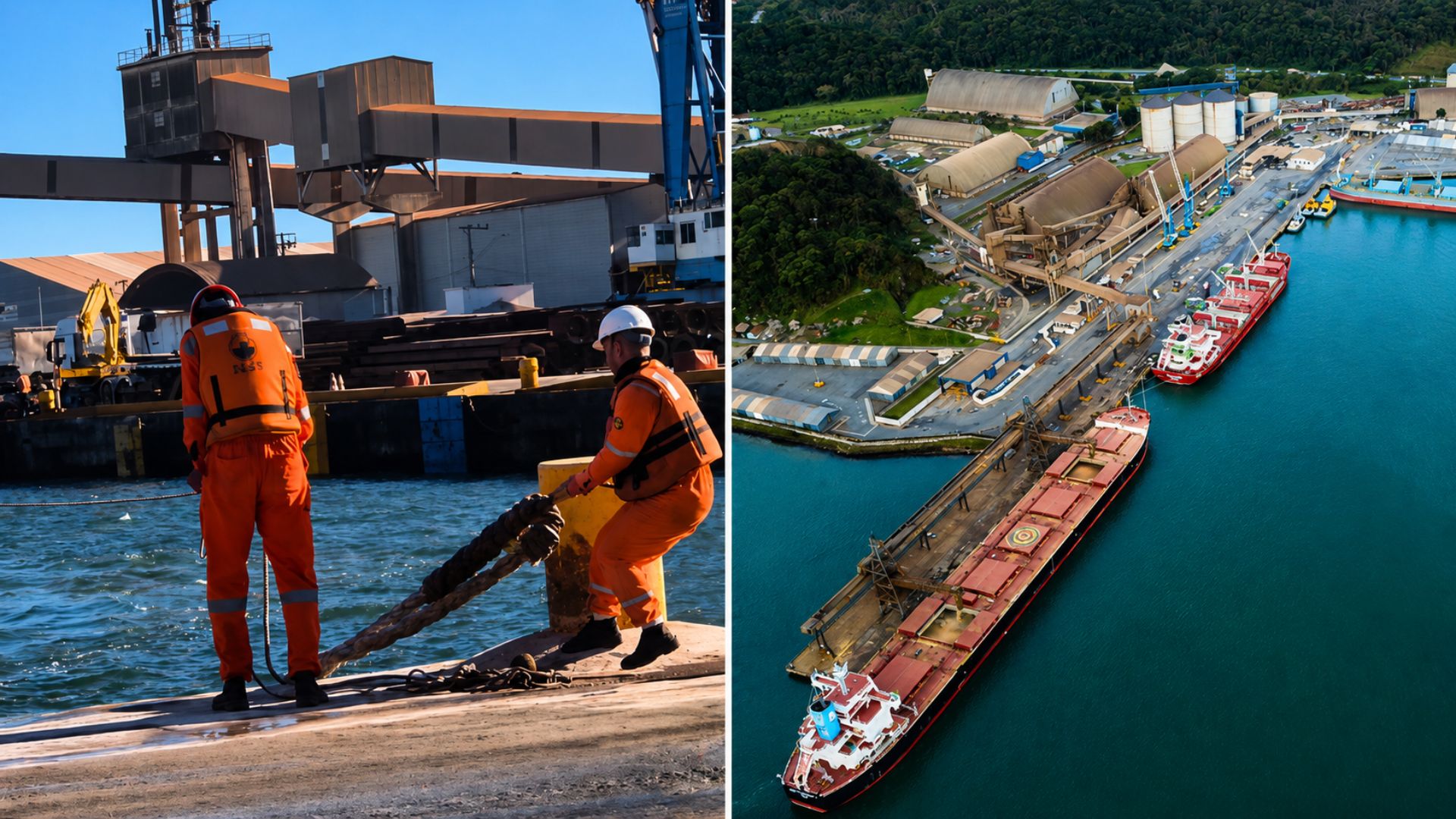

The port of São Francisco do Sul, on the Northern Coast of Santa Catarina, is the largest in the state in cargo handling and currently operates with ships up to 336 meters and a capacity of 10 thousand TEUs. According to information released by ndmais, the docking of these giant vessels involves a mega-operation with pilots, tugboats, and crew working in an integrated manner to ensure safety in an access channel that is being dredged to receive even larger ships.
The person who coordinates the docking maneuver at the port is the pilot, a specialized professional who knows every detail of local navigation, including depth, currents, winds, and characteristics of the access channel. When the ship approaches: the tugboats spring into action to align the vessel and control its movements in narrow areas. How the docking works: the pilot assists the ship’s captain throughout the maneuver, the tugboats position the vessel in the docking berth, and mooring lines secure the ship to the quay, ensuring stability. Why this operation is so complex: 336-meter ships in a channel that still has a critical curve require millimetric calculation of speed, angle, and position, where any mistake can mean collision, grounding, or blockage of maritime traffic.
The port hit a historic record in 2025 with 17.5 million tons of goods handled, the largest volume ever recorded in its 70 years of operation. In soybean exports alone, there were 6.1 million tons last year, a volume equivalent to 5.7% of all soybeans exported by Brazil. The ongoing dredging in Babitonga Bay will deepen the access channel to 16 meters, allowing the arrival of ships with up to 16 thousand TEUs, 60% larger than those currently operating at the terminal.
The pilot: the professional who guides giants in the channel

The maneuvering of a 336-meter ship in a port channel is not a task that can be resolved solely with the experience of the ship’s captain. The pilot is the professional who boards before docking and takes over the tactical navigation of the ship, advising the captain on each decision regarding the rudder, speed, and positioning. This specialist knows the port access channel like few others: they know where the bottom is shallower, where currents change direction, how winds affect large vessels, and the exact point where each maneuver needs to be executed.
-
Brazil’s Port of Santos to Receive New $1.1 Billion Container Terminal, Tecon Santos 10, Set to Begin Operations in 2029

-
Ports without drivers and cabins already move containers like automated factories: robotic cranes, autonomous electric vehicles, and software transform giant terminals into 24-hour logistics machines.
-
About 300 American ports still breathe diesel from trucks, cranes, and locomotives, but they are now trying to electrify heavy machinery to clean the air for 31 million nearby residents.

-
A 220-meter giant powered in part by solar energy and lithium batteries has just unloaded nearly 5,000 Chinese cars at the Port of Itajaí. It is the first of ten Grimaldi super ships and the first in the world prepared to run on ammonia as fuel.


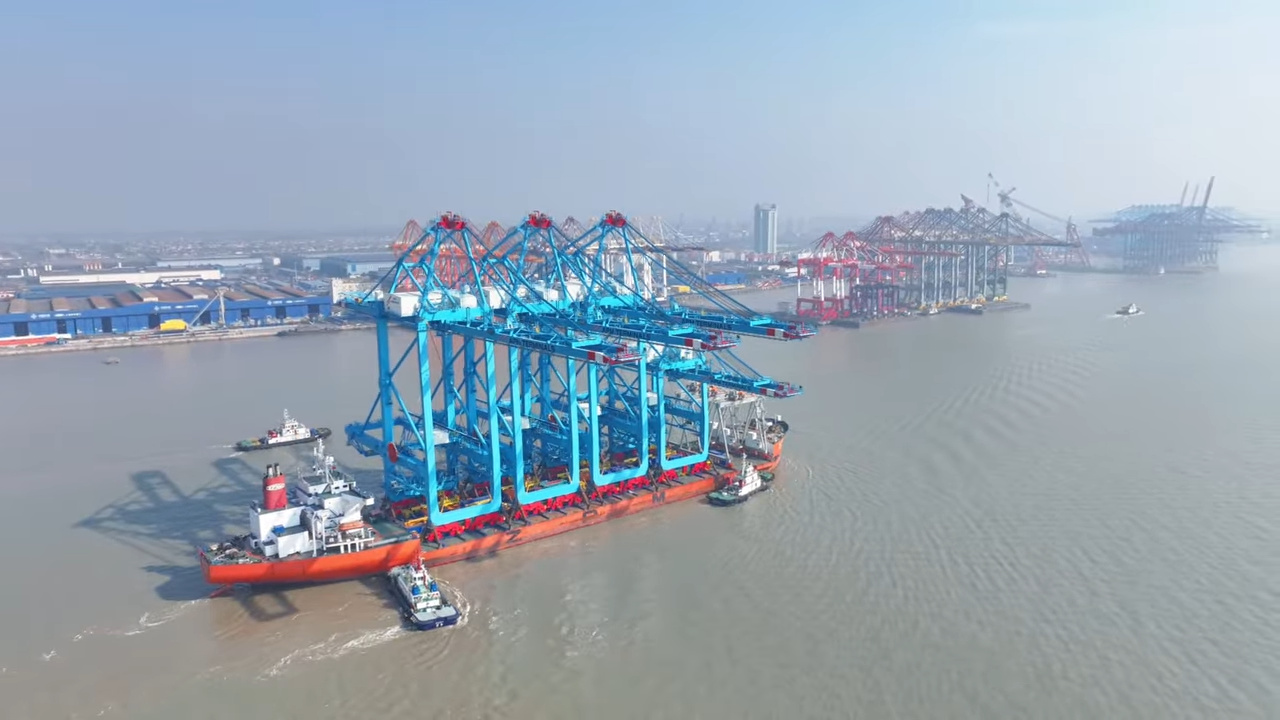


At the port of São Francisco do Sul, the pilot’s role is especially critical due to a curve in the access channel that requires absolute precision. Ships of 10,000 TEUs over 300 meters long need to negotiate this curve with a reduced margin, and any deviation in trajectory can result in grounding or collision with the channel’s banks. The combination of limited depth, sharp curves, and variable currents turns each docking into an operation that requires advance planning and constant communication between the pilot, captain, and tugboats.
Tugboats: the force that aligns the ship at the berth
video:ndmais
While the pilot guides navigation within the channel, the tugboats provide the physical force necessary to position the ship at the docking berth. These support vessels connect to the ship with cables and push or pull the vessel laterally, controlling movements that the ship’s rudder alone cannot execute at low speeds. In narrow areas like the access channel to the port of São Francisco do Sul, tugboats are indispensable for the ship to enter aligned and stop exactly where needed.
The number of tugboats involved depends on the size of the ship and the wind and current conditions at the time of the maneuver. Larger ships require more tugboats and more complex positioning, with support vessels operating at the bow, stern, and sides simultaneously. Communication between the pilot on the bridge, the ship’s captain, and the tugboat masters is done by radio and needs to be precise and immediate. A second of delay in executing an order can mean the difference between a clean docking and an incident at the quay.
17.5 million tons: the record that positioned the port
The port of São Francisco do Sul ended 2025 with the highest cargo movement in its 70-year history. The 17.5 million tons moved consolidated the terminal as the largest in Santa Catarina and one of the most significant in Southern Brazil, surpassing previous records in a year of strong demand for agricultural exports and imports of industrial inputs. The volume includes containers, bulk grains, fuels, and various products that enter and leave the country through the quay.
Soy exports accounted for a significant portion of this record, with 6.1 million tons shipped throughout the year. This volume represents 5.7% of all soy exported by Brazil, a significant percentage for a single port that competes with much larger terminals in states like Paraná, São Paulo, and Maranhão. For the port, maintaining and expanding this soy flow directly depends on the channel’s ability to accommodate increasingly larger bulk carriers, which justifies the investments in dredging currently underway.
The dredging that will pave the way for 16,000 TEU ships
The dredger Galileo Galilei, the same vessel that participated in the widening of Balneário Camboriú beach in 2021, is operating in Babitonga Bay to deepen the access channel to the port. The main goal is to address the critical curve that limits the size of ships that can enter the terminal, deepening the 7-meter section to up to 16 meters. In the straight channel, the depth already reaches 15 meters and will reach 16 meters by the end of the work, scheduled for the second half of 2026.
With the channel deepened to 16 meters throughout its length, the port of São Francisco do Sul will be able to receive ships with up to 16,000 TEUs, vessels 60% larger than the current 10,000 TEU ships that already pose an operational challenge for pilots and tugboats. Ships with 16,000 TEUs can exceed 400 meters in length, which will require updating maneuvering protocols, possibly expanding the tugboat fleet, and additional training for pilots to operate with vessels of this scale in a channel that, even dredged, will continue to have natural limitations.
From the channel to the quay: what happens after docking
After the pilot completes the maneuver, the tugboats disconnect, and the mooring ropes secure the ship to the quay, the most visible part of the operation begins. Quay cranes, called portainers, position themselves over the ship and start moving the containers, removing 20 or 40-foot boxes from the deck and holds and placing them on trucks or in storage areas in the port yard. In the bulk berths, conveyor belts load or unload millions of tons of soy, corn, and other bulk products.
For containers and bulk goods to arrive at or leave the port, an entire land logistics chain needs to operate in sync with the quay operations. Trucks bring and take loads, trains connect the terminal to inland production regions, and intermediary warehouses ensure that the flow does not stop even when the pace of ship arrivals varies. At the port of São Francisco do Sul, which handled 17.5 million tons in 2025, this mechanism operates almost uninterrupted throughout the year.
A port that grows with the size of the ships it receives
The port of São Francisco do Sul operates ships up to 336 meters, broke a record of 17.5 million tons in 2025, and is now dredging the channel to receive vessels of 16,000 TEUs. Each docking involves pilots who know every meter of the channel, tugboats that position giant ships with centimeter precision, and an infrastructure that needs to grow at the same pace as the arriving ships. The critical curve in the channel, which currently limits the size of vessels, is being corrected by the same dredger that has already reshaped beaches in Santa Catarina.
Have you ever seen a ship over 300 meters being maneuvered in a port? Tell us in the comments if you follow the operations of the port of São Francisco do Sul, what you think about the dredging to accommodate larger ships, and if the port infrastructure of Santa Catarina is at the level the state needs. We want to hear your opinion.