Portuguese
  Spanish


The Third Global Ocean Assessment by the UN confirms that sea level is rising faster: it has increased from 3.2 to 4.3 millimeters per year. The study is a warning for Brazil’s 8,000 kilometers of coastline and also points to the advance of pollution in the seas.
The sea is rising increasingly faster, and the warning now comes with numbers. A new report by the UN, released this Monday (8), World Oceans Day, confirms that the speed of sea level rise has jumped: it has increased from 3.2 to 4.3 millimeters per year in just four years.
The data is part of the Third Global Ocean Assessment (WOA-3), considered the most comprehensive survey ever conducted on the seas. The document is a direct warning for Brazil, which has more than 8,000 kilometers of coastline and millions of people living in coastal cities spread across 17 states.
The silent leap in sea level and the risk to Brazil’s coastline
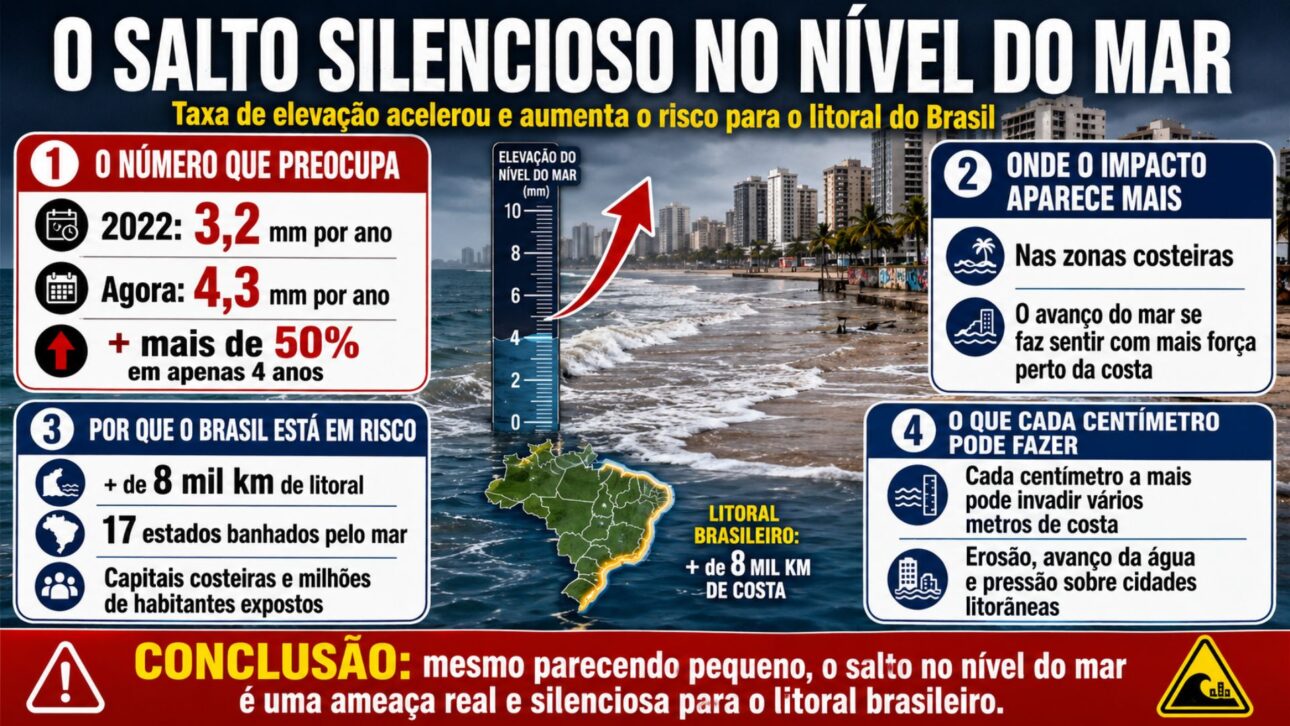
The number is alarming precisely because it seems small. The rate of sea level rise has increased by more than 50% in just four years: it was about 3.2 millimeters per year in 2022 and is now confirmed at around 4.3 millimeters per year. According to Ronaldo Christofoletti, a professor at the Federal University of São Paulo (Unifesp) and one of the study’s authors, in an interview with UN News, it is in coastal areas that this advance is felt most strongly.
-
Unknown Molecule Possibly Detected on Pluto and Titan by James Webb Telescope

-
Global Population Estimates May Be More Inaccurate Than Thought: Study Finds Rural Areas Underestimated in 35 Countries, Sparking Debate Over Earth’s 8.2 Billion Inhabitants
-
From Space, a “Great Solar Wall” Spans 400 km of China’s Kubuqi Desert, Transforming the “Sea of Death” with Giant Panels to Combat Sandstorms and Revitalize the Land

-
New Study Finds Brief Stress Episodes Can Alter Blood and Increase Risk of Clot Formation


And this is where the risk for Brazil lies. The country has more than 8,000 kilometers of coastline and is home to capitals and millions of inhabitants in 17 states bordered by the sea. Each centimeter that the water level rises can mean, on average, several meters of invaded coast, which places the Brazilian coastline among the most exposed to this silent change.
Melting at the poles changes climate and rainfall in Brazil
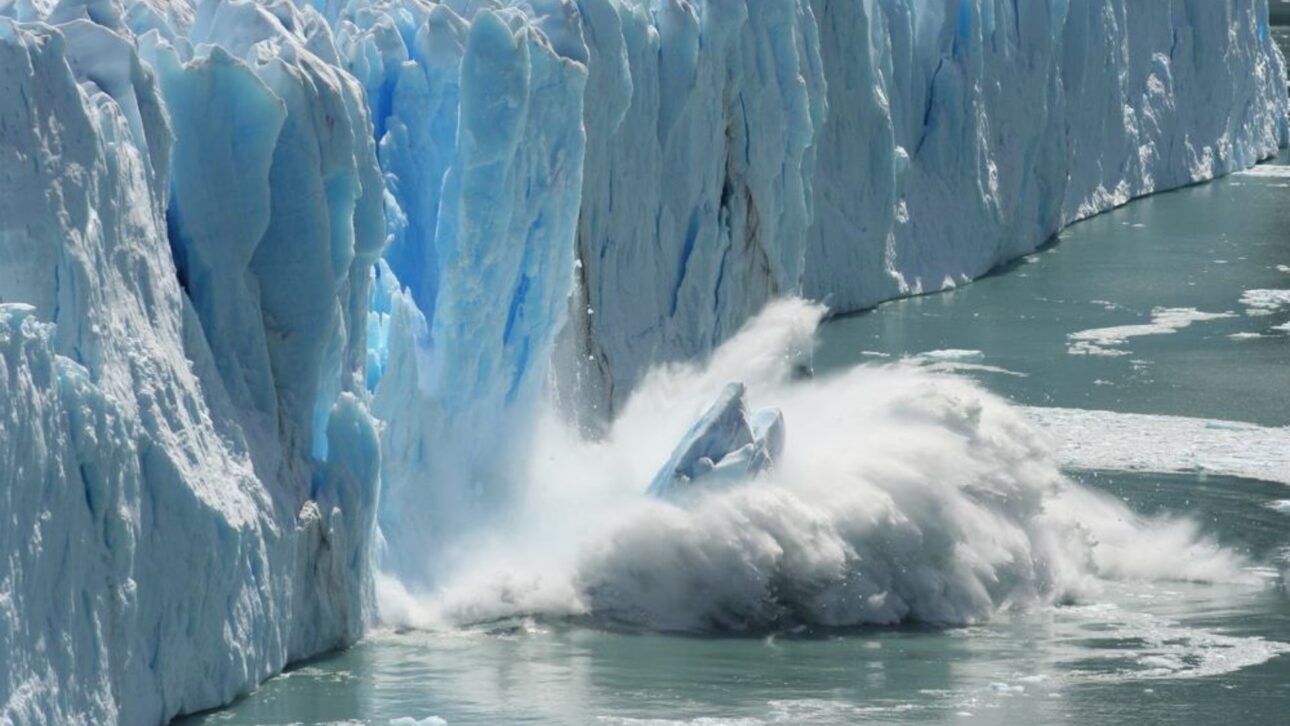
The report also links the rise of the sea to another phenomenon: the accelerated melting of glaciers. According to Christofoletti, new records of ice loss in the Arctic and Antarctic change the way the ocean and atmosphere exchange energy, with effects that go far beyond the beach.
In practice, this means that the rising sea does not only threaten cities by the coast. These changes affect weather patterns and the very rainfall regime in Brazilian territory, linking the health of the oceans to the climate of regions far from the coastline. Climate change thus appears as the root of much of the problem.
Pollution goes beyond plastic: antibiotics are a concern
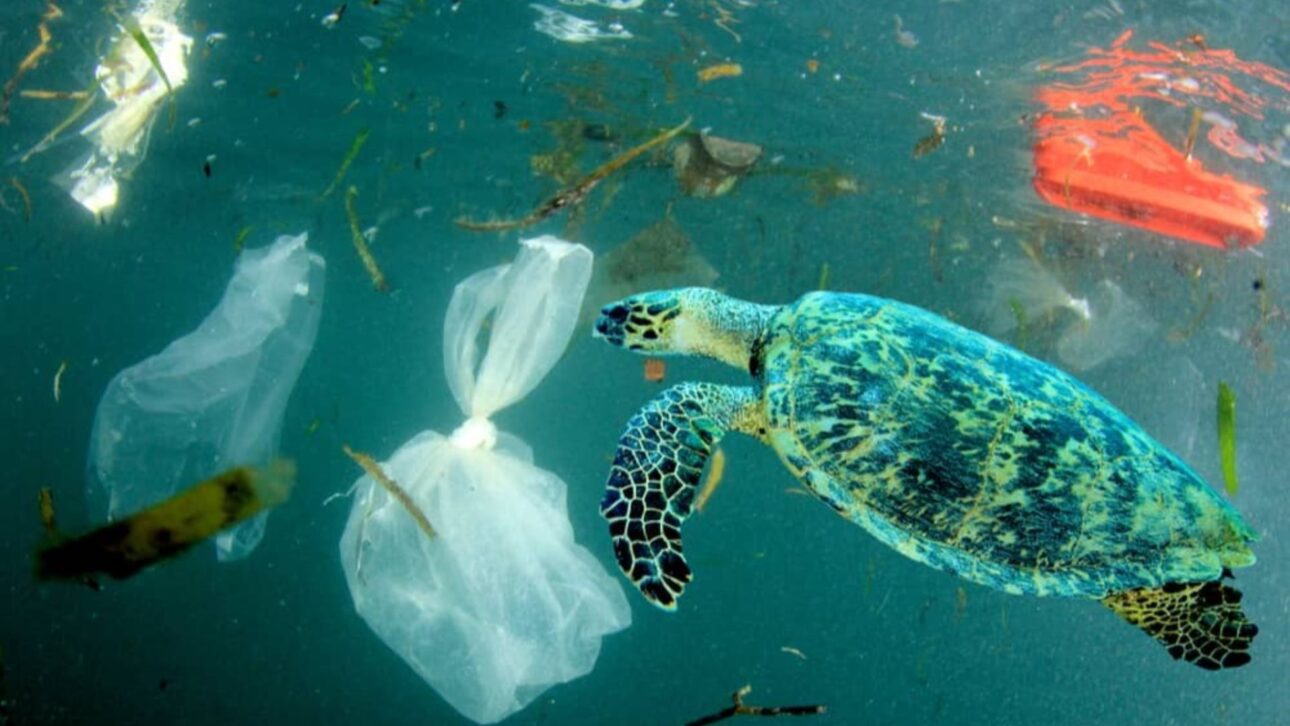
Another strong warning from the study is the advance of marine pollution, and not all of it is visible. Portuguese researcher Maria João Bebianno, also an author of the report, highlighted the increase in the concentration of antibiotics in the sea, which favors the emergence of resistant bacteria and genes in the water, in a situation similar to the superinfections faced in hospitals.
Plastic pollution, in turn, has grown significantly. While the previous assessment recorded about 1,400 species affected by plastic waste, the new edition points to 4,076 species affected. Added to this is the acidification of waters, ocean warming, and the loss of oxygen, known as deoxygenation, which threatens the survival of numerous marine species.
UN talks about triple crisis and demands a new relationship with the sea
Presenting the study, the UN Secretary-General, António Guterres, stated that the oceans are in a critical situation and called for them to no longer be treated as inexhaustible resources.
For him, the sea is at the center of a triple crisis, marked by climate change, biodiversity loss, and pollution, and plays an essential role in climate regulation, ecosystems, and the economy that feeds billions of people.
The weight of the document comes from its dimension: the WOA-3 brings together more than 550 scientists from 86 countries and analyzes data collected mainly between 2018 and 2023. Despite the warning tone, experts like Christofoletti remind that there are ways to reduce the damage, such as cutting greenhouse gas emissions and investing in nature-based solutions.
More than announcing a catastrophe, the report serves to show Brazil and the world that there is still time to act in the face of advancing pollution and the rising sea.
Knowing that the sea is silently advancing over Brazil’s coastline while pollution grows in the oceans raises an alert that goes far beyond the beach.
Tell us in the comments if you think the country is prepared to protect its coastal cities.