






 Portuguese
  Spanish
  4 min of reading
  0 comments


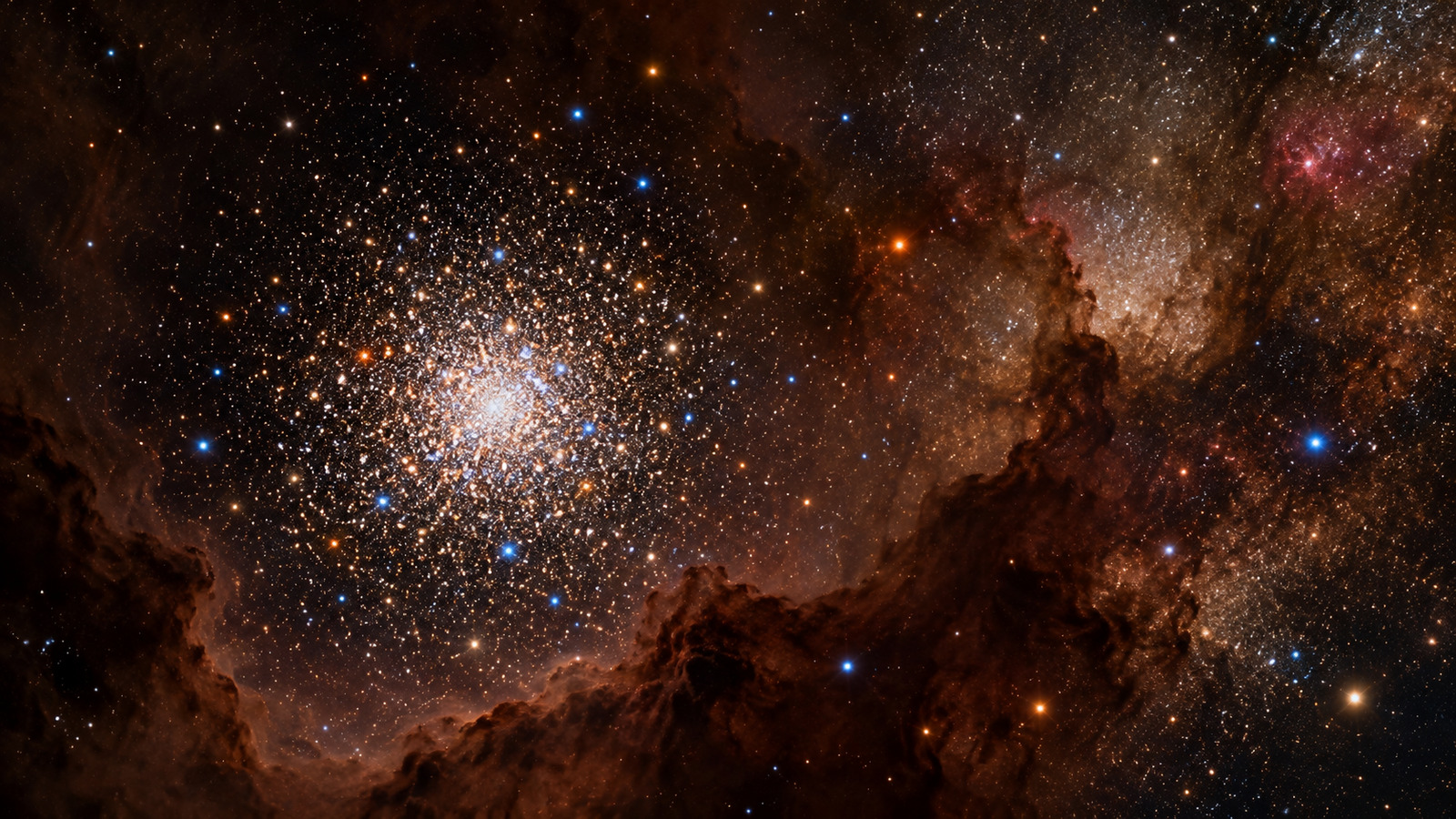
Observations from James Webb and Hubble data indicate that Terzan 5 harbors stellar populations formed at different times, reinforcing the hypothesis that it is a fossil fragment of the galactic bulge
Terzan 5, a star system located about 19,000 light-years from Earth in the constellation Sagittarius, hosts four distinct generations of stars, according to new observations from the James Webb Space Telescope combined with Hubble data. The discovery indicates that the object has a more complex history than that of a common globular cluster near the Milky Way.


Terzan 5 no longer appears to be a simple cluster
Discovered in 1968 by astronomer Agop Terzan, Terzan 5 has always attracted attention for not fully fitting the pattern of globular clusters, dense groups of ancient stars found around many galaxies.
The system is located near the center of the Milky Way and gathers hundreds of thousands of stars. For years, it was treated as an object similar to a globular cluster, but previous studies already indicated that its composition was different.
-
Researchers develop a revolutionary solution capable of cooling chips with up to 10 times greater efficiency, overcoming thermal limits that hindered the advancement of modern computing and enabling faster, more compact, and energy-efficient equipment.

-
Scientists pumped seawater to the surface of the Arctic during the third warmest winter ever recorded in the region and thickened the ice by up to 32 centimeters in the tested areas, a gain comparable to the thickness lost in 50 years.

-
At the age of 3, little Eduardo Amaral became the first Brazilian diagnosed with an ultra-rare genetic disease that affects fewer than 100 people worldwide, and he has just returned from the United States with news that seemed impossible.
-
James Webb Telescope finds possible black hole in object observed 1.8 billion years after the Big Bang and reveals more than 40 spectral lines in GLIMPSE-17775




In 2009, astronomers found evidence of two distinct stellar populations within Terzan 5. Later, observations made with Hubble showed that these groups had emerged at very different times, reinforcing the idea of a more eventful history.
The new analysis expands this picture. With data from James Webb and Hubble, researchers identified not two, but four populations of stars, formed in separate periods over billions of years.
Webb helped to see stars hidden by dust
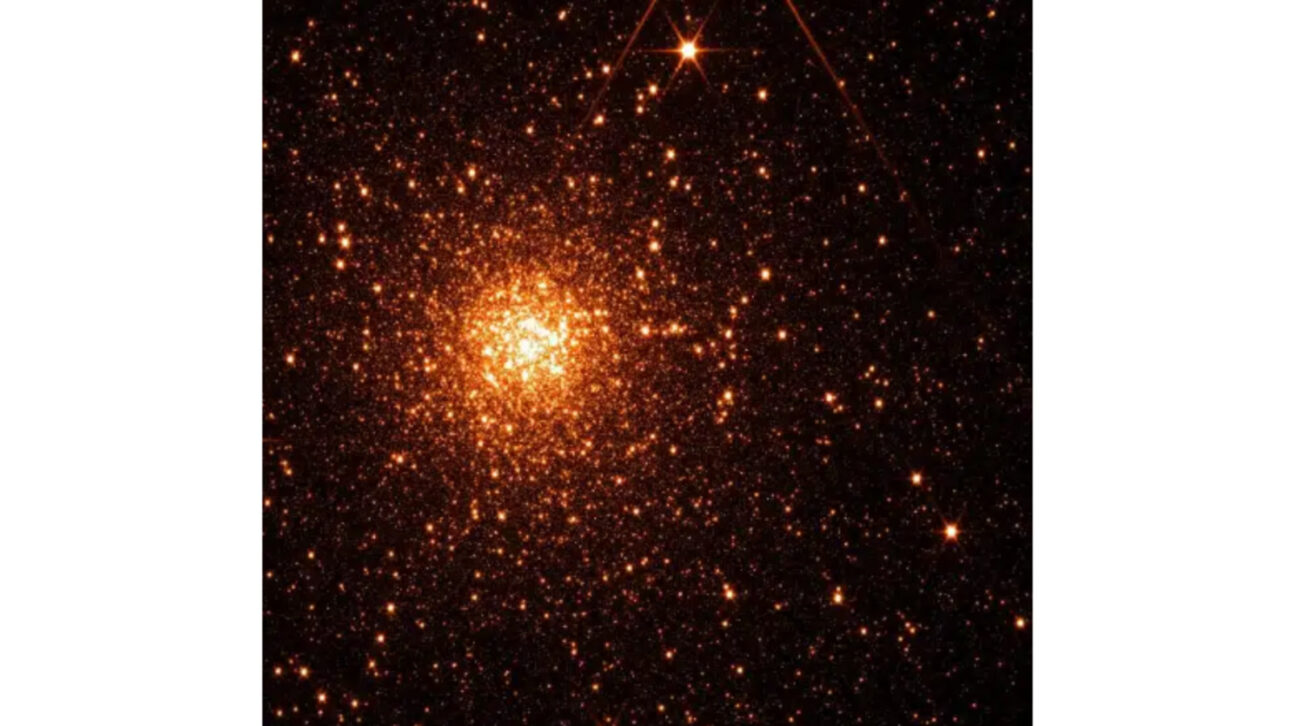
One of the main difficulties in studying Terzan 5 is its location. The system is located in the inner bulge of the Milky Way, a dense region where dust clouds block much of the visible light emitted by distant stars.
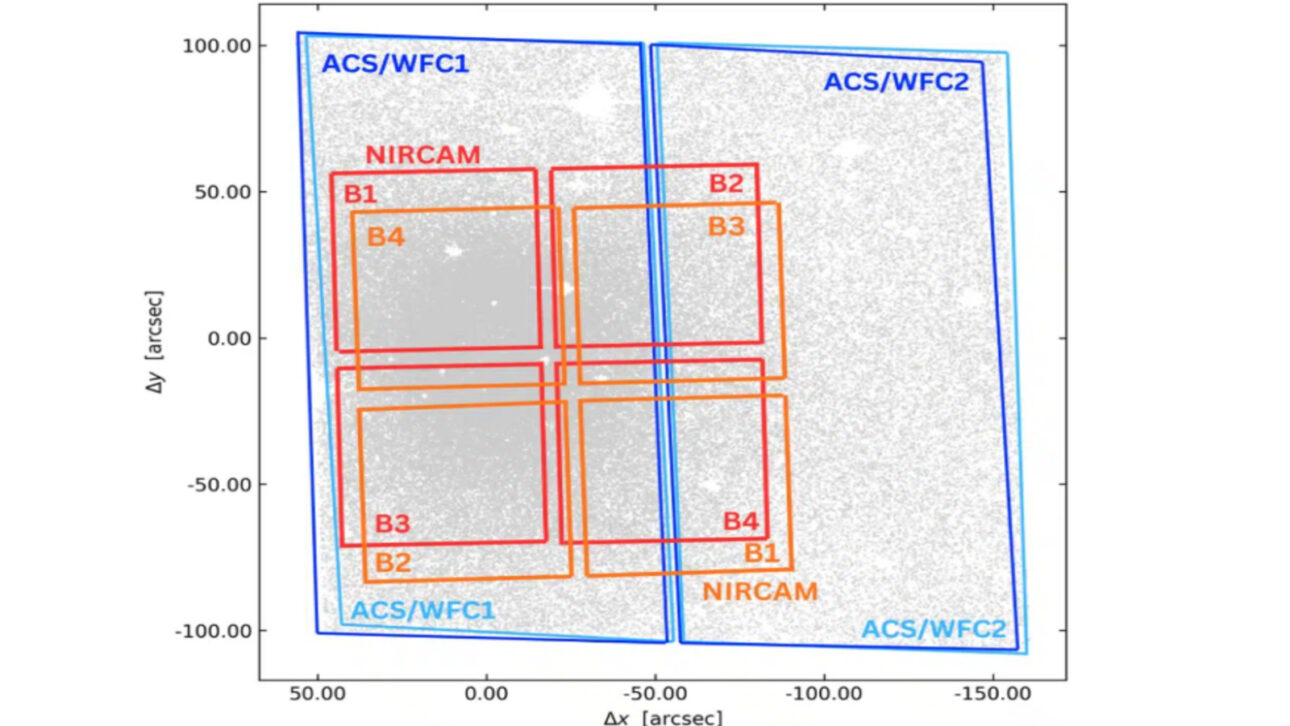
Near-infrared observations made by the James Webb allowed for penetrating some of this dust and revealing stars that previously did not appear clearly. With this, astronomers were able to measure brightness and colors more accurately.
These measurements helped estimate the age and chemical composition of the stars. According to Giorgia Zullo, a PhD student at the University of Bologna, the comparison between the new Webb observations and the Hubble archives provided a clearer view of Terzan 5’s history.
The team also compiled a more complete census of the stars within and around the system, including fainter objects that had been left out of previous analyses.
Four generations show prolonged formation
To separate the stars of Terzan 5 from other stars in the Milky Way’s bulge, researchers used Hubble images taken 12 years apart. This interval allowed them to track small stellar movements, known as proper motions.
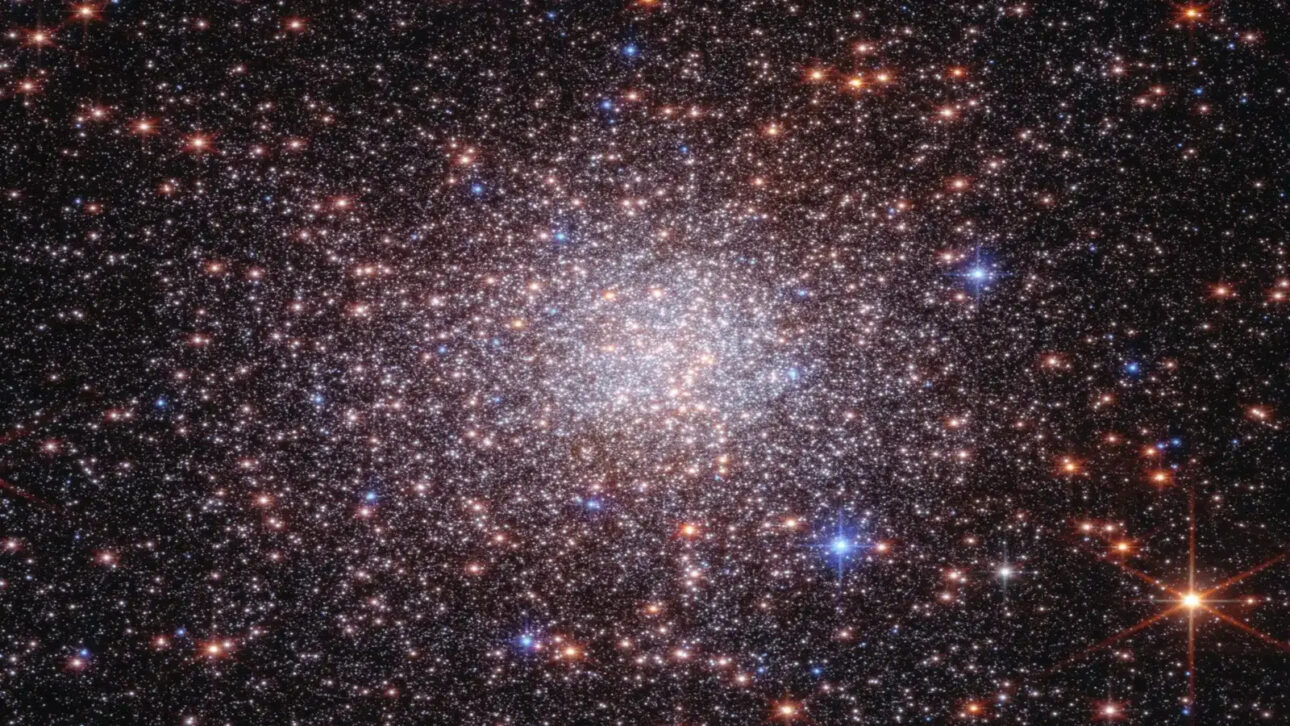
With this technique, the team was able to identify which stars truly belong to the system. Then, by combining Hubble data with Webb observations, astronomers identified the four distinct generations.
The oldest population is estimated to have formed about 12.5 billion years ago. Another emerged around 4.7 billion years ago. The remaining populations appeared approximately 3.8 billion and 2.5 billion years ago.
This sequence makes a previous explanation unlikely, according to which a single later episode of star formation could have been triggered by interaction with another object, such as a globular cluster or a giant molecular cloud.
Chemical composition reinforces fossil fragment hypothesis
The team also analyzed the chemical composition of the stars with observations from the W. M. Keck Observatory and the ESO’s Very Large Telescope. The data showed clear differences between the stellar populations.
According to R. Michael Rich from the University of California, the set preserves a fossil record of progressive enrichment of heavy elements by supernovae.
This indicates that the ancestor of Terzan 5 had enough mass to retain gas and elements produced by stellar explosions.
In less massive systems, this material is usually lost in space. In Terzan 5, it would have remained available to fuel new star formations over billions of years.
The research suggests that Terzan 5 is likely the remnant of a much larger stellar system, formed about 12.5 billion years ago. This system would have survived while the bulge of the Milky Way formed around it.
Francesco Ferraro from the University of Bologna stated that the peculiar cluster seems to have formed separately from the bulge and was not destroyed during the formation of the galaxy’s central structure itself. He described Terzan 5 as a “fossil fragment of a bulge.”
This article was prepared based on information from the material provided about observations from the James Webb Space Telescope, the Hubble Space Telescope, the W. M. Keck Observatory, and the ESO’s Very Large Telescope, with data, numbers, and statements preserved as per the consulted material.





Be the first to react!