Portuguese
  Spanish


There remains a single wild specimen of the Dendroseris neriifolia tree, clinging to a cliff on an island in Chile and held by ropes to prevent it from falling. To avoid the extinction of the species, forest rangers climb to the branches and collect the seeds, now stored in a genetic bank in England.
There is a single tree of its species still alive in the wild, and it is literally hanging on the edge of an abyss. According to information from the portal LiveScience, it is the Dendroseris neriifolia, which survives attached to a cliff on Robinson Crusoe Island, in Chile, tied by ropes to prevent it from falling. Faced with the risk of extinction, scientists rushed to collect its seeds before it was too late.
The seeds were collected in March and sent to the Millennium Seed Bank in Kew, England, where the first seedlings have already germinated. According to the Royal Botanic Gardens, Kew, of the 29 seeds received, 25 were potentially viable, in an international effort that could represent the last chance to save the tree from extinction. The Dendroseris neriifolia is a species of daisy that grows in the form of a tree, endemic to the Juan Fernández Islands, a volcanic archipelago about 673 kilometers from mainland Chile.
The last tree clinging to a cliff in Chile
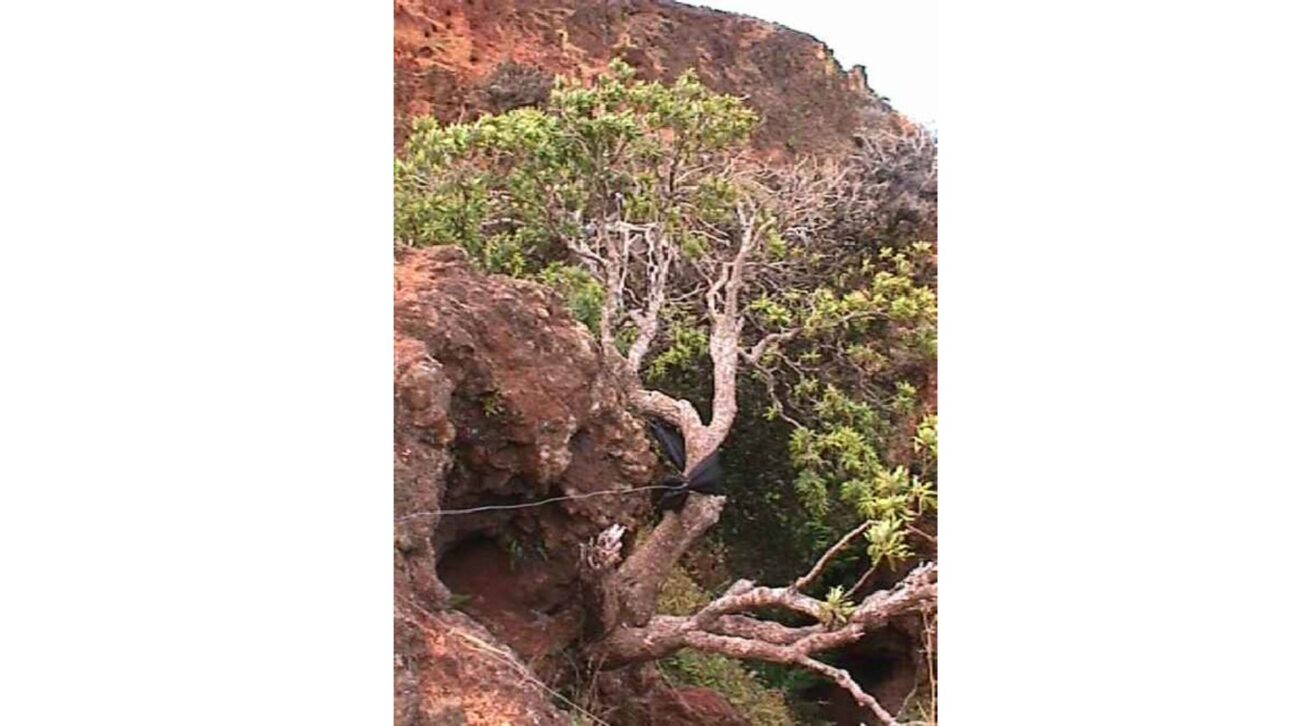
Dendroseris neriifolia tree remaining on Robinson Crusoe Island, Chile.
(Image credit: Gonzalo Rojas)
On a typical day in the lowlands of Robinson Crusoe Island, it has been reduced to a single wild individual, clinging to a steep cliff and supported by ropes to prevent it from falling into the abyss.
-
Scientists Discover 125-Million-Year-Old “Pregnant Fossil” with Preserved Embryos and Microscopic Larvae Inside Mollusk in England

-
17-Year-Old Justin Bernstein Develops Bacteria to Produce Glass on Arctic Ice to Reflect Sunlight, Wins $50,000 U.S. Scholarship

-
The 19-Meter Rocket-Helicopter: A Private Industry Prototype That Challenged Space Race Logic

-
Brazilian Students Convert Seized Illegal TV Boxes into Linux-Powered Mini Computers for Schools and Social Projects Across São Paulo




The specimen is monitored by forest rangers from CONAF, the national forestry agency of Chile.
According to Paulina Hechenleitner, a plant taxonomist at the Royal Botanic Garden Edinburgh in Scotland, the population of the tree has been declining for more than a century.
The species has been pushed to the brink of extinction by a combination of factors: habitat loss, erosion, invasive species, grazing animals, fires, and historical deforestation.
The case is not isolated, as the Dendroseris genus comprises 11 species, all in decline, and no seeds from this group had been stored in a bank until now.
The dangerous climb to collect the seeds
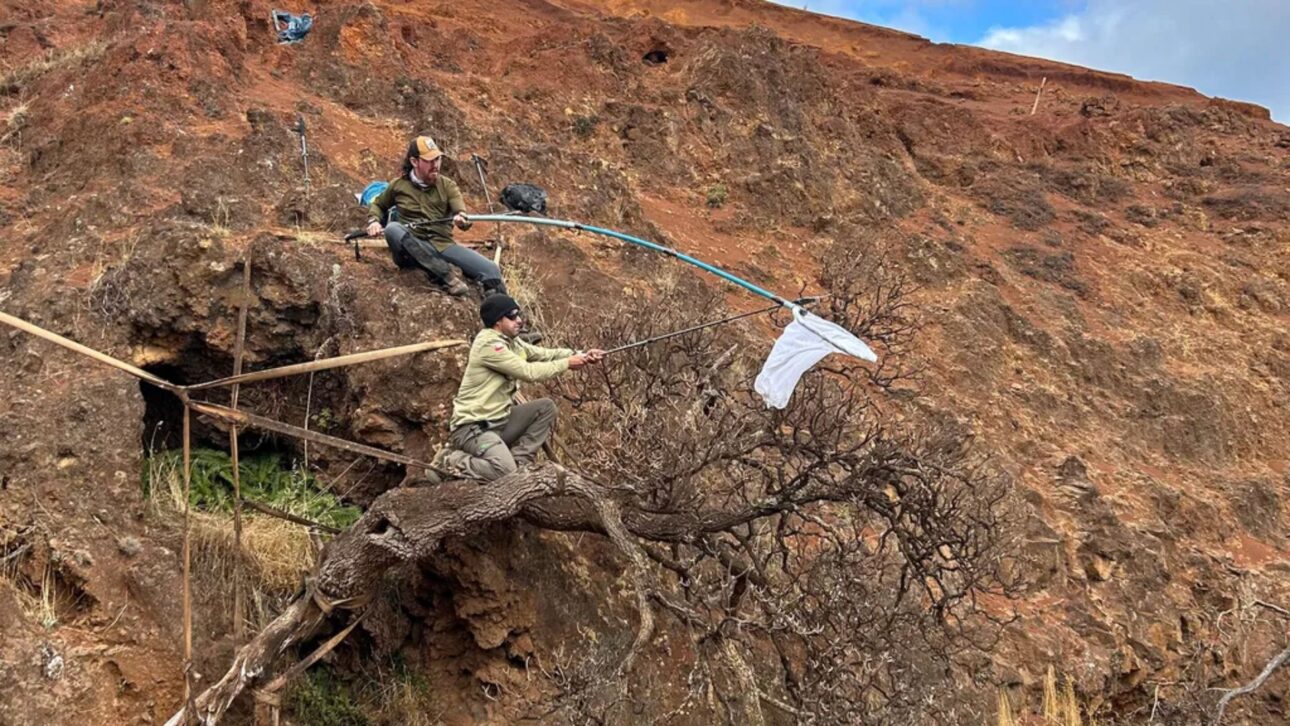
Reaching the tree is already a risky adventure. As Hechenleitner explains, Robinson Crusoe Island is a rocky volcanic terrain, with no road accessible by car.
The only path to the cliff involves a four-hour journey and then a climb of about two hours. All this to reach a plant that balances on a stone wall.
Every March, when the seeds mature, park rangers climb the tree trunk itself to reach the flowering branches and collect the material in nets.
This is how, for the first time, seeds from this genus were deposited in a genetic bank.
In the future, new tools may facilitate the work: according to researchers, drones could help collect seeds from plants growing on hard-to-reach slopes like this one.
Why storing seeds can save the species from extinction
After being harvested, the seeds were sent to the Millennium Seed Bank in Kew Wakehurst, in West Sussex, England.
There, X-ray analyses revealed that 25 of the 29 units were potentially viable, and the first seedlings have already started to take root.
According to the Royal Botanic Garden Kew, some of these new plants will be transferred to the Logan Botanic Garden in Scotland, reinforcing the conservation strategy outside the original habitat.
For Alice Hudson, responsible for partnerships at the Millennium Seed Bank, this type of storage acts as an insurance policy.
If something happens to the remaining specimen in nature, there are stored seeds that scientists already know how to germinate, which reduces the risk of losing the species altogether.
The banks also allow for close study of the germination process and, later on, returning plants to Chile for restoration projects, preventing definitive extinction.
Genetic bottlenecks, a hummingbird, and the race against time
Even with viable seeds, there are biological obstacles. Researchers fear genetic bottlenecks, low fertility, and inbreeding.
The Dendroseris neriifolia can self-pollinate, but seed production may be limited if there are few flowering branches, making each harvest even more valuable to prevent extinction.
The disappearance of this tree would have effects beyond itself. Its flowers feed the hummingbird known as the Juan Fernández firecrown, also critically endangered, in a link that shows how the loss of a plant can disrupt an entire ecosystem.
To give an idea of the urgency, studies indicate that in the last 250 years, plants have gone extinct at a rate twice that of birds, mammals, and amphibians combined.
The species was described in 1830 by the Italian botanist Carlo Bertero and, although a 1980 expedition still found seven specimens in Chile, today only one remains.
Risking life by climbing a cliff to save the last tree of a species is the kind of story that shows the lengths to which efforts go to prevent extinction.
Tell us in the comments if you think all this effort is worth it to preserve a single plant and what it says about how we treat nature.