Portuguese
  Spanish


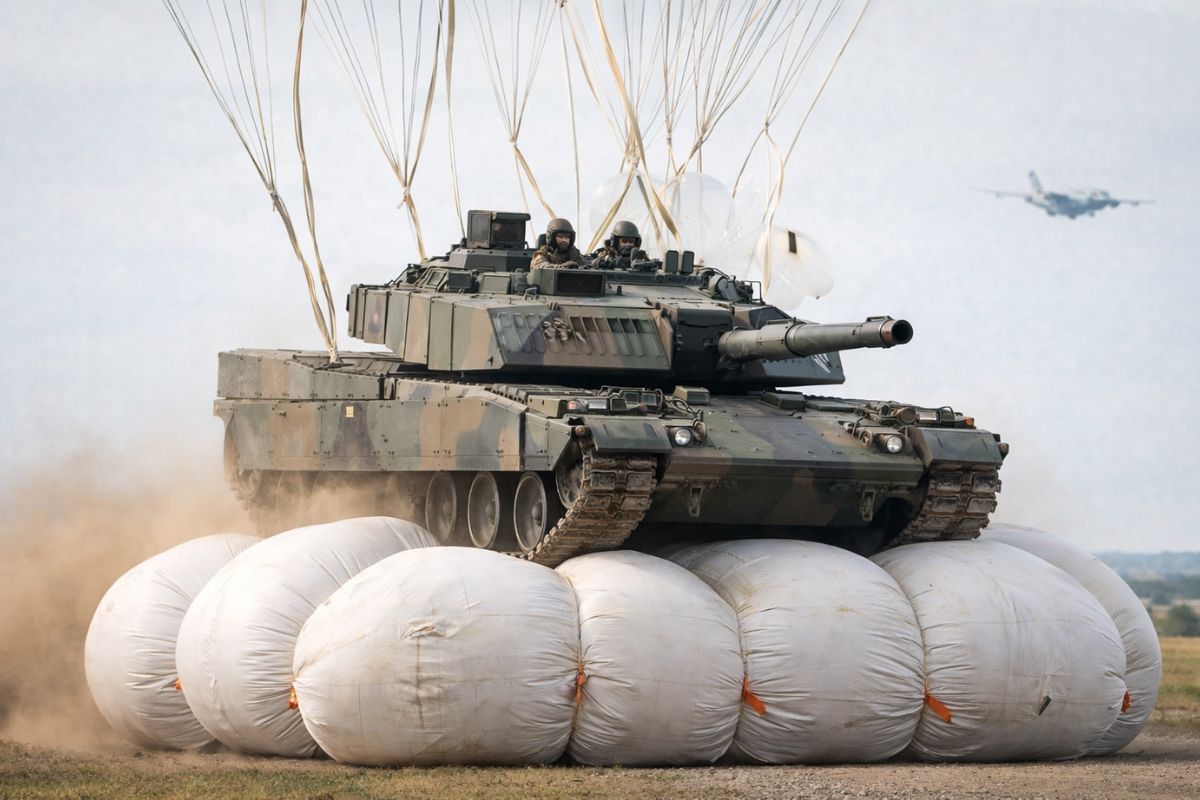

The BMD-4 is a 13-ton amphibious tank that can be parachuted from a military aircraft with the entire crew inside, using the PBS-950 parachute system and pressurized air bags that absorb the impact on the ground, allowing the team to enter combat seconds after landing.
There is a tank that falls from the sky with soldiers sitting inside. The BMD-4 is an amphibious armored vehicle weighing over 13 tons that can be parachuted from a military aircraft at kilometers of altitude, with the entire crew accommodated in the cabin during the fall. A complex system of heavy parachutes slows the descent, and highly pressurized air bags inflate a fraction of a second before impact with the ground, dissipating the violent kinetic energy of the landing. Seconds after touching the ground, the driver starts the engine and the tank enters combat immediately.
The logic behind launching a tank with the crew inside is purely tactical. When paratroopers jump individually, they spread out over extensive areas and need precious minutes to regroup, becoming vulnerable to enemy fire even before firing the first shot. Accommodating the crew directly inside the armored vehicle solves this problem: the troops land ready, protected by the armor of the tank, and leave the drop zone with maximum combat capability in a matter of seconds.
How a 13-ton tank survives a parachute drop

The launch operation begins kilometers above the ground inside a military transport aircraft. To dispatch the weight of over 13 tons, the air force uses the heavy PBS-950 parachute system, a complex network of nylon domes that expand rapidly to slow the descent of the metal mass towards the operational zone.
-
After three years living in a van, a couple bought an abandoned historic house and had to deal with mold, damaged plumbing, raccoons, and heavy cleaning before moving in.

-
In the city that the market called “road cockroach,” between Balneário Camboriú and Florianópolis, he launched a planned neighborhood worth R$ 1 billion with a marina for 90 boats and sold 80% of the lots in the first phase in 1 week.

-
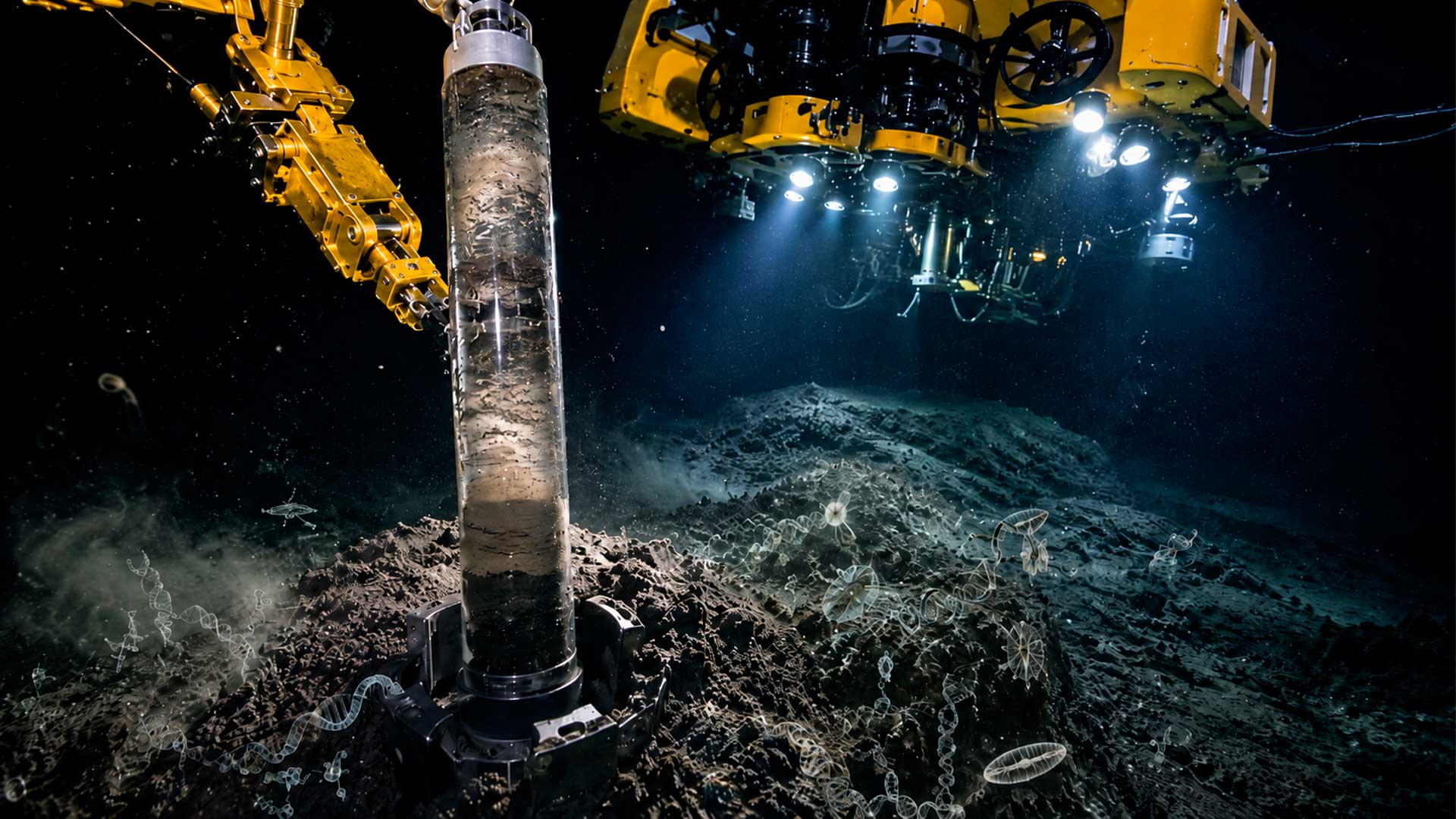
At a depth of 5,000 meters, where there is no sunlight, researchers found ancient DNA preserved in the mud of the South Atlantic and discovered signs of organisms that did not match known records.

-
At 77 years old, a retired woman who never tires of learning completes her second degree in design in Ceará and moves people by revealing the help of her 98-year-old mother in the final project.



The system was specifically designed for heavy loads and operates with redundancy to ensure that failures in one dome do not compromise the landing.
The decisive element in the survival of the tank and crew are the air bags installed under the tracks. These pneumatic cushions automatically inflate a fraction of a second before contact with the ground, creating a layer that absorbs the brutal kinetic energy of the fall.
The result is a sufficiently smooth impact to keep the passengers’ vertebrae unharmed and preserve the mechanical integrity of the engine. Without this system, the landing would destroy the suspension and render the vehicle unusable even before the combat begins.
Why the crew stays inside the tank during launch

The decision to keep soldiers inside during the fall is not for comfort. Dropping fighters separately from the air spreads the battalion over extensive areas without armored cover, and the time needed to regroup the operators exposes the infantry to enemy fire during critical minutes.
In an airborne operation, every second between landing and the first shot can mean the difference between success and annihilation.
With the crew already inside the war tank, the vehicle lands as a complete combat unit. The driver starts the engine, the gunner takes over the turret, and the commander coordinates the immediate movement out of the landing zone.
There is no regrouping, no radio communication to locate scattered soldiers, and no window of vulnerability between landing and the start of the operation. The war tank reaches the ground functioning as if it had driven there.
How the war tank navigates rivers without needing bridges
Besides falling from the sky, the BMD-4 crosses rivers. The aluminum alloy armor, chosen precisely for its lightness, gives the war tank a natural buoyancy that allows it to cross turbulent waterways without bridge engineering.
Rear thrusters project pressurized water and push the vehicle through unpredictable currents, while a hydraulically activated steel deflector plate protects the front of the vehicle against the volume of water.
Two nozzles installed near the floor control the direction of the war tank during aquatic navigation, and the driver operates the electronic steering normally inside the cabin.
Logistical reports indicate that the amphibious capability eliminates the need for long pauses to build temporary bridges, which turn slow convoys into easy targets for enemy artillery. The war tank simply enters the water and comes out on the other side, maintaining the speed of the operation.
The arsenal that the war tank carries to fight after landing
Disembarking far ahead of supply lines requires diverse armament that allows for facing different threats without immediate support.
The automated turret of the battle tank features a 100 mm rifled cannon capable of firing high-fragmentation projectiles, a 30 mm automatic cannon designed to neutralize light vehicles and barriers, and laser-guided anti-tank missiles to penetrate the armor of other vehicles.
This combination of calibers allows the battle tank to confront everything from unprotected infantry to enemy armored vehicles and fortified structures.
Versatility is essential because the airborne troops operate in unknown terrain, without any guarantee of what type of resistance they will encounter after landing. The BMD-4 was designed so that the crew falling from the sky has enough firepower to establish and defend a position until heavier ground reinforcements arrive.
The limitations that make the battle tank vulnerable despite technology
The same lightness that allows the battle tank to be parachuted and float in rivers comes at a cost to protection.
Aluminum armor can withstand projectiles from light infantry weapons, but it does not resist landmines or heavy caliber munitions that would destroy the thin plate on direct impact. The battle tank was designed for speed and surprise, not for prolonged confrontation against main battle tanks.
Therefore, the armed forces that use the BMD-4 employ it exclusively in rapid ambush operations. The group drops from the sky, secures strategic landing zones or tactical positions, and defends the perimeter until heavy infantry arrives on the ground.
The battle tank is an opening tool, not a sustaining one. Its effectiveness depends on surprise and speed, not on the ability to absorb damage.
Would you enter combat inside a battle tank parachuted from kilometers in altitude? What impresses you more: the technology of the air bags or the courage of the crew? Share in the comments. Military engineering that defies gravity always generates fascinating debates among those who admire technology and those who question the risks.