






 Portuguese
  Spanish


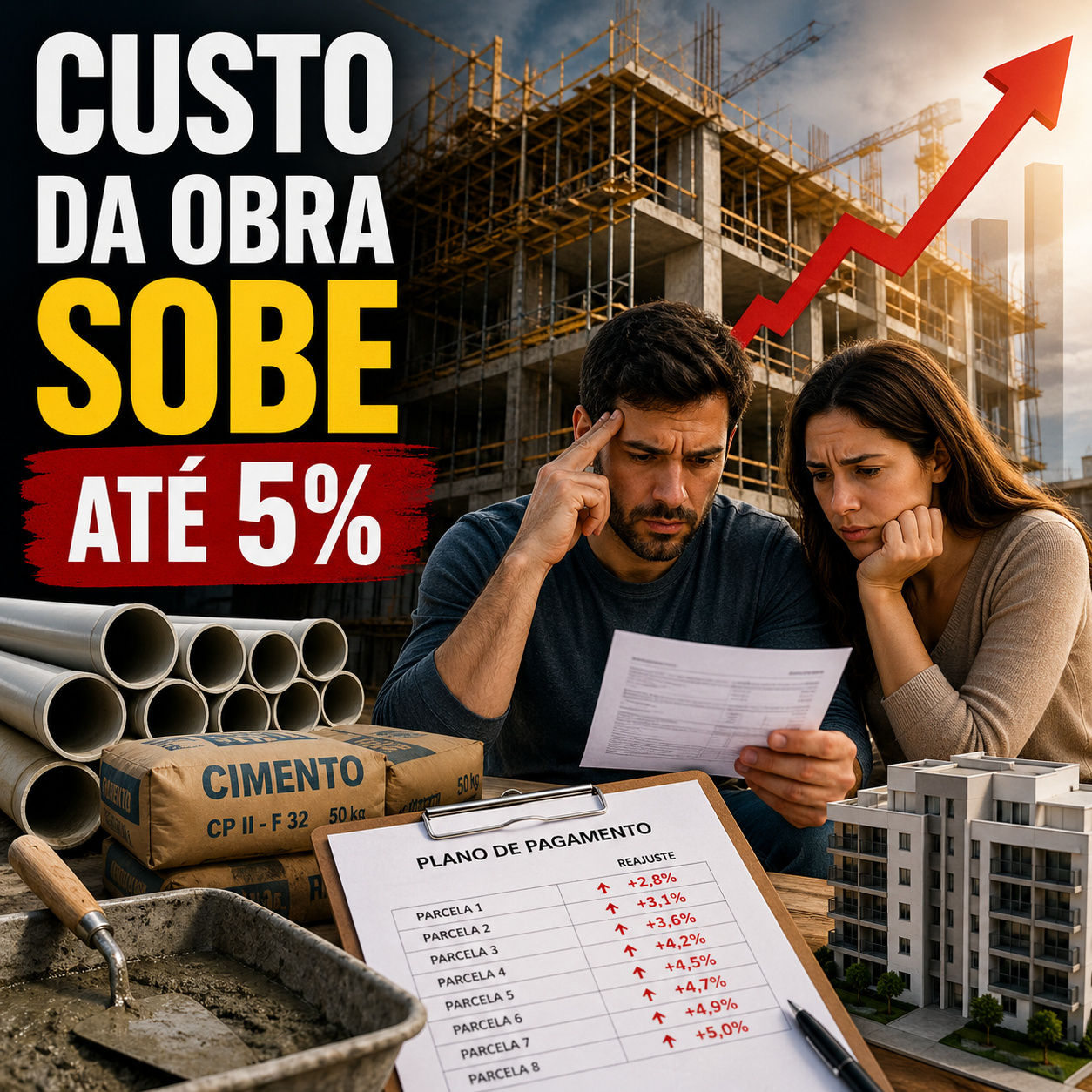

Up to 5% increase in construction materials pressures cost of off-plan properties and may raise installments during construction.
In April 2026, FGV IBRE reported, in a bulletin released on April 27, that the INCC-M rose 1.04%, above the 0.36% increase recorded in March, raising the accumulated 12-month total to 6.28%. The pressure came mainly from the Materials, Equipment, and Services group, which advanced 1.35%, with acceleration in all seven capitals surveyed by the index. The impact is evident in basic construction inputs: concrete mix rose 4.39%, PVC pipes and fittings advanced 5.11%, common Portland cement increased 3.02%, and concrete blocks rose 1.48%.
For those who bought an off-plan property with a contract linked to construction costs, these adjustments help explain why installments and outstanding balances may become heavier during the execution of the work.
For those paying installments during construction, the impact may appear month by month, increasing the final value of the property.
-
Brazilian Startup Turns Coffee Grounds into Plant-Based Leather, Cutting Water Use by Over 50 Times for High-Impact Sustainable Fashion

-
Eco Invest Auction Aims to Unlock $10 Billion in Investments, Focusing on Green Fertilizers, Critical Minerals, Batteries, and AI for Clean Industry in Brazil

-
Half of Brazilians Prefer Lower Taxes with Private Health and Education, While 44% Opt for Higher Taxes for State-Provided Services, Datafolha Survey Reveals

-
Brazil’s Most Expensive Toll Rises to R$ 40.60 on Route from São Paulo to the Coast, Nearly Matching Bus Fare to Santos




Essential Materials Register Above-Average Increases
Among the most affected inputs, some stand out for the magnitude of the increase recorded in April. Concrete mix showed an increase of over 4%, while PVC pipes exceeded a 5% rise. Cement also registered an advance of over 3%, and steel rebar saw an increase of nearly 1%.
These materials form the basis of practically any construction project, from structures to finishing.
When fundamental items rise simultaneously, the effect is not isolated, but cumulative throughout the entire construction chain.
Off-Plan Property Installments Follow Construction Costs
Unlike ready-made properties, contracts for off-plan units have an update mechanism linked to construction costs.


This means that, during the construction period, the value of installments can be readjusted as prices of materials and services vary.
In practice, the buyer may notice:
- gradual increase in installments
- increase in the outstanding balance throughout the construction
This model is common in the Brazilian real estate market and serves to protect construction companies against cost fluctuations. The side effect is that the risk of construction inflation ends up being shared with the buyer.
Pressure Comes from Multiple Factors, Including Energy and Logistics
The recent increase in materials does not occur in isolation. Various factors contribute to rising costs, including:
- rising cost of industrial inputs
- increase in transportation costs
- variations in energy prices
Products like PVC, for example, have petrochemical origins, making them sensitive to oil price fluctuations. The transportation of materials, in turn, is directly impacted by the cost of diesel. These elements create a ripple effect that is reflected in the final construction value.
Real Estate Market Feels Impact Even Without Construction Stoppage
Unlike more acute crises, the current scenario does not necessarily interrupt projects but alters their cost structure. Construction companies continue to operate, but with more pressured margins. In some cases, this can result in:
- price readjustment for new launches
- reduction in supply in certain price ranges
- greater caution in new projects
The impact is not only felt by those who have already bought, but also by those planning to enter the market.
Buyer may pay more without immediately realizing it
One of the most relevant aspects of this type of increase is how it manifests. Unlike a direct price hike for a product, construction costs are diluted over time. This means many buyers only realize the impact after a few months.

Installments may rise gradually, without an abrupt jump, but accumulating a significant value by the end of the contract. The result is a silent increase in the total cost of the property.
Accumulated increase over 12 months reinforces pressure trend
In addition to the monthly increase, the behavior over a longer period reinforces the trend of rising costs. Over the last 12 months, construction costs have accumulated an increase of over 6%, indicating that the movement is not isolated.
This type of trajectory shows that the sector has been facing continuous pressure, and not just an isolated episode. The persistence of the increase amplifies the impact on longer contracts, such as those for off-plan properties.
Sector depends on industrial inputs sensitive to global variations
Civil construction is strongly connected to global production chains. Materials such as steel, petroleum derivatives, and chemical inputs depend on international markets, making them vulnerable to external fluctuations. Even when domestic demand is stable, changes in the global scenario can influence local prices.
This dependence increases the sector’s exposure to factors beyond the domestic economy. The current scenario highlights an important difference between types of real estate acquisition.
For a ready-made property, the price is defined at the time of purchase. For an off-plan property, the final value can vary over time.
This means that the buyer assumes part of the uncertainty related to the cost of the work. During periods of increase, this difference becomes more noticeable and relevant for financial planning.
Financial planning becomes essential in high-cost scenarios
Given the possibility of increased installments, financial planning gains even more importance. Buyers need to consider not only the initial value of the property but also the possibility of adjustments throughout the construction.
This assessment can influence:
- payment capacity
- property choice
- financing term
Ignoring this variable can lead to surprises throughout the contract.
Market continues to operate, but with greater cost sensitivity
Despite the pressures, the construction sector remains active, with ongoing projects and new launches. However, the current environment demands greater attention to costs and efficiency.
Construction companies tend to adjust strategies to deal with volatility, while buyers need to monitor variations more closely. The balance between supply, demand, and cost becomes more delicate in scenarios of input inflation.
With materials rising, installments being readjusted throughout the construction, and costs accumulating month by month, do you believe it’s still worth buying an off-plan property, or could the risk of paying more in the end change that decision?







