






 Portuguese
  Spanish


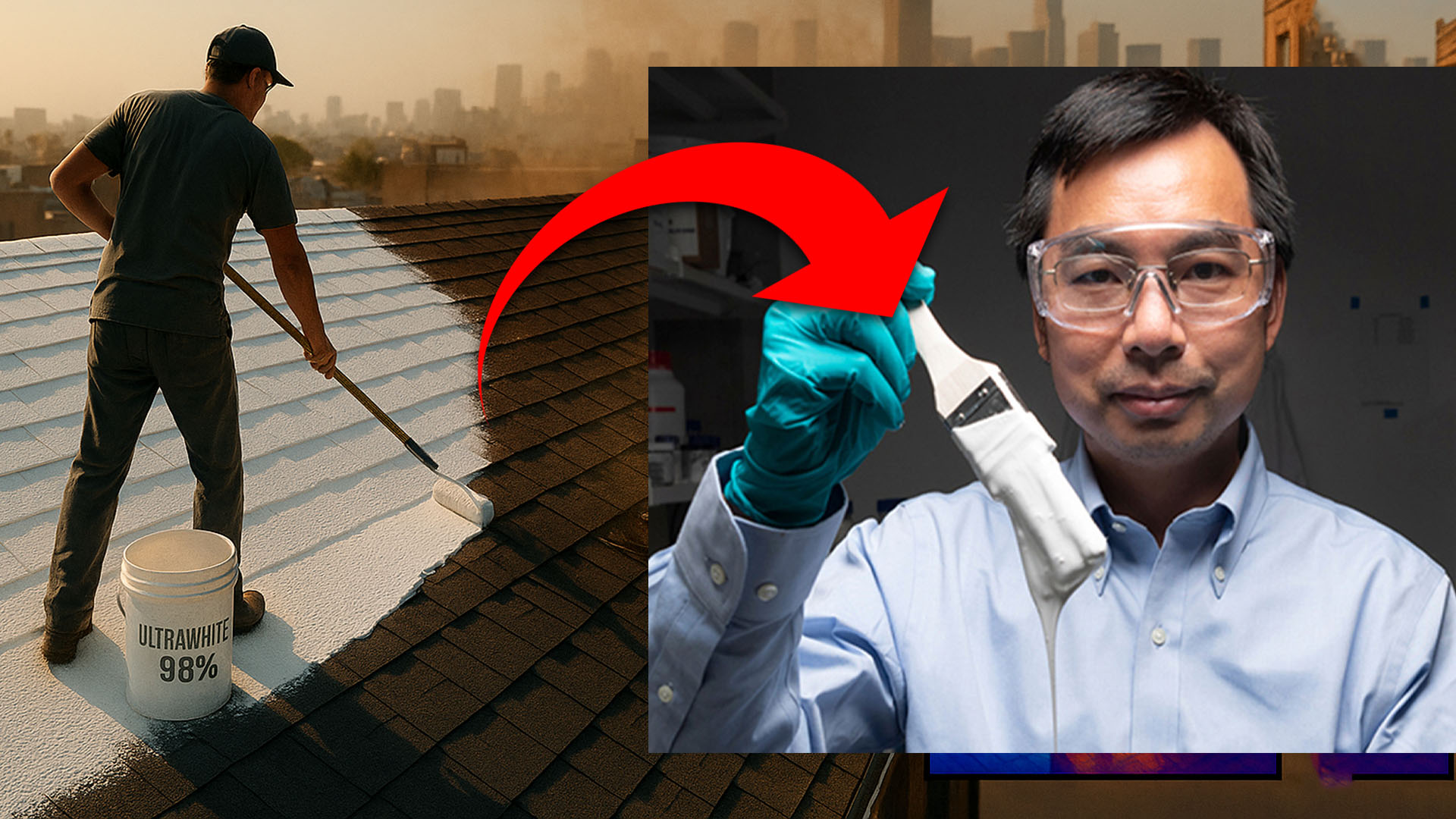


In Laboratory and Roof Tests, the “Ultrawhite Paint” Created by American Engineers Reflected Up to 98.1% of Solar Light and Emitted Heat into Space, An Effect That Can Reduce the Need for Air Conditioning.
The global heat wave has increased energy consumption and electricity bills. Scientists are seeking passive solutions to cool buildings without spending electricity. One candidate has gained prominence: the ultrawhite paint developed by engineers at Purdue University in the USA.
The operation is simple, the more light a roof reflects back to the sky, the less it heats up. Professor Xiulin Ruan’s team formulated a coating that reflects up to 98.1% of sunlight and also emits infrared radiation, generating cooling even at noon, something that common paints do not do.
According to the university, a 93 m² roof painted with the material could be equivalent to 10 kW of “cooling power” under ideal conditions.
-
World Cup Ball Chip Uses Technology to Detect Invisible Touches, Confirms Offside, Secures Portugal’s Victory Over Croatia

-
36-Meter Hydrogen-Powered Superyacht Arrives in Brazil to Debut German Engines and Showcase Future of Clean Navigation

-
Indian Students from Jaipur Win Top Prize at World’s Largest Science Fair with EcoFog, an Affordable Mesh to Harvest Fog Water Without Energy

-
Italy Sinks Massive 11-Story Concrete Structures in the Ligurian Sea to Create a 6.2 km Barrier, Clearing the Way for 400-Meter Ships in Genoa


What Is Radiative Cooling and Why Does the Paint Stand Out
Passive radiative cooling occurs when a material emits heat at wavelengths that pass through the atmosphere and dissipate into space. Thus, the surface can remain below air temperature without consuming energy. Purdue’s technical article details the recipe, acrylic with barium sulfate (BaSO₄) particles of multiple sizes, a strategy that spreads nearly the entire solar spectrum. In the test roof, the surface was up to 4.5 °C below the surrounding temperature during the day.
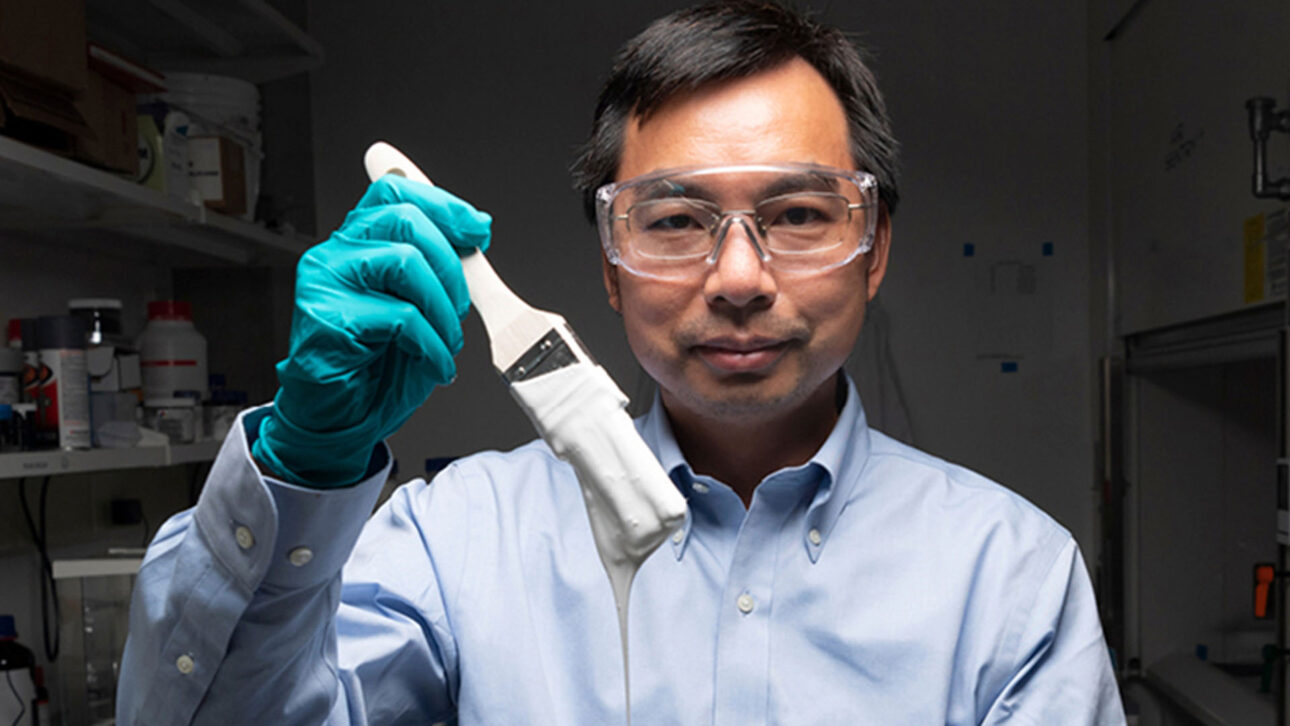
Purdue itself summarized: “the whitest white” has record reflectivity and has been recognized by Guinness World Records as the whitest paint ever measured. The university also highlights that, unlike conventional paints with 80–90% reflectivity, the new formulation exceeds 95% and reaches 98.1%. Result: less heat retained in the building.
Thinner and Lighter Version for Roofs to Vehicles
After the roof, the group moved on to mobile applications. Purdue also announced a thinner and 80% lighter version, suitable for cars, trains, and airplanes, maintaining reflectivity around 97.9%. The thickness reduction facilitates usage on surfaces where weight and aerodynamics matter. Technical reports confirm the focus on hexagonal boron nitride (hBN) and a nanoporous structure to reduce mass without losing performance.
This movement expands the impact, less cabin heating and lower air conditioning load in fleets and transportation infrastructure, sectors that suffer from heat spikes and expensive electricity during peak hours.
The Potential on the Energy Bill and in Combating Heat Islands
The central message for buildings is energy efficiency. The higher the solar reflectivity and thermal emittance, the lower the thermal load indoors, which reduces compressor activation and demand peaks. Purdue estimates that covering ~93 m² can deliver 10 kW of cooling effect, while engineering analyses cite SRI index above 120, higher than seen in regular white paints. In hot cities, this also helps mitigate heat islands if adopted on a large scale.
Important: results vary based on climate, orientation, wind, and shading. The paint is not an air conditioner and does not dehumidify; it reduces thermal load. The “10 kW” estimate is thermal equivalence under specific conditions, not electrical power delivered to the outlet.
Availability, Durability, and Next Steps
When will it reach the market? The team stated that it is working with the Purdue Research Foundation to license and scale production, with no fixed timeline. This year of 2025, the university highlighted new commercialization grants to accelerate technologies with market potential, signaling institutional progress in this direction. In other words, there is a path of R&D and standards to meet before reaching the shelf.
Regarding durability, initial studies are promising in the lab and on the test roof, but performance over years of weather, dirt, and pollution requires aging tests and certifications for residential and commercial uses. So far, public disclosures do not indicate widespread release for sale; follow Purdue’s official bulletins for updates.
Do you think that cities should adopt ultrawhite roofs on a large scale or prioritize other measures like urban greenery and insulation? Leave your comment, would you paint your roof with such a paint if the product reached retail at a price close to conventional paint?





Sim compraria; acho que as 2 medidas telhados e paredes ultra brancos concomitantemente com a vegetação .