Portuguese
  Spanish




Know The Types Of Porcelain, See Advantages And Discover Where To Apply Each Model. Complete Guide For Those Who Are Building Or Renovating.
In recent years, types of porcelain have become the protagonists in residential and commercial projects. The interest is growing because the material combines modern aesthetics, durability, and great versatility.
To understand this movement, it is necessary to observe the advancement of manufacturing technologies, which have expanded the catalog of finishes and made the coating capable of serving from sophisticated areas to high-wear locations.
This report therefore gathers the main information about each type of porcelain, explaining what they are, who they are for, how much they cost, and where they can be safely applied.
-
France Revamps 530 Social Housing Units with Large Balconies and Glass Facades Without Demolishing Existing Buildings

-
Facing high rent, couple transforms parents’ garage into a fully functional apartment, creating a complete home at a fraction of the market cost.

-
MIT Scientists Develop Method to Transform CO₂ into a Construction Ally, Boosting Cement Strength by 13% in 24 Hours for More Sustainable Infrastructure
-
Canadian City Builds 8 Tiny Homes in 72 Hours for Homeless Youth, Plans 40 Affordable Houses for Female-Led Families Amid Housing Crisis


The goal is to guide consumers who often get lost among the numerous options in the market.
Why Choosing Well Among The Types Of Porcelain Makes A Difference
Deciding which porcelain to use is not just an aesthetic issue. The choice directly influences factors such as durability, adhesion, safety, and ease of cleaning.
As each model responds differently to abrasion and moisture, selecting the wrong version can pose risks — especially in bathrooms and outdoor areas.
Additionally, as the product has become one of the most used coatings in the country, there is a growing need to understand the differences between its finishes and technical properties. Thus, the decision tends to be more economical and effective.
Technical Porcelain: The Most Resistant In The Category
Among the types of porcelain, technical is the one that shows the greatest solidity.
It is made from a single mass, without a glaze layer, which ensures resistance to impacts and heavy traffic.
For this reason, it is a favorite among engineers and architects for:
- Parking lots
- Commercial spaces
- High-traffic corridors
- Outdoor areas
Another advantage is the low water absorption, which prevents stains and facilitates cleaning. Although it has a higher cost than other models, it generally pays off in the long run.
Glazed Porcelain: Visual Variety And Sophisticated Finishing
In contrast to the technical type, glazed porcelain primarily values aesthetics.
It receives a glaze layer that allows for the reproduction of different materials, such as marble, wood, and burnt cement.
This characteristic makes it one of the most versatile for indoor environments.
Even so, the glaze also defines its degree of resistance. Higher-wear environments require attention to PEI — a measure that indicates the surface’s durability.
Even so, for those who wish to decorate spaces with personality, the glazed type is a safe bet.
Finishes That Transform The Environment: Polished, Satin, And Natural
Each finish modifies the user experience, and understanding these differences helps avoid mistakes.
Polished
With intense shine and a smooth surface, it is usually applied in living rooms, halls, and sophisticated environments. However, it can be slippery in wet areas.
Satin
It has a soft touch and discreet appearance. It is recommended for indoor environments that combine comfort and safety.
Natural/EXT
Ideal for those who need adhesion, especially in backyards, pool areas, and outdoor spaces that require non-slip flooring.
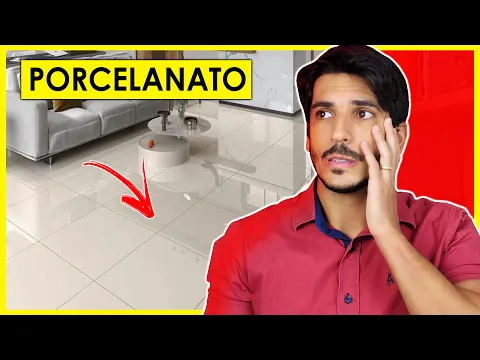

The Evolution Of Formats: From Small Pieces To Giant Slabs
The industry has also innovated in sizes. Today, it is possible to find porcelain that mimics whole slabs, offering a sense of spaciousness and reducing the use of joints.
The most common formats include:
- 60×60
- 80×80
- 90×90
- 120×120
- 120×250 (large formats)
These enlarged dimensions are a trend in projects that seek a continuous and minimalist aesthetic.
Where To Apply Each Type Of Porcelain Without Error
The choice of the ideal porcelain also directly depends on the environment where it will be installed.
In the bathroom, for example, satin models or those with a natural surface offer more safety, as they reduce the risk of slips even with constant moisture.
In the kitchen, on the other hand, practically all types of porcelain work well, as long as they present adequate resistance to daily traffic and can handle splashes of water and grease.
When the goal is to create a sense of spaciousness in living rooms and bedrooms, the polished finish is usually the preferred choice.
The intense shine enhances brightness and helps to make the space more refined without losing practicality.
In outdoor areas, adhesion is a priority, and thus natural/EXT porcelain becomes essential, ensuring safety in environments exposed to rain and weather variations.
In places with heavy traffic, such as commercial spaces and industrial areas, the requirements are greater.
In these cases, technical porcelain stands out for its robustness, resisting wear caused by constant movement and the weight of equipment, without losing aesthetic characteristics.
Advantages And Points Of Attention Before Buying
Among the most valued benefits are durability, ease of cleaning, low water absorption, and variety of styles.
Even so, there are necessary precautions, such as professional installation and attention to anti-slip characteristics.
Currently, consumers are looking for models that replicate natural textures — such as wood and stone — in addition to large pieces that create continuous environments.
Another growing trend is the search for porcelain that combines beauty and safety, especially non-slip options, to meet the new demands of sustainable and accessible construction.