Portuguese
  Spanish


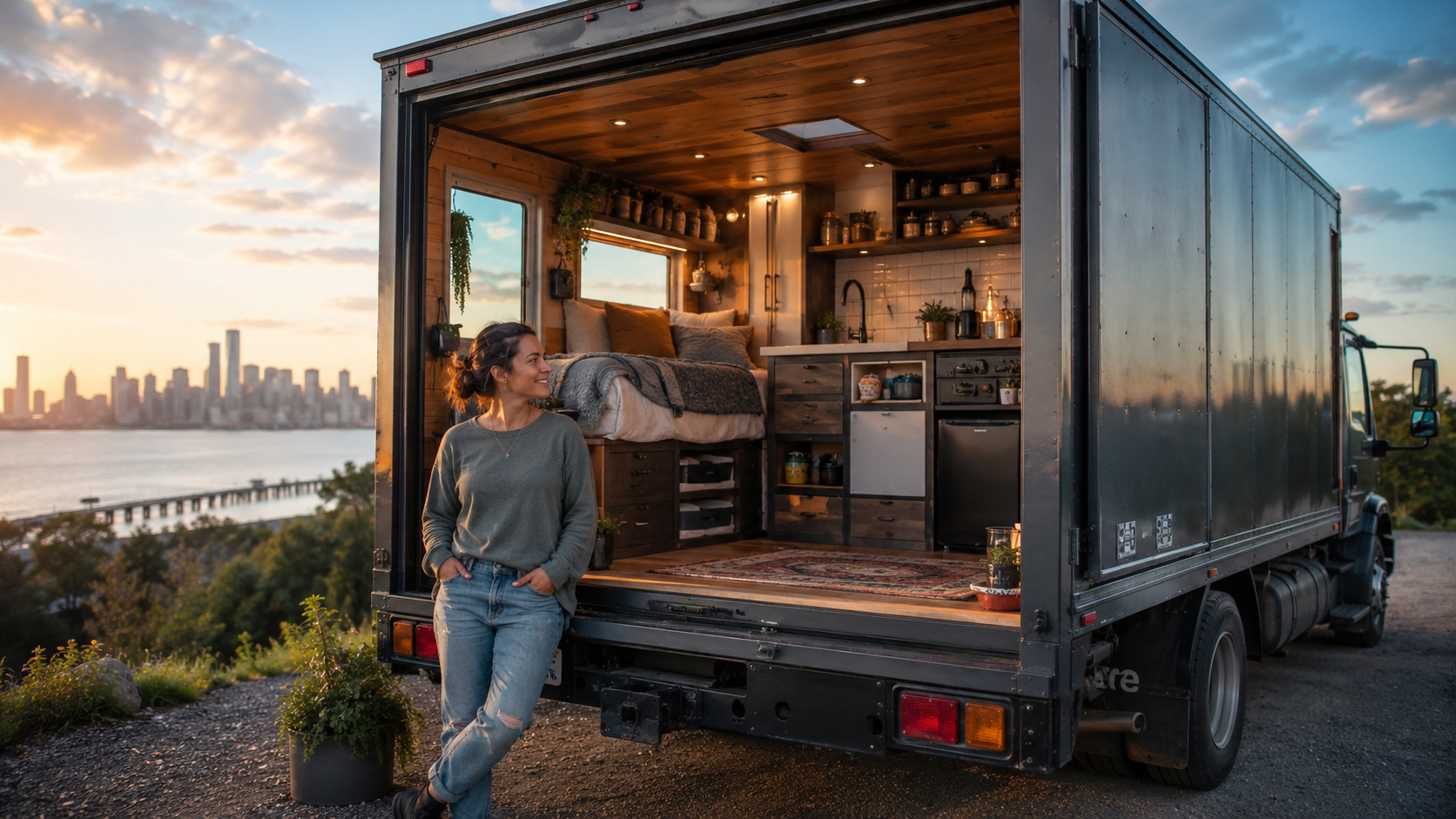

The house on wheels created inside a truck included a bed, kitchen, and space for objects, but swapping rent for a life of traveling required fuel, maintenance, safe places to sleep, and care with every choice made in the limited space available.
Not wanting to remain stuck with rent in the city center, Chrissie Junge, the truck’s owner, transformed the vehicle’s cargo area into a house on wheels. The space now includes a place to sleep, prepare meals, and store objects used in daily life.
The information was published by Great Home Ideas, a video program about homes and renovations. The report shows that the mobile home was not just a change of address but a new way to handle space, movement, and simple daily tasks.
The experience took place in Brisbane, Australia, after leaving a rented apartment in the central area. Instead of returning to a fixed home, Chrissie began taking her own home wherever the truck could stop.
-
After Earthquakes Devastated Thousands of Homes in Nepal, Woman Uses Compressed Earth Bricks to Build Over 40 Resilient Houses

-
Wind energy company discovers 19th-century shipwreck with 615 tons of coal while surveying seabed for 150 turbines installation.

-
Scottish Village with 15 Wooden Tiny Homes Provides Shelter for the Homeless: Each Unit Includes a Private Door, Kitchen, Bathroom, and Living Room in a £3 Million Project
-
Brazil bans donkey slaughter to prevent extinction and address health risks amid rising demand for hides in China.




The rent was left behind, but the truck brought new expenses
Swapping an apartment for a cargo truck did not eliminate the obligations of daily life. The difference was that expenses and care followed the owner wherever she went.


Fuel, maintenance, and stopping points became part of the routine. The truck needed to function as both transport and home, making any mechanical problem more significant than it would be in a vehicle used only for travel.
In a regular home, water, bathroom, electricity, and space to store objects are already part of the structure. In a mobile home, each need depends on choices made within a few meters.
The change also required reducing the number of objects. A house on wheels cannot accommodate items stored out of habit or furniture used only occasionally.
The cargo area gained a bed, kitchen, and space for organization
Great Home Ideas, a video program about homes and renovations, showcased the adaptation of the truck’s interior and the use of the cargo area as a residential space. The structure began to fulfill functions that, in a regular house, would be separated into various rooms.
The area designated for rest needed to coexist with the kitchen and storage. This organization prevented circulation from being blocked and allowed frequently used items to always be nearby.
The truck had space for a bed, windows, and a small refrigerator. The presence of these elements helped create a routine closer to home life, but did not turn the vehicle into an apartment.
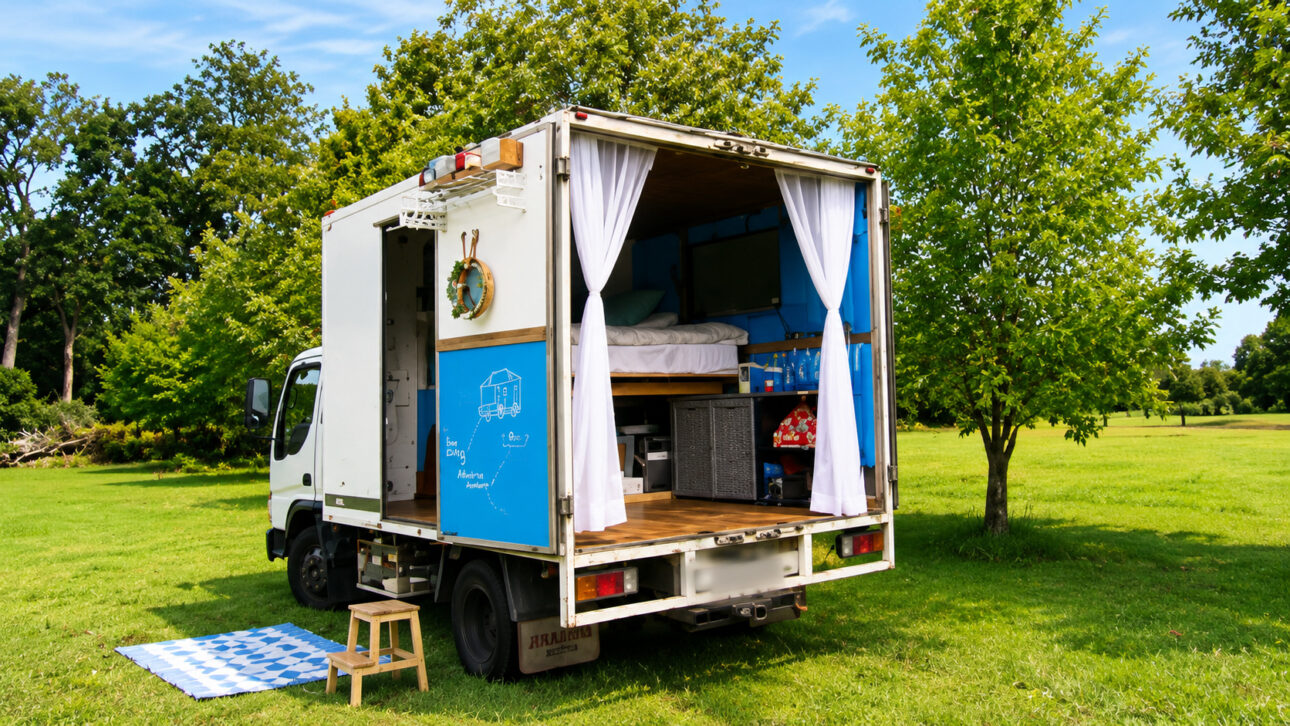
Each object needed to have a defined place. Clothes, utensils, food, and tools competed for the same area, making organization a daily necessity.
Bathroom and kitchen require solutions outside the apartment routine
The kitchen in a truck needs to be simple, as the space for preparing food and storing utensils is limited. Using a small area requires attention so that the preparation area does not occupy the entire internal passage.
The bathroom also requires planning. Water, cleaning, and waste disposal need to be resolved within a structure that is not connected to the fixed networks of a regular residence.
In the initial phase of adaptation, the bathroom and shower were not yet ready. Chrissie used gym facilities to take care of hygiene while the truck received new improvements.
This detail shows that living in a truck may require support outside the vehicle. Not everything that exists in a traditional house fits immediately into a mobile home.
Work and parking locations defined the rhythm of the mobile home
Life in a truck did not keep Chrissie away from her professional routine. She maintained a job in a store, and the chosen parking locations needed to make sense for the next day’s commitments.
Sleeping near work could make the next morning easier. At other times, she looked for places with trees, water, and a more open view, but the choice did not depend solely on the landscape.
Where to sleep became a daily decision. The lack of a fixed address required planning, especially after a tiring day, when the truck still needed to be taken to a suitable location.
Parking rules were also part of this account. A house on wheels needs to respect the regulations of each place, in addition to considering safety and access to basic services.
Fuel, loan, and maintenance were part of the dwelling
The purchase of the truck involved a loan, and the expectation of reducing expenses depended on finishing the adaptations and paying off the debt. Leaving rent behind did not mean living without costs.
Fuel needed to be considered for each trip. Maintenance, repairs, and parts could also alter the routine, as the truck carried not just a person, but her entire home.
When a vehicle used as a home needs to stay in a workshop, clothes, food, and personal belongings remain inside it. This turns a mechanical problem into something bigger than just a pause in the journey.
Height and weight also influence possible routes. Not every place allows the passage or stopping of a truck, which requires attention before choosing a route or place to spend the night.
A traveling house offers autonomy but demands organization
Chrissie Junge’s choice shows that a house on wheels can offer more autonomy to change places. At the same time, it requires discipline to keep the space clean, safe, and ready to function.
Life without a fixed address is not just about traveling. It involves fewer objects, more daily decisions, and responsibility for everything that keeps the truck moving.
The story shows that swapping rent for a mobile home can change the way of living, but it does not eliminate expenses, care, or limits. The truck became a home, kitchen, bedroom, and storage space, all in the same place.
For you, would living in a house on wheels be a form of freedom or a routine too difficult to maintain for long? Comment and share this story with anyone who has thought about swapping rent for the road.