





 Portuguese
  English
  Spanish
  5 min of reading
  0 comments


The Itapororoca House combines cliff, preserved area, laminated wood, and an open veranda to the sea to show how a house in Bahia can emerge from the land without erasing the coastal landscape.
Part of a house in Bahia was buried in the land itself so that the construction would not compete for attention with the beach, the cliff, and the surrounding vegetation. The building is located on the Bahia coast and was named Itapororoca House.
The information was published by Wallpaper, an international architecture and design magazine, on October 19, 2025. The project is signed by Bloco Arquitetos and uses laminated wood to create a light, open structure connected to the coastal environment.
The house is on a plot with a 3 m slope and 30 m from a cliff. The semi-buried solution makes the construction appear more discreet at the entrance but reveals two levels on the beach side.
-
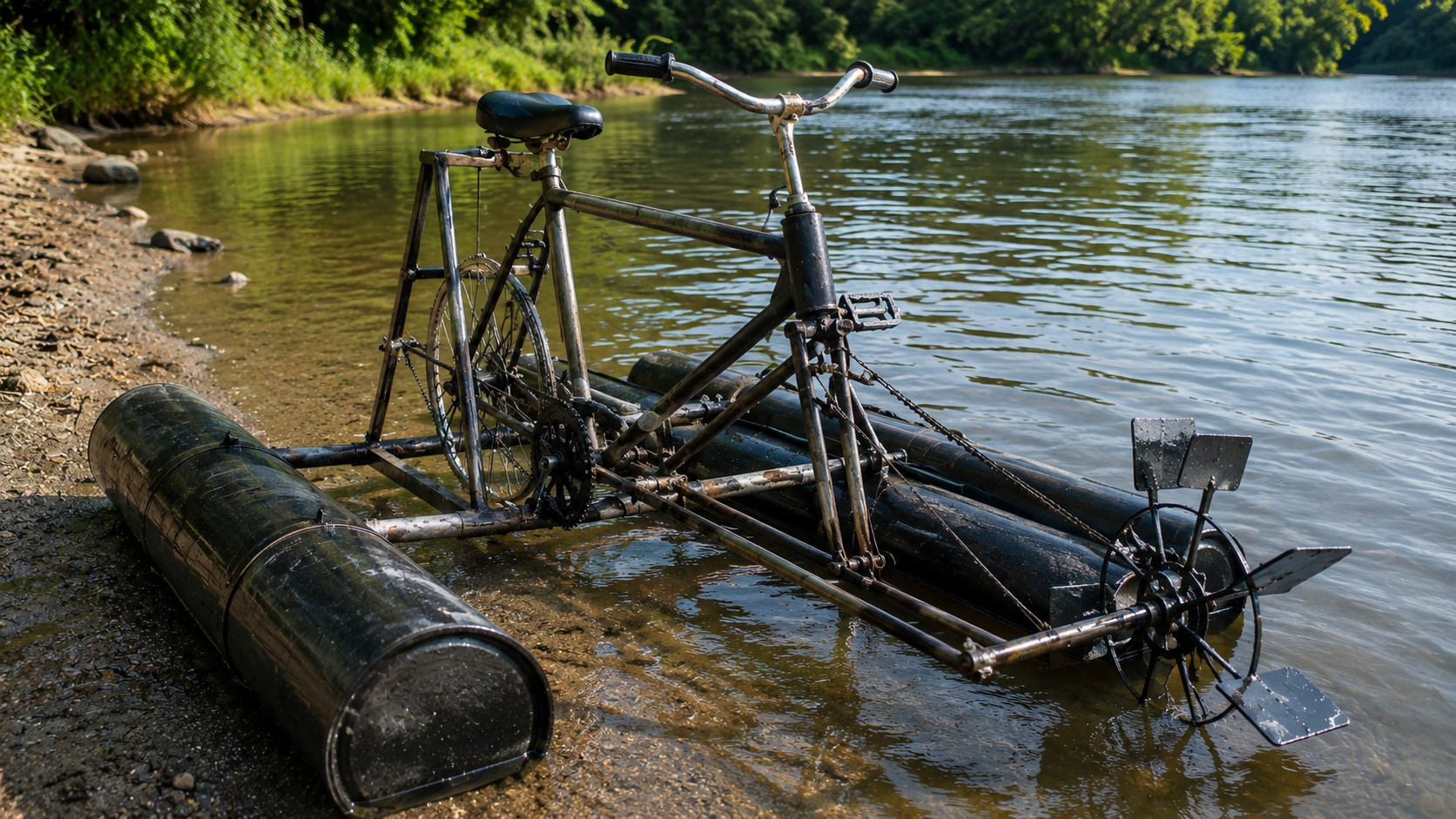
The amphibious bicycle made from metal scrap that looks like a garage invention, but uses floats, welding, human pedaling, and discarded parts to travel on roads, enter rivers, and demonstrate how sustainable engineering can transform metal waste into creative mobility.

-
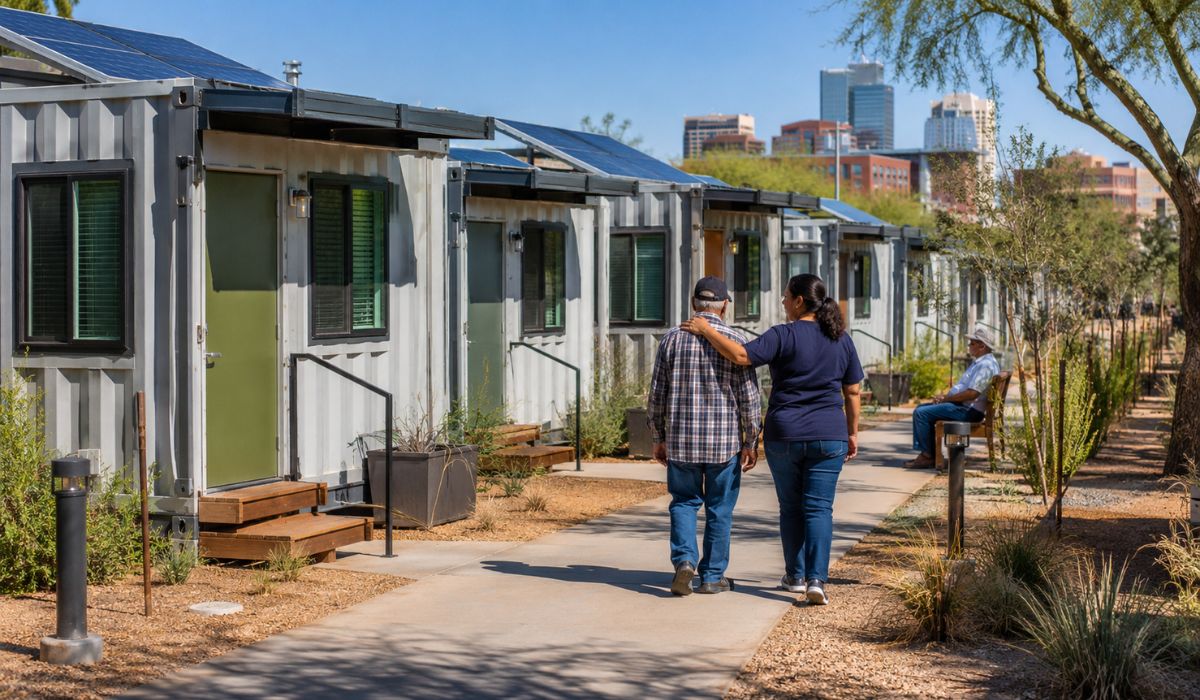
Pressured by nearly 10,000 homeless people in Maricopa County, Phoenix is converting containers into 40 transitional housing units of 14.8 m² for homeless seniors, with a bed, sink, bathroom, shower, microwave, mini-fridge, solar power, and social services before moving to permanent apartments.

-
Japan uses stunt doubles to simulate real accidents in front of children at schools and turns staged accidents with cars, bicycles, and pedestrians into shock lessons to teach traffic safety from an early age.

-
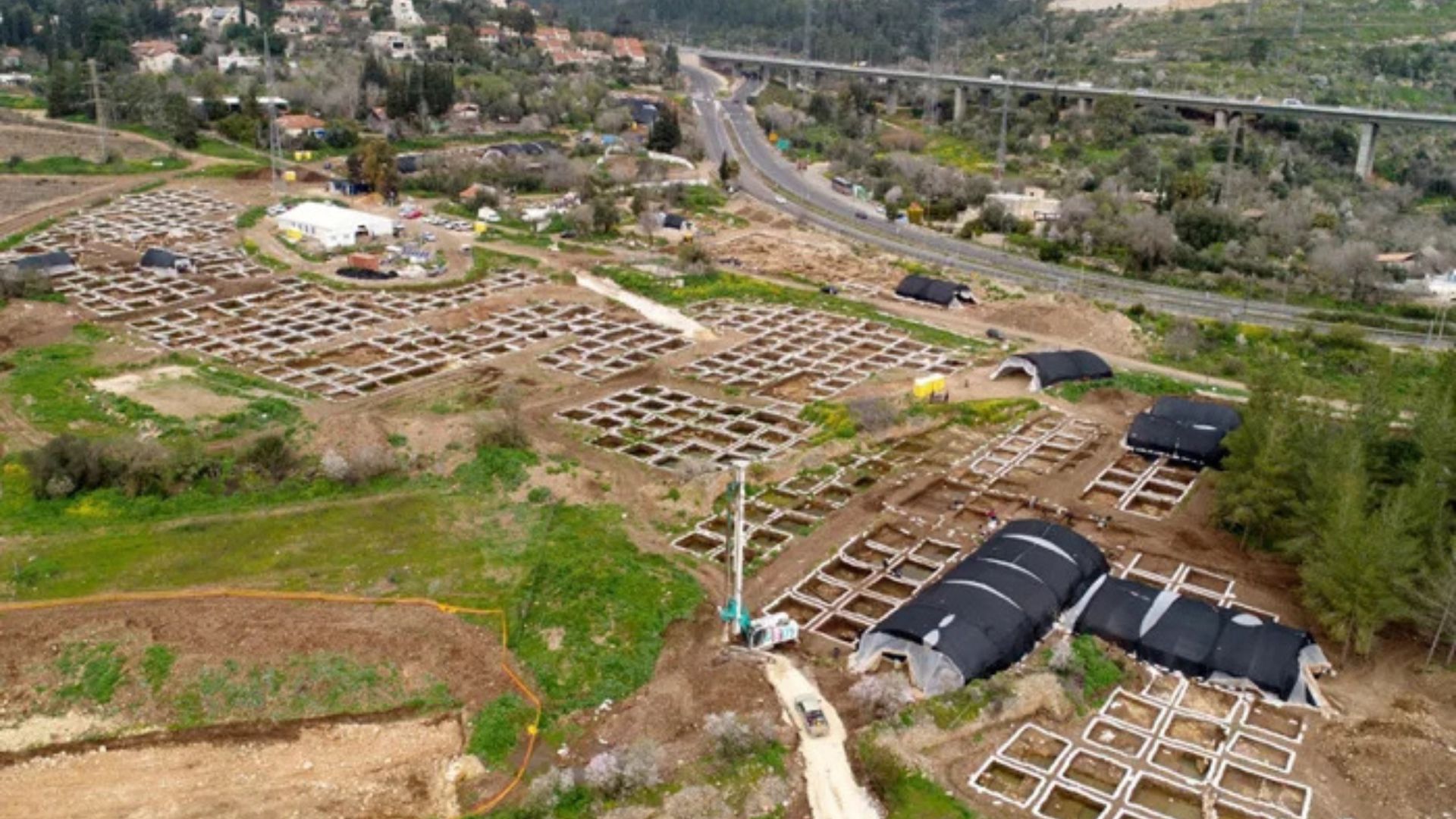
Before opening a new highway near Jerusalem, archaeologists discovered a 9,000-year-old “metropolis”: houses, streets, worship areas, thousands of tools, and a population comparable to that of a small modern city were hidden beneath the road’s layout.


Why part of the house was buried in the sloping land
The land of the Itapororoca House has a 3 m slope. Instead of treating this inclination as a problem, the project took advantage of the natural drop to fit part of the residence into the ground.
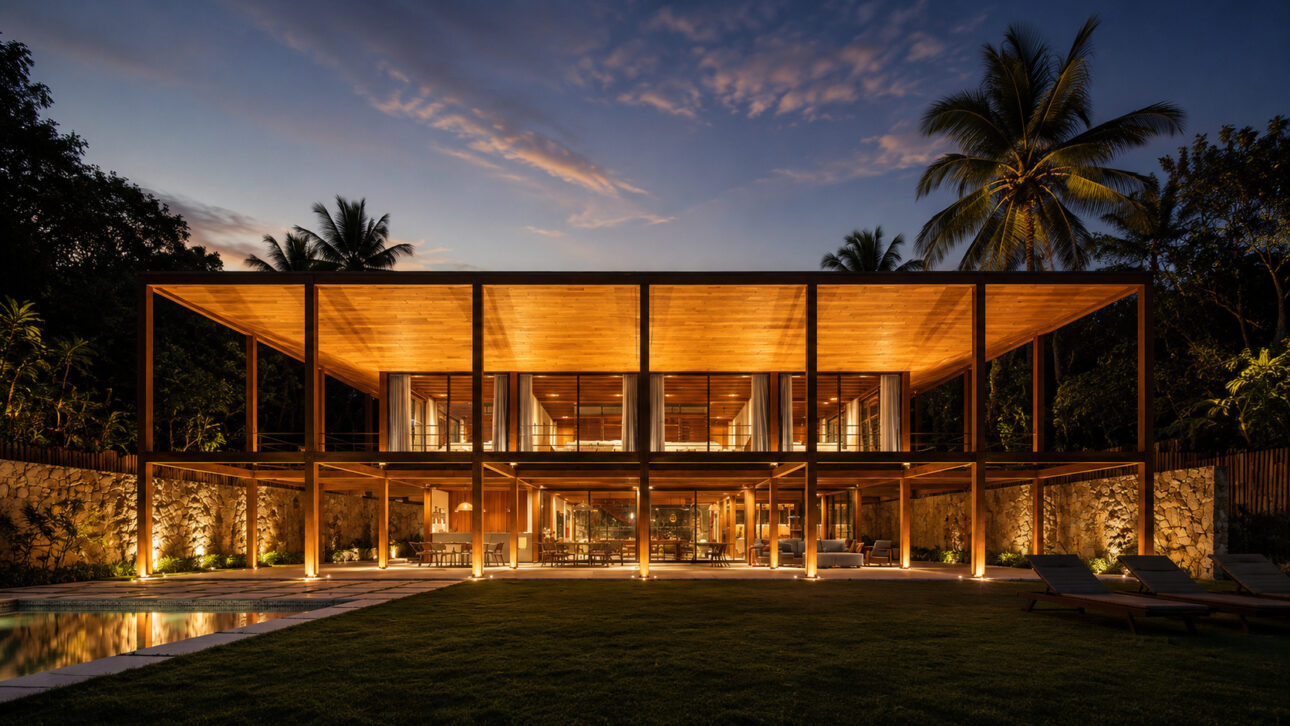
In practice, this creates a curious visual effect. From the main access, the house seems to have only one floor. From the side facing the beach, it shows two levels and opens to the sea.
This choice also reduces the visual impact of the construction. The house does not appear as a tall block in front of the landscape. It follows the contour of the land and appears gradually.
For the lay reader, the idea is simple: the construction does not try to correct the nature of the place. It uses the slope itself to be lower, more integrated, and less aggressive to the surroundings.
How glued laminated timber supports the structure without making the house heavy
Glued laminated timber is a technique that joins layers of wood to form strong pieces. These pieces can become beams, pillars, and important parts of the structure.
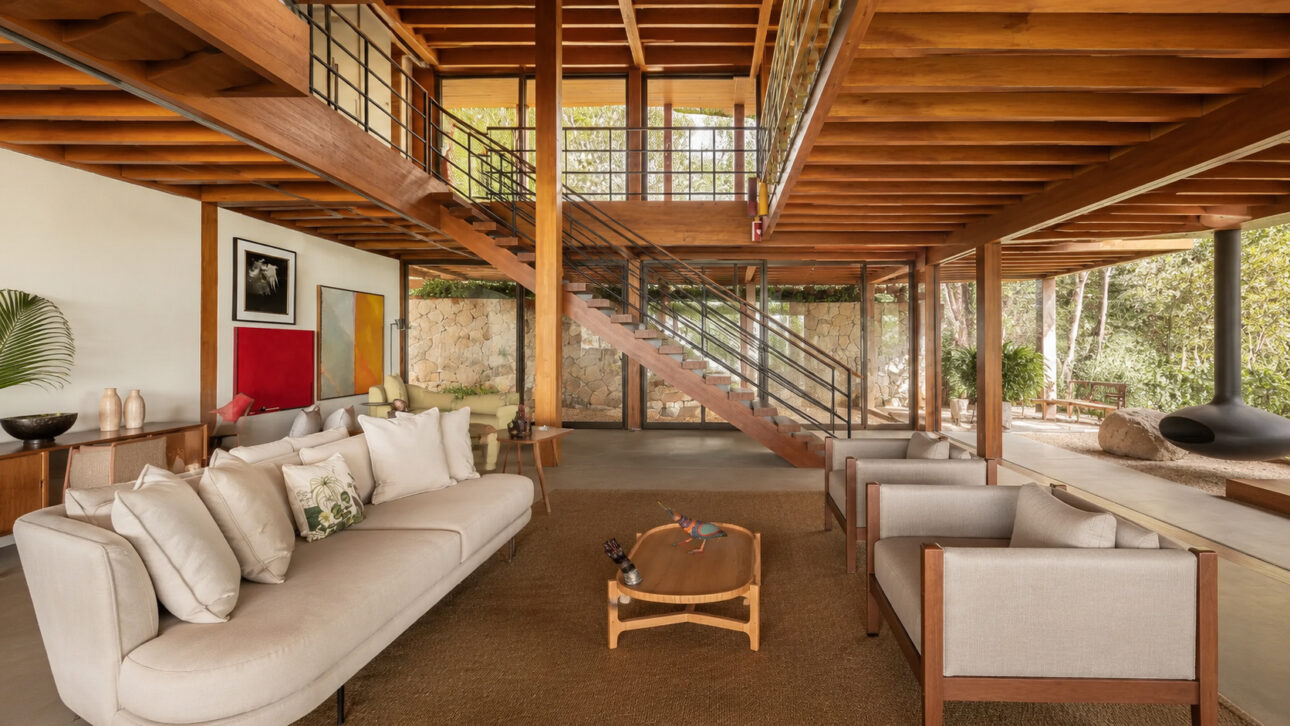
In Casa Itapororoca, this material helps support the structure and also contributes to the residence’s appearance. The structure appears lighter to the eyes than a closed and heavy construction.
Wallpaper, an international architecture and design magazine, noted that the house was designed to connect with the surrounding tropical landscape. The choice of wood reinforces this perception because it creates transparency, shade, and a sense of openness.
The wood also complements the wide veranda. Together, the structure and veranda make the house seem less isolated from the forest and closer to the beach atmosphere.
The cliff required a 15 m setback and made the construction more delicate
The residence is 30 m from a cliff. The project also had to respect a mandatory setback of 15 m from the edge.
This fact is important because cliffs are sensitive areas. They are affected by wind, rain, the sea, and the natural erosion of the soil.
The region is also associated with Iphan, the federal agency for historical and artistic heritage. This emphasizes that the project is located in a coastal area that requires special attention.
Building near a cliff involves more than just a beautiful view. It is necessary to respect limits, setbacks, and how the structure fits into the environment.
The open veranda transforms the house into a lookout for the Atlantic
The veranda is one of the most striking parts of Casa Itapororoca. It functions as an area between the interior of the residence and the exterior, creating shade and ventilation.
This type of space is easy to understand for the Brazilian public. Many old houses used wide verandas to protect from the sun, welcome people, and keep the house cooler.
In the Bahian construction, the veranda takes on another role. It opens the residence to a direct view of the Atlantic and creates a smooth transition between the bedrooms, living areas, vegetation, and the sea.
The result does not depend solely on beauty. The balcony also helps the house breathe better in the hot coastal climate.
The house looks small at the entrance and reveals itself larger on the beach side
One of the strongest points of the project is the change in perception. Those arriving at the entry level see a more contained house, almost hidden in the terrain.
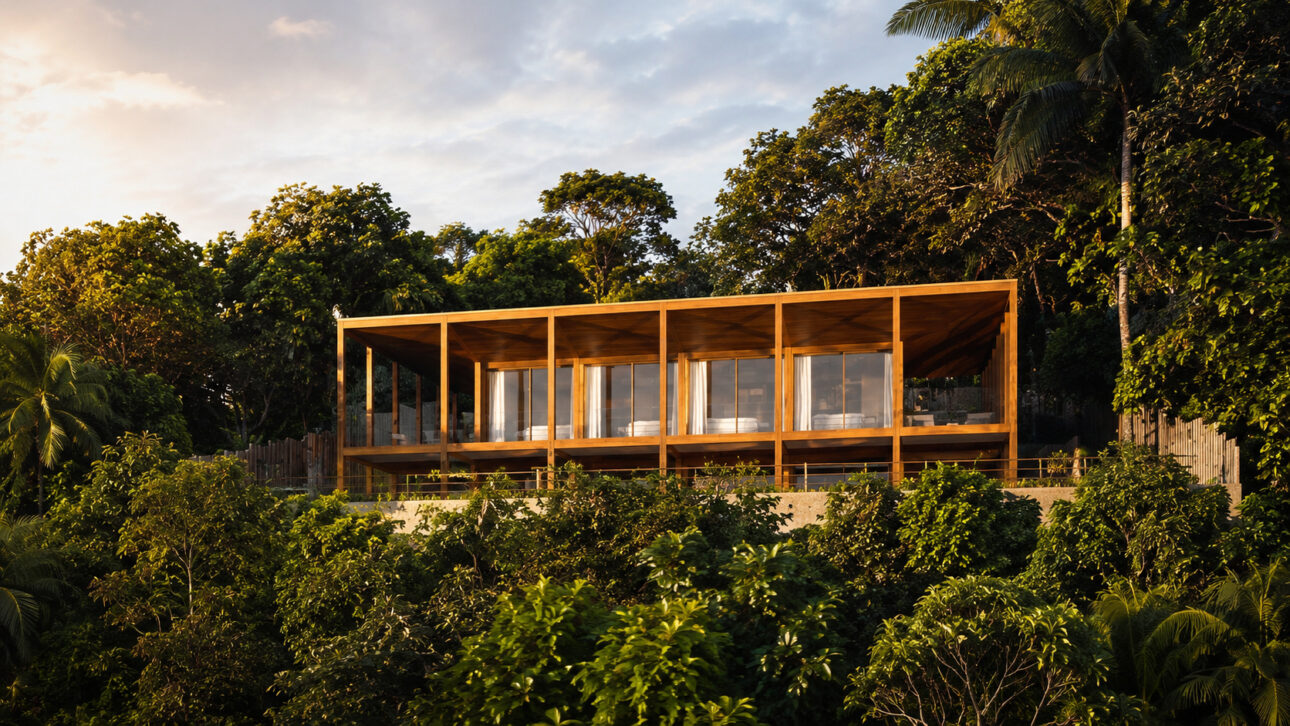
On the beach side, the construction shows another scale. The two levels appear, the balcony stands out, and the view of the sea gains strength.
This effect arises from the combination of sloping terrain, semi-buried part, and open structure. The house does not reveal everything at once.
It reveals itself as the perspective changes. First, it seems discreet, then it shows its direct relationship with the coastal landscape.
How to build near nature without dominating the landscape
Casa Itapororoca shows that a residence near the sea can seek balance instead of excess. The landscape did not become a backdrop for a dominant construction.
The project uses the terrain, wood, and balcony to create a house that respects its surroundings. The solution also shows that architecture in a sensitive area needs to consider soil, view, shade, and occupancy limits.
The work is not just a beach house with a sophisticated look. It shows a way of building where nature remains the protagonist.
In the end, Casa Itapororoca draws attention precisely by trying to appear less. The buried part, the glued laminated timber, and the balcony open to the Atlantic help create a residence that follows the terrain instead of dominating the cliff.
On a coastline increasingly pressured by constructions, this type of project raises an important question: should houses near the sea seek more visual impact or more respect for the existing landscape? Share your opinion and share with those who love Brazilian architecture.


Be the first to react!