






 Portuguese
  Spanish


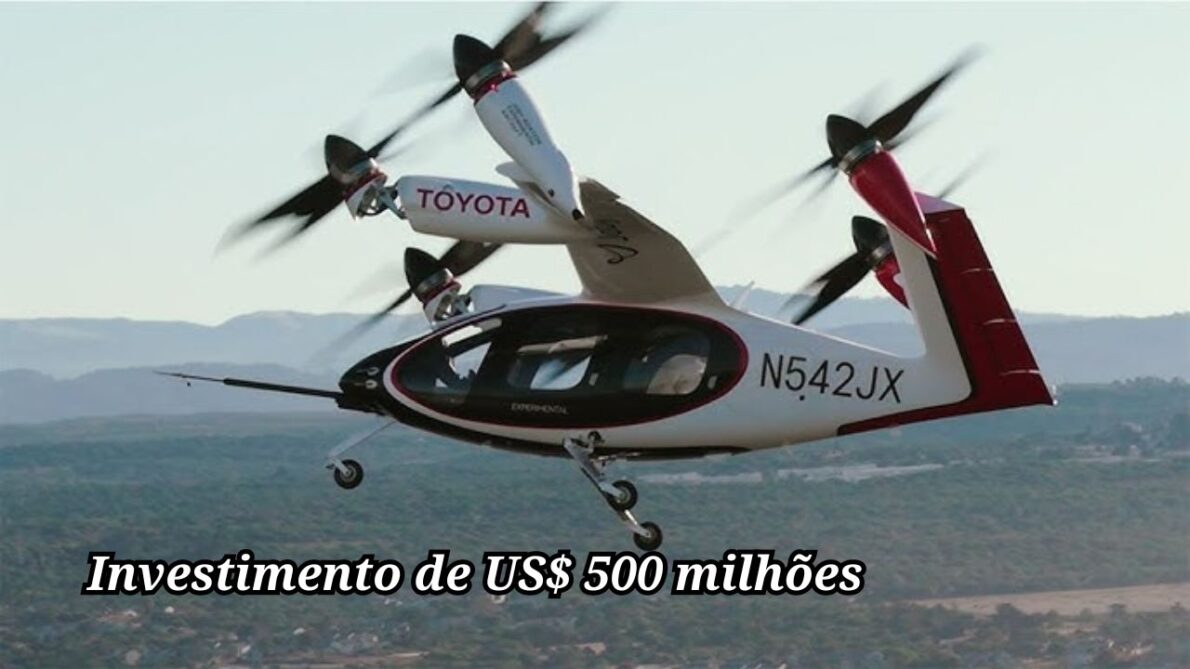

Japanese Car Manufacturer Reinforces Alliance With Joby Aviation Aiming To Revolutionize Urban Air Transport
Toyota is not just stepping on the accelerator of innovation; it is taking off toward the future! This Wednesday (2), the Japanese giant announced an investment of US$ 500 million (around R$ 2.7 billion) in the American company Joby Aviation, further strengthening the partnership that aims to transform the concept of urban mobility with the electric air taxi. This adds to the US$ 394 million already injected previously, signaling a heavy commitment to the commercial production and certification of these futuristic aircraft.
The electric vertical takeoff and landing (eVTOL) vehicles, like those from Joby Aviation, are being pointed out as the next big step for urban mobility, promising to transport passengers through the skies of large cities and avoid the chaos of traffic on highways.
But the road to the skies has obstacles: the regulations and certifications necessary for this new form of transport to truly take off.
-
2027 Toyota Corolla Cross Unveiled: New Design, Enhanced Fuel Efficiency, Reduced Maintenance Costs, Advanced Technology, Connected Services, and Up to 10-Year Warranty

-
Fiat Cronos Precision 2018: Affordable Sedan with Spacious Trunk and Reliable Maintenance
-
Volkswagen to Cut Production by 1 Million Cars by 2030, Reducing Jobs and Platforms, Focusing on More Profitable Models

-
Toyota Launches First 100% Electric Car in Brazil: bZ4X with 343 HP, All-Wheel Drive, 361 km Range, Priced at $419,990 BRL, Limited to 99 Units




Chairman of Toyota North America Makes Statement
“Sustainable flight will be key to alleviating today’s mobility challenges,” stated Ted Ogawa, chairman of Toyota North America, reinforcing the automaker’s commitment to contributing to the air revolution.
Toyota engineers are already working side by side with the Joby team in California, joining forces to develop efficient and sustainable electric air taxis.
New Expanded Facility In California
Joby Aviation recently inaugurated a new expanded facility in California, proof that the company is making progress toward commercialization and certification of its aerial vehicles.
JoeBen Bevirt, CEO of Joby, highlighted the collaboration with Toyota, which will provide the main powertrain and other components for the aircraft, as a significant milestone for the future of air mobility.
In addition to Toyota, other automotive giants are entering the game. In July, Stellantis, the parent company of Chrysler, announced a new investment of US$ 55 million in Archer Aviation, another electric air taxi company, while Delta Air Lines invested US$ 60 million in Joby in 2022, aiming for air transport services between airports in New York and Los Angeles.
The question remains: with so much capital and effort being invested, are we really close to seeing the skies filled with electric air taxis? Share your opinion in the comments!








