Portuguese
  Spanish


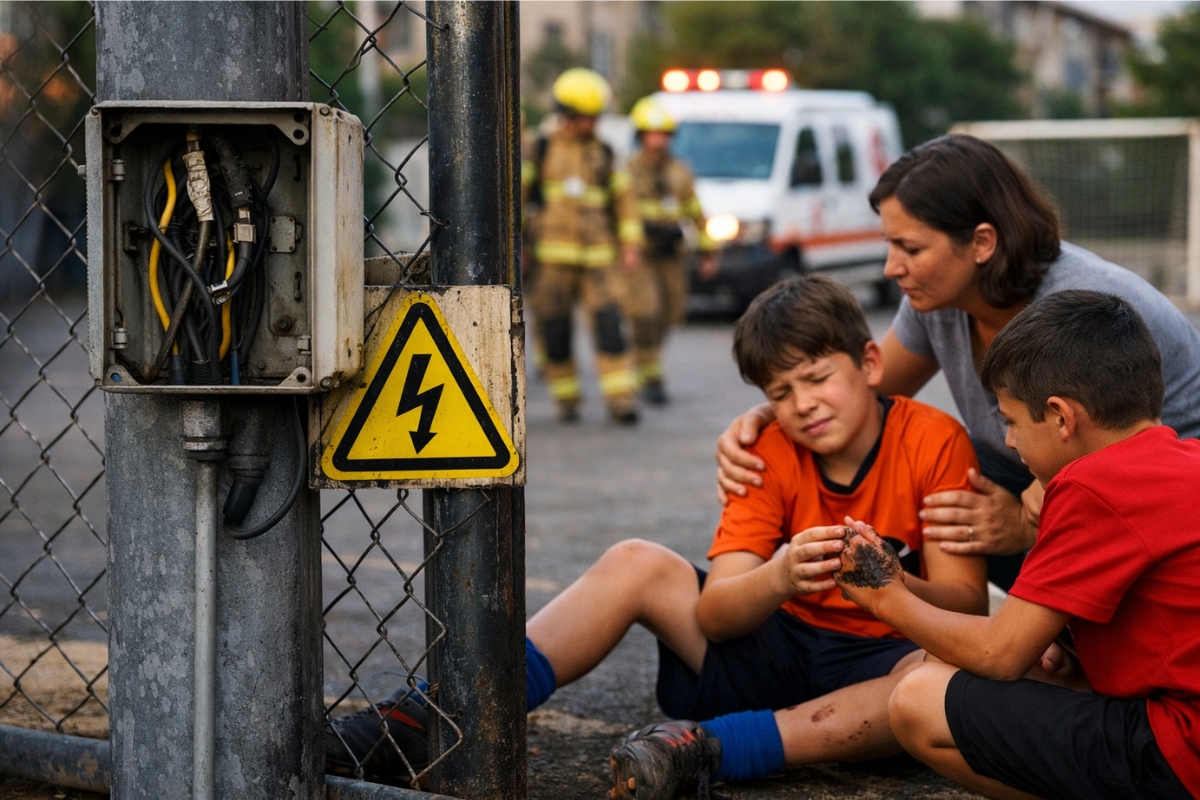

Decision Confirms Compensation of R$ 8 Thousand and Reinforces Duty to Maintain Public Lighting to Prevent Life-Threatening Accidents.
The CEB was held liable for an electric shock suffered by a child in a public court in the Federal District. The conviction was upheld by the Court of Justice of the Federal District, with compensation set at R$ 8 thousand for moral damages.
The case involves a failure in the public lighting network, which left an iron grid electrified. The situation exposed children to risk and resulted in injuries.
The episode also reinforces that utility companies can be held liable for damages when there is a defect in the service, even without a direct contract with the citizen.
-
Volcanic Soils from Destructive Eruptions Turn into Million-Dollar Crops: Ashes Nourish Grapes in Lanzarote, Bananas in the Canary Islands, Blood Oranges on Mount Etna, and Cacti in Mexico, Showcasing How Lava-Formed Lands Sustain Rare Harvests in Seemingly Barren Regions

-
In the Caucasus Mountains, a Community Preserves a Language So Rare Few Outsiders Can Understand It

-
Slovakia’s Ice Cave Holds Over 110,000 m³ of Frozen Wonders, Boasts Walls Up to 27 Meters Thick, and Was Among the First Electrified Caves Globally

-
Street Cleaner Accidentally Receives $200,000 Transfer, Returns Unexpected Fortune to Rightful Owner



What Happened and Why It Got Attention
The accident occurred in May 2019, in a court where children were playing soccer. A boy tried to help a friend who got stuck in the location’s metal grid.
The grid was electrified due to a failure in the lighting network maintained by the CEB. When touching the structure, the child also suffered the electric shock.
There was numbness in the arms and hands and burns on the fingers. The lawsuit was filed by the mother, seeking R$ 20 thousand for moral damages.
How Justice Determined CEB’s Responsibility

The 3rd Civil Court of Guará recognized the company’s responsibility and set the compensation at R$ 8 thousand. The CEB appealed to try to overturn the conviction.
The company argued that no energy leakage capable of causing shock was found. It also questioned the existence of moral damages and pointed out the lack of causal link.
In the judgment, the logic of strict liability was applied, which requires proof of the fact, the damage, and the connection between them, without the need to prove fault.
Who Has the Right and What the Law Says When Applicable
The decision highlighted Article 37, Paragraph 6 of the Federal Constitution and Article 14 of the Consumer Protection Code. These provisions address the duty to repair damages arising from failures in service delivery.
Article 17 of the CDC was also considered, which extends protection to victims of events caused by service defects, even without a direct contractual relationship.
In practice, this allows recognizing the child as a consumer by equivalence when the damage arises from a failure in service delivery.
What Weighed in the Evidence and in the Causal Link
The evidence demonstrated the occurrence of the accident and the failure in maintaining the lighting network of the location. The decision pointed out the absence of proof by CEB of effective preventive maintenance measures and periodic inspections.
Technical elements capable of dismissing the causal link between the shock and the electrical network under the company’s maintenance were also not presented.
Responsibility could only be dismissed with proof of exclusive fault of the victim, force majeure, or unforeseeable circumstances, which did not occur in the process.
Why the Value of R$ 8 Thousand Was Maintained
The compensation of R$ 8 thousand was considered proportional to the damage. The case involved a child subjected to electric shock, a situation associated with life risk and suffering.
In addition to physical pain, the episode can cause emotional impact, with greater weight due to the inherent vulnerability of childhood.
The decision was unanimous in the judging panel, maintaining the conviction and the set amount.
The upholding of the conviction confirms the duty of care regarding public lighting and the prevention of failures that can energize metal structures in spaces for collective use.
For the population, the message is direct: defects in essential services that pose risks and damages can lead to compensation, with strict liability of the concessionaire when the link with the failure is proven.