






 Portuguese
  Spanish
 4 min of reading
  12 comments


A submerged tunnel will revolutionize mobility in Santa Catarina, connecting Itajaí and Navegantes. The R$ 1 billion project promises to integrate 11 municipalities, boost tourism, and generate 11 thousand jobs. Moreover, the system will feature sustainable transport, including electric BRT and bicycle paths. An ambitious project that puts the state at the forefront of mobility in Brazil.
Can you imagine a project so ambitious that, besides improving urban mobility, also becomes a new tourist landmark in one of the most visited regions in Brazil?
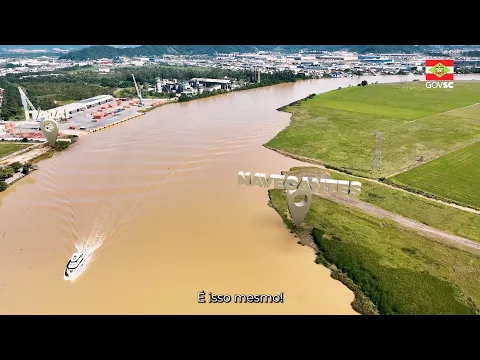
That is exactly what the underwater tunnel planned to connect Itajaí and Navegantes on the northern coast of Santa Catarina promises to deliver.
With an estimated cost of R$ 1 billion and the generation of 11 thousand direct and indirect jobs, the project stands out for its grandeur and for the impact on the lives of residents and tourists who visit the region.
-
Brazilian Joins Homeownership Consortium, Faces Decade of Dual Payments Totaling $141,000, Surpassing Traditional Mortgage

-
Land Rover to Halt Production in July, Putting 371 Jobs at Risk, as Chinese Automaker Negotiates to Convert Factory to 100,000 Vehicles Annually by 2027

-
Bolivian Female Construction Workers Form Association to Combat Discrimination and 38% Pay Gap in the Industry
-
Mexican Pest Threatens U.S. Cattle Herds at Historic Lows, Potentially Boosting Brazilian Beef Exports as Burger Prices Soar


A Milestone in Sustainable Mobility
The tunnel will have 548 meters in length and will be built under the bed of the Itajaí-Açu River, close to its mouth in the Atlantic Ocean.
With a total depth of 29 meters, it will feature a clear depth of 13 meters for navigation.
The structure will have three segregated sections, two for vehicle traffic – with exclusive lanes for buses – and one designated for pedestrians and cyclists.
In addition, there will be escalators, ensuring a more practical and accessible movement for users.
According to João Luiz Demantova, the technical person responsible for the project, the design of the tunnel follows the standards of the model that will link Santos and Guarujá in São Paulo, reinforcing the modernity and functionality of the undertaking.
Regional Integration and Economic Benefits
The project is part of the Promobis (Integrated Sustainable Mobility Project of the Itajaí River Mouth Region), which encompasses the connection between 11 municipalities: Itajaí, Navegantes, Balneário Camboriú, Camboriú, Itapema, Bombinhas, Balneário Piçarras, Penha, Porto Belo, Ilhota, and Luís Alves.
With the support of the Association of Municipalities of the Itajaí River Mouth Region (Amfri), a consortium was created to coordinate actions among the involved cities.
This cooperation model aims to ensure that the work and the integrated transport system meet the demands of the entire local population.
According to the government of Santa Catarina, an amount of R$ 136 million has already been allocated for the initial stages of the project, including environmental licensing and complementary works.
The total cost, estimated at R$ 2 billion, will be covered by public and private resources, with financing from the World Bank.

Tourism and Environmental Impacts
In addition to its practical functionality, the tunnel is set to become yet another tourist attraction in the region, which is already known for its natural beauty and cutting-edge infrastructure.
Balneário Camboriú, famous for its skyscrapers and stunning beaches, will see an increase in tourist flow, both national and international.
Despite the enthusiasm, the project also faces environmental challenges.
Because it involves construction in an area of high ecological sensitivity, experts argue that environmental licensing should be strict to ensure the preservation of the surroundings.
Future Urban Mobility
One of the most innovative initiatives of Promobis is the implementation of a 100% electric rapid bus system (BRT), which will feature exclusive corridors, solar-powered stations, and integration with bicycle paths and escalators.
This sustainable approach aims to reduce pollutant emissions and offer modern public transport alternatives for residents of the 11 municipalities.
The expectation is that the integrated mobility system will serve approximately 15 thousand people and 5 thousand vehicles daily, transforming the region into a model for other areas of Brazil.
Comparisons with the Santos-Guarujá Tunnel
Just like the tunnel planned for Itajaí and Navegantes, the project in São Paulo, linking Santos to Guarujá, also sparked debates about the feasibility of building a bridge.
However, the choice for the tunnel prevailed due to benefits such as less visual impact and greater durability.
In Santa Catarina, the choice was similar, after analyses indicated that a tunnel would be more advantageous to preserve the natural landscape and better meet the region’s traffic needs.
Next Steps and Timeline
The technical studies of the project have already been completed, and the next steps include finalizing the basic designs and starting the environmental licensing process, expected for 2026.
With the contracting of World Bank resources scheduled for March 2025, the government of Santa Catarina is optimistic about starting the construction in the coming years.
The concession of the system, including the operation of the tunnel and the BRT, will be carried out for 35 years, with toll charges, the value of which will still be defined.
Development Opportunity
With the potential to transform urban mobility, boost tourism, and create thousands of jobs, the underwater tunnel between Itajaí and Navegantes emerges as a landmark of innovation and progress for Santa Catarina.
But will the environmental challenges and high costs be overcome to deliver such an ambitious project?





Boa noite fique enteresado,sou montador mecânico ,e pra ano que vem
Br 101 25 anos , rodo anei florianópolis 14 anos, br 470 interminável… será daqui para 57 anos o túnel kkkkk
Ficará pronto em 2090 com um custo de 100trilhoes