






 Portuguese
  Spanish
  5 min of reading
  0 comments


Auroville was inaugurated on February 28, 1968, with 5,000 people and youths from 124 nations, according to official sources. Today, the city in India gathers more than 3,300 residents from 60 nationalities and claims to seek a life beyond beliefs, politics, and nationalities, centered on progressive human unity.
A city in India was created with an unusual proposal: to bring together people from different countries in a community focused on human unity, beyond beliefs, politics, and nationalities. Auroville, called the City of Dawn, was inaugurated on February 28, 1968, in front of 5,000 people.
According to the institutional source provided, youths representing 124 nations participated in the inauguration. Today, Auroville is presented as a growing community, with more than 3,300 people from 60 nationalities, trying to put into practice an idea that seems simple in speech but difficult in real life: living together beyond traditional divisions.
Auroville was born as an attempt at a universal city
Auroville is described by the community itself as a universal city. The proposal is that men and women from all countries can live in peace and progressive harmony, without nationality, religion, or politics being the central elements of coexistence.
-
An abandoned weapons factory that still contains ammunition and military vehicles has been discovered.

-
Businessman puts modern 1,100 square meter fortress in Russia up for sale for $550,000, featuring high walls, archer towers, a 1.2-hectare plot, and an isolated location on the banks of the Don River.
-
Small shops in the interior of São Paulo have been around for up to 70 years, maintaining credit accounts, preserving artisanal preserves, and showing how small rural businesses have turned customers into friends, families, and guardians of stories that remain alive even after the advance of sugarcane, the end of coffee plantations, and the arrival of large commercial chains.

-
Chinese students build a 6.06-meter remote-controlled paper airplane, achieve a flight of almost 15 minutes, and turn a school pastime into an engineering project to attempt a world record.


This ambition helps explain why the story draws attention decades after the inauguration. The city in India was not presented merely as a neighborhood, village, or common urban project, but as a social experiment aimed at testing the idea of human unity in diversity.
Inauguration gathered 5,000 people in 1968
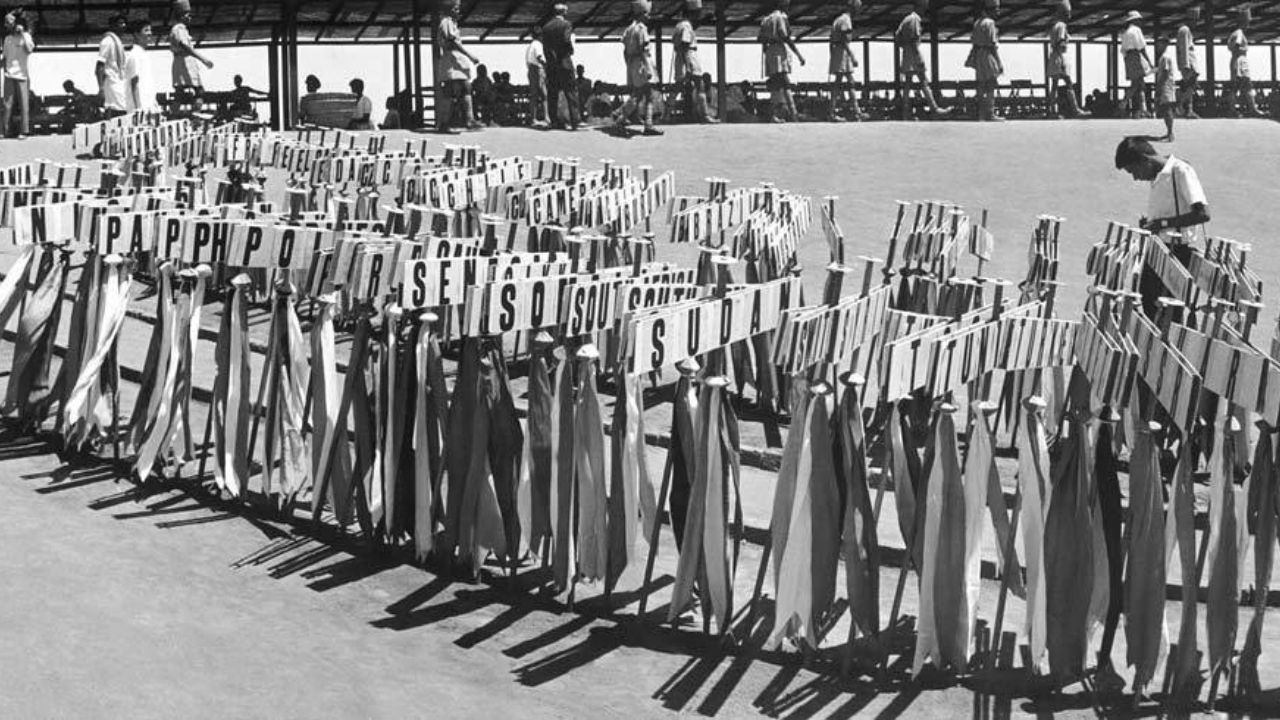
The founding date is one of the strongest points of the story. Auroville was inaugurated on February 28, 1968, in a ceremony that gathered 5,000 people, according to the official source provided.
The symbolic act also had significant international presence: young people from 124 nations participated in the inauguration. This detail reinforces that the proposal was born with a global ambition from the start, and not just as an isolated local community.
Community today gathers 60 nationalities
Currently, Auroville is described as a growing community, with more than 3,300 residents from 60 nationalities. The number shows that the experiment started in 1968 continued to exist and attract people from different backgrounds.
The presence of so many nationalities strengthens the concept of a universal city. The challenge, however, is not only in bringing different people together in the same space, but in sustaining daily coexistence based on cooperation, common purpose, and respect for differences.
Declared purpose is to realize human unity
The institutional source states that the purpose of Auroville is to realize human unity. The phrase sums up the core of the proposal: to create a community where national identity, political affiliation, and personal beliefs are not barriers to collective life.
This idea makes the city in India a topic of global interest. In a world marked by territorial disputes, polarization, and cultural conflicts, Auroville draws attention for trying to sustain an opposite experience: coexistence among people from different origins around a common ideal.
City seeks to live above beliefs and nationalities
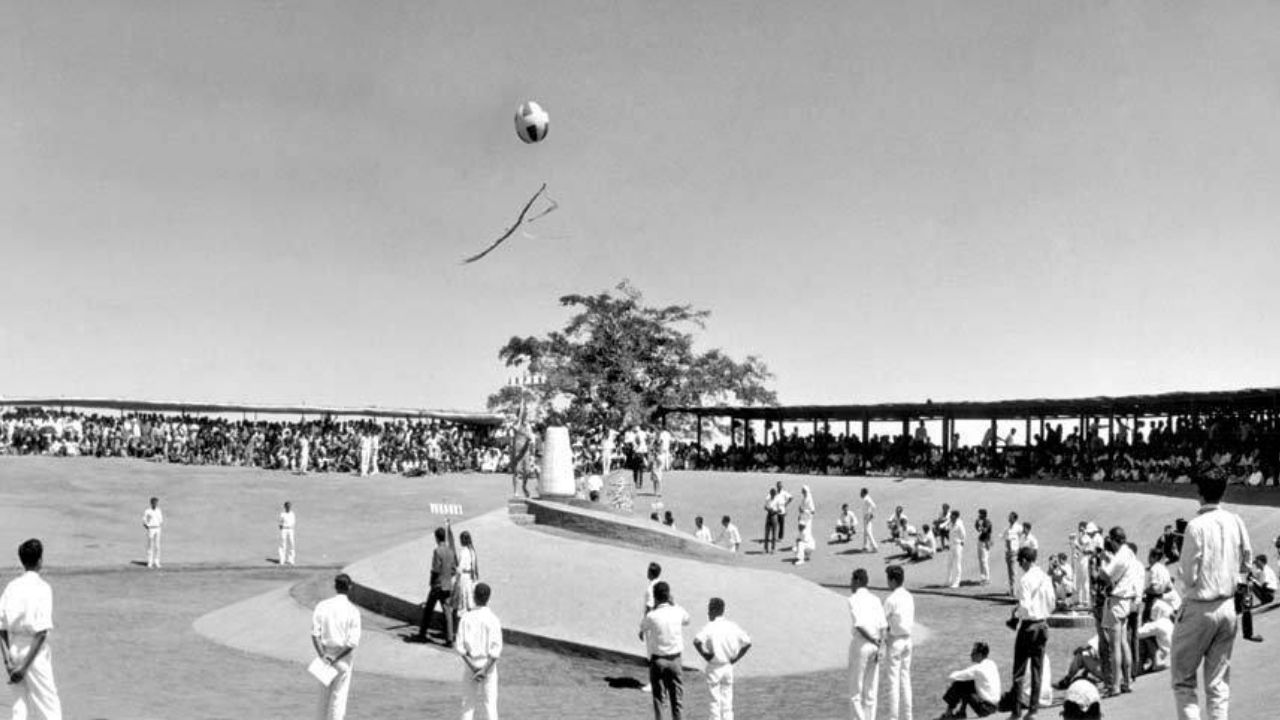
The official text states that Auroville aims to be a place where people from all countries live in peace and progressive harmony. The proposal includes living above all beliefs, politics, and nationalities, without turning these differences into internal borders.
This formulation is strong because it touches on a sensitive point of modern life. In many societies, religion, politics, and nationality define belonging; in Auroville, the declared intention is to place human unity above these divisions.
Matrimandir appears as the symbolic center of the community
The provided source highlights the Matrimandir as one of the central elements for visitation and orientation in Auroville. The text mentions the Visitors Center, the Matrimandir viewpoint, and the Inner Chamber, with specific information for visitors and residents.
The site itself presents the Matrimandir as “the soul of the city” on its featured pages. Within Auroville’s narrative, this space appears associated with the symbolic and spiritual dimension of the community, although the text does not describe it as a conventional tourist attraction.
Savitri Bhavan also integrates into the local cultural life
Another space mentioned in the source is the Savitri Bhavan, described as a center dedicated to the works of Sri Aurobindo and the Mother. This reference helps to contextualize the cultural and philosophical environment surrounding Auroville since its formation.
The presence of these centers shows that the city in India is not limited to housing and infrastructure. The community is also presented as a space for study, reflection, cultural activities, and the pursuit of a higher and truer life, according to the language used by the source itself.
Auroville is described as a continuous experience with international endorsement
The official source states that Auroville is recognized as the first and only continuous experience with international endorsement in the pursuit of human unity and the transformation of consciousness. This description positions the community as a long-term social project.
The text also lists pages of support statements and testimonials, including the Government of India, UNESCO, the Dalai Lama, and others. The provided source does not detail these statements in the given excerpt, but it shows that the community presents this support as part of its institutional trajectory.
More than a visit, Auroville proposes a way of life
The source states that Auroville has much more to offer than it appears at first glance, describing the place as a lifestyle and a different way of perceiving the world. There are also mentions of visits, accommodation, volunteering, workshops, therapies, and Auroville products.
This set reinforces that the community seeks to function as something greater than a passing destination. Auroville tries to present itself as an experience of coexistence, learning, and participation, not just as a city to be photographed or visited quickly.
Experience also depends on participation and support
The institutional text invites people to support the City of Dawn through donations and states that, despite the progress achieved, there are critical areas where help is needed. This point reveals that the project also faces practical challenges of maintenance and development.
Every planned community needs to deal with resources, governance, infrastructure, participation, and permanence. In the case of Auroville, these challenges gain weight because the promise is ambitious: to sustain a city in India focused on human unity, with residents from dozens of nationalities.
When a city tries to prove an almost impossible idea
Auroville draws attention because it transforms a philosophical question into physical space: can people from many countries live together above the divisions of religion, politics, and nationality? The answer is not just in the numbers, but in the continuity of the experience since 1968.
The story also provokes debate. A city in India with more than 3,300 residents from 60 nationalities can be seen as a sign of hope, a social experiment, or an ideal difficult to replicate? Do you believe that such a community can inspire other parts of the world? Leave your opinion in the comments.





Be the first to react!