






 Portuguese
  Spanish
  7 min of reading
  0 comments


The Gothic church Cologne Cathedral was born in 1248 to house relics of the Three Wise Men, remained halted for centuries, and was completed 632 years later. With Gothic architecture, steel, steam, and two towers, it became a symbol of faith, engineering, and German identity in northern Europe, still monumental in European history.
The Gothic church known as the Cologne Cathedral, in Germany, began construction in 1248 to house relics associated with the Three Wise Men and was only completed 632 years later, in 1880, as a landmark of Gothic architecture and German identity.
In a video released by the channel Guilherme Pavan, on YouTube, on February 15, 2024, the construction went through religious changes, funding crises, halts, rediscovery of the Gothic style, and resumption in the 19th century. The result was a cathedral 157 meters high, marked by two twin towers and a history as impressive as its engineering.
Relics changed the destiny of Cologne
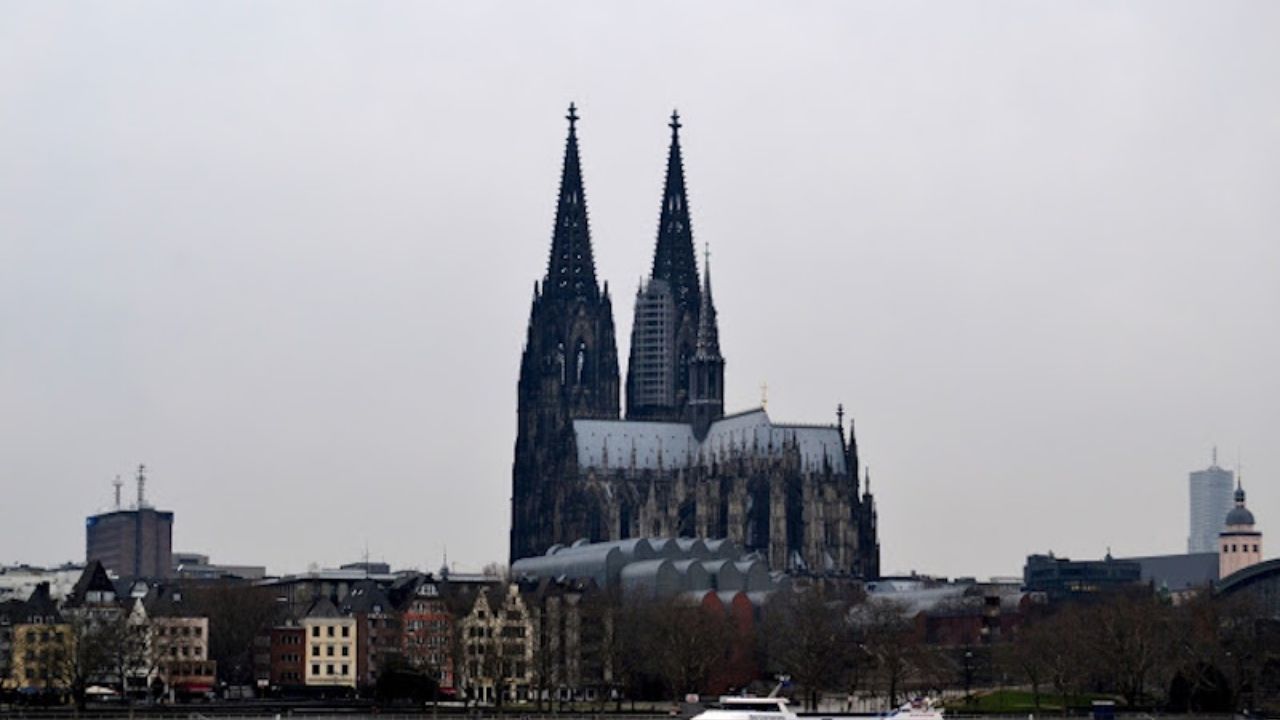
The story begins before the construction of the new cathedral. In 1162, relics attributed to the Three Wise Men were taken from Milan to Cologne, in present-day Germany, strengthening the city’s religious importance.
-
A city in India was inaugurated in 1968 in front of 5,000 people, welcomed young people from 124 nations, and today gathers more than 3,300 residents from 60 nationalities trying to prove that humanity can live without divisions of country, religion, and politics.

-
An abandoned weapons factory that still contains ammunition and military vehicles has been discovered.
-
Businessman puts modern 1,100 square meter fortress in Russia up for sale for $550,000, featuring high walls, archer towers, a 1.2-hectare plot, and an isolated location on the banks of the Don River.
-
Small shops in the interior of São Paulo have been around for up to 70 years, maintaining credit accounts, preserving artisanal preserves, and showing how small rural businesses have turned customers into friends, families, and guardians of stories that remain alive even after the advance of sugarcane, the end of coffee plantations, and the arrival of large commercial chains.


With this new role, the old church no longer seemed sufficient. It was necessary to erect a larger, more vertical, and more symbolic Gothic church, capable of receiving pilgrims and displaying the city’s spiritual prestige.
Construction began in 1248 with monumental ambition
The construction of the Cologne Cathedral began in 1248, inspired by the French Gothic style. The idea was to create a structure capable of competing in grandeur with the major medieval cathedrals of Europe.
The project followed the logic of Gothic architecture: height, light, stained glass, pointed arches, and a sense of spiritual elevation. The Gothic church was not just a temple; it was a demonstration of faith, urban power, and engineering.
First centuries had constant progress
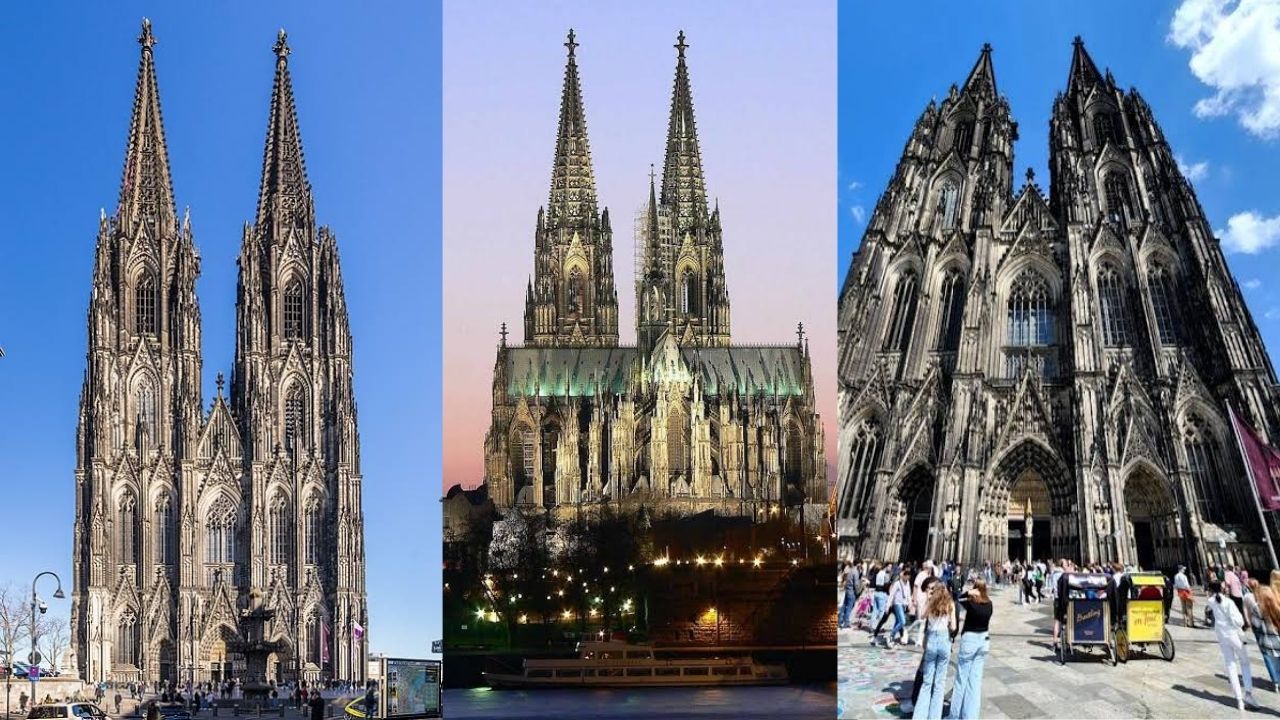
During the first 200 years, construction advanced considerably. Important parts of the cathedral were erected, and the city began to live with a structure that grew slowly, generation after generation.
In the Middle Ages, large cathedrals were rarely quick projects. They depended on donations, pilgrims, artisans, masons, political stability, and a continuity of funding that was difficult to maintain for so many centuries.
Gothic style lost strength with the Renaissance
With the arrival of the Renaissance, the Gothic style lost prestige in parts of Europe. New artistic and architectural references began to value classical proportions, Greco-Roman symmetry, and another vision of beauty.
This cultural shift affected the Cologne Cathedral. The Gothic church that once represented modernity and medieval boldness began to seem old, expensive, and less urgent to some of the elites of the time.
Protestant Reformation reduced the flow of pilgrims
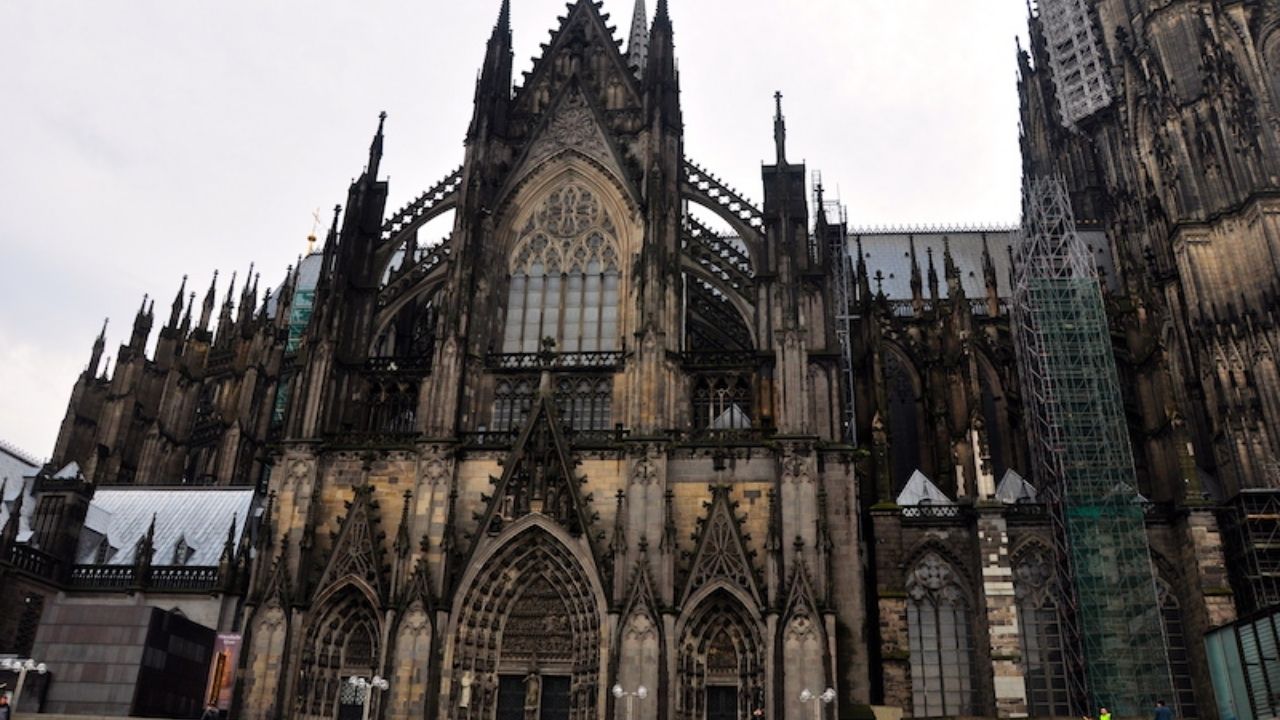
Another important factor was the Protestant Reformation. The religious change altered the dynamics of pilgrimages and reduced the flow of faithful who helped finance large Catholic projects.
Without the same influx of resources, construction lost momentum. A cathedral of this size required constant money, and the weakening of pilgrimages directly affected the continuity of the project.
Construction stopped and became a symbol of delay
In 1560, the works were completely halted, according to the source’s narrative. The cathedral remained unfinished, with parts erected and others still far from the original project.
The most striking detail was a large crane left on the base of the south tower. What should have been a construction tool turned into an involuntary monument of delay, visible for centuries on the Cologne skyline.
Crane remained as a medieval reminder
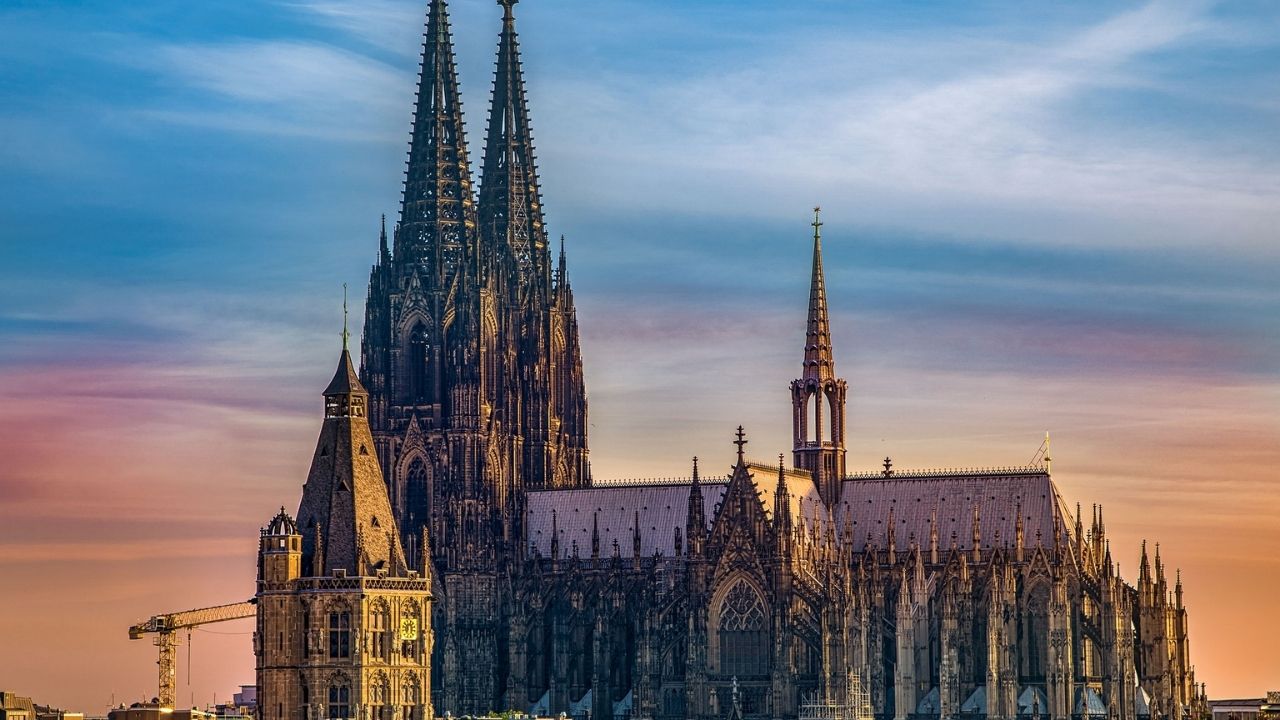
The crane remained on top of the structure for so long that it became part of the landscape. In the 19th century, it still appeared in visual records, creating an almost frozen image of the Middle Ages.
For the residents, the unfinished work became a subject of legend and irony. The delay was so great that popular stories emerged saying the world would end when the cathedral was finally completed.
Almost 300 years of standstill
The construction was halted for almost 300 years. Meanwhile, the city changed, Europe went through wars, occupations, religious transformations, and new political ideas.
Even abandoned as an active work, the gothic church continued to dominate the landscape. It was incomplete, but not irrelevant: its presence reminded of a medieval ambition that the city had not yet managed to finish.
Rediscovery of Gothic reignited interest
From the end of the 18th century, the Gothic style began to be valued again by writers, artists, and intellectuals. What once seemed outdated came to be seen as a profound expression of European identity.
This cultural change favored the Cologne Cathedral. The unfinished gothic church ceased to be just a functional ruin and began to be interpreted as an interrupted work of art.
French occupation damaged the cathedral
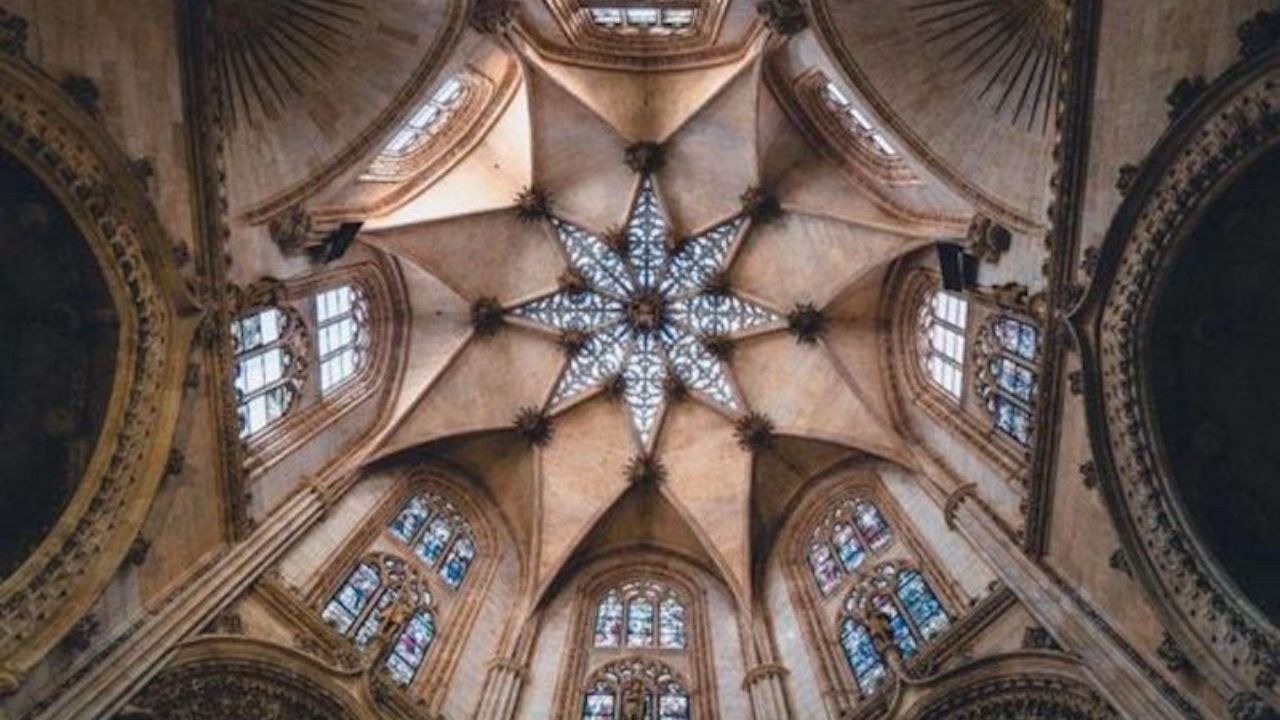
In 1794, during the French occupation, the cathedral suffered damage and was even used for functions far removed from its religious origin, such as a warehouse, barn, and prison.
This period reinforced the perception of abandonment. A temple created to hold sacred relics also came to symbolize vulnerability, improvised use, and loss of urban prestige.
German National Campaign Changed the Course
At the beginning of the 19th century, a campaign grew to complete the Cologne Cathedral. The idea gained momentum with the rediscovery of old drawings showing how the main facade should be finished.
The work came to be seen as a national project. Completing the Gothic church meant recovering a medieval past, strengthening German identity, and transforming an incomplete construction into a symbol of cultural unity.
Prussia Saw Political Opportunity
When Prussia came to control the Cologne region, the completion of the cathedral also gained a political dimension. King Frederick William IV supported the resumption, partly to improve relations with the Catholic population.
Architecture became an instrument of reconciliation. By financing and supporting the work, the Prussian power helped convert an old religious promise into a gesture of national rapprochement.
19th Century Brought Steel and Steam
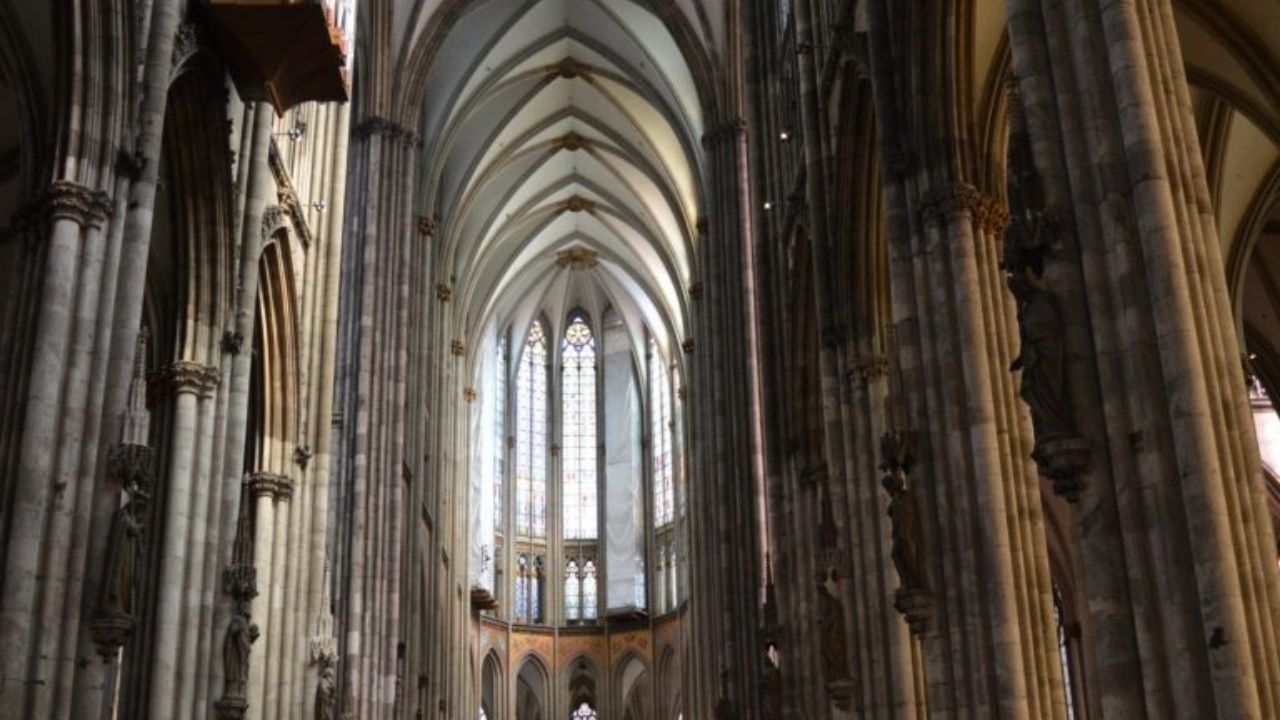
The resumption was not a simple medieval repetition. Although the builders sought to respect the original design, modern methods were used to speed up the work and solve structural challenges.
Steel played an important role in the roof structure, and steam power helped in transporting stones. The Gothic church ended with a medieval appearance, but relied on industrial technology to come to fruition.
Tradition and Modernity Mixed
This contrast is one of the most interesting parts of the story. The Cologne Cathedral maintained the Gothic language, but its completion was only possible with 19th-century resources.
The result was a hybrid work. On the outside, the cathedral seemed to fulfill a medieval dream; within the construction process, it revealed the strength of modern engineering.
Facade advanced rapidly in the resumption
With financing, labor, and technology, construction gained speed. The south facade was completed in 1855, and the nave was finished years later, bringing the work closer to its final form.
The two western towers began to emerge as the great visual landmark of the project. The city saw, in a few decades, a transformation it had awaited for centuries.
Completion came 632 years later
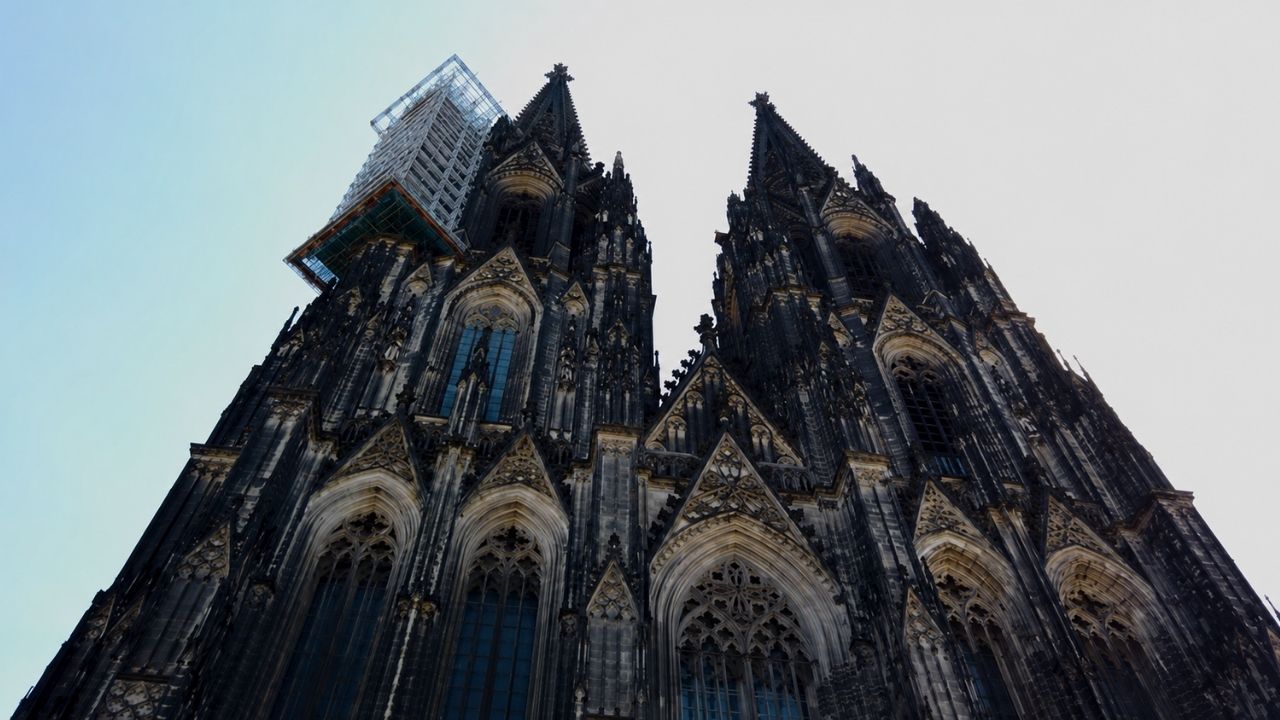
The inauguration of Cologne Cathedral was celebrated in 1880, 632 years after the start of construction. At that moment, the cathedral reached 157 meters in height and became one of the most impressive structures in the world.
The delay ceased to be just a failure. The delay was reinterpreted as historical persistence, as if each century had added a layer of meaning to the Gothic church.
Cathedrals also tell political stories
Cologne Cathedral is not just a religious building. It also tells the story of cultural disputes, changes in taste, religious ruptures, and German nationalism in the 19th century.
Therefore, its completion did not just represent the end of a work. It marked the transformation of an unfinished cathedral into a political, artistic, and spiritual monument.
World War II brought a new test


During World War II, the cathedral was hit by bombs, but its structure did not collapse. Amid the surrounding destruction, the towers remained a visual reference for the population.
This episode increased its symbolic weight. After surviving centuries of stoppage, the Gothic church also came to represent resilience in the face of war and urban devastation.
Two Towers Became a City Landmark
The twin towers are an essential part of the identity of Cologne Cathedral. They elevate the building on the horizon and reinforce the impression of verticality typical of Gothic architecture.
For those arriving in the city, the cathedral serves as a point of orientation. Its silhouette is not only beautiful; it organizes the visual memory of Cologne and dominates the urban landscape.
Beauty Also Comes from Delay
Part of the fascination with Cologne Cathedral comes precisely from its impossible duration. Few works carry with such force the sensation of having traversed entire eras.
Time became an architectural element. Each interruption, resumption, and technological change helped build not only the building but the legend around it.
Delay That Became a Monument
The Gothic church of Cologne began as a response to the arrival of relics associated with the Three Wise Men, but it turned into one of the longest stories in European architecture. It took 632 years between foundation, abandonment, resumption, and completion.
With steel, steam, a German national campaign, and fidelity to the medieval design, the cathedral turned delay into a historical symbol. Do you think a work that takes centuries to complete gains more value for carrying so many generations in its construction? Share your opinion.






Be the first to react!