





 Portuguese
  English
  Spanish
  4 min of reading
  0 comments


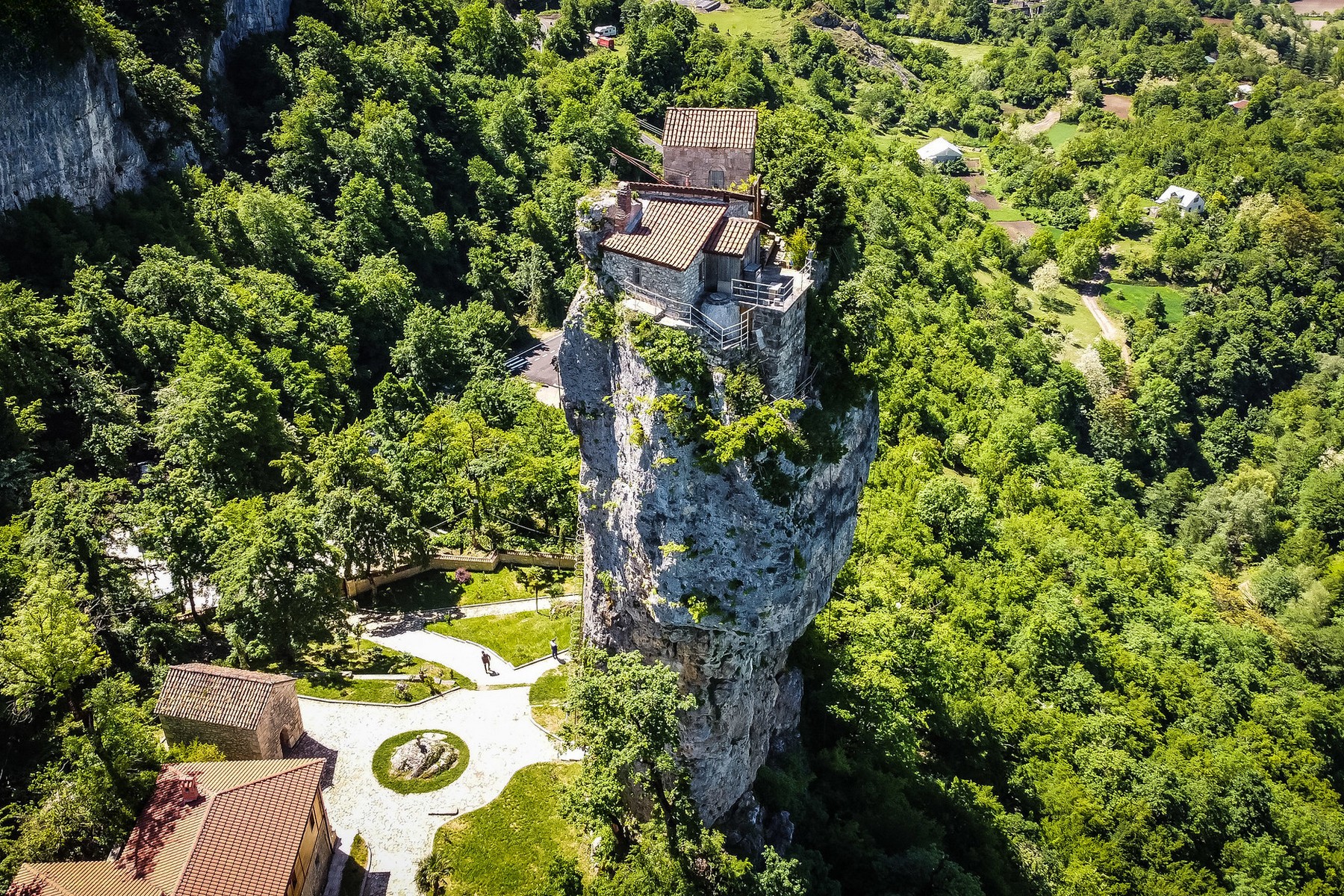
In Western Georgia, Monks Have Lived for Decades at the Top of a 40-Meter Monolith, Accessed Only by a Vertical Ladder, Maintaining One of the Most Isolated Habitations in the World.
In Western Georgia, in an apparently ordinary rural landscape, one of the most extreme forms of habitation continuously maintained by humanity rises. The Katskhi Pillar, a natural limestone monolith about 40 meters high, supports at its top a small active religious complex, occupied by monks who live practically isolated from the modern world. There is no road, elevator, or conventional trail. The only access is a vertical metal ladder, fixed directly to the rock, which requires physical strength, balance, and religious authorization to be used.
What makes the location extraordinary is not only its height but the fact that it functions as a real habitable space, with daily religious routines, structural maintenance, and continuous human occupation, something exceedingly rare in natural vertical structures.
The Katskhi Pillar and the Logic of Extreme Vertical Housing


The Katskhi Pillar is a natural monolith formed from limestone, with a narrow base and a relatively flat top, whose usable area does not exceed 150 square meters. Within this minimal space, a small set has been built, consisting of a chapel, a monastic cell, storage areas, and a metal cross visible from afar.
-
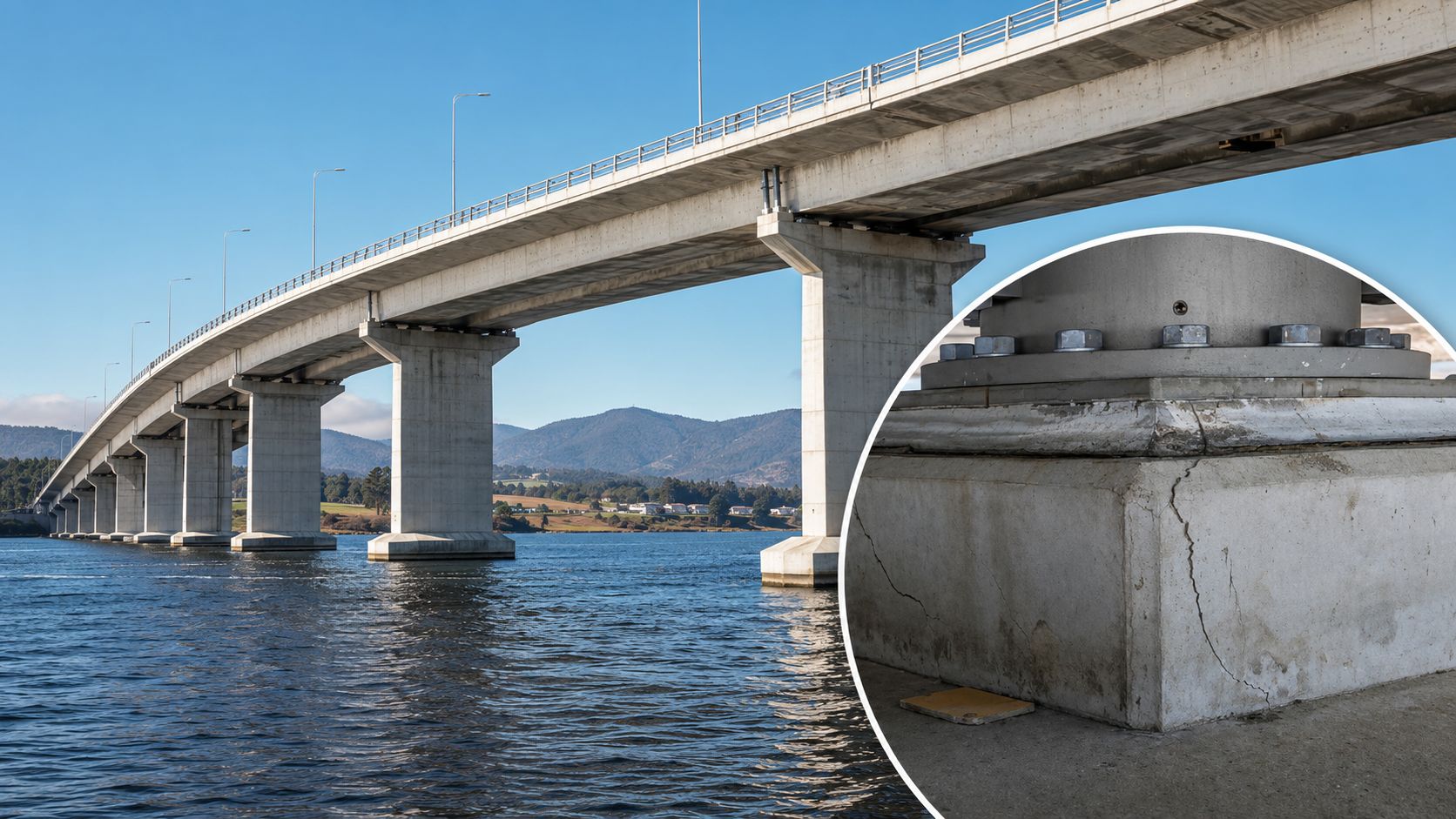
$786 million bridge becomes subject to technical alert after engineer points out risk in deep piles used in the foundation over the Derwent River in Tasmania

-
The United States purchased for $125 million a ship that Shell used for drilling oil in the Arctic, spent another $25 million refurbishing it, and renamed it Storis because the largest economy on the planet can no longer build an icebreaker on its own.

-
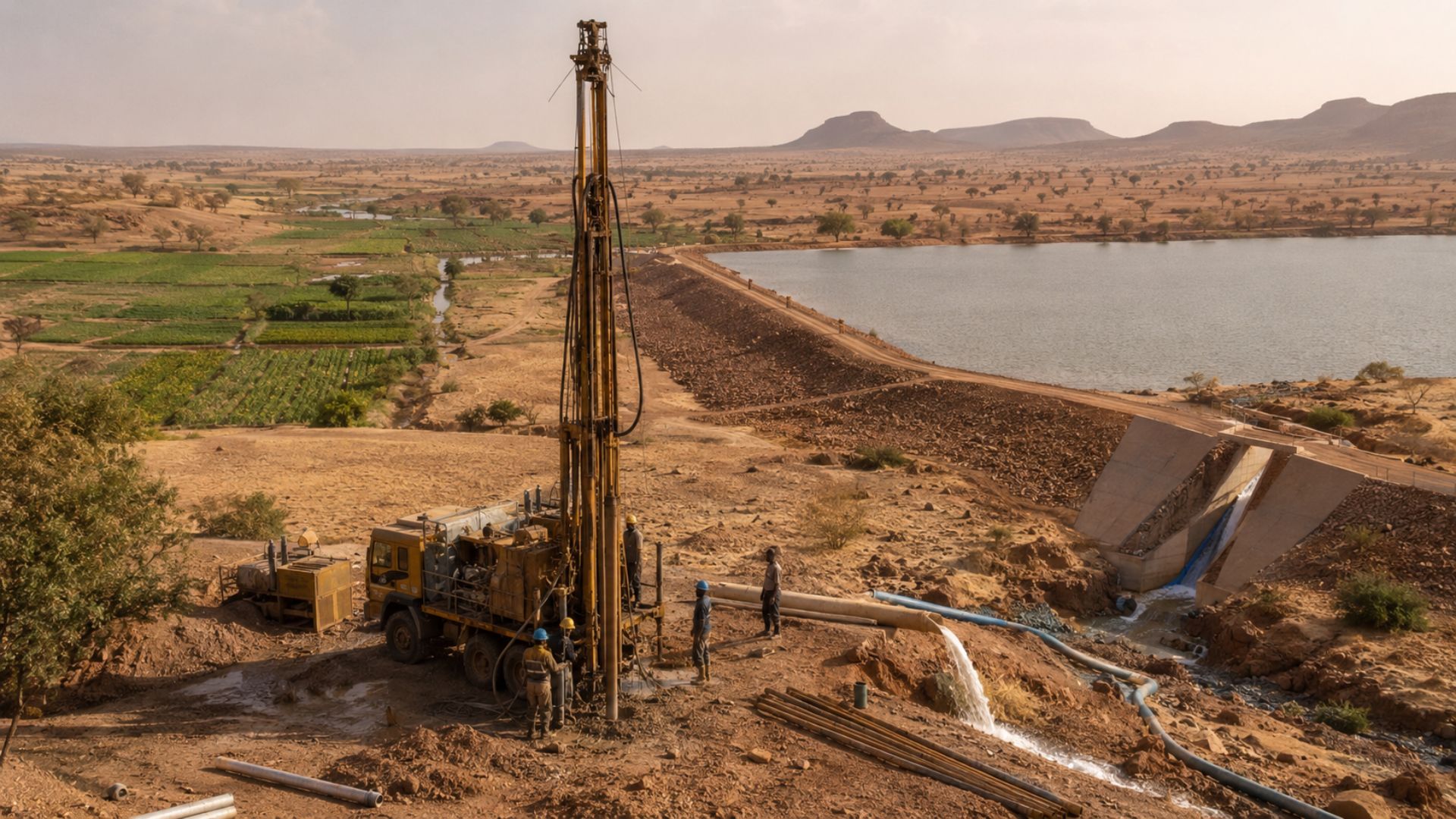
African country launched a $145 million project to rehabilitate 35 dams and drill deep wells seeking water stored for millennia beneath the desert, a plan that Captain Ibrahim Traoré’s government presents as a path to the country’s water sovereignty.

-
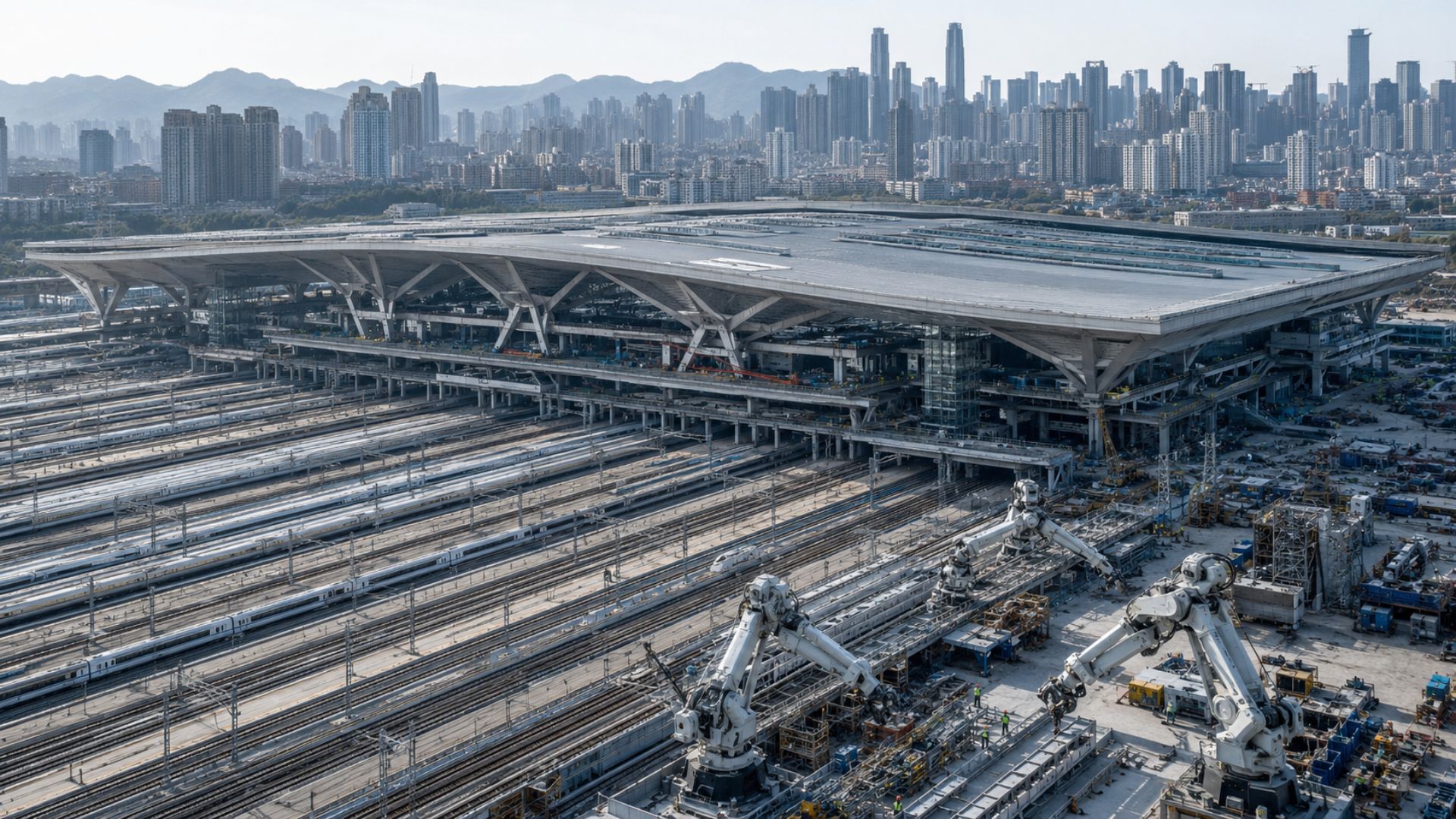
An eight-story railway colossus with a 16,500-ton roof, Chongqing East Station was built in 38 months with the help of robots and has become one of the largest passenger terminals in the world, with 15 platforms and 29 tracks.

The human occupation at the top dates back at least to the 9th or 10th centuries, when ascetic monks from the Eastern Christian tradition sought absolute isolation as a form of devotion. The inspiration came from the stylites, hermits who lived atop columns in late antiquity, but no other example has reached so far in terms of scale, permanence, and functionality.
For centuries, the monastery remained practically inaccessible, which contributed to its preservation and the mystery surrounding the site. Only in the 20th century did archaeologists and historians manage to study the top systematically.
A Vertical Ladder as the Only Link to the World
Access to the top of the Katskhi Pillar is through a vertical metal ladder fixed to the rock, installed only in the 20th century. The ascent takes about 15 to 20 minutes, with no lateral protection, exposed to the wind and height. By religious tradition, women are not permitted to ascend, and even men can only do so with the resident monk’s approval.
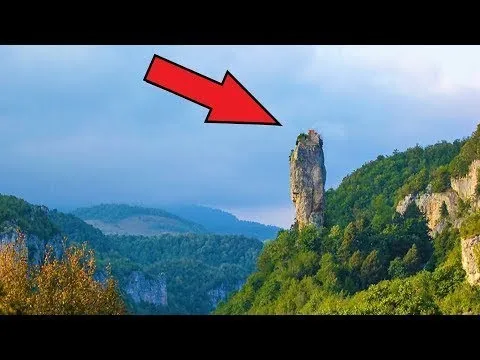
All supplies — food, water, maintenance materials — must be manually transported, reinforcing the sense of isolation and self-sufficiency. There is no direct road access to the top, nor any possibility of heavy mechanization.
This physical limitation is not a problem to be solved but an essential part of the meaning of the site itself: the more difficult the access, the greater the distance from the material world.
Life Without Modern Comforts, But With Natural Thermal Balance
Despite its extreme appearance, the top of the pillar offers some natural advantages. The limestone serves as thermal mass, helping to maintain more stable internal temperatures throughout the day. The constructions are compact, with thick walls and minimal openings, reducing heat loss in winter and excess heat in summer.
Historically, the monastery functioned without electricity, without artificial heating, and without modern sanitation networks. Water was collected and stored in containers, and waste was managed simply, compatible with the small number of occupants.
Even today, with minimal support coming from the base, the lifestyle remains deliberately austere.
Why the Katskhi Pillar Challenges Modern Architecture
From a technical standpoint, the Katskhi Pillar contradicts almost all principles of contemporary architecture. It was not designed for constructive efficiency, maximum comfort, or expansion. It exists within absolute physical limits imposed by the rock itself.
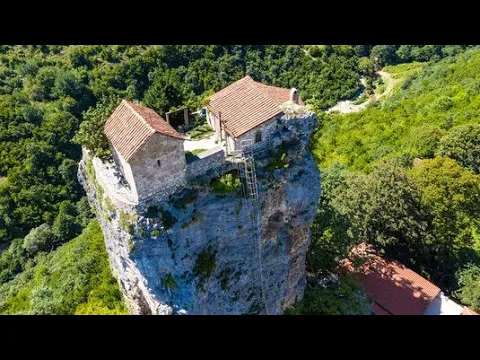
There is no room for urban growth, broad functional adaptation, or complex infrastructure. Yet, the site has functioned for centuries, proving that habitability does not necessarily depend on advanced technology but extreme adaptation to the environment.
Therefore, the pillar has become a reference in studies of archaeology, vernacular architecture, and the history of human occupation. It shows that, in certain contexts, survival and permanence come from restriction, not abundance.
A Living Monument, Not a Ruin
Unlike abandoned or museum-like structures, the Katskhi Pillar remains a living space, with an active spiritual function. Monks still reside at the top, follow daily rituals, and maintain the ascetic tradition that gave rise to the site.
Recognized and studied by cultural and scientific institutions, the pillar has also become a symbol of the human capacity to inhabit the impossible, not as a spectacle, but as a way of life.
Few places in the world demonstrate so clearly that architecture does not need to dominate the landscape to exist. Sometimes, it is enough to accept the limits of stone, height, and silence and build life right there.






-

-

-

-

-

12 people reacted to this.