






 Portuguese
  Spanish


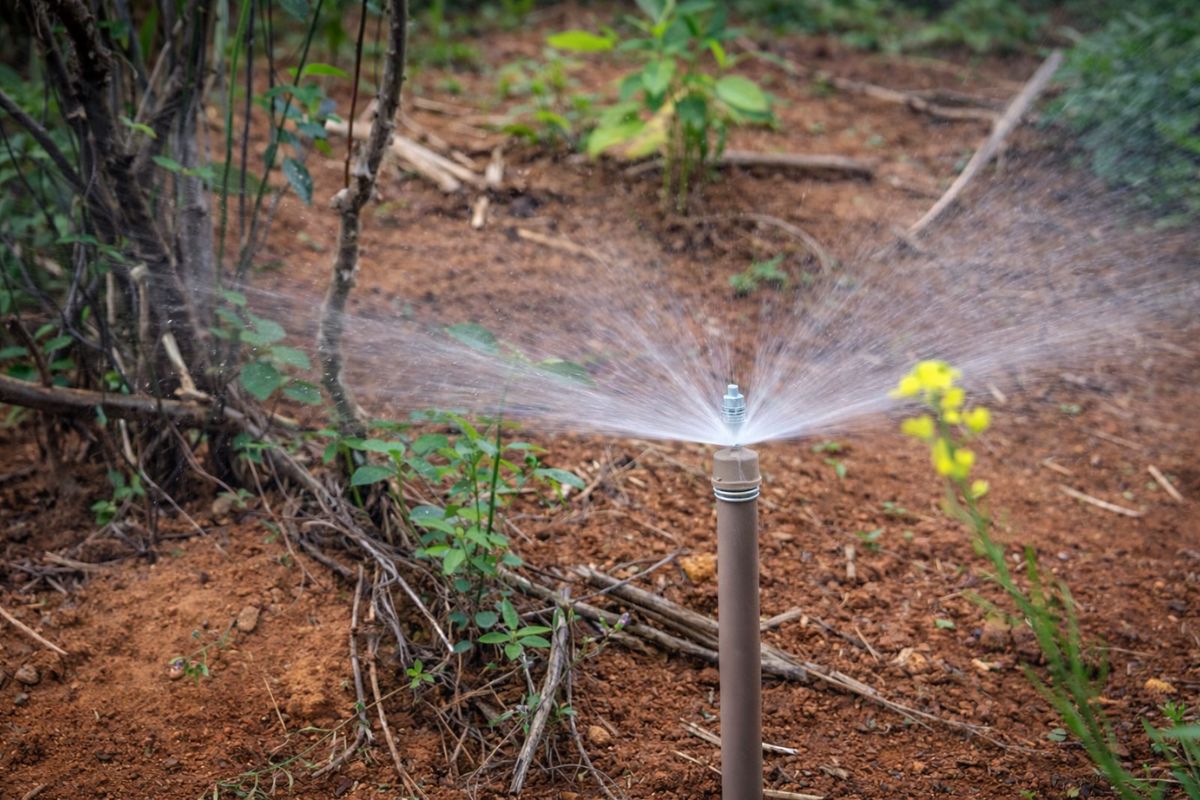


An Old PET Bottle and a PVC Pipe Assembled in a T-Shape Create a Rotary Irrigator That Distributes Water Continuously in Flower Beds and Gardens, Spins with Its Own Pressure, Allows for Flow and Hole Adjustment, and Helps Save Water and Time Without a Motor or Electricity
The rotary irrigator is born from a simple and ancient principle of domestic hydraulics: pressurized water exits through directed holes, creates thrust, and puts the entire piece into rotation. What stands out here is the choice of material, because an old PET bottle inside a PVC pipe turns into a functional sprinkler and solves a real pain point for those with a garden or small bed who don’t want to waste time watering plant by plant.
The proposal is straightforward: reuse common waste, reduce waste, and maintain more uniform irrigation. The rotary irrigator works without a motor and without electricity because it relies solely on the water pressure entering through the vertical part of the assembly. The winner is the backyard owner, who replaces bucket and watering can with continuous rotation, with less waterlogging in one spot and fewer failures in the bed.
What Is the PET and PVC Rotary Irrigator and Why Does It Spin on Its Own

The heart of the rotary irrigator is a T-shaped assembly made from PVC pipe. At each end of the T, a small PET bottle enters, one on each side.
-
Crab Trapped in Plastic Bottle for 62 Days Near Okinawa Highlights Little-Known Impact of Marine Pollution on Small Animals

-
Esperanza’s Bamboo Barrier in Oaxaca Redirects River and Reduces Erosion by 85% in Five Years

-
Family Builds Homemade Wind Turbine to Power Off-Grid Home, Video Reaches 555,000 Views on Ngô Thị Huyền’s Channel
-
Indian Brand Creates Sneakers from Recycled PET Bottles and Discarded Tires, Repurposing Over 1 Million Bottles and Raising $4 Million for Expansion





Water comes in from underneath, rises through the vertical part, travels through the T, and exits through holes made in the sides of the bottles, forming jets that spread out in the surroundings.
The spin is not “magic.” The water pressure combined with the tilt of the holes creates thrust, pushing the assembly in the opposite direction of the jet.
The effect is the same as a traditional sprinkler, only assembled in a DIY manner. With the rotary irrigator, the wet area tends to be more circular and distributed, avoiding concentrated watering that leaves one part soaked and another dry.
The Parts That Make a Difference: PVC T, Two Bottles, and the Axis Detail

For the rotary irrigator to spin well, it’s not enough to just poke holes in the bottle. The structure needs an axis that allows for rotation with minimal friction.
The described solution uses two pieces of PVC with different diameters: the smaller pipe fits inside the larger one, forming an improvised “bearing” that reduces friction and facilitates rotation when water is released.
There is a locking detail that holds the assembly in place. The end of the larger pipe is heated and shaped like a “little hat” to prevent the smaller axis from escaping during operation. This keeps the irrigator firm at the base, but free to spin with the water pressure.
It is this fitting that separates a prototype that shakes from a rotary irrigator that spins steadily, without needing a motor or any electrical outlet.
How the Holes Define Range, Speed, and Waste
The holes are the “calibration” of the rotary irrigator. The base text describes two stages: holes in the lids for controlled passage and lateral holes at the bottom of each bottle, with a slight backward tilt.
It is this tilt that creates the thrust and sustains the rotational movement.
The logic is practical and predictable. Smaller holes produce finer jets and generally increase range. Larger holes release more volume, soak nearer, and may reduce range.
If the goal is to save water, adjusting the holes and pressure tends to be more important than increasing flow, because excess water turns into splashes, runoff, and saturated soil.
Assembly in Stages, Without Blind Improvisation, to Avoid Leakage and Jamming
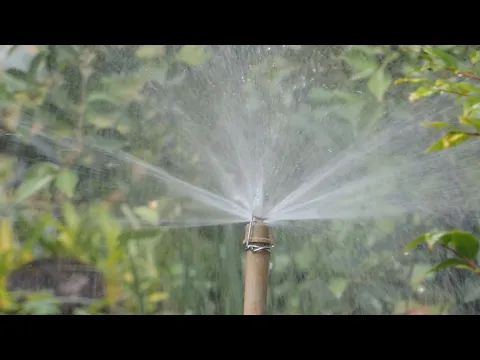

The assembly of the rotary irrigator follows a sequence that prioritizes fitting, sealing, and alignment. First, clean two small PET bottles, the cited example is 300 ml, remove labels, and prepare the holes in the caps. This avoids initial dirt and already defines a controlled passage.
Next comes the fitting into the PVC T. The described procedure involves slightly heating the ends of the T to fit the bottle necks and reinforcing with PVC glue, ensuring sealing and alignment.
Then, open the lateral holes at the bottom of the bottles and tilt slightly backward. If the alignment is crooked, the spin tends to wobble and waste water in splashes, which is why the step of testing the manual spin before use appears as a minimum check.
Finally, the assembly of the rotating axis, joining the pipe pieces to create a base and internal axis with locking at the top, and the securing of the assembly: coupling the T to the central axis and testing again. The goal is simple: to spin freely, without jamming, leaking, or coming apart.
Installation in the Garden: Height Changes Radius and Type of Crop Changes the Choice
Once assembled, the rotary irrigator can be connected directly to the hose or a fixed plumbing system.
The installation is usually done at a point above the plants, using a wooden support, a vertical pipe buried in the ground, or a simple metal structure to hold the assembly.
The height changes the behavior. In narrow beds and small gardens, the irrigator can be lower to prevent the jet from passing over the target and watering paths, walls, or useless areas. In lawns or larger areas, raising the assembly increases the coverage radius.
The choice of height is a decision for the person watering, because the rotary irrigator does not “know” where you want water, it simply spins and distributes according to pressure, holes, and position.
Fine Adjustments That Improve Efficiency and Durability Without Increasing Costs
The suggested list of improvements is the type of detail that avoids frustration in daily use. Pressure control appears as the first item: use a valve or faucet to regulate flow and avoid waste and excessive splashes.
It is a simple adjustment that changes everything because the rotary irrigator depends on pressure to spin, but too much pressure can cause irregular jets and wear.
Adjusting the holes comes right after, as a way to calibrate reach and volume. Balancing the bottles is also decisive: maintain similar weight between the two sides, both in water volume and material, so that the spin is stable. Sealing the connections prevents leaks that drop internal pressure and cause the irrigator to stop or spin weakly.
Periodic maintenance closes the loop: clean the holes and check for dirt or algae buildup to maintain uniform irrigation. Without maintenance, the rotary irrigator loses its main benefit, which is consistency, and goes back to requiring manual attention.
Where This Makes Sense, and Where It May Not Be Worth It
The rotary irrigator made from PET and PVC is described as adaptable for backyards, urban gardens, and home beds. The main gain is to reduce the repetitive work of watering plant by plant and maintain a more uniform distribution without expensive equipment.
At the same time, it depends on basic conditions: it needs a water source with sufficient pressure to sustain rotation and needs to be well fixed to avoid tipping. If the terrain is very uneven, if the wind is constant, or if the system leaks, the assembly loses efficiency.
The value of this sprinkler lies in its simplicity and low cost, so its limit is also simplicity, it is not a professional large area system, it is a low-cost domestic solution.
The rotary irrigator made from a PET bottle and PVC pipe shows how a project detail, inclined holes, an axis with differing diameter fittings, and firm sealing, transforms waste into an irrigation tool. It spins on its own with its own pressure, distributes water in a circle, reduces waste when properly regulated, and saves time in the gardening routine, all without a motor and without electricity.
Now the question that really separates curiosity from practical experience: in your garden, what frustrates you most when watering, waste, time, or areas that remain dry, and have you ever tested a homemade rotary irrigator that truly worked without leaking or jamming?


