






 Portuguese
  Spanish




Discovery at Beycesultan Höyük, in Western Anatolia, The Identification of Two Burnt Fabrics Dating Back 4,000 Years, Between 1915 and 1595 BC, Revealed the Oldest Evidence of Nålbinding and Indigo Dyeing in the Bronze Age, Indicating Organized Textile Production
Excavations conducted in 2016 and 2018 at Beycesultan Höyük, in western Anatolia, identified two burnt fabrics dating back 4,000 years that reveal the oldest evidence of nålbinding and indigo dyeing in the region, dating between 1915 and 1595 BC, broadening the knowledge about Bronze Age textile industry.
Two Burnt Fabrics Dating Back 4,000 Years Reveal a Lost Bronze Age Textile Industry
The excavations in Turkey brought to light two very small textile fragments but considered extremely important. They represent the oldest evidence ever found of a single-needle knitting technique known as nålbinding and of indigo-dyed fabric in Bronze Age Anatolia.
Cuneiform tablets indicate that the textile industry was highly sophisticated during the Bronze Age, in the period of the Ancient Assyrian Colony and the Hittite Empire. However, physical traces rarely survive, according to the study.
-
Pennsylvania Mine Creates Ice in Summer Heat and Melts in Winter, Turning a Mountain Crevice into a Reverse Natural Refrigerator

-
China Accelerates Global Expansion of Robotics: From Smart Vacuums to Industrial and Humanoid Machines, Millions Exported to Over 150 Markets
-
Polar Air Mass to Hit Brazil: Temperatures to Plummet in Nine States, Near Freezing in the South with Frost Risk Until Monday
-
Chinese “dark factories” produce electric cars 24/7 with minimal human intervention, as Zeekr assembles 800 units daily, raising concerns in Brazil.





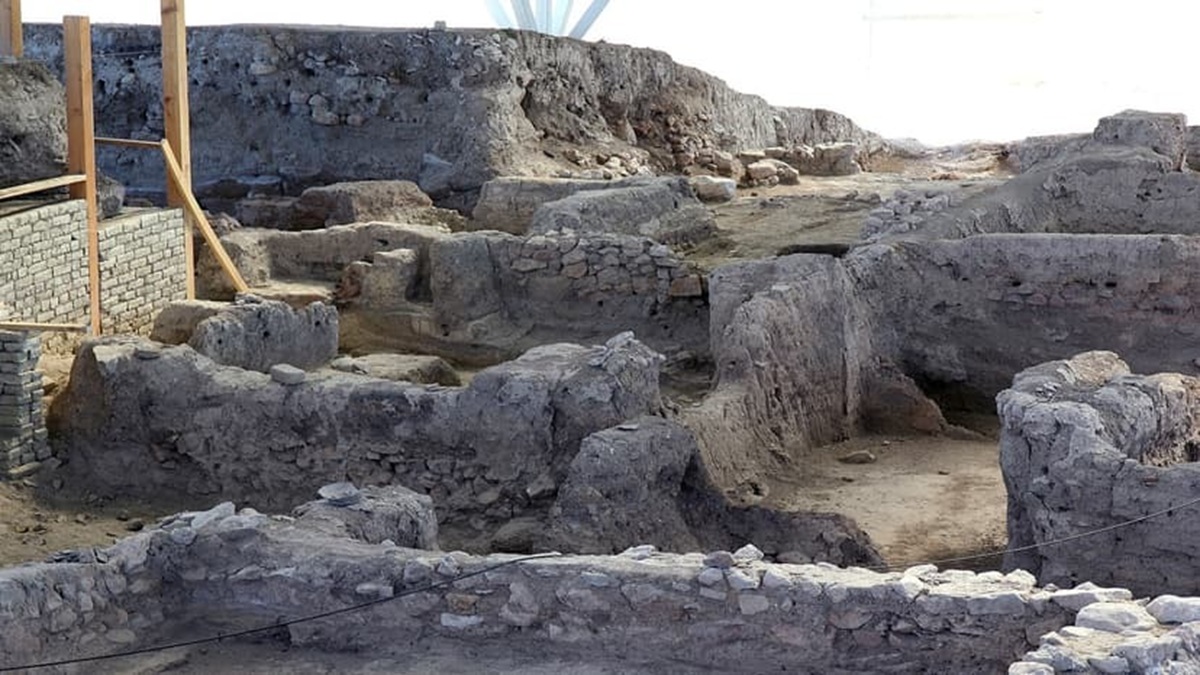
In 2016 and 2018, burnt textile fragments dating back 4,000 years were discovered at Beycesultan Höyük, an ancient settlement in western Anatolia.
The find provided archaeologists with a rare insight into an once-thriving industry that has practically disappeared.
Structures, Containers and Indications of Workshop
The two burnt fabrics were found inside Middle and Late Bronze Age structures. It remains unclear whether they belonged to a single building or to a larger complex.
Along the wall of the central courtyard, which has a square hearth, containers, storage pots, and clay basins were identified. The authors suspect that the room where one of the fabrics was located functioned as a workshop, as remains of baskets made from branches were found nearby.
The second fragment, named Tx2, was in a large domestic house destroyed by fire. The property contained six rooms filled with storage containers and clay boxes. Four post holes in an adjacent room may indicate the former presence of a loom.
In addition to the fabrics, tools and artifacts associated with textile production were found, such as needles and a weaving sword. These elements demonstrate that Beycesultan was an important textile-producing settlement during the Bronze Age.
Dating, Fibers and Identified Techniques
Radiocarbon dating placed the Tx1 fragment between approximately 1915 and 1745 BC. Under the microscope, researchers verified that the fiber came from hemp and that the loops were formed with a single needle.
The analysis revealed the oldest example of nålbinding in this archaeological context. It is a historically known technique, but it had never been identified in this region and period before.
Chemical analysis detected the compound responsible for the blue dye, making Tx1 the oldest known example of indigo-dyed fabric in Bronze Age Anatolia. According to the study, this hue typically appeared only in garments of the elite or royalty.
The fragment Tx2 was dated between 1700 and 1595 BC. It was produced on a loom using a simple taffeta weave. The find indicates the existence of a loom with weights in Beycesultan.
Organized Production and Regional Relevance
As both fragments were found in rooms with textile tools, archaeologists believe they have identified signs of large-scale organized production. The presence of instruments and structures reinforces this interpretation.
The authors conclude that the discoveries offer a unique glimpse into the textile industry of the Middle and Late Bronze Age, both at the site and in the region as a whole.
According to the study, the artifacts Tx1 and Tx2 indicate that Beycesultan produced a variety of fabrics, including exotic and luxury materials, compatible with reconstructions of the economic and social structure based on other material finds.
So far, no cuneiform text has been discovered at Beycesultan, and the ancient name of the settlement remains unknown. Nevertheless, the textile finds and workshop traces indicate that the site may have been a regional capital linked to the textile industry and large-scale production.






