






 Portuguese
  Spanish


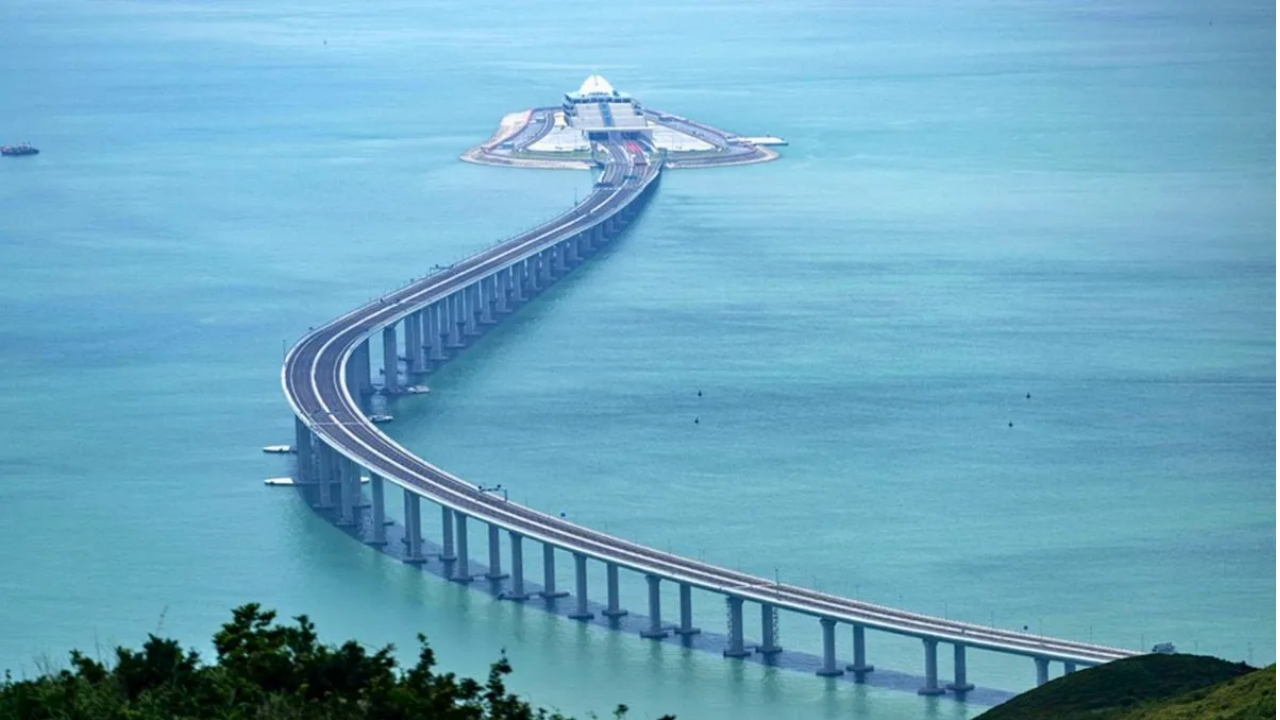


At 55 km Long, the Hong Kong-Zhuhai-Macao Bridge-Tunnel Is the Largest in the World, Connecting Three Chinese Regions Over the Sea and Under the Water, a Symbol of Innovation and Cultural Unity
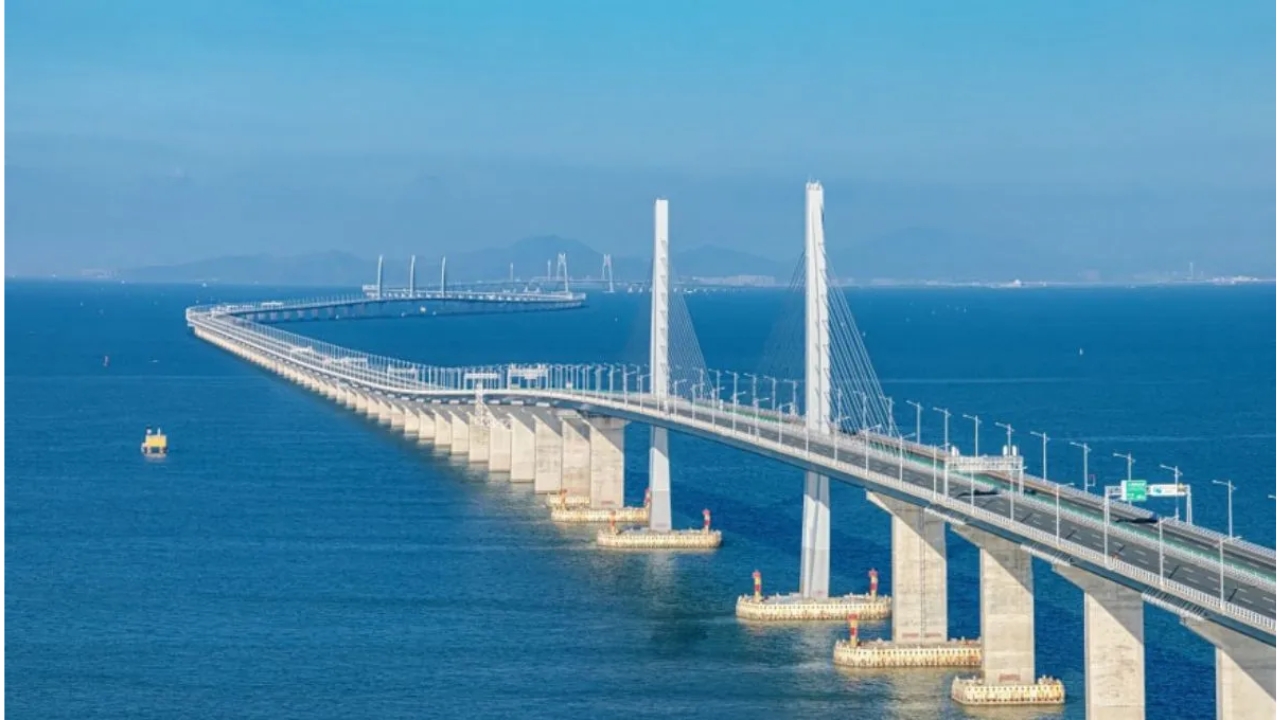
Between the blue horizon of the South China Sea and the mist of the Pearl River Delta rises one of the greatest feats of modern engineering: the Hong Kong-Zhuhai-Macao Bridge-Tunnel. Spanning 55 kilometers, this structure is not just a bridge nor just a tunnel; it is an impressive combination of both, capable of connecting three major Chinese regions over the ocean.
A Structure That Defies Logic
The megaproject took nearly a decade to complete and required millimeter precision. Part of its route extends over the sea, supported by giant steel pillars; another part dives beneath the waters in a nearly seven-kilometer underwater tunnel, linking two artificial islands built specifically for the project.
The result is an elegant line that seems to float and disappear beneath the ocean, only to resurface toward the light again, a transition that combines cutting-edge engineering and an almost poetic aesthetic.
-
China’s Engineered Bamboo: The “Material of the Future” Stronger Than Steel and a Sustainable Wood Alternative

-
Egypt’s “New Nile”: 170 km Artificial River Aims to Turn Desert into Farmland, but Water Supply Concerns Loom
-
Unable to secure a mortgage as a self-employed single mother, she designed her own floating home from a 20-meter boat and now lives “off-grid” with her two children and solar panels on an English canal.
-
Man Transforms Rusty Shipping Container into Luxury Home with Insulated Walls, Large Windows, and Drywall Finish, Surprising Onlookers


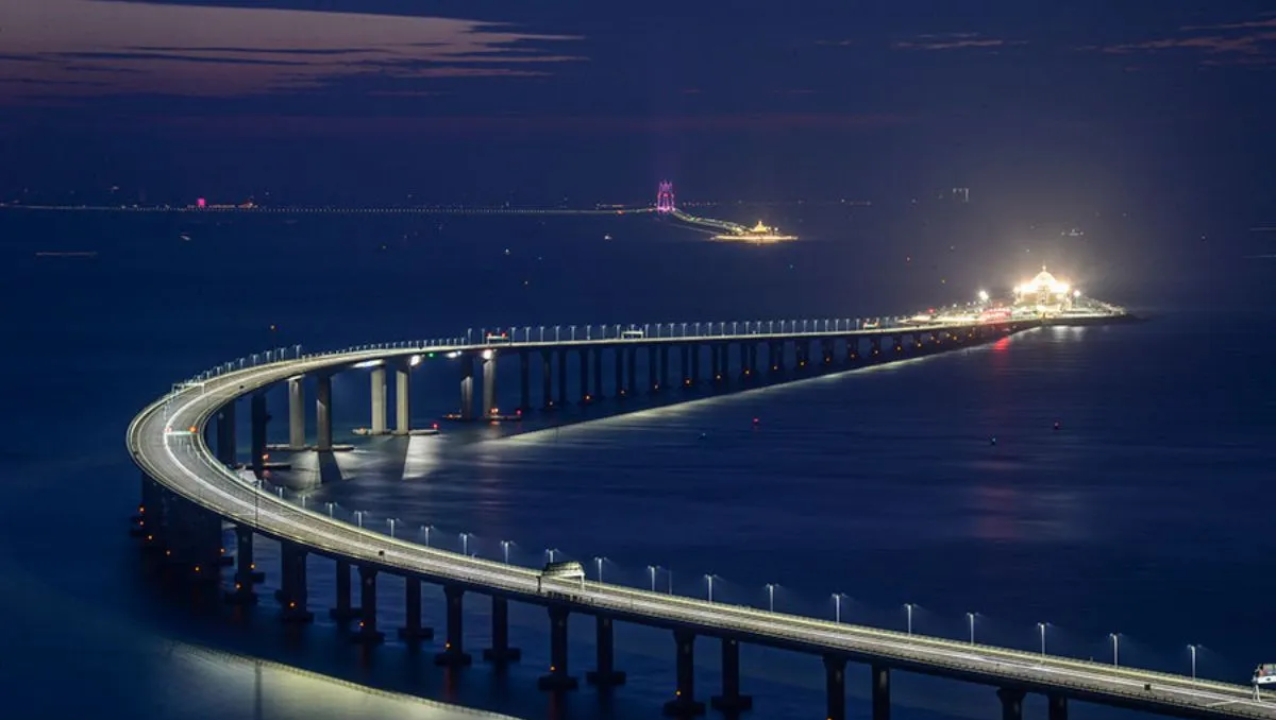
Designed to withstand typhoons, earthquakes, and the constant forces of the sea, the structure required hundreds of thousands of tons of high-density steel and concrete. Every detail was calculated to endure extreme conditions, making it one of the most resilient and complex constructions ever erected by mankind.
A Bridge That Shortens Distances and Unites Cultures
Before its inauguration, traveling between Hong Kong, Zhuhai, and Macao could take over three hours. Today, the journey can be made in about 30 minutes, completely transforming mobility in the region and strengthening economic integration among the three cities.
More than just a logistical shortcut, the bridge-tunnel has become a symbol of unity: it connects not only territories but also cultures, economies, and people that once seemed separated by kilometers of sea.
Crossing it is an almost cinematic experience. From the car, the sea appears to stretch infinitely on either side, reflecting the sun’s glow. Suddenly, the road begins to descend, and the driver finds themselves diving beneath the waters, surrounded by concrete walls and cold lights. When the tunnel ends and the sky reappears, the feeling is one of rebirth, as if crossing into two distinct worlds.
A Work That Connects the Present to the Future
The Hong Kong-Zhuhai-Macao Bridge-Tunnel is not merely a transportation route. It is a demonstration of what modern engineering can achieve when human ingenuity is allied with ambition and perseverance. It transformed a natural barrier, the sea, into a direct pathway to the future, showing the world how infrastructure can also be an expression of art and collective vision.
Today, the work is considered a global engineering landmark and one of China’s “seven modern wonders.” It redefines the concept of connectivity and inspires new generations of engineers to imagine solutions that transcend physical and mental boundaries.


Não é a primeira. A ligação entre Copenhague e malmoe é igual